Turmeric and Curcumin: The Complete Anti-Inflammatory Supplement Guide
Quick Answer: Turmeric contains curcumin, a polyphenol with genuine anti-inflammatory activity — it suppresses NF-κB, COX-2, and multiple pro-inflammatory cytokines through mechanisms distinct from NSAIDs. The problem: standard curcumin is poorly absorbed. Less than 1% reaches systemic circulation from a typical capsule. Enhanced delivery forms — piperine co-administration, liposomal encapsulation, and phytosome technology — meaningfully improve bioavailability. Clinical evidence supports curcumin for joint pain, osteoarthritis, and exercise recovery; evidence for other conditions is promising but thinner. Effective dosing is 500–1,000 mg of a high-bioavailability extract daily.
Turmeric is one of the oldest medicinal plants in documented human use. Ayurvedic medicine has employed it for digestive complaints, joint pain, and wound healing for over three thousand years. In the last two decades, Western research has largely validated that something real is happening — that the golden spice contains biologically active compounds with measurable effects on inflammation pathways.
But the story has a significant complication that most popular articles gloss over: the active compound responsible for most of turmeric’s studied benefits, curcumin, is notorious for not actually getting into your bloodstream in meaningful amounts when you swallow it. Understanding this gap — between what curcumin can do in a test tube or a well-designed clinical trial and what a standard turmeric capsule will actually do in your body — is essential for making sense of the supplement market and getting real results.
This guide covers the mechanisms, the bioavailability problem and its solutions, the evidence by health condition, how to compare supplement forms intelligently, and how to use turmeric-curcumin products safely and effectively.
What Curcumin Is and Why It Matters
Turmeric root (Curcuma longa) contains a class of compounds called curcuminoids, of which curcumin (diferuloylmethane) is the most abundant and most biologically active, typically comprising 2–9% of dried turmeric root by weight. Standard turmeric extracts are usually standardized to 95% curcuminoids, meaning a 500 mg extract capsule contains roughly 475 mg curcuminoids — far more than what you’d get from eating turmeric as a spice.
The reason curcumin has attracted such intense scientific interest is its ability to modulate multiple inflammation pathways simultaneously — something most pharmaceuticals can’t do without causing serious side effects. Curcumin doesn’t just block one enzyme or one receptor; it appears to act upstream of many inflammatory signals.
The NF-κB Pathway
Nuclear factor kappa-light-chain-enhancer of activated B cells — NF-κB — is a protein complex that functions as a master regulator of immune response and inflammation. When NF-κB is activated, it turns on the transcription of dozens of genes coding for pro-inflammatory cytokines (IL-1β, IL-6, TNF-α), adhesion molecules, and enzymes including COX-2. Chronic, low-grade NF-κB activation underlies virtually every major chronic inflammatory condition — cardiovascular disease, type 2 diabetes, inflammatory bowel disease, rheumatoid arthritis, and cancer.
Curcumin inhibits NF-κB activation through multiple mechanisms: it blocks the kinase that phosphorylates IκB (the inhibitor protein that normally keeps NF-κB inactive), directly binds to several NF-κB subunits, and interferes with upstream signaling that would otherwise activate the pathway. This suppression has been demonstrated in cell culture, animal models, and increasingly in human clinical studies (Gupta et al., 2013; PMID: 23143785).
COX-2 and Prostaglandins
Cyclooxygenase-2 (COX-2) is the enzyme targeted by NSAIDs like ibuprofen and naproxen — it converts arachidonic acid into prostaglandins, which are key mediators of pain and inflammation. Curcumin inhibits COX-2 expression (not just COX-2 enzyme activity like NSAIDs do, but actual gene expression), which means it reduces prostaglandin production at a more fundamental level. Unlike selective COX-2 inhibitor drugs (like rofecoxib/Vioxx), curcumin doesn’t appear to carry cardiovascular risks at normal doses, though this comparison is not fully established in large trials.
Cytokine Modulation
Beyond NF-κB and COX-2, curcumin directly suppresses several pro-inflammatory cytokines including interleukin-1β (IL-1β), interleukin-6 (IL-6), and tumor necrosis factor-alpha (TNF-α). Elevated levels of these cytokines are characteristic of conditions ranging from rheumatoid arthritis to metabolic syndrome to depression. This multi-target profile is part of what makes curcumin biologically interesting — and part of why conducting clean clinical trials is challenging, since its effects are widespread rather than targeted.
The Bioavailability Problem
Here’s the inconvenient truth that the supplement industry prefers you don’t focus on: curcumin has extremely poor oral bioavailability. A 2007 review by Anand and colleagues published in Molecular Pharmaceutics documented that curcumin is rapidly metabolized in the intestine and liver, has poor aqueous solubility (it doesn’t dissolve well in water), and is quickly conjugated and eliminated — resulting in peak serum concentrations that are negligible after standard oral doses (PMID: 17999464).
In practical terms: if you swallow a plain 500 mg curcumin capsule, you might absorb a few nanograms per milliliter into your bloodstream — likely insufficient to produce meaningful systemic anti-inflammatory effects. The dramatic anti-inflammatory effects seen in cell culture studies use concentrations far higher than any oral supplement can achieve without absorption enhancement.
This is why the bioavailability solutions matter enormously — they’re not marketing gimmicks. They’re the difference between a supplement that works and one that produces expensive urine.
Piperine (BioPerine)
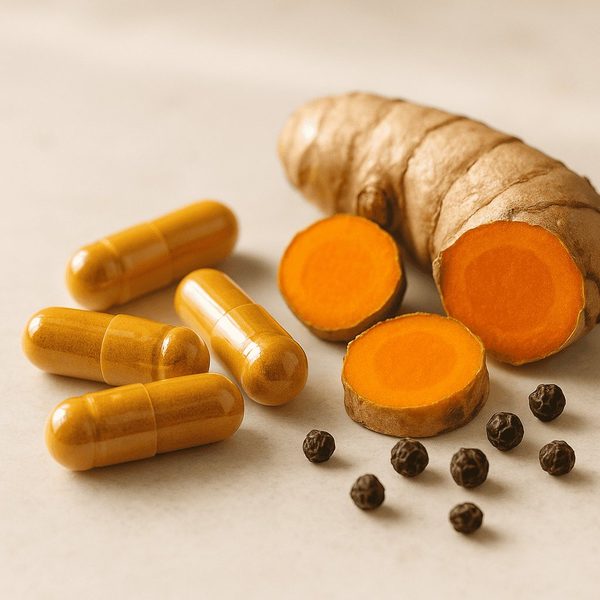
The simplest and best-documented bioavailability enhancer is piperine — the active alkaloid in black pepper. A landmark 1998 study by Shoba and colleagues published in Planta Medica showed that co-administration of 20 mg piperine with 2 grams curcumin increased curcumin bioavailability in human subjects by 2,000% — a twenty-fold improvement (PMID: 9619120). Piperine achieves this by inhibiting intestinal glucuronidation and P-glycoprotein efflux, two of the major mechanisms responsible for curcumin’s rapid elimination.
Most evidence-based curcumin supplements now include BioPerine® (a standardized piperine extract) or list black pepper extract at 5–20 mg per dose. If a curcumin supplement doesn’t include piperine or another bioavailability enhancer and costs more than a few dollars, it’s almost certainly not worth buying. See our guide to the best curcumin supplements with black pepper for what to look for.
One caution: piperine inhibits a wide range of drug-metabolizing enzymes (CYP3A4, P-gp), which means it can increase the blood levels of many medications. Anyone on prescription drugs — particularly blood thinners, chemotherapy, or antiepileptics — should consult their physician before using piperine-enhanced supplements.
Liposomal Curcumin
Liposomes are tiny spherical vesicles made from phospholipid bilayers — essentially artificial membranes — that encapsulate the curcumin molecule and protect it from intestinal degradation while facilitating absorption through intestinal epithelium. Liposomal formulations generally show significantly higher bioavailability than standard curcumin, with some studies reporting 5–20x improvements depending on the specific formulation.
Liposomal curcumin has the additional advantage of not interacting with drug-metabolizing enzymes the way piperine does, making it potentially a better choice for people on multiple medications. For a detailed head-to-head comparison, see our article on liposomal curcumin vs. standard curcumin.
Phytosome Technology (Meriva®, Theracurmin®)
Phytosomes are complexes in which curcumin is bound to phosphatidylcholine — a component of cell membranes — creating a molecule that is more fat-soluble and membrane-permeable. Meriva® is the most studied phytosome formulation, with multiple clinical trials demonstrating meaningful absorption improvements and efficacy in joint health outcomes. Theracurmin® uses a different approach — colloidal nanoparticle dispersion — and has also shown significantly improved bioavailability in comparison studies.
Evidence by Condition
Joint Pain and Osteoarthritis
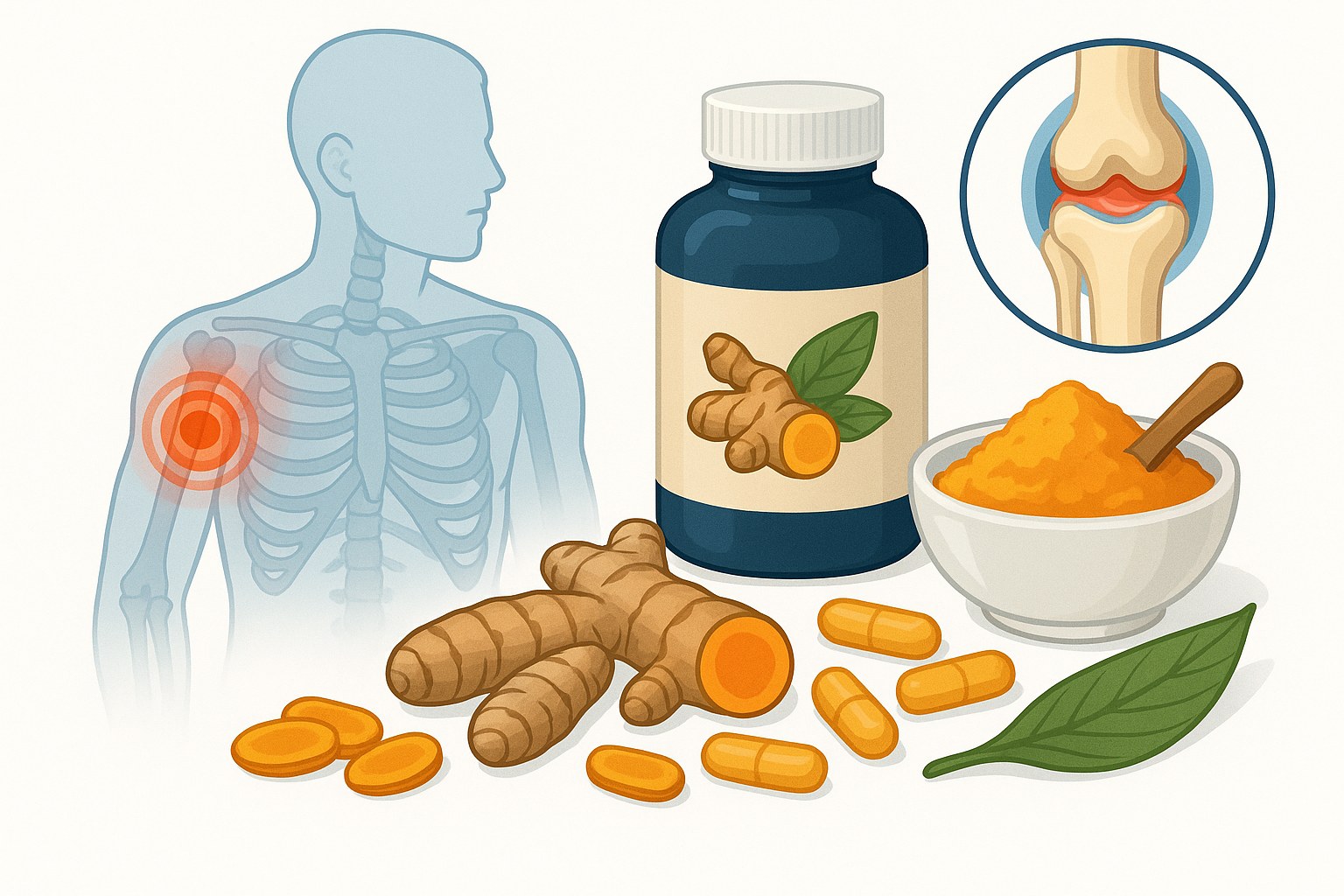
This is where curcumin’s clinical evidence is strongest. A 2016 systematic review by Daily and colleagues in the Journal of Medicinal Food examined eight randomized controlled trials of turmeric or curcumin extracts for joint arthritis and concluded that the evidence “suggests efficacy” for alleviating symptoms — particularly pain and functional disability in osteoarthritis (PMID: 27533649).
A widely-cited trial of Meriva® (phytosome curcumin) in knee osteoarthritis found that 1,000 mg per day over eight months produced significant improvements in WOMAC pain and stiffness scores, with a safety profile superior to standard NSAID comparators. The effect size was comparable to what you’d expect from 1,000 mg of acetaminophen daily — meaningful, though not as potent as prescription anti-inflammatories. For a dedicated deep-dive, see turmeric for joints and inflammation and our turmeric curcumin and arthritis guide.
Pain Relief
Curcumin has been studied for pain beyond osteoarthritis, including post-surgical pain, neuropathic pain, and dysmenorrhea (menstrual pain). A 2016 study published in the Journal of Dietary Supplements by Panahi and colleagues found that curcuminoid supplementation significantly reduced pain scores in knee OA patients while also lowering serum CRP (a systemic inflammation marker), suggesting that the anti-inflammatory effect was real and measurable in blood (PMID: 25688638). Our article on curcumin for pain relief reviews this evidence in full.
Exercise Recovery
Post-exercise inflammation is a normal part of the adaptation process, but excessive delayed-onset muscle soreness (DOMS) can limit training frequency and quality. Several trials have shown that curcumin supplementation reduces DOMS severity and biomarkers of exercise-induced muscle damage (creatine kinase, IL-6) following intense eccentric exercise. This is an area where the effects are genuine and practically relevant for athletes and active individuals. Read more in does turmeric help recovery after exercise.
Gut Health
Curcumin has been studied in inflammatory bowel diseases — Crohn’s disease and ulcerative colitis — with some positive findings, particularly for UC maintenance therapy. Curcumin’s effects on gut microbiota are also being explored, with preliminary evidence suggesting it may shift the microbial balance in a favorable direction. This is still an emerging area, but the gut-inflammation connection makes curcumin a logical candidate for further investigation.
Skin Health
Oral and topical curcumin has been studied for inflammatory skin conditions including psoriasis, acne, and eczema. The anti-inflammatory and antioxidant mechanisms are relevant, and some controlled trials show benefit for psoriasis severity scores. For skincare-specific context, see anti-inflammatory diet for clearer skin, which covers the diet and supplement landscape for skin inflammation.
Metabolic and Cardiovascular Health
Laboratory and animal data are compelling — curcumin modulates metabolic pathways relevant to insulin sensitivity, lipid metabolism, and endothelial function. Human trial results are less consistent, in part because of the bioavailability problem. The evidence is suggestive but not yet definitive enough to recommend curcumin primarily for metabolic health management.
Forms Compared: What to Actually Buy
Given the bioavailability discussion above, here’s a practical framework for navigating the supplement market:
Standard turmeric extract (plain curcumin, no enhancer): Avoid unless you’re using it for topical purposes or simply want the mild antioxidant effect of a diet-level dose. The systemic anti-inflammatory effects won’t materialize reliably.
Curcumin + BioPerine (piperine): Good evidence base, low cost, widely available. Best for healthy adults not on multiple medications. The 2,000% bioavailability improvement is real. Look for 95% curcuminoid standardization plus 5–20 mg piperine per serving.
Meriva® (curcumin phytosome): Has the most clinical trial evidence of any enhanced form, particularly for joint health. Often requires a higher per-dose cost but doses can be lower (typically 500–1,000 mg vs. 1,500–3,000 mg for plain + piperine).
Theracurmin®: Excellent bioavailability data, especially in comparison pharmacokinetic studies. Used in several high-quality clinical trials. Available in a smaller number of products but worth seeking for joint and cognitive applications.
Liposomal curcumin: Strong bioavailability, good for those avoiding piperine. Formulation quality varies — look for brands that publish particle size and phospholipid composition data.
Take with food — preferably a meal containing some fat, as curcumin is fat-soluble and lipid co-ingestion further aids absorption.
For most joint and inflammation applications, clinical trials have used durations of 8–12 weeks to assess efficacy. Expect 4–8 weeks before noticing meaningful effects in joint pain or recovery-related outcomes.
Safety and Side Effects
Curcumin has a strong safety record at typical supplemental doses. Common side effects at higher doses include GI discomfort, nausea, or loose stools — effects that are more frequent with plain curcumin than with enhanced formulations, and generally manageable by taking with food or splitting doses. See our article on curcumin supplement side effects for a full breakdown.
Drug interactions: The most clinically significant concern is with anticoagulants. Curcumin has mild antiplatelet effects and may potentiate blood-thinning medications (warfarin, clopidogrel, apixaban). Anyone on anticoagulant or antiplatelet therapy should not use high-dose curcumin without physician guidance. The piperine component also inhibits drug metabolism enzymes, which can raise or lower blood levels of many medications.
Gallbladder issues: Curcumin stimulates bile production and contraction of the gallbladder. While this is beneficial for healthy gallbladder function, anyone with gallstones or biliary tract obstruction should avoid high-dose curcumin supplements.
Pregnancy: High-dose supplemental curcumin is not recommended during pregnancy. Culinary amounts of turmeric in food are considered safe.
For context on how curcumin fits within a broader anti-inflammatory supplement strategy, see our anti-inflammatory supplements guide. For complementary anti-inflammatory compounds with overlapping mechanisms, bromelain supplements are worth exploring, as bromelain acts through distinct pathways and pairs well with curcumin for joint and recovery applications.
Curcumin’s effects on men’s sexual health are also an area of growing interest, primarily through its effects on vascular inflammation and testosterone pathway modulation. See turmeric benefits sexually for a focused look at this evidence.
For those who prefer food-based approaches, turmeric tea benefits explores what you can realistically expect from dietary turmeric consumption vs. supplements.
How Curcumin Fits Into a Broader Longevity Strategy
Chronic systemic inflammation — sometimes called “inflammaging” — is one of the central biological mechanisms of aging and age-related disease. NF-κB overactivation, elevated IL-6, and persistent low-grade oxidative stress are hallmarks of both aging and virtually every major chronic disease. Curcumin’s multi-target anti-inflammatory activity positions it as a candidate longevity supplement, and it appears in several longevity-focused protocols alongside compounds like resveratrol, quercetin, and omega-3 fatty acids.
For how curcumin fits into a comprehensive longevity supplementation strategy, see our longevity supplements guide. For how structural support from collagen interacts with anti-inflammatory compounds for joint and connective tissue health, see our collagen hub.
Gupta SC, Patchva S, Aggarwal BB. Therapeutic roles of curcumin: lessons learned from clinical trials. AAPS J. 2013;15(1):195–218. PMID: 23143785
Hewlings SJ, Kalman DS. Curcumin: A review of its effects on human health. Foods. 2017;6(10):92. PMID: 29065496
Daily JW, Yang M, Park S. Efficacy of turmeric extracts and curcumin for alleviating the symptoms of joint arthritis: a systematic review and meta-analysis of randomized clinical trials. J Med Food. 2016;19(8):717–729. PMID: 27533649
Panahi Y, Rahimnia AR, Sharafi M, Alishiri G, Saburi A, Sahebkar A. Curcuminoid treatment for knee osteoarthritis: a randomized double-blind placebo-controlled trial. Phytother Res. 2014;28(11):1625–1631.
Panahi Y, Hosseini MS, Khalili N, et al. Antioxidant and anti-inflammatory effects of curcuminoid-piperine combination in subjects with metabolic syndrome. J Dietary Suppl. 2016;13(2):209–220. PMID: 25688638
Anand P, Kunnumakkara AB, Newman RA, Aggarwal BB. Bioavailability of curcumin: problems and promises. Mol Pharm. 2007;4(6):807–818. PMID: 17999464
Shoba G, Joy D, Joseph T, Majeed M, Rajendran R, Srinivas PS. Influence of piperine on the pharmacokinetics of curcumin in animals and human volunteers. Planta Med. 1998;64(4):353–356. PMID: 9619120
Prasad S, Tyagi AK, Aggarwal BB. Recent developments in delivery, bioavailability, absorption and metabolism of curcumin: the golden pigment from golden spice. Cancer Res Treat. 2014;46(1):2–18. PMID: 24520218



Leave a Reply