Collagen Supplements: The Complete Guide to Types, Benefits, and What Works
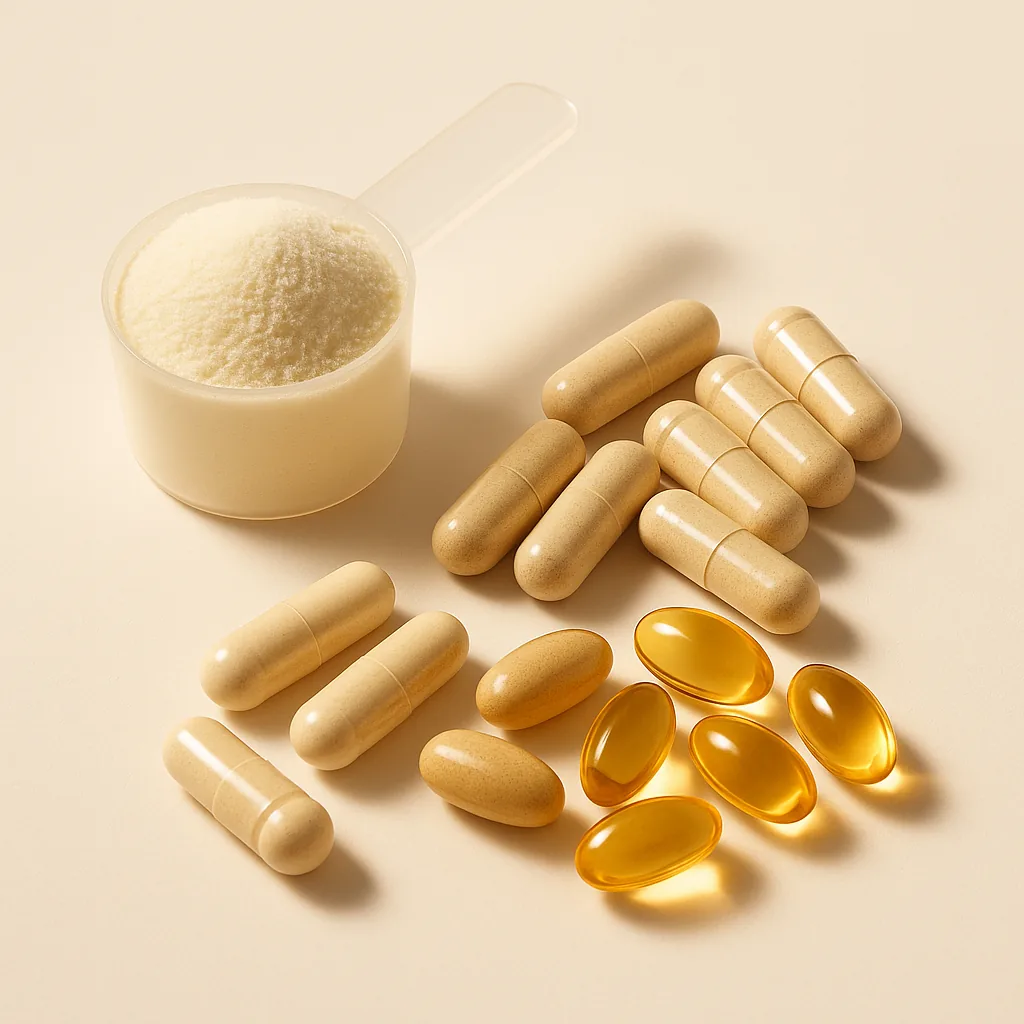
Quick Answer: Collagen supplements — particularly hydrolyzed collagen peptides — have meaningful clinical evidence for improving skin elasticity, joint pain, and bone density. They work not by delivering collagen directly to skin or joints (the body breaks it down during digestion) but by providing amino acids and bioactive peptides that stimulate the body’s own collagen production. Type I and III from marine or bovine sources support skin and bone; Type II (undenatured) supports joint cartilage through a different immune-modulating mechanism. Dose, source, and hydrolysis quality matter considerably.
Collagen is the most abundant protein in the human body, accounting for roughly 30% of total protein mass. It forms the structural scaffolding of skin, tendons, ligaments, cartilage, bones, blood vessels, and virtually every connective tissue. At around age 25, the body’s natural collagen production begins to decline — a process that accelerates with UV exposure, smoking, chronic inflammation, and poor nutrition. By age 40, the average person has lost roughly 10–15% of skin collagen; by menopause, women can lose up to 30% in the first five years due to estrogen’s role in stimulating collagen synthesis.
This biological reality has created a booming market for collagen supplements — projected to exceed $7 billion globally by 2027. But the market is flooded with products making wildly varying claims, from dubious (oral collagen directly rebuilds your skin) to understated (collagen peptides have no systemic effect beyond basic protein). The truth is more nuanced and more interesting than either extreme.
This hub guide covers the science of collagen supplementation comprehensively: how it works in the body, which types serve which purposes, what the best sources are, what the research shows for specific health outcomes, and how to choose a product that’s actually worth buying.
How Collagen Supplements Actually Work
A common objection to collagen supplements goes like this: “The digestive system breaks down protein into amino acids. You can’t swallow collagen and have it end up in your skin — it gets digested like any other protein.” This objection has a kernel of truth but misses the more interesting mechanism.
It’s true that the body breaks down ingested collagen into amino acids and short peptides during digestion. However, the key insight from recent research is that:
Bioactive peptides survive digestion. Unlike longer collagen chains, small collagen-derived peptides (dipeptides and tripeptides, particularly hydroxyproline-containing sequences like Pro-Hyp and Hyp-Gly) resist complete digestion and appear in the bloodstream intact after oral consumption. These bioactive peptides have been detected in human plasma in multiple studies.
These peptides stimulate fibroblast activity. Fibroblasts are the skin cells responsible for manufacturing new collagen. Laboratory studies have shown that collagen-derived peptides like Pro-Hyp directly stimulate fibroblast proliferation and collagen synthesis, suggesting that the peptides signal the body to upregulate its own collagen production.
Collagen provides specific amino acids. Collagen is uniquely rich in glycine, proline, and hydroxyproline — amino acids that are relatively scarce in typical dietary protein sources (muscle meat, legumes, eggs). Hydroxyproline in particular can only be synthesized if the body has adequate vitamin C — which is why vitamin C deficiency causes scurvy (a collagen failure disease). Supplementing with collagen provides these specific building blocks for collagen synthesis in quantities difficult to achieve from food alone.
This “signal-plus-substrate” mechanism — bioactive peptides signaling fibroblasts while providing the raw material for synthesis — is a more scientifically coherent explanation of collagen supplementation’s benefits than either “collagen goes directly to skin” or “it’s just digested like any other protein.”
The Types of Collagen and What They Do
There are at least 28 distinct types of collagen identified in the human body, numbered based on their discovery. For supplementation purposes, the relevant types are:
Type I Collagen
The most abundant collagen in the body, found in skin, tendons, ligaments, cornea, and bone. Type I provides tensile strength — the ability to resist being pulled apart. It’s the primary target for skin and bone health supplementation. Sources: bovine hide, marine (fish) skin.
Type II Collagen
Found almost exclusively in articular cartilage — the smooth tissue covering the ends of bones in joints. Unlike Types I and III, which are fibrillar (rope-like), Type II is a network-forming collagen that provides cartilage with its ability to resist compression. For joint support, Type II is the specific target.
There are two supplemental approaches to Type II:
Hydrolyzed Type II: Broken down into peptides, providing amino acid building blocks for cartilage matrix.
Undenatured Type II collagen (UC-II): A specific preparation that preserves the native collagen structure. UC-II works through an immune mechanism (oral tolerance) rather than substrate provision — it “teaches” the immune system not to attack cartilage collagen. Clinical studies have used very small doses (40 mg/day) compared to typical collagen supplementation.
Type III Collagen
Found alongside Type I in skin, blood vessels, and internal organs. Type III gives tissue flexibility and is important in wound healing. Most bovine and marine collagen products contain both Types I and III.
Type IV Collagen
Forms the basal lamina (basement membrane) of epithelial cells. Relevant to skin structure but not directly supplemented in most products.
Type V Collagen
Found in hair, cell surfaces, and placenta. Less common as a supplement target.
For most consumers, the practical distinction is: Types I + III for skin, hair, nails, and bone; Type II (especially undenatured UC-II) for joint cartilage support.
Sources of Collagen: Marine, Bovine, Chicken, and Vegan
Bovine collagen: Sourced from cattle hides, bones, and connective tissue. Provides Types I and III. The most common and typically least expensive source. Well-studied in clinical trials for skin and joint benefits. Look for grass-fed sourcing if the purity of the collagen peptide chain is a concern.
Marine collagen: Sourced from fish skin and scales (wild-caught or farmed). Provides primarily Type I. Some research suggests marine collagen peptides may have higher bioavailability than bovine due to smaller peptide sizes, though the evidence for meaningful clinical differences is mixed. Marine collagen contains high levels of hydroxyproline-containing sequences associated with fibroblast stimulation. Good option for those avoiding bovine sources.
Chicken collagen: Primary source of Type II collagen. Chicken sternum cartilage is used to produce UC-II (undenatured Type II collagen), the form specifically studied for osteoarthritis and joint pain. Most chicken collagen products are aimed at joint health specifically.
Egg-based collagen: Egg membranes contain Types I, III, IV, and V. Some products use egg membrane as a collagen source; less common than bovine or marine but with a useful Type IV content.
“Vegan collagen”: This is a marketing term that requires clarification. No dietary vegan source contains collagen — it’s an animal protein. Products marketed as “vegan collagen” typically contain:
Vitamin C and other nutrients that support the body’s own collagen synthesis
Amino acids that serve as collagen precursors (glycine, proline, hydroxyproline)
Silica (from bamboo extract), which supports collagen crosslinking
These products support collagen production but do not contain collagen. They can be effective but work through a completely different mechanism.
The Clinical Evidence: What Has Been Proven
Skin Health
The evidence for collagen peptides and skin health is genuinely strong. A 2019 systematic review by de Miranda et al. in the Journal of Drugs in Dermatology examined 11 RCTs (805 participants) and found that oral collagen supplementation (hydrolyzed, 2.5–10 g/day for 8–24 weeks) consistently improved skin elasticity, hydration, and reduced wrinkle depth. The effects were statistically significant and clinically meaningful.
A landmark 2014 double-blind RCT by Proksch et al. in Skin Pharmacology and Physiology found that women taking 2.5 g of bioactive collagen peptides daily for 8 weeks showed 20.1% higher skin elasticity than placebo — a practically significant improvement. At 4 g/day, skin elasticity improved even more.
A 2015 follow-up study by Proksch using the same 2.5 g peptide dose over 8 weeks found significant increases in skin moisture content, reduced roughness, and reduction in skin evaporation.
Joint Pain
For joint pain, both hydrolyzed collagen (high-dose, 10 g+) and undenatured Type II collagen (UC-II at 40 mg) have clinical evidence.
A 2008 study in the International Journal of Medical Sciences by Clark et al. examined 5 g/day of collagen hydrolysate in 147 athletes with activity-related joint pain over 24 weeks, finding significant improvements in joint pain, with effect sizes large enough to have clinical relevance for athletic populations.
UC-II has been compared directly to glucosamine + chondroitin. A 2016 study by Lugo et al. in the Journal of the International Society of Sports Nutrition found that UC-II (40 mg/day) produced superior improvements in knee extension and knee comfort during exercise compared to glucosamine/chondroitin — at a much smaller dose, because it works through immune tolerance rather than substrate provision.
Bone Density
Post-menopausal bone loss is an area of increasing interest for collagen research. A 2018 RCT by König et al. in Nutrients examined specific bioactive collagen peptides (5 g/day) in postmenopausal women with primary age-related bone loss over 12 months. The treatment group showed significantly increased bone mineral density in the femoral neck and spine compared to placebo — a clinically meaningful outcome given that fracture risk is a primary concern in this population.
Muscle Mass
Some evidence suggests collagen peptides, taken post-exercise with vitamin C, may support lean mass gains. A 2019 RCT by Oertzen-Hagemann et al. in Nutrients found that young men taking 15 g/day of collagen peptides post-workout showed greater increases in fat-free mass and strength over 12 weeks compared to whey protein — a surprising finding given that whey has better essential amino acid content. The mechanism may involve the specific peptide signals from collagen rather than amino acid content per se.
Gut Health
Collagen’s high glycine content has prompted interest in gut barrier support. Glycine has demonstrated roles in intestinal tight junction integrity in animal models. The “leaky gut” narrative around collagen is underdeveloped from an RCT standpoint, but glycine’s anti-inflammatory and gut-protective effects are real, and the amino acid composition of collagen makes it a logical complement to gut health protocols.
Choosing a Collagen Supplement: What Matters on the Label
Hydrolysis: For systemic effects, look for “hydrolyzed collagen peptides” or “collagen hydrolysate.” Full collagen molecules are too large to absorb efficiently; hydrolysis breaks them into peptides that can cross the intestinal wall.
Molecular weight: Not always disclosed on consumer labels, but in research contexts, peptides in the 1,000–5,000 Dalton range show the best balance of absorption and bioactivity. Some brands disclose average molecular weight on their technical specs.
Dose: Skin and bone: 5–10 g/day hydrolyzed collagen peptides. Joint pain: 10–15 g/day hydrolyzed collagen OR 40 mg/day UC-II (undenatured — don’t confuse with hydrolyzed). These two approaches are different products with different mechanisms.
Source transparency: Grass-fed bovine or wild-caught marine collagen. Look for non-GMO certification. Avoid products that don’t disclose the animal source.
Vitamin C inclusion: Collagen synthesis requires vitamin C as a cofactor for hydroxylation of proline and lysine residues. Some products include vitamin C; if yours doesn’t, take 500–1000 mg vitamin C daily alongside your collagen supplement.
Third-party testing: NSF certification or similar. Collagen is derived from animal connective tissue, and quality control matters for contamination and authenticity of the claimed type.
Amino acid profile verification: Legitimate collagen peptide products should show high glycine, proline, and hydroxyproline in their amino acid panel. Products diluted with other proteins will show lower hydroxyproline — a unique marker of collagen.
Marine vs. Bovine: The Ongoing Debate
Both marine and bovine collagen work in clinical trials, and the evidence base is stronger for bovine (more total studies) while marine gets premium positioning from brands due to perceived sustainability and bioavailability advantages. The practical differences for most consumers are modest. Key considerations:
Religious/dietary restrictions: Bovine is not appropriate for vegans, vegetarians, or some religious dietary restrictions (halal and kosher considerations apply).
Sustainability: Some wild-caught marine collagen sources raise sustainable fishing concerns; farmed fish may have feed quality issues. Look for certifications.
Allergen: Fish collagen is inappropriate for those with fish/shellfish allergies.
Taste/odor: Marine collagen powder can have a faint fish odor at high doses; bovine is typically more neutral.
For most people, sourcing quality matters more than the marine vs. bovine distinction. A high-quality bovine product will outperform a poorly sourced marine product, and vice versa.
How to Use Collagen Supplements Effectively
Morning or post-workout: Both timing windows work. Post-exercise with vitamin C may particularly support muscle and connective tissue synthesis because exercise upregulates collagen-synthesizing gene expression.
Mix with liquid: Hydrolyzed collagen powders mix well in warm liquid (coffee, tea, broth) without clumping. Cold water also works for most products.
Consistent daily use: Effects build over 8–24 weeks. Taking collagen for 2 weeks and expecting dramatic skin changes is unrealistic — the research uses durations of 2–6 months.
Stack appropriately: Vitamin C (500 mg+), hyaluronic acid (for skin hydration synergy), and zinc (for collagen crosslinking) are rational co-supplements.
FAQ
Is collagen supplementation worth it?
For skin elasticity, hydration, and wrinkle reduction: yes — evidence from multiple RCTs supports meaningful improvements with 5–10 g/day hydrolyzed collagen peptides over 8+ weeks. For joint pain: yes, particularly UC-II for osteoarthritis and high-dose hydrolyzed collagen for activity-related pain. For bone density: emerging but positive evidence. Overall, collagen is among the better-evidenced supplement categories.
What is the best type of collagen to take?
For skin and bone: hydrolyzed Type I and III (from bovine hide or marine). For joint cartilage: UC-II (undenatured Type II from chicken sternum, 40 mg/day) or high-dose hydrolyzed Type II. These are distinct products used differently.
Is marine collagen better than bovine?
Not definitively. Marine collagen may have a slight absorption advantage due to smaller peptide sizes, but both produce meaningful results in clinical trials. Choose based on dietary preferences, allergen considerations, and product quality.
Can vegans take collagen supplements?
Not from an actual collagen product — collagen is only found in animals. Vegan “collagen support” products supply precursor amino acids and cofactors (vitamin C, silica) to support the body’s own collagen synthesis.
How long does collagen take to work?
Most clinical benefits for skin become measurable at 8 weeks; significant improvement is often seen at 12–16 weeks. Joint benefits may require 3–6 months of consistent supplementation. This is a long-term investment, not a quick fix.
Should I take collagen with vitamin C?
Yes — vitamin C is essential for collagen synthesis. Taking vitamin C (500–1000 mg) alongside collagen supplementation maximizes collagen production from the peptide building blocks provided.
Key Takeaways
Collagen supplements work primarily by providing bioactive peptides that stimulate fibroblast collagen synthesis and specific amino acids (glycine, proline, hydroxyproline) that serve as collagen building blocks.
Type I and III (from bovine or marine) support skin elasticity, hydration, bone density, and general connective tissue.
Undenatured Type II collagen (UC-II, 40 mg/day) supports joint cartilage through immune tolerance mechanisms — distinctly different from hydrolyzed collagen.
Clinical evidence is strongest for skin elasticity (multiple RCTs), joint pain (UC-II and high-dose hydrolyzed), and bone density (postmenopausal women).
Look for “hydrolyzed collagen peptides,” 5–10 g/day dosing for skin/bone goals, and third-party testing.
Always take vitamin C alongside collagen supplementation to support hydroxylation of proline/lysine in collagen synthesis.
Effects build over 8–24 weeks; this is a long-term supplement commitment.
Sources
de Miranda, R.B., et al., “Effects of hydrolyzed collagen supplementation on skin aging: a systematic review and meta-analysis,” Journal of Drugs in Dermatology, 2021.
Proksch, E., et al., “Oral supplementation of specific bioactive collagen peptides reduces skin wrinkles and increases dermal matrix synthesis,” Skin Pharmacology and Physiology, 2014.
Clark, K.L., et al., “24-Week study on the use of collagen hydrolysate as a dietary supplement in athletes with activity-related joint pain,” Current Medical Research and Opinion, 2008.
Lugo, J.P., et al., “Undenatured type II collagen (UC-II®) for joint support: a randomized, double-blind, placebo-controlled study in healthy volunteers,” Journal of the International Society of Sports Nutrition, 2013.
König, D., et al., “Specific Collagen Peptides Improve Bone Mineral Density and Bone Markers in Postmenopausal Women,” Nutrients, 2018.
Oertzen-Hagemann, V., et al., “Effects of 12 Weeks of Hypertrophy Resistance Exercise Training Combined with Collagen Peptide Supplementation on the Skeletal Muscle Proteome in Recreationally Active Men,” Nutrients, 2019.
Proksch, E., et al., “Oral intake of specific bioactive collagen peptides reduces skin wrinkles and increases dermal matrix synthesis,” Skin Pharmacology and Physiology, 2014.
Schunck, M., et al., “Dietary Supplementation with Specific Collagen Peptides Has a Body Mass Index-Dependent Beneficial Effect on Cellulite Morphology,” Journal of Medicinal Food, 2015.
Shaw, G., et al., “Vitamin C-enriched gelatin supplementation before intermittent activity augments collagen synthesis,” American Journal of Clinical Nutrition, 2017.
[…] For skin and connective tissue applications, sea moss pairs conceptually with collagen — see our collagen hub for the full evidence base on collagen […]





Leave a Reply