
Quick Answer
Dietary inflammation is a genuine driver of acne, rosacea, psoriasis, and general skin quality – but ‘anti-inflammatory diet’ is often oversimplified into superfood lists without addressing the actual mechanisms. The most evidence-supported dietary modifications for skin inflammation are: reducing high-glycemic foods and refined carbohydrates (which drive IGF-1 and androgen spikes that stimulate sebum and comedogenesis), consuming adequate omega-3 fatty acids (reduce leukotriene and prostaglandin production), and eating polyphenol-rich plant foods (reduce NF-kB signaling and oxidative skin stress). Dairy’s role in acne is more nuanced – whey protein specifically appears to be more acne-promoting than fermented dairy.
Key Takeaways
- High-glycemic index diets are the most consistently replicated dietary driver of acne – a 2007 Australian RCT (Smith et al.) found switching to a low-glycemic diet significantly reduced acne lesion count, androgen levels, and IGF-1 after 12 weeks vs. high-GI control diet – the biological pathway is GI foods ? insulin/IGF-1 spike ? mTORC1 activation ? enhanced androgen synthesis and sebum production.
- Omega-3 to omega-6 ratio is a major determinant of skin inflammation baseline: the Western diet has an omega-6:omega-3 ratio of approximately 15:1 (vs. evolutionary 4:1 or lower). Correcting this imbalance (omega-3 supplementation + reducing refined seed oils) reduces leukotriene B4 and prostaglandin E2 at sebaceous glands, blunting the inflammatory acne cascade.
- Dairy’s acne association is primarily with whey protein (which is highly insulinogenic) and hormonal components in milk (IGF-1, prolactin, steroids) – fermented dairy (yogurt, kefir) is less consistently implicated and may have neutral or positive effects via probiotic content. This distinction gets lost in generic ‘cut dairy’ advice.
- Polyphenols from green tea (EGCG), berries (resveratrol, anthocyanins), and dark chocolate (flavanols) reduce NF-kB-driven skin inflammation and suppress 5-alpha-reductase activity – adding 2-3 cups of green tea and a serving of mixed berries daily is a practical, low-cost anti-inflammatory skin strategy.
- Sugar alcohols and ultra-processed ‘diet’ foods can maintain high insulin response without glycemic impact on some testing – glycemic load (not just GI) matters. Eliminating clearly ultra-processed and sugary foods is more practically effective than strict GI scoring of every meal.
“Anti-inflammatory diet” is one of those terms that gets slapped on everything from carnivore to vegan meal plans. But inflammation genuinely drives most chronic skin conditions – acne, rosacea, eczema, psoriasis. So does reducing dietary inflammation actually help?
Quercetin is one of the most studied anti-inflammatory flavonoids, with benefits extending from skin to systemic health. Our roundup covers quercetin and anti-inflammatory compounds for skin and systemic inflammation support.
Enzyme supplements like bromelain are gaining attention for inflammatory skin issues. See our guide on bromelain for inflammation and what the evidence shows.

The short answer: yes, moderately, and more for some conditions than others.
What “Inflammatory Diet” Actually Means
Researchers use the Dietary Inflammatory Index (DII) to score how pro- or anti-inflammatory a dietary pattern is. High-DII diets are characterized by:
– Excess refined carbohydrates and added sugars
– High omega-6 to omega-3 ratios (typical Western diet: ~15:1, optimal: closer to 4:1)
– Low fiber intake
– Low polyphenol and antioxidant intake
– High consumption of ultra-processed foods
Multiple observational studies have linked high-DII scores to worse skin outcomes, including increased acne severity and faster photoaging.
The Mediterranean Diet: Best Evidence
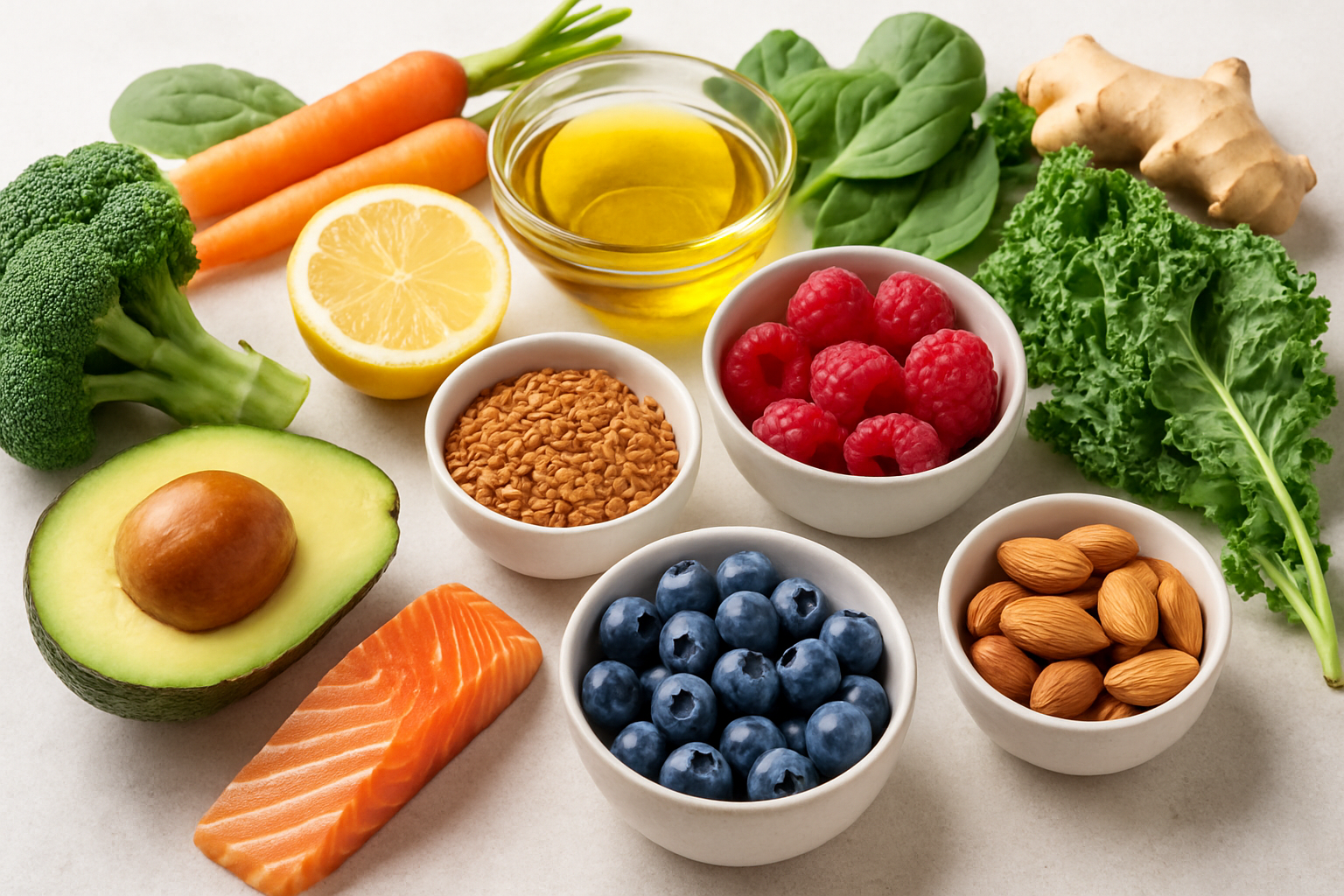
The Mediterranean dietary pattern has the strongest evidence for anti-inflammatory effects relevant to skin:
Key components:
– Olive oil as primary fat (rich in oleocanthal, a natural anti-inflammatory)
– Fatty fish 2-3x/week (omega-3s)
– Abundant vegetables, fruits, legumes (polyphenols, fiber)
– Moderate nuts and seeds
– Limited red meat and processed food
– Moderate red wine (optional – alcohol has its own skin effects)
What the evidence shows:
– A 2020 study in JAAD found that adherence to a Mediterranean diet was inversely associated with acne severity in a cohort of 2,300+ participants
– Mediterranean diet adherence is associated with lower psoriasis severity in multiple studies
– The PREDIMED trial showed reduced inflammatory biomarkers (CRP, IL-6) – the same markers elevated in inflammatory skin conditions
Condition-Specific Evidence
Acne
The strongest dietary connection. Key interventions:
1. Low glycemic load – a 2007 Australian RCT (Smith et al.) found that a low-glycemic diet significantly reduced acne lesion counts over 12 weeks compared to a typical Western diet. Mechanism: lower insulin ? lower IGF-1 ? reduced sebum production and androgen activity
2. Omega-3 supplementation – a 2014 Korean study found that 2g/day EPA+DHA reduced inflammatory and non-inflammatory acne lesions after 10 weeks
3. Reduced dairy – observational evidence links dairy (especially skim milk) to acne. No RCTs yet, but the hormonal mechanism is plausible
Practical translation: Swap white bread, pasta, and sugary snacks for whole grains, legumes, and vegetables. Add fatty fish. Reduce dairy if you notice a connection.
Eczema/Atopic Dermatitis
More complex. Elimination diets are commonly tried but rarely evidence-based:
– Food allergy-triggered eczema is real but overdiagnosed. True IgE-mediated food allergies (confirmed by oral food challenge) affect a subset of eczema patients, especially children
– General anti-inflammatory eating – limited direct evidence for eczema specifically, but reducing inflammatory markers is theoretically helpful
– Probiotics and fermented foods – some evidence for prevention in high-risk infants, mixed evidence for treatment in adults
Important: Unsupervised elimination diets in children can cause nutritional deficiencies. Work with an allergist.
Rosacea
– Alcohol, spicy food, and hot beverages are known triggers (though these are more about vasodilation than inflammation per se)
– Gut health is increasingly linked – SIBO prevalence is elevated in rosacea patients
– Anti-inflammatory dietary pattern may help reduce baseline flare frequency, but direct trial evidence is limited
Psoriasis
Strongest evidence after acne:
– Weight loss in overweight psoriasis patients reduces disease severity – multiple RCTs confirm this
– Mediterranean diet adherence correlates with lower PASI scores
– Gluten-free diet benefits only the subset of psoriasis patients with confirmed celiac disease or anti-gliadin antibodies (~15% of psoriasis patients)
Foods With Anti-Inflammatory Evidence
| Food | Key Compound | Mechanism | Evidence Level |
|---|---|---|---|
| Fatty fish | EPA/DHA | Resolvin and protectin production | Strong |
| Extra virgin olive oil | Oleocanthal | COX inhibition (similar to ibuprofen) | Moderate-strong |
| Turmeric | Curcumin | NF-?B inhibition | Moderate (bioavailability concerns) |
| Berries | Anthocyanins | Antioxidant, NF-?B modulation | Moderate |
| Green tea | EGCG | Multiple anti-inflammatory pathways | Moderate |
| Fermented foods | SCFAs, probiotics | Gut barrier, immune modulation | Moderate |
| Cruciferous vegetables | Sulforaphane | Nrf2 activation | Moderate |
What Doesn’t Have Good Evidence
– ”Anti-inflammatory” supplements marketed for skin – most are underdosed or contain ingredients with no human skin data
– Alkaline diets – the body tightly regulates blood pH. Diet cannot meaningfully change it
– Detox regimens – your liver and kidneys handle detoxification. Juice cleanses don’t reduce skin inflammation
– Cutting all nightshades – popular online, zero clinical evidence for skin conditions
A Realistic Anti-Inflammatory Skin Protocol
1. Switch to a Mediterranean-style eating pattern – this single change addresses most dietary inflammation
2. Reduce glycemic load – fewer refined carbs, more whole grains and legumes
3. Increase omega-3 intake – fatty fish 2-3x/week or 1-2g EPA+DHA supplement
4. Add fermented foods daily – yogurt, kefir, kimchi
5. Track triggers for 4-6 weeks – keep a simple food-skin diary if you suspect specific triggers
6. Don’t expect overnight results – dietary changes take 8-12 weeks to show consistent skin effects
The unsexy truth: there’s no single anti-inflammatory superfood that will clear your skin. But shifting your overall dietary pattern genuinely reduces systemic inflammation, and your skin reflects that over time.
—
Related reading:
– [Holistic Skin Nutrition: How Diet, Supplements, and Gut Health Transform Your Skin](/skincare/holistic-skin-nutrition/)
– [Best Foods for Glowing Skin](/skincare/holistic-skin-nutrition/best-foods-for-glowing-skin/)
– [Gut Health and Acne Connection](/skincare/holistic-skin-nutrition/gut-health-and-acne-connection/)
FAQ
Does diet actually affect skin?
Yes, significantly – particularly for acne and inflammatory skin conditions. The strongest evidence links high-glycemic diets, dairy (especially whey), and omega-3 deficiency to worsened acne. Observational studies show that populations transitioning from traditional to Western diets develop substantially higher acne prevalence within one generation. Diet is not the only factor, but it is a meaningful and modifiable one.
What is the best diet to reduce skin inflammation?
A Mediterranean-adjacent dietary pattern has the strongest combined evidence for skin and systemic anti-inflammatory outcomes: emphasize fatty fish (omega-3s), colorful vegetables and fruits (antioxidants and fiber), olive oil (oleocanthal), legumes, and whole grains. Reduce refined sugar, refined carbohydrates, industrial seed oils (omega-6), and processed meat. This pattern reduces CRP, IL-6, and skin inflammatory markers while supporting microbiome diversity.
K-Beauty ingredients like mugwort and green tea take an anti-inflammatory approach to clearer skin. We compare them directly in our guide on anti-inflammatory K-beauty ingredients like mugwort and green tea for skin calming.
Does cutting dairy clear acne?
For some people, particularly those with moderate-to-severe acne, reducing dairy intake – especially whey protein, skim milk, and protein shakes with dairy isolates – shows measurable improvement in lesion count. Fermented dairy (Greek yogurt, kefir) is less consistently implicated. A 4-week dairy elimination trial is a reasonable N=1 experiment; work with a dermatologist or registered dietitian if acne is severe.
What foods are most anti-inflammatory for skin?
Top evidence-supported anti-inflammatory skin foods: fatty fish (salmon, mackerel – EPA+DHA omega-3s), colorful berries (anthocyanins, resveratrol), extra virgin olive oil (oleocanthal – natural COX inhibitor), green tea (EGCG), walnuts (ALA omega-3, vitamin E), and fermented foods (microbiome diversity). These foods collectively address multiple inflammatory pathways relevant to skin health.
Related Articles
- Anti-Inflammatory Diet for Clearer Skin: What Works and Whats Marketing
- Best Makeup for Sensitive Skin: A Gentle Routine That Actually Works
- Centella Asiatica for Redness and Sensitive Skin: What Actually Works
- Holistic Skin Nutrition: How Diet, Supplements, and Gut Health Transform Your Skin
- Oral Chelation and Heavy Metal Detox Supplements: Whats Sold, Whats Real, and Whats Marketing
Sources
- Swanson D, Block R, Mousa SA. Omega-3 fatty acids EPA and DHA: health benefits throughout life. Adv Nutr. 2012;3(1):1-7.
- Grosso G, Pajak A, Marventano S, et al. Role of omega-3 fatty acids in the treatment of depressive disorders: a comprehensive meta-analysis. PLoS One. 2014;9(5):e96905.
- Calder PC. Omega-3 fatty acids and inflammatory processes: from molecules to man. Biochem Soc Trans. 2017;45(5):1105-1115.
- Innes JK, Calder PC. Marine omega-3 (N-3) fatty acids for cardiovascular health: an update for 2020. Int J Mol Sci. 2020;21(4):1362.
- Bowe WP, Logan AC. Acne vulgaris, probiotics and the gut-brain-skin axis: from anecdote to translational medicine. Benef Microbes. 2014;5(2):185-199.
📚 Part of our Best Supplements for Skin Health hub. Explore all our skin supplement guides.

Leave a Reply