Turmeric and Curcumin for Arthritis: Does It Actually Work?
Quick Answer: Curcumin — the active compound in turmeric — has a legitimate evidence base for osteoarthritis. Multiple meta-analyses show real reductions in pain and stiffness comparable to low-dose NSAIDs in some trials. But formulation matters enormously: standard turmeric powder has poor bioavailability, and the studies that show results use enhanced curcumin formulas. If you’re buying a generic turmeric powder capsule, don’t expect trial-level results.
Key Takeaways
Curcumin targets NF-κB, COX-2, and cytokine pathways — the same inflammatory mechanisms driving arthritis pain
The 2021 Nutrients meta-analysis (16 RCTs, 1,810 participants) found significant improvements in OA pain and physical function
Several trials showed curcumin results comparable to ibuprofen or diclofenac for knee OA — with better GI tolerability
Raw turmeric powder has ~3% curcumin and very poor absorption — phytosomal, liposomal, or piperine-enhanced forms perform better
Typical effective doses in trials: 500–1,500 mg curcuminoids daily; effects often visible at 4–8 weeks
It does not repair cartilage or reverse joint damage — it manages inflammation and pain, not disease progression
Safe for most people; caution warranted with blood thinners, gallbladder disease, and high-dose piperine products
What Is Curcumin and Why Does It Matter for Joints?
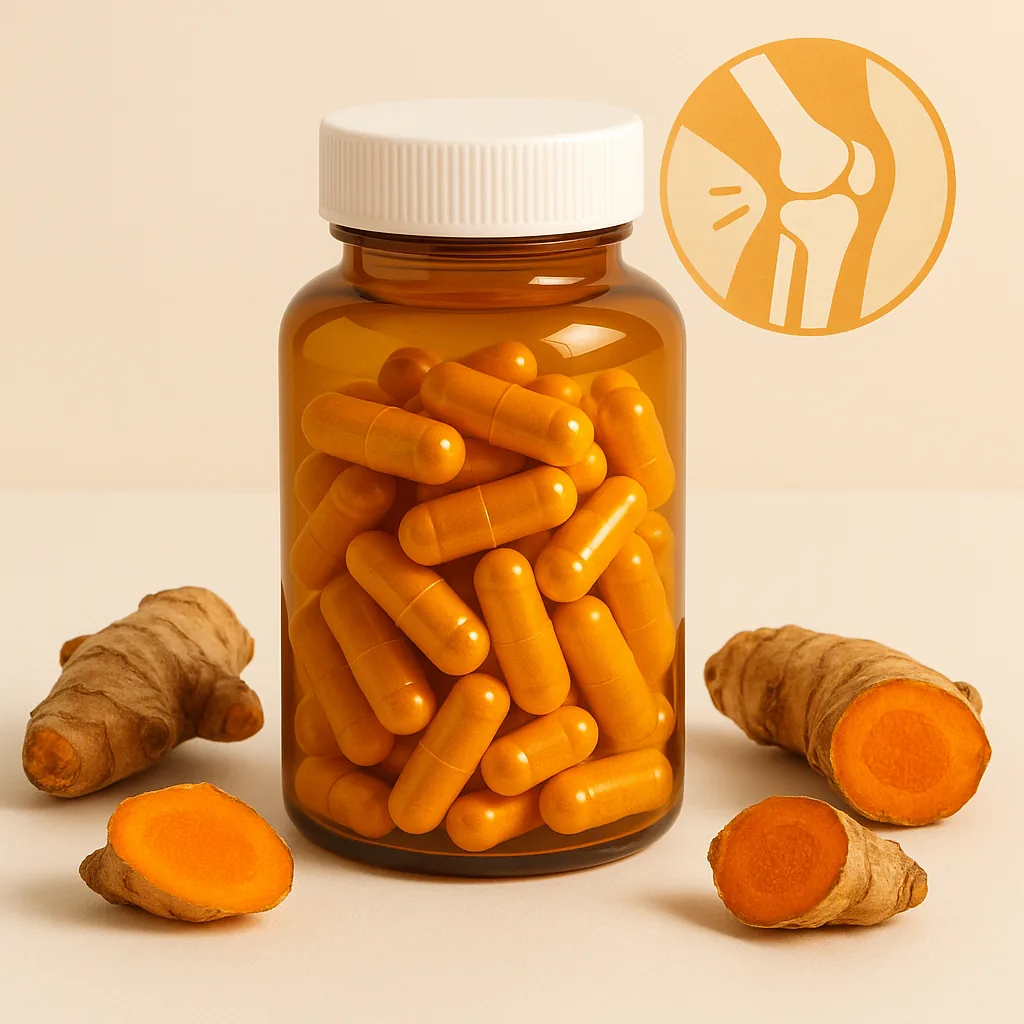
Turmeric is the golden spice from Curcuma longa, a root plant native to South Asia and widely used in Indian cuisine and Ayurvedic medicine for millennia. The compound responsible for its yellow color — and most of its biological activity — is curcumin, which makes up roughly 2–5% of turmeric root by dry weight.
Curcumin is classified as a polyphenol, and it works on joint inflammation through multiple molecular mechanisms that are unusually well-characterized for a natural supplement:
NF-κB inhibition: NF-κB is a transcription factor that acts as a master switch for inflammatory gene expression. Curcumin suppresses NF-κB activation, which in turn reduces production of cytokines like TNF-α, IL-1β, and IL-6 — all players in arthritis inflammation.
COX-2 and LOX inhibition: Curcumin inhibits cyclooxygenase-2 (COX-2), the enzyme ibuprofen and naproxen target. It also inhibits lipoxygenase (LOX), giving it a broader inflammatory pathway blockade.
Matrix metalloproteinase suppression: MMPs are enzymes that degrade joint cartilage in OA. Curcumin has been shown to reduce MMP expression in chondrocytes (cartilage cells), which has implications for slowing cartilage degradation — though this has been demonstrated more in vitro than in clinical settings.
Antioxidant activity: Joint inflammation generates significant oxidative stress. Curcumin scavenges reactive oxygen species and upregulates endogenous antioxidant enzymes.
This is not a single-target supplement. The multi-pathway activity is why researchers have continued studying it despite the formidable bioavailability challenge.
What the Clinical Trials Actually Show
The Best Meta-Analyses for Osteoarthritis
Paultre et al. (2021) — Nutrients, 16 RCTs, 1,810 participants: This is the largest and most current comprehensive meta-analysis of curcumin for OA. Key findings:
Significant improvement in WOMAC pain scores (WMD -5.45, 95% CI −8.91 to −1.98)
Significant improvement in WOMAC physical function scores
Effect sizes were modest but clinically meaningful — comparable to what you’d expect from low-dose NSAID therapy
No serious adverse events attributable to curcumin
Daily et al. (2016) — Journal of Medicinal Food, 8 RCTs: An earlier but still widely cited analysis specifically comparing curcumin to NSAIDs. Several included trials directly compared curcumin formulations to ibuprofen 800 mg daily or diclofenac:
Curcumin showed comparable symptom relief to NSAIDs in 3 of the included OA studies
GI side effects were significantly lower in the curcumin groups
Perkins et al. (2017) — Systematic review of bioavailable curcumin forms: Found that enhanced-absorption formulations (phytosomal, nanoparticle, piperine-enhanced) consistently produced better clinical outcomes than standard curcumin preparations, supporting the formulation-dependent nature of results.
The NSAID Comparison Studies
Two Indian RCTs deserve mention:
Kuptniratsaikul et al. (2014): 367 knee OA patients randomized to curcumin (2g/day) or ibuprofen (1.2g/day). Primary outcomes (WOMAC scores) were similar between groups; curcumin was better tolerated for GI side effects.
Haroyan et al. (2018): 53 patients with knee OA treated with curcumin/boswellia vs. placebo for 3 months. Significant improvements in VAS pain scores and KOOS subscales in the curcumin group.
These aren’t definitive proofs of equivalence to NSAIDs — but they’re enough to take the ingredient seriously as a complementary or alternative approach for mild-to-moderate OA.
Rheumatoid Arthritis (Less Data)
The RA evidence is thinner than for OA. A 2012 pilot RCT (Chandran & Goel) showed curcumin outperformed diclofenac sodium for RA-specific outcomes (DAS28 scores, swelling), but this was a small trial (n=45) and results haven’t been replicated at scale. RA management involves disease-modifying drugs (DMARDs) that curcumin does not replace.
The Bioavailability Problem (and How It’s Being Solved)
This is the most important practical caveat for anyone shopping for turmeric.
Standard curcumin has poor oral bioavailability:
It is poorly absorbed in the small intestine
It is rapidly metabolized by liver enzymes
It is quickly eliminated in bile
When measured in plasma, standard curcumin produces very low blood levels even after substantial doses
Researchers have spent considerable effort developing delivery systems to overcome this:
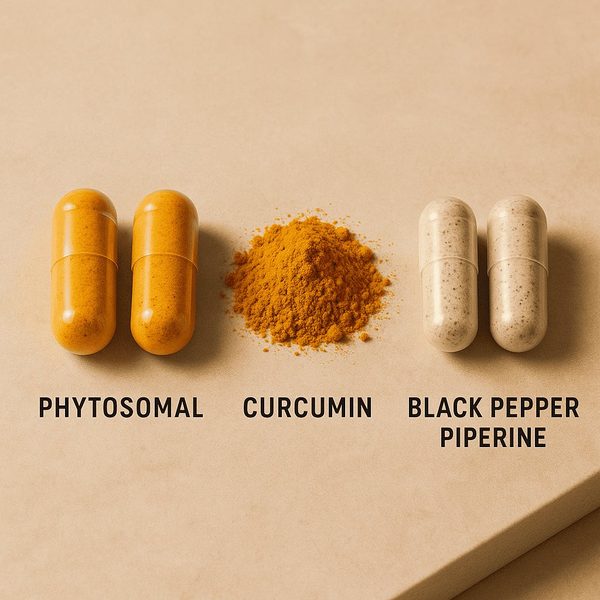
Practical recommendation: For joint health purposes, look for one of the named, patented delivery systems on the label (Meriva, Longvida, BCM-95, NovaSol), or a curcumin + piperine combination as a budget option. Do not expect a plain turmeric root powder capsule to deliver study-level results.
What Curcumin Cannot Do for Arthritis
It’s worth being clear about the limits:
It does not regenerate cartilage. OA involves structural cartilage loss. Curcumin’s anti-inflammatory effects may slow the inflammatory component of that degradation, but no supplement restores lost cartilage. Neither does any current OA drug, for that matter.
It is not a disease-modifying treatment for RA. Rheumatoid arthritis is an autoimmune condition requiring disease-modifying antirheumatic drugs (DMARDs) like methotrexate, hydroxychloroquine, or biologics. Curcumin may offer adjunct anti-inflammatory benefit, but it does not modify disease progression.
It may not work for acute inflammation or severe pain. The trials showing benefit typically involve chronic, mild-to-moderate OA discomfort. For acute flares or severe arthritic pain, NSAIDs or corticosteroids remain standard-of-care.
It takes time. Most positive trials ran 4–12 weeks. People who try curcumin for two weeks and give up may not have given it a fair trial.
How to Use Curcumin for Arthritis
Dosing
Standard curcuminoid equivalent: 500–1,500 mg/day of curcuminoids (split doses are common, e.g., 500 mg 3x daily with meals)
Phytosomal products (Meriva): Often effective at lower nominal doses (200–500 mg) due to better absorption
With food: Curcumin absorption is enhanced by dietary fat (it’s fat-soluble); take with meals containing fat
Timeline
Expect 4–8 weeks for meaningful effects
12 weeks is a reasonable trial window before deciding it’s not working
Some people notice improvement sooner; others take longer
Safety and Drug Interactions
Generally safe:
Well-tolerated in dozens of RCTs
No serious adverse events in trials at typical doses
GI side effects (nausea, diarrhea) possible at very high doses
Caution with:
Anticoagulants (warfarin, heparin, aspirin therapy): Curcumin has mild antiplatelet activity; high doses may enhance bleeding risk
Piperine-containing products: Piperine inhibits CYP3A4 and P-glycoprotein, affecting metabolism of many medications (statins, some antibiotics, tacrolimus, cyclosporine)
Gallbladder disease: Curcumin stimulates bile secretion, which can aggravate gallstone symptoms
Pregnancy: Insufficient safety data at supplement doses
Who Is Most Likely to Benefit?
Curcumin for arthritis is a better fit for some people than others:
Better fit:
Mild-to-moderate knee or hip OA with primarily inflammatory symptoms
People seeking NSAID alternatives due to GI sensitivity or renal concerns
Those willing to use a bioavailable form and give it 8–12 weeks
People with elevated inflammatory markers (CRP) who want broader anti-inflammatory support
Individuals already doing the basics (exercise, weight management, PT) and looking for adjunct support
Weaker fit:
Severe structural OA awaiting surgery — the inflammatory component is secondary to mechanical damage
Active RA without DMARD therapy — curcumin is an adjunct, not a primary RA treatment
People expecting rapid pain relief comparable to prescription NSAIDs
Anyone who won’t commit to a consistent daily dose for at least 6–8 weeks
Practical Comparison: Curcumin vs. Other Popular Supplements for Arthritis
Supplement
OA Evidence Strength
Key Strength
Key Limitation
Curcumin
★★★★☆
Multiple meta-analyses; NSAID-comparable in some trials
Bioavailability highly formulation-dependent
Fish oil (omega-3s)
★★★☆☆
CRP reduction well-documented; some OA benefit
Pain relief less consistent than curcumin
Glucosamine/chondroitin
★★★☆☆
Long-term structure data (controversial)
Inconsistent across trials
Boswellia
★★★☆☆
Anti-leukotriene mechanism; pairs well with curcumin
Q: How long does it take for turmeric to help arthritis? Most clinical trials showing benefit ran 4–12 weeks. Give it at least 8 weeks of consistent daily use before judging results. Start with a bioavailable form at a therapeutic dose (not a random turmeric powder capsule).
Q: Is curcumin as effective as ibuprofen for arthritis? Some direct-comparison trials have found comparable symptom relief for knee OA, with fewer GI side effects for curcumin. However, ibuprofen generally provides faster relief for acute pain, and the comparison isn’t clean across all OA severities. For chronic daily support, curcumin can rival low-dose NSAID use in some patients.
Q: Can you get enough curcumin from cooking with turmeric? No. Cooking with turmeric is wonderful for general health and flavor, but the amounts used in cooking deliver far less curcumin than what’s been studied clinically. Therapeutic doses require concentrated supplements — typically 500–1,500 mg curcuminoids daily.
Q: What’s the best form of turmeric for arthritis? Look for named bioavailability-enhanced forms: Meriva (phytosomal), Longvida (SLCP), BCM-95, or NovaSol. Budget option: curcumin + 5–10 mg piperine (black pepper extract). Avoid plain turmeric root powder capsules if you want clinical results.
Q: Does curcumin help both osteoarthritis and rheumatoid arthritis? The evidence is stronger for OA. For RA, there is preliminary evidence of benefit as an adjunct, but curcumin does not replace disease-modifying medications. If you have RA, discuss any supplement use with your rheumatologist.
Q: Are there side effects from taking turmeric supplements? At standard doses, most people tolerate curcumin well. Possible side effects include nausea or GI upset at high doses. The main interaction concerns are with blood thinners and medications metabolized by CYP3A4 (especially when paired with piperine).
Sources
Paultre, K. et al. (2021). Therapeutic Effects of Turmeric or Curcumin Extract on Pain and Function for Individuals with Knee Osteoarthritis: A Systematic Review. Nutrients, 13(7), 2405. PMC8308618
Daily, J.W. et al. (2016). Efficacy of Turmeric Extracts and Curcumin for Alleviating the Symptoms of Joint Arthritis. Journal of Medicinal Food, 19(8), 717–729. PMC5003001
Kuptniratsaikul, V. et al. (2014). Efficacy and safety of Curcuma domestica extracts compared with ibuprofen in patients with knee osteoarthritis. Clinical Interventions in Aging, 9, 451–458. PMC3964021
Haroyan, A. et al. (2018). Efficacy and safety of curcumin and its combination with boswellic acid in osteoarthritis. BMC Complementary and Alternative Medicine, 18, 7. PMC5761198
Chandran, B. & Goel, A. (2012). A randomized, pilot study to assess the efficacy and safety of curcumin in patients with active rheumatoid arthritis. Phytotherapy Research, 26(11), 1719–1725. PMID: 22407780
This article is for informational purposes only and does not constitute medical advice. Consult your healthcare provider before starting any new supplement, especially if you take prescription medications or have a diagnosed medical condition.




Leave a Reply