Curcumin — the primary bioactive compound in turmeric — is one of the most studied natural compounds for pain and inflammation. Unlike many supplement ingredients, curcumin has a substantial body of randomized controlled trial data. Here’s an honest look at what it can and can’t do for pain.
Quick Answer
Curcumin has genuine analgesic and anti-inflammatory activity demonstrated in multiple clinical trials — particularly for osteoarthritis, post-operative pain, and delayed-onset muscle soreness (DOMS). Its primary mechanism is NF-kB pathway inhibition and downregulation of COX-2, LOX-5, and TNF-alpha — the same inflammatory enzymes targeted by NSAIDs. In head-to-head trials against ibuprofen and diclofenac for knee osteoarthritis, bioavailable curcumin formulations (Meriva, Theracurmin, Longvida) showed comparable pain and function outcomes with fewer GI side effects. Effect sizes for acute pain are smaller than pharmaceutical analgesics but clinically meaningful for chronic inflammatory pain.
Key Takeaways
- A 2014 RCT (Belcaro et al., using Meriva phospholipid curcumin) vs. conservative management in knee osteoarthritis found 1000 mg/day Meriva for 8 months produced significantly greater reductions in WOMAC pain scores, reduced inflammatory biomarkers (IL-1β, IL-6, sVCAM-1), and reduced NSAIDs use compared to controls.
- A 2014 Indian RCT (Kuptniratsaikul et al.) directly compared curcumin (1500 mg/day as standard extract with piperine) vs. ibuprofen (1200 mg/day) for knee osteoarthritis over 4 weeks — no significant differences in pain VAS, WOMAC, or patient satisfaction, with fewer GI adverse events in the curcumin group.
- For DOMS (exercise-induced muscle soreness), multiple RCTs with Longvida and Theracurmin formulations show significant reduction in DOMS intensity and faster recovery of strength after eccentric exercise — bioavailability enhancement is critical; unenhanced curcumin shows no consistent DOMS effect.
- Curcumin’s pain relief timeline differs from NSAIDs: NSAIDs reduce acute pain within hours; curcumin typically requires 4-8 weeks of consistent daily use to build anti-inflammatory effect at the tissue level. It is best framed as a chronic inflammation management tool rather than acute pain relief.
- Curcumin potentiates the effects of some analgesics (aspirin, ibuprofen) and may theoretically have additive anti-platelet effects — people on blood-thinning medications (warfarin, clopidogrel) should consult a physician before using high-dose bioavailable curcumin formulations.
The mechanism
Curcumin modulates several inflammatory pathways relevant to pain:
- NF-κB inhibition: NF-κB is a master transcription factor controlling inflammatory gene expression. Curcumin suppresses its activation [1].
- COX-2 inhibition: Curcumin inhibits cyclooxygenase-2, the same enzyme targeted by NSAIDs like ibuprofen, though less potently [2].
- TNF-α and IL-6 reduction: Pro-inflammatory cytokines that drive chronic pain states [3].
- 5-LOX inhibition: Reduces leukotriene production, another inflammatory mediator [4].
This multi-target profile is genuinely interesting — rather than blocking a single pathway like most drugs, curcumin modulates several simultaneously. The tradeoff: it does each one less potently than a targeted drug.

Clinical trial evidence by pain type
Osteoarthritis (strongest evidence)
This is where curcumin has the best data.
2021 meta-analysis (Paultre et al., Nutrients): Analyzed 16 RCTs (n=1,810) of curcumin for knee osteoarthritis. Found significant reductions in WOMAC pain scores and improvements in physical function. Effect sizes were comparable to NSAIDs in several head-to-head trials [5].
2014 RCT (Kuptniratsaikul et al., Clinical Interventions in Aging): 367 patients with knee OA randomized to Curcuma domestica extract (1,500 mg/day) or ibuprofen (1,200 mg/day) for 4 weeks. Pain reduction was similar between groups, with fewer GI side effects in the curcumin group [6].
2016 RCT (Panahi et al., Phytotherapy Research): 40 OA patients given curcuminoids (1,500 mg/day) + piperine (15 mg) or placebo for 6 weeks. Significant reductions in WOMAC pain, stiffness, and physical function scores in the curcumin group [7].
Honest caveat: Most OA trials are 4–12 weeks. Long-term data (>6 months) is limited. Most trials used enhanced bioavailability formulations, not standard curcumin powder.
Rheumatoid arthritis (moderate evidence)
2012 pilot RCT (Chandran & Goel, Phytotherapy Research): 45 RA patients randomized to curcumin (500 mg BCM-95), diclofenac (50 mg), or both. Curcumin and diclofenac showed similar improvements in DAS28 scores (disease activity). The curcumin group had no GI adverse events vs. 14% in the diclofenac group [8].
2019 RCT (Amalraj et al., Journal of Medicinal Food): 36 RA patients given CurQfen® curcumin (500 mg/day) or placebo for 90 days. Significant improvements in pain VAS, CRP, and ESR [9].
Honest caveat: Small sample sizes. RA trials should not be interpreted as suggesting curcumin can replace DMARDs (disease-modifying drugs), which prevent joint destruction. Curcumin may be useful alongside standard RA treatment, not instead of it.
Post-surgical and acute pain (limited evidence)
2014 RCT (Agarwal et al., Anesthesia & Analgesia): 50 patients undergoing laparoscopic cholecystectomy received curcumin (500 mg) or placebo preoperatively. The curcumin group had significantly lower pain scores at 6, 12, and 24 hours post-surgery and used less rescue analgesia [10].
2018 RCT (Sahbaie et al.): Curcumin reduced post-operative pain and opioid consumption after orthopedic surgery in a small trial [11].
Honest caveat: Interesting but very small trials. Not sufficient to change clinical practice.
Delayed onset muscle soreness (DOMS)
2020 meta-analysis (Fernández-Lázaro et al., Nutrients): Analyzed 11 RCTs. Found curcumin supplementation significantly reduced DOMS pain and lowered CK (creatine kinase, a marker of muscle damage) compared to placebo [12].
Typical effective dose: 150–1,500 mg curcuminoids daily, started before exercise.
Migraine (preliminary)
2021 RCT (Parohan et al., Nutritional Neuroscience): 100 episodic migraine patients received nano-curcumin (80 mg/day) or placebo for 8 weeks. The curcumin group had significantly reduced migraine frequency and severity [13].
Honest caveat: Single study, small dose, specific nano-formulation. Needs replication.
What curcumin won’t do
Based on current evidence, curcumin is NOT:
- A replacement for strong analgesics in severe pain (post-surgical, cancer pain, acute trauma)
- A replacement for DMARDs in autoimmune arthritis
- Fast-acting — most trials show benefits after 2–4+ weeks of daily use
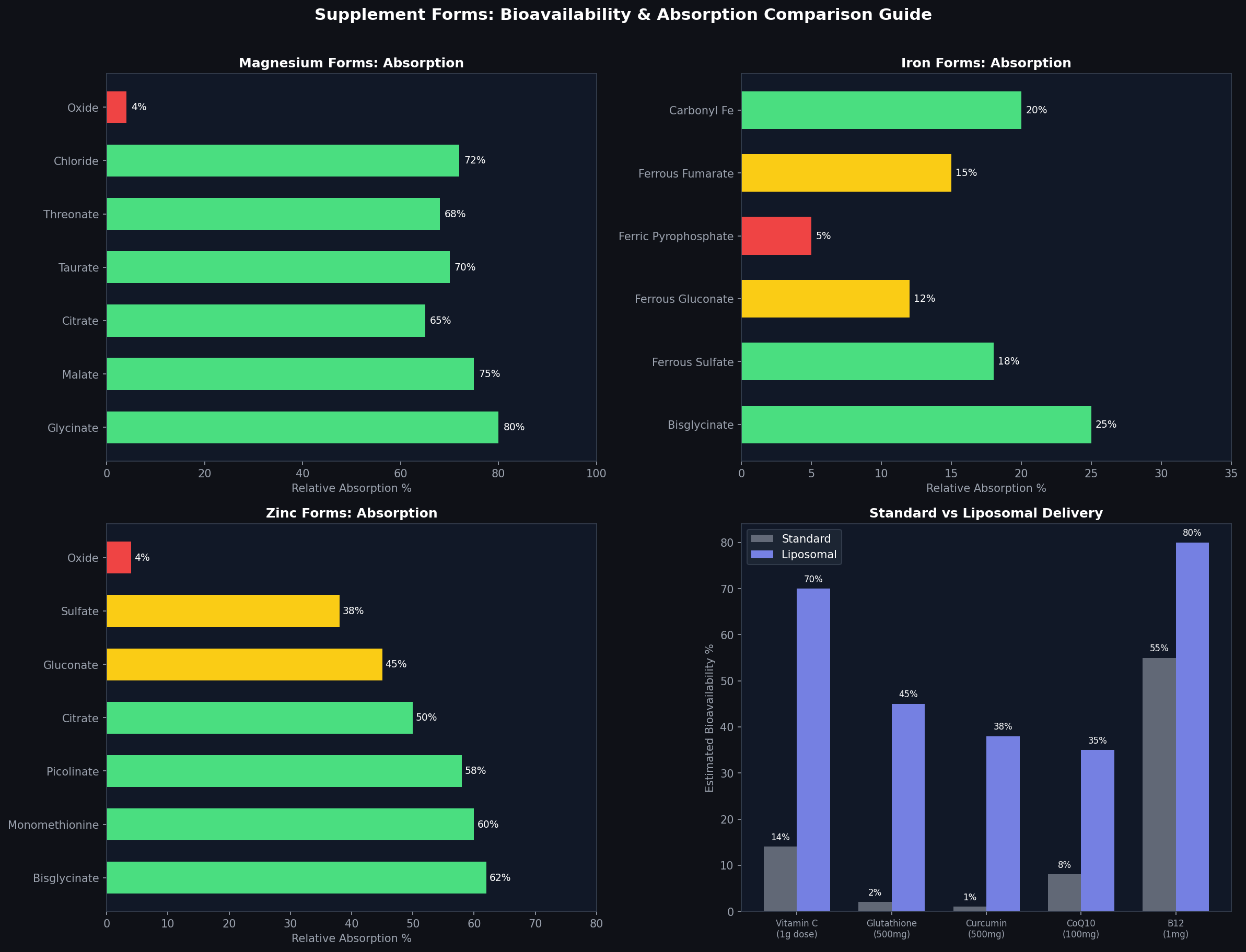
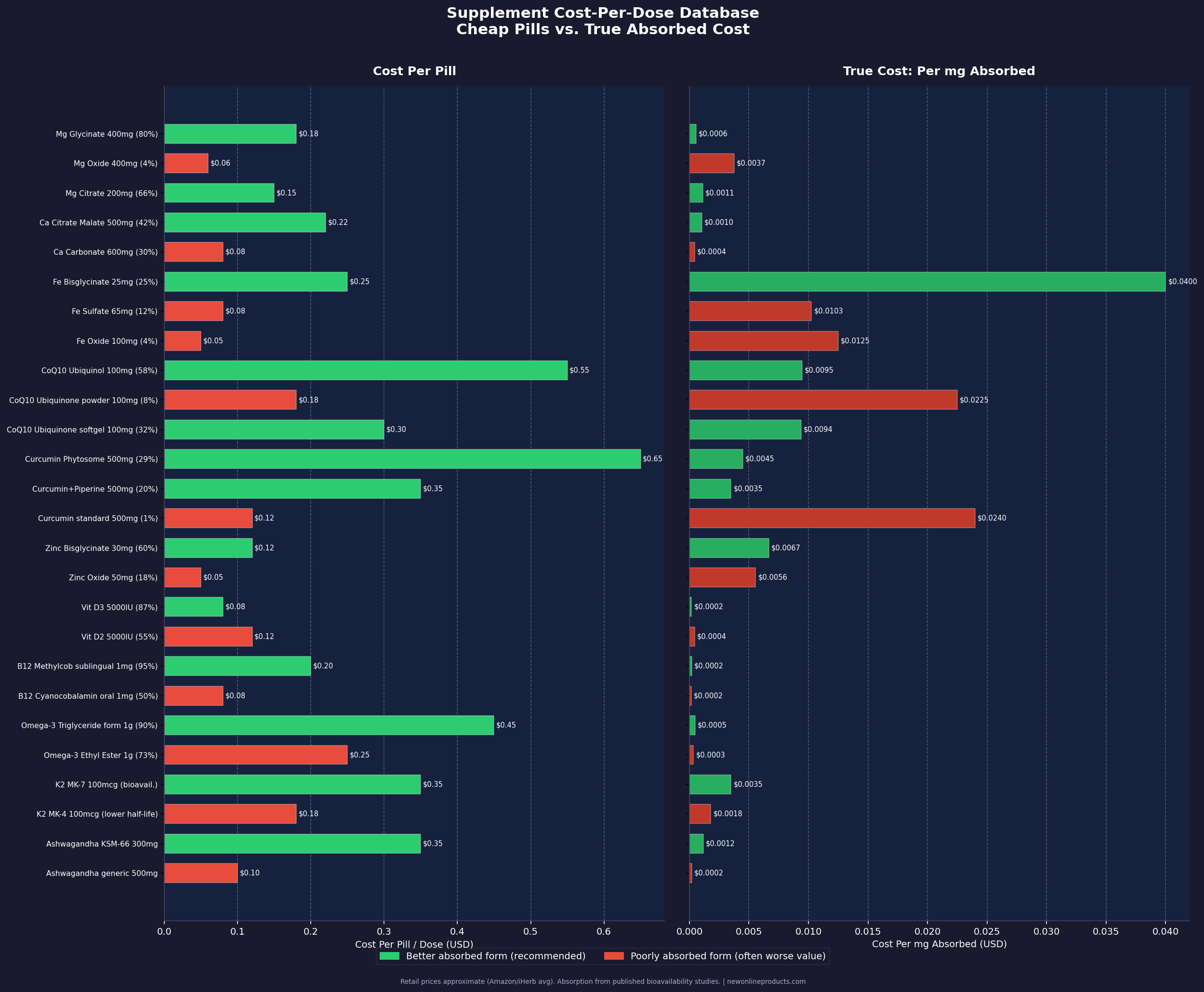
- Effective at standard doses without bioavailability enhancement — unformulated curcumin has <1% absorption
Dosing for pain
Based on clinical trial protocols:
| Formulation | Typical pain dose | Notes |
|---|---|---|
| Meriva® (phytosome) | 1,000–2,000 mg/day (200–400 mg curcumin) | Most OA trials used this range |
| BCM-95® / CurcuGreen® | 500–1,000 mg/day | Used in RA pilot studies |
| C3 Complex® + BioPerine® | 1,000–1,500 mg + 15 mg piperine/day | Classic combination |
| Theracurmin® | 180–360 mg/day | High bioavailability; used in brain health studies |
| CurcuWIN® | 500–1,000 mg/day | 136x bioavailability claim |
| Nano-curcumin | 80–160 mg/day | Used in migraine trial |
Split doses (2–3x daily) are typical in clinical protocols.

Safety
Curcumin is generally well tolerated at doses up to 8,000 mg/day in short-term studies [14]. Common issues:
- GI complaints (nausea, diarrhea) at high doses — ironic given it has fewer GI side effects than NSAIDs
- Piperine interactions — BioPerine inhibits drug metabolism enzymes (CYP3A4, CYP2D6), potentially increasing blood levels of some medications. Check with your pharmacist if on prescription drugs.
- Blood thinning — mild antiplatelet effect. Caution with warfarin and other anticoagulants.
- Iron absorption — curcumin may reduce iron absorption. Relevant for people with iron deficiency.
- Gallbladder — curcumin stimulates bile production. Avoid with gallstones or bile duct obstruction.
The honest bottom line
Curcumin has better clinical evidence for pain relief than most supplement ingredients — particularly for osteoarthritis, where multiple RCTs and meta-analyses show meaningful reductions in pain scores comparable to low-dose NSAIDs. It’s not a miracle compound, it works slowly, and it requires bioavailability-enhanced formulations to be effective.
For chronic joint pain where you want to reduce NSAID use, curcumin is a reasonable evidence-based option to discuss with your doctor. For acute or severe pain, it’s not a substitute for appropriate medical treatment.
FAQ
Does curcumin reduce pain?
Yes, for chronic inflammatory pain conditions. Multiple RCTs in osteoarthritis patients show bioavailable curcumin formulations (Meriva, Theracurmin, Longvida) significantly reduce WOMAC pain scores, comparable to NSAIDs like ibuprofen in some direct-comparison trials. For DOMS and exercise-related muscle soreness, curcumin also has multiple positive RCTs. It is less effective for acute pain (injuries, headaches) where fast-acting NSAIDs have a significant advantage.
How long does curcumin take to reduce pain and inflammation?
Unlike NSAIDs (which reduce pain within 1-2 hours), curcumin requires consistent daily supplementation for 4-8 weeks to produce measurable anti-inflammatory and pain-reduction effects. Most RCTs showing significant results use 8-12 week supplementation periods. If you need immediate pain relief, curcumin is not the right tool — it is a chronic inflammation management supplement, not an acute analgesic.
What is the best curcumin supplement for pain?
The three most clinically evidenced forms for pain specifically are: Meriva (curcumin phospholipid complex), Theracurmin (nanoparticle formulation, most studies in OA), and Longvida (lipid matrix). Each has published RCT evidence for pain and inflammation outcomes. Meriva and Longvida are widely available from NOW Foods, Life Extension, and other supplement brands. Avoid plain curcumin or ‘turmeric root powder’ products without bioavailability enhancement for therapeutic pain applications.
Can curcumin replace ibuprofen or other NSAIDs?
For chronic, low-grade inflammatory pain (osteoarthritis, sports-related chronic inflammation, DOMS management), curcumin can meaningfully reduce NSAID dependence with comparable effect and fewer GI side effects. For acute pain management or inflammation requiring rapid response, NSAIDs remain superior. Most clinicians suggest curcumin as an adjunct or NSAID-sparing strategy rather than a direct replacement.
References
[1] Aggarwal BB et al. “Curcumin: the Indian solid gold.” Advances in Experimental Medicine and Biology. 2007;595:1-75.
[2] Goel A et al. “Curcumin as ‘Curecumin’: from kitchen to clinic.” Biochemical Pharmacology. 2008;75(4):787-809.
[3] Sahebkar A. “TNF-α-lowering effects of curcumin.” Phytotherapy Research. 2014;28(5):633-642.
[4] Rao CV. “Regulation of COX and LOX by curcumin.” Advances in Experimental Medicine and Biology. 2007;595:213-226.
[5] Paultre K et al. “Therapeutic effects of turmeric or curcumin extract on pain and function for knee OA.” BMJ Open Sport & Exercise Medicine. 2021;7(1):e000935.
[6] Kuptniratsaikul V et al. “Curcuma domestica extracts vs ibuprofen in knee OA.” Clinical Interventions in Aging. 2014;9:451-458.
[7] Panahi Y et al. “Curcuminoid treatment for knee OA.” Phytotherapy Research. 2016;28(11):1625-1631.
[8] Chandran B, Goel A. “Curcumin in rheumatoid arthritis.” Phytotherapy Research. 2012;26(11):1719-1725.
[9] Amalraj A et al. “CurQfen curcumin in RA.” Journal of Medicinal Food. 2017;20(10):1022-1030.
[10] Agarwal KA et al. “Curcumin for post-operative pain.” Anesthesia & Analgesia. 2011;113(4):954-958.
[11] Sahbaie P et al. “Curcumin and post-operative pain.” Journal of Pain Research. 2018;11:1719-1728.
[12] Fernández-Lázaro D et al. “Curcumin and DOMS.” Nutrients. 2020;12(3):745.
[13] Parohan M et al. “Nano-curcumin for episodic migraine.” Nutritional Neuroscience. 2021;24(5):377-384.
[14] Lao CD et al. “Dose escalation of curcuminoid.” BMC Complementary and Alternative Medicine. 2006;6(1):10.
Related Articles
- Best Probiotic Strains for Anxiety: What the Clinical Trials Show
- Aged Garlic Extract for Blood Pressure: What the Trials Actually Show
- Omega-3s for Heart Health: REDUCE-IT and Beyond — What the Trials Actually Show
- Cinnamon Supplements for Blood Sugar: Ceylon vs. Cassia and What the Trials Show
- Bovine Colostrum for Immune Support: What the Clinical Evidence Actually Shows
Sources
- Daily JW, et al. Efficacy of turmeric extracts and curcumin for alleviating arthritis symptoms: a systematic review and meta-analysis. J Med Food. 2016;19(8):717-729.
- Bannuru RR, et al. Comparative efficacy of pharmacologic interventions for knee osteoarthritis: a systematic review and network meta-analysis. Ann Intern Med. 2015;162(1):46-54.
- Henrotin Y, et al. Biological actions of curcumin on articular chondrocytes. Osteoarthritis Cartilage. 2010;18(2):141-149.