
Complete Guide to Omega-3 Supplements in 2026: Fish Oil, Krill Oil, and What the Evidence Shows
Quick Answer: Omega-3 fatty acids — specifically EPA and DHA — are among the most studied supplements on the planet. The evidence is strong for heart health at therapeutic doses (2–4 g/day EPA+DHA), solid for joint inflammation and depression (especially high-EPA formulas), and promising but less conclusive for brain health, dry eyes, and skin. Fish oil, krill oil, and algae oil all deliver EPA and DHA, but they differ in cost, bioavailability, and sustainability. This guide covers what actually works, what doesn’t, and how to choose.
What’s in This Guide
- What Are Omega-3 Fatty Acids?
- EPA vs DHA: Different Jobs, Different Evidence
- Fish Oil vs Krill Oil vs Algae Oil
- How Much EPA and DHA Do You Actually Need?
- Omega-3s for Heart Health
- Omega-3s for Brain Health and Cognition
- Omega-3s for Joint Pain and Inflammation
- Omega-3s for Depression and Mood
- Omega-3s in Pregnancy
- Other Uses: Dry Eyes, Acne, and Overhyped Claims
- Side Effects, Safety, and Drug Interactions
- How to Choose an Omega-3 Supplement
- Frequently Asked Questions
- Sources
- Related Articles
What Are Omega-3 Fatty Acids?
Omega-3s are a family of polyunsaturated fats your body can’t make on its own. Three matter most:
- EPA (eicosapentaenoic acid) — the anti-inflammatory workhorse. Most of the clinical trial evidence for heart health, mood, and joint pain centers on EPA.
- DHA (docosahexaenoic acid) — the structural fat. DHA makes up about 40% of the polyunsaturated fatty acids in your brain and 60% of the fatty acids in your retina. Critical during pregnancy and early development.
- ALA (alpha-linolenic acid) — the plant-based precursor found in flaxseed, chia, and walnuts. Your body converts ALA to EPA and DHA, but the conversion rate is brutally low — roughly 5–10% to EPA and less than 1% to DHA. This is why ALA-only supplementation doesn’t substitute for marine omega-3s in most clinical contexts.
When supplement labels say “omega-3,” what matters is the EPA + DHA content, not the total fish oil volume. A 1,000 mg fish oil capsule might contain only 300 mg of actual EPA+DHA. Always check the supplement facts panel for the EPA and DHA lines specifically.
EPA vs DHA: Different Jobs, Different Evidence
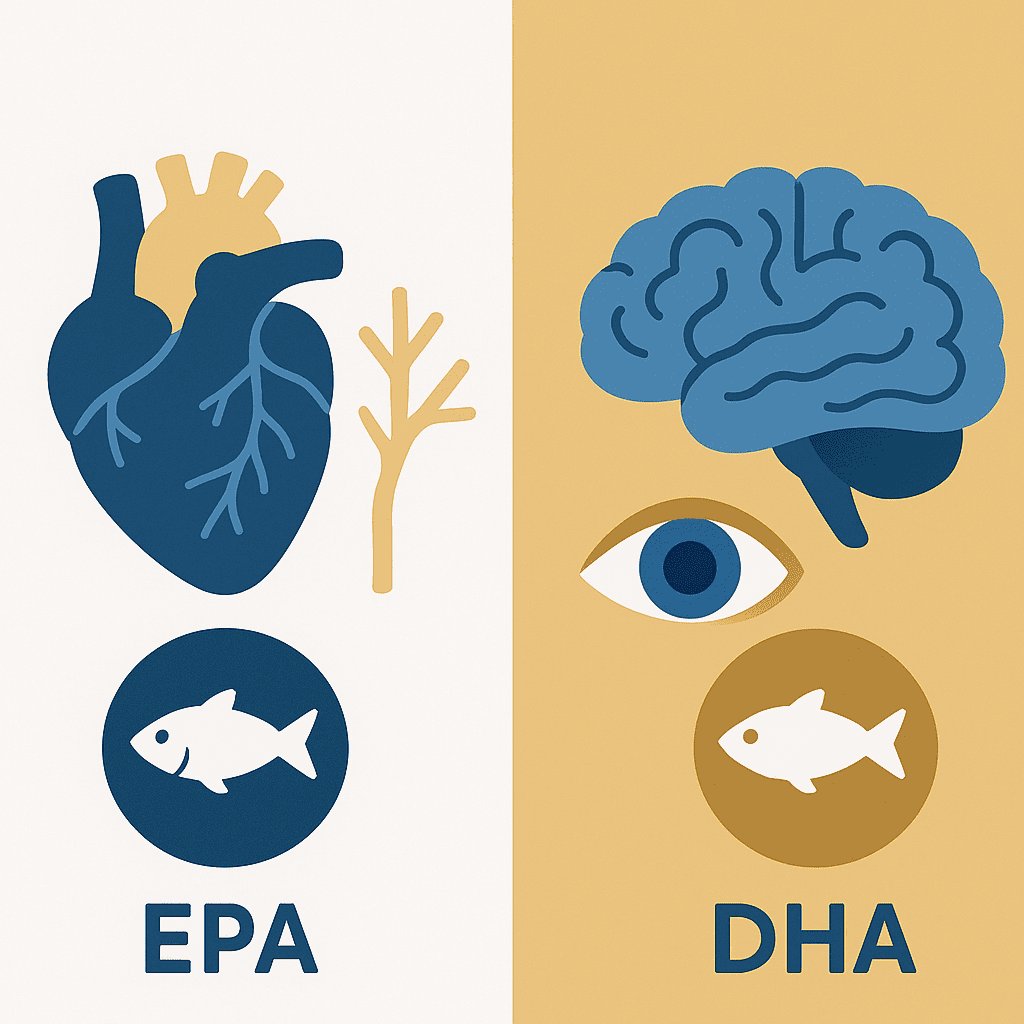
EPA and DHA aren’t interchangeable. The research increasingly suggests they have distinct roles:
EPA drives most of the anti-inflammatory and cardiovascular benefits. The REDUCE-IT trial (2018), which showed a 25% reduction in cardiovascular events, used pure EPA (icosapent ethyl) at 4 g/day. EPA is also the form most consistently linked to improvements in depression — meta-analyses show that formulas with ≥60% EPA outperform DHA-dominant or balanced formulas for mood. For a deeper dive into this evidence, see our guide to omega-3s for depression and the EPA evidence.
DHA is the structural player. It’s essential for brain development (especially prenatal and early childhood), retinal health, and may play a role in cognitive maintenance with aging. During pregnancy, DHA demand spikes — the developing fetal brain accumulates DHA rapidly during the third trimester. Our omega-3s in pregnancy guide covers the specific dosing and timing evidence.
For most adults, a supplement providing both EPA and DHA makes sense. But if you’re targeting a specific condition — depression, cardiovascular risk, joint inflammation — the EPA-to-DHA ratio matters. We cover optimal ratios in our EPA and DHA dosing guide.
Fish Oil vs Krill Oil vs Algae Oil
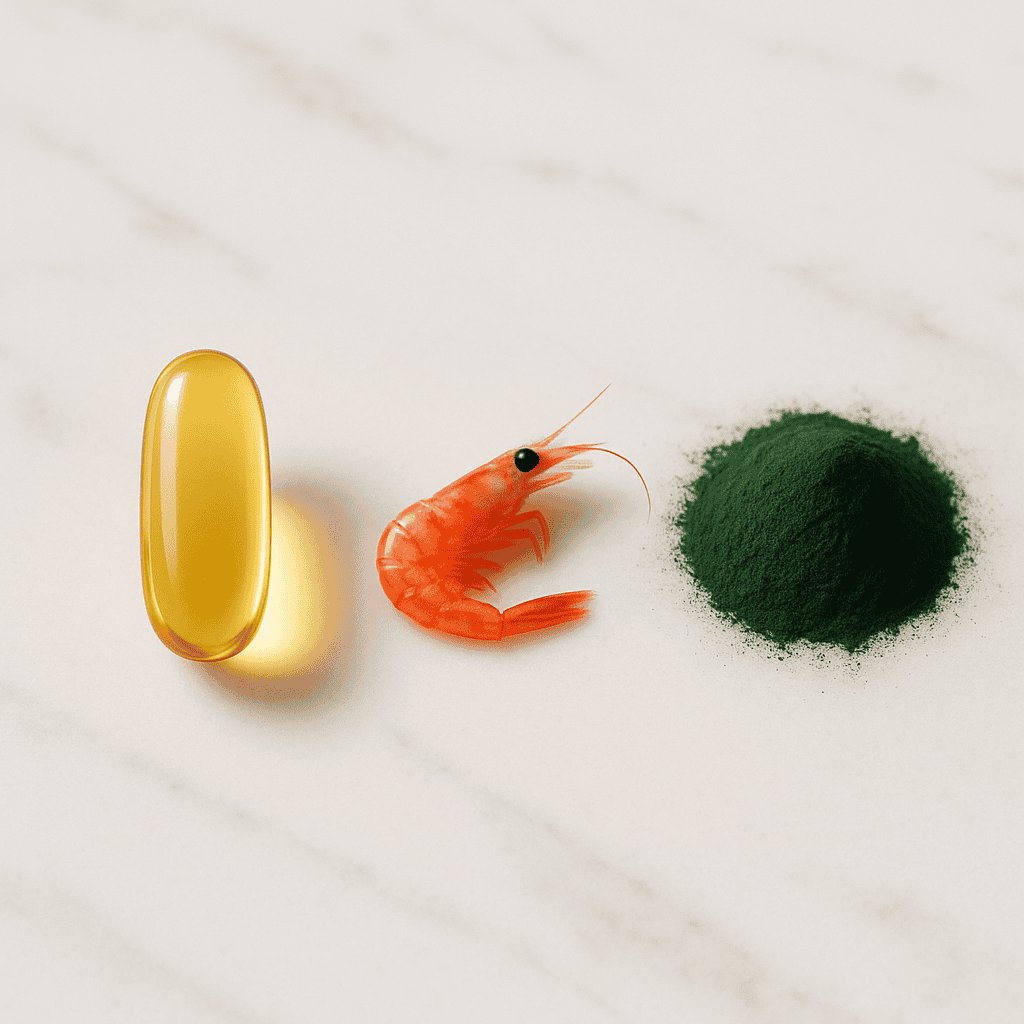
All three deliver EPA and DHA, but the differences matter more than marketing suggests — and sometimes less.
Fish Oil
The most studied and most affordable source. Fish oil comes in two main forms: triglyceride (TG) and ethyl ester (EE). Triglyceride-form fish oil has slightly better absorption, but ethyl ester is what was used in the major cardiovascular trials (REDUCE-IT, VITAL, STRENGTH). Both work. The real quality markers are third-party testing for oxidation (TOTOX values), heavy metals, and actual EPA+DHA content matching the label.
Krill Oil
Krill oil delivers omega-3s bound to phospholipids rather than triglycerides, which some studies suggest improves absorption per milligram. It also contains astaxanthin, a potent antioxidant. The catch: krill oil capsules typically contain much less EPA+DHA per capsule (150–300 mg vs 500–900 mg for fish oil), so you need more capsules to hit therapeutic doses — and krill oil costs significantly more per gram of EPA+DHA.
Algae Oil
The only marine omega-3 source suitable for vegans and vegetarians. Algae oil is where the fish get their omega-3s in the first place — it’s going straight to the source. Most algae supplements are DHA-dominant, though newer formulations include meaningful EPA. Environmentally, it sidesteps overfishing concerns entirely. The main downside is cost and that high-EPA algae formulations are still less common.
We break down the full comparison — absorption studies, cost per gram, environmental impact, and who each source actually suits — in our detailed fish oil vs krill oil vs algae oil comparison.
How Much EPA and DHA Do You Actually Need?
This is where most people go wrong. The minimum intake recommended by major health organizations (250–500 mg/day combined EPA+DHA) is a baseline for general health maintenance. But the doses used in clinical trials for specific conditions are often much higher:
| Condition | Dose Used in Trials | Key Form |
|---|---|---|
| General health | 250–500 mg EPA+DHA/day | Combined |
| Cardiovascular risk reduction | 2–4 g EPA/day | High EPA or pure EPA |
| Triglyceride lowering | 2–4 g EPA+DHA/day | Combined |
| Depression (adjunct) | 1–2 g EPA/day | ≥60% EPA |
| Joint inflammation | 2.7–3 g EPA+DHA/day | Combined |
| Pregnancy | 200–600 mg DHA/day | DHA-dominant |
| Dry eyes | 1–2 g EPA+DHA/day | Combined |
The gap between “recommended daily intake” and “therapeutic dose” is enormous. Someone taking a single standard fish oil capsule (300 mg EPA+DHA) is getting a maintenance dose, not a therapeutic one. If you’re trying to move the needle on triglycerides or depression, you likely need 3–10x that amount.
For the full breakdown of dosing by condition, including safety ceilings and when to involve your doctor, see our complete EPA and DHA dosing guide and our omega-3 safety and drug interactions page.
Omega-3s for Heart Health
Cardiovascular health is where the omega-3 evidence is both strongest and most contentious.
The landmark REDUCE-IT trial (2018, n=8,179) showed that 4 g/day of pure EPA (icosapent ethyl, brand name Vascepa) reduced cardiovascular events by 25% in statin-treated patients with elevated triglycerides. This was a game-changer — it led to FDA approval of icosapent ethyl as a cardiovascular drug, not just a supplement.
But not all omega-3 trials have been positive. The STRENGTH trial (2020), which used a mixed EPA+DHA formulation at 4 g/day, showed no significant benefit and was stopped early. The VITAL trial (2018) found that 1 g/day of fish oil (840 mg EPA+DHA) did not reduce major cardiovascular events in the general population — though subgroup analyses showed benefit in people who ate less than 1.5 servings of fish per week and in African Americans.
What this tells us: dose matters, form matters, and baseline risk matters. High-dose EPA in high-risk patients works. Low-dose mixed omega-3s in the general population probably don’t move the needle for cardiovascular events. For the detailed trial-by-trial breakdown, see our omega-3s for heart health evidence review.
Omega-3s for Brain Health and Cognition
DHA makes up a significant portion of brain cell membranes, so the logic that omega-3s should help cognition seems airtight. The evidence is more complicated.
For cognitive decline prevention in older adults, the results have been mixed. The VITAL-MIND substudy (2022) found no cognitive benefit from 1 g/day fish oil over 5 years in healthy older adults. However, observational studies consistently show that people who eat more fish have lower rates of dementia — suggesting that dietary omega-3s over a lifetime may matter more than supplementation started in late life.
Where omega-3s show more promise is in specific neurological contexts: ADHD (modest benefits in children with low omega-3 status), traumatic brain injury recovery, and possibly early-stage cognitive decline. The key variable appears to be baseline omega-3 status — people who are genuinely deficient benefit most.
Our omega-3s for brain health guide covers the full evidence landscape, including which forms and doses have the most support.
Omega-3s for Joint Pain and Inflammation
This is one of the more consistently positive areas. Multiple meta-analyses show that omega-3 supplementation at doses of 2.7 g or more EPA+DHA per day reduces joint pain intensity, morning stiffness duration, and NSAID use in people with rheumatoid arthritis.
The mechanism is straightforward: EPA competes with arachidonic acid for the enzymes that produce inflammatory eicosanoids. More EPA in cell membranes means fewer pro-inflammatory prostaglandins and leukotrienes. This isn’t a theoretical effect — it’s measurable in blood work within weeks of starting supplementation.
For osteoarthritis, the evidence is less robust but still mildly positive. A 2022 Cochrane update found low-certainty evidence of small pain improvements. Rheumatoid arthritis has much stronger trial data.
The practical details — doses, how long until you notice changes, and which supplements deliver enough EPA+DHA to matter — are in our omega-3s for joint pain guide.
Omega-3s for Depression and Mood
The depression evidence is one of the most interesting stories in supplement research. A 2019 meta-analysis in Translational Psychiatry (n=26 RCTs, 2,160 participants) found that omega-3 supplementation had a significant antidepressant effect — but only when the formula was EPA-dominant (≥60% EPA). DHA-dominant and balanced EPA/DHA formulas showed no significant benefit.
The effective dose range in positive trials is typically 1–2 g of EPA per day, used as an adjunct to standard treatment (not as monotherapy). Omega-3s are not a replacement for SSRIs or therapy, but they appear to enhance the response to standard treatment in people with clinical depression.
The biological rationale involves EPA’s anti-inflammatory effects on neuroinflammation, its role in serotonin signaling, and its impact on brain-derived neurotrophic factor (BDNF). People with depression consistently show lower omega-3 levels and higher omega-6/omega-3 ratios than controls.
For the complete trial evidence and practical dosing recommendations, see our omega-3s for depression: EPA evidence guide.
Omega-3s in Pregnancy
This is the one area where there’s near-universal agreement among medical organizations. DHA is essential for fetal brain and retinal development, and demand peaks during the third trimester when the fetal brain is growing fastest.
The American College of Obstetricians and Gynecologists (ACOG) recommends at least 200 mg DHA daily during pregnancy. Many researchers argue 600 mg DHA/day is closer to optimal based on trial data.
The 2016 Kansas DHA Outcomes Study (KUDOS, n=350) found that 600 mg DHA/day from mid-pregnancy reduced early preterm birth by 85% in a subgroup of women with low baseline DHA levels. A 2018 Cochrane review (n=70 RCTs) concluded that omega-3 supplementation reduces the risk of preterm birth and early preterm birth.
Key practical considerations: mercury concerns favor purified fish oil or algae oil over whole-fish consumption during pregnancy. Cod liver oil should be avoided due to vitamin A content. Our omega-3s in pregnancy guide covers all the specifics.
Other Uses: Dry Eyes, Acne, and Overhyped Claims
Dry Eyes
The evidence is genuinely mixed. The DREAM study (2018, n=535) — the largest trial on omega-3s for dry eye — found no significant benefit over olive oil placebo at 3 g/day for 12 months. However, the choice of olive oil as a “placebo” has been criticized since olive oil itself has anti-inflammatory properties. Smaller studies and a 2019 meta-analysis suggest modest benefits. If you have dry eyes, omega-3s are worth trying but aren’t a guaranteed fix. Details in our omega-3 for dry eyes review.
Acne
A small number of trials suggest omega-3 supplementation may reduce inflammatory acne lesions, likely through EPA’s anti-inflammatory effects and modulation of the omega-6/omega-3 ratio. The evidence is early-stage and trial sizes are small. It’s worth considering as part of a broader approach, especially if your diet is high in omega-6 fats. See our omega-3s for acne review.
Where the Marketing Gets Ahead of the Evidence
Not everything omega-3s are sold for holds up to scrutiny. Weight loss, cancer prevention, ADHD in adults, and “brain fog” in healthy young adults all have weak or inconclusive evidence. It’s worth knowing where the real science stops and the marketing starts. Our honest look at where fish oil falls short covers the most common overhyped claims.
Side Effects, Safety, and Drug Interactions
Omega-3 supplements are generally well-tolerated, but higher doses come with real considerations:
- GI effects: Fish burps, nausea, diarrhea, and fishy aftertaste are the most common complaints. Enteric-coated capsules, taking with meals, and freezing capsules can help. We have a dedicated guide to eliminating fish burps from omega-3 supplements.
- Bleeding risk: At doses above 3 g/day, omega-3s may increase bleeding time. This is clinically relevant if you’re on blood thinners (warfarin, apixaban), about to have surgery, or taking other supplements that affect clotting (vitamin E, ginkgo).
- LDL cholesterol: DHA can raise LDL-C in some people, typically 5–10%. This is why the REDUCE-IT trial used pure EPA — to avoid the LDL-raising effect of DHA. If you have high LDL, pure EPA formulations may be preferable.
- Drug interactions: Beyond blood thinners, omega-3s can interact with blood pressure medications (additive hypotensive effect) and some diabetes drugs.
For the complete safety profile including specific drug interaction charts, see our omega-3 safety and drug interactions guide.
How to Choose an Omega-3 Supplement
With thousands of options on the market, here’s what actually matters:
1. Check the EPA + DHA Content, Not the Fish Oil Total
A “1,200 mg fish oil” capsule with only 360 mg EPA+DHA is mostly filler fatty acids. Look at the supplement facts panel for the EPA and DHA lines specifically. Good supplements typically deliver 500–900 mg EPA+DHA per capsule.
2. Choose the Right Form for Your Goal
High-EPA for depression, cardiovascular risk, and inflammation. DHA-dominant or balanced for pregnancy, brain health, and dry eyes. See the dosing table above.
3. Look for Third-Party Testing
IFOS (International Fish Oil Standards), USP, NSF, or ConsumerLab certification means the product has been independently verified for potency, purity, and oxidation. Oxidized fish oil may be worse than no fish oil at all.
4. Consider the Form: Triglyceride vs Ethyl Ester
Triglyceride form absorbs about 30% better than ethyl ester form, especially when taken without a high-fat meal. Most premium supplements use re-esterified triglyceride (rTG) form. Ethyl ester is fine if taken with meals.
5. Don’t Overpay for Krill Oil Unless You Want It Specifically
Krill oil has unique advantages (phospholipid delivery, astaxanthin content), but if your goal is just hitting an EPA+DHA target, fish oil does it at a fraction of the cost per gram.
For specific product recommendations and a buyer’s guide, see our best omega-3 supplements comparison.
Frequently Asked Questions
Can I get enough omega-3s from food alone?
If you eat 2–3 servings of fatty fish (salmon, mackerel, sardines, anchovies) per week, you’re likely getting 250–500 mg EPA+DHA daily — enough for general health maintenance. But hitting therapeutic doses (2+ g/day) from food alone is impractical for most people, which is where supplements fill the gap.
Is flaxseed oil a good substitute for fish oil?
No, not for EPA and DHA specifically. Flaxseed oil provides ALA, and the conversion rate to EPA is about 5–10%, with less than 1% converting to DHA. Flaxseed oil has its own anti-inflammatory benefits, but it’s not a substitute when EPA/DHA is what you need.
When is the best time to take omega-3 supplements?
With your largest meal of the day. The fat in the meal significantly improves absorption — studies show up to 3x better absorption when taken with a fat-containing meal versus on an empty stomach.
How long does it take for omega-3s to work?
It depends on what you’re measuring. Red blood cell omega-3 levels (the Omega-3 Index) take about 3–4 months to reach a new steady state. Anti-inflammatory effects may be noticeable within 2–6 weeks. Depression benefits in trials typically emerge after 8–12 weeks.
Are omega-3 supplements safe for children?
Generally yes, at age-appropriate doses. Many pediatric health organizations recommend 100–250 mg EPA+DHA daily for children depending on age. DHA is particularly important for brain development in young children. Consult your pediatrician for specific dosing.
Can you take too much omega-3?
The FDA considers doses up to 5 g/day of EPA+DHA as generally safe. Above 3 g/day, bleeding risk increases and you should be under medical supervision, especially if you’re on blood thinners. The European Food Safety Authority (EFSA) has set the same 5 g/day upper safety limit.
Sources
- Bhatt DL, et al. “Cardiovascular Risk Reduction with Icosapent Ethyl for Hypertriglyceridemia.” NEJM. 2019;380(1):11-22. (REDUCE-IT)
- Manson JE, et al. “Marine n-3 Fatty Acids and Prevention of Cardiovascular Disease and Cancer.” NEJM. 2019;380(1):23-32. (VITAL)
- Nicholls SJ, et al. “Effect of High-Dose Omega-3 Fatty Acids vs Corn Oil on Major Adverse Cardiovascular Events.” JAMA. 2020;324(22):2268-2280. (STRENGTH)
- Liao Y, et al. “Efficacy of omega-3 PUFAs in depression: A meta-analysis.” Translational Psychiatry. 2019;9(1):190.
- Middleton P, et al. “Omega-3 fatty acid addition during pregnancy.” Cochrane Database Syst Rev. 2018;11:CD003402.
- Goldberg RJ, Katz J. “A meta-analysis of the analgesic effects of omega-3 polyunsaturated fatty acid supplementation for inflammatory joint pain.” Pain. 2007;129(1-2):210-223.
l>
Related Articles
- Fish Oil vs Krill Oil vs Algae Oil: Which Omega-3 Source Is Best?
- How Much EPA and DHA Do You Need Daily?
- Omega-3 Dosing, Safety, and Drug Interactions
- Where Omega-3 Fish Oil Falls Short of the Marketing
- Omega-3 Supplements That Don’t Cause Fish Burps
- Best Omega-3 Supplements: Fish Oil & Krill Compared
- Best Omega-3 for Brain Health: EPA and DHA Guide
- Omega-3 for Dry Eyes: Do Fish Oil and DHA Help?
- Omega-3 for Heart Health: What Clinical Trials Show
- Omega-3 for Joint Pain and Inflammation: What Works
- Omega-3s in Pregnancy: DHA and Infant Development
- Omega-3s for Depression: What the EPA Evidence Shows
- Omega-3s for Acne: Can Fish Oil Help Clear Skin?
Related Supplement Guides
These comprehensive guides cover related topics that intersect with this one:
- Best Supplements for Depression
- Best Supplements for Anxiety
- Blood Pressure Supplements Guide
- Longevity Supplements Guide
📝 Cite This Article
Richard Shoemake. “Complete Guide to Omega-3 Supplements in 2026: Fish Oil, Krill Oil, and What the Evidence Shows.” New Online Products, 2026-04-09. https://newonlineproducts.com/2026/04/09/omega-3-supplements-complete-guide-2026/