

Complete Guide to Blood Pressure Supplements in 2026: Potassium, Garlic, CoQ10, and What the Trials Show
Quick Answer: Several supplements have legitimate clinical evidence for modest blood pressure reductions: potassium (the strongest), aged garlic extract (AGE), CoQ10, hibiscus tea, beetroot/nitrate supplements, and magnesium. Typical reductions are 3–10 mmHg systolic — meaningful for borderline hypertension but not a substitute for medication in moderate-to-severe cases. This guide covers what works, realistic expectations, and how to combine supplements safely alongside medical care.
What’s in This Guide
- Understanding Blood Pressure Numbers
- Potassium: The Most Evidence-Backed Supplement
- Aged Garlic Extract
- CoQ10 for Blood Pressure
- Hibiscus Tea
- Nitric Oxide Boosters: Beetroot, Citrulline, and Arginine
- Magnesium
- Vitamin D: Why the Data Doesn’t Add Up
- Omega-3 Fatty Acids
- Realistic Expectations: What Supplements Can and Can’t Do
- Safety: Interactions With Blood Pressure Medications
- Frequently Asked Questions
- Sources
- Related Articles
Understanding Blood Pressure Numbers
Blood pressure is measured in two numbers: systolic (pressure during heartbeats) over diastolic (pressure between beats). Current guidelines classify levels as:
| Category | Systolic | Diastolic |
|---|---|---|
| Normal | <120 mmHg | <80 mmHg |
| Elevated | 120–129 | <80 |
| Stage 1 Hypertension | 130–139 | 80–89 |
| Stage 2 Hypertension | ≥140 | ≥90 |
Supplements are most relevant for people in the elevated and Stage 1 categories — where lifestyle changes (diet, exercise, weight loss, sodium reduction) are first-line treatment and supplements can contribute meaningfully to reaching target levels. For Stage 2 hypertension, medication is typically necessary and supplements serve as adjuncts, not alternatives.
Potassium: The Most Evidence-Backed Supplement
Potassium is less a “supplement” and more a corrected deficiency for most people. The average American consumes about 2,500 mg/day of potassium — far below the adequate intake of 3,400 mg/day for men and 2,600 mg/day for women. Meanwhile, sodium intake is typically double the recommended limit. This imbalanced sodium-to-potassium ratio directly drives hypertension.
A 2017 meta-analysis in the Journal of the American Heart Association (n=32 RCTs) found that potassium supplementation reduced systolic blood pressure by an average of 4.48 mmHg and diastolic by 2.96 mmHg. The effect was strongest in people with higher sodium intake and those with existing hypertension.
Potassium works by promoting sodium excretion through the kidneys, relaxing blood vessel walls, and counteracting the effects of high sodium intake. Food sources (bananas, potatoes, beans, spinach) are ideal, but potassium citrate supplements (typically 99 mg per capsule due to FDA limits) can help close the gap.
Caution: Potassium supplementation can be dangerous for people with kidney disease or those taking ACE inhibitors, ARBs, or potassium-sparing diuretics. Always check with your doctor first. Full details in our potassium for blood pressure guide.
Aged Garlic Extract
Aged garlic extract (AGE) — specifically the Kyolic brand used in most research — has one of the strongest supplement evidence bases for blood pressure after potassium.
A 2020 meta-analysis of 12 RCTs (n=553) found that AGE reduced systolic blood pressure by 8.3 mmHg and diastolic by 5.5 mmHg in hypertensive subjects. The GOAA (Garlic and Omega-3 Antiaging) study further showed that AGE was effective even in patients already taking blood pressure medication who still had uncontrolled hypertension.
The mechanism involves hydrogen sulfide signaling and inhibition of angiotensin-converting enzyme (ACE). The effective dose in most trials is 600–1,200 mg/day of aged garlic extract — not raw garlic or garlic oil, which have different bioactive profiles.
AGE is well-tolerated with garlic breath as the main side effect. It has mild blood-thinning properties, so caution is needed before surgery or with anticoagulants. See our aged garlic extract evidence review.
CoQ10 for Blood Pressure
Coenzyme Q10 (CoQ10) has been studied for blood pressure for over two decades. A 2007 meta-analysis of 12 trials found that CoQ10 reduced systolic blood pressure by up to 17 mmHg and diastolic by up to 10 mmHg — though these numbers have been criticized for coming from small, low-quality studies.
A more conservative assessment suggests 3–6 mmHg systolic reductions at doses of 100–200 mg/day. The mechanism likely involves improved endothelial function and reduced oxidative stress in blood vessel walls.
CoQ10 is generally very safe. The ubiquinol form has better absorption than ubiquinone, especially in older adults. It may be particularly relevant for people on statins, which deplete CoQ10 as a side effect of blocking the mevalonate pathway.
Full coverage in our CoQ10 for blood pressure evidence review.
Hibiscus Tea
Hibiscus sabdariffa tea is one of the more pleasant ways to potentially lower blood pressure. A 2015 meta-analysis of 5 RCTs found that hibiscus consumption reduced systolic blood pressure by about 7.6 mmHg and diastolic by 3.5 mmHg.
The active compounds (anthocyanins and organic acids) appear to work as natural ACE inhibitors and diuretics. The effective dose in studies is typically 1–3 cups of brewed hibiscus tea daily or 250–500 mg of hibiscus extract.
Hibiscus is generally safe but can interact with hydrochlorothiazide (additive diuretic effect) and has been reported to affect acetaminophen metabolism. See our hibiscus tea and blood pressure guide.
Nitric Oxide Boosters: Beetroot, Citrulline, and Arginine
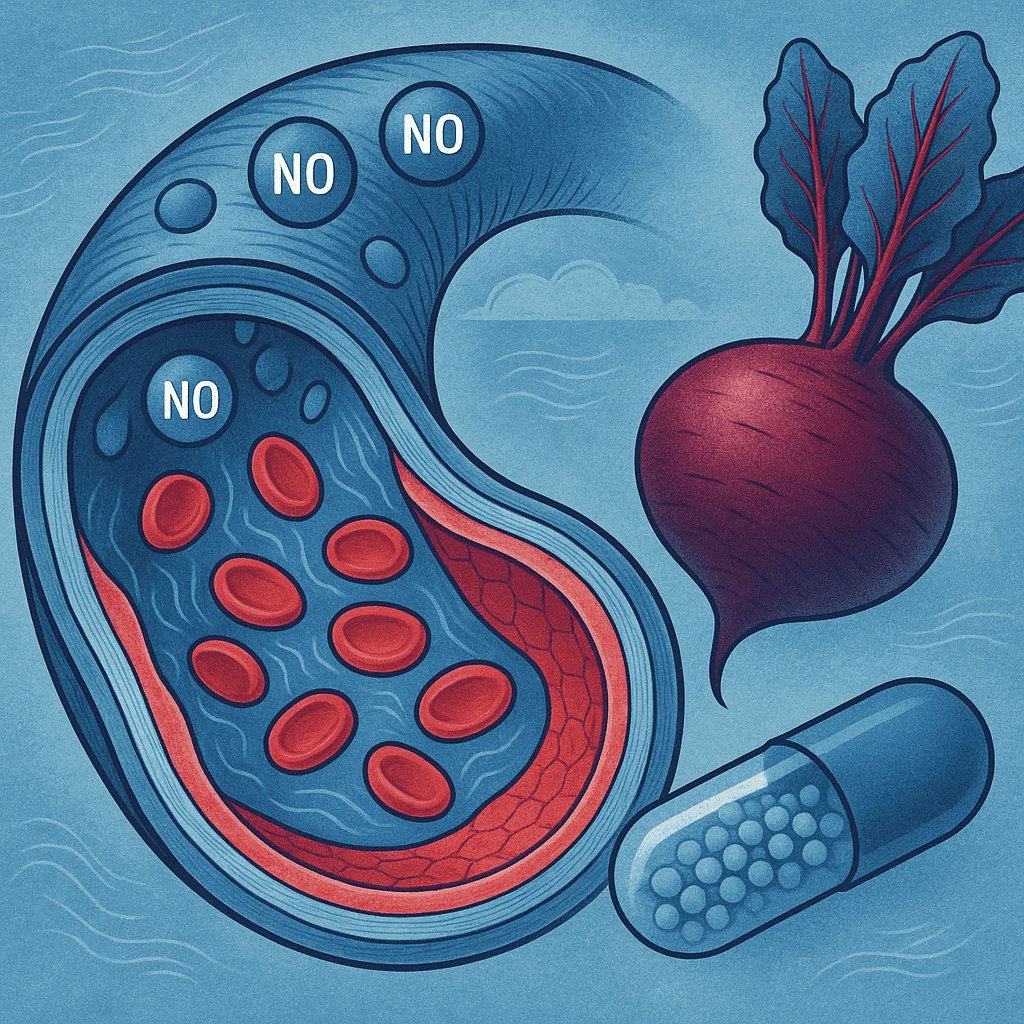
Nitric oxide (NO) is your body’s primary vasodilator — it relaxes blood vessel walls, improving blood flow and reducing pressure. NO production declines with age, which is one reason hypertension becomes more common.
Beetroot juice/powder provides dietary nitrate that converts to nitric oxide via oral bacteria and stomach acid. A 2018 meta-analysis found that beetroot juice reduced systolic BP by 3.55 mmHg and diastolic by 1.32 mmHg. The effective dose is typically 500 mL of juice or 6.4 mmol of nitrate from concentrated supplements.
L-citrulline is converted to L-arginine in the kidneys and then to nitric oxide. It’s generally more effective than supplemental L-arginine because it bypasses first-pass metabolism in the liver. Doses of 3–6 g/day have shown modest blood pressure benefits.
L-arginine supplementation has mixed results for blood pressure specifically, partly due to poor oral bioavailability. It remains useful for specific populations (e.g., pre-eclampsia, where IV arginine has shown benefits).
Our coverage: best nitric oxide supplements, nitric oxide for blood pressure, and beetroot and nitrate supplements guide.
Magnesium
Magnesium has a modest but consistent blood pressure-lowering effect. A 2016 meta-analysis of 34 RCTs (n=2,028) found that magnesium supplementation at a median dose of 368 mg/day reduced systolic BP by 2.0 mmHg and diastolic by 1.78 mmHg.
These numbers are small individually but meaningful in a stacking context. Magnesium also benefits sleep, anxiety, muscle function, and blood sugar — making it one of the highest-value supplements overall for people in the elevated BP category who also have other symptoms.
Magnesium glycinate and magnesium taurate are the forms most often recommended for cardiovascular support. Taurate is interesting because taurine itself may have independent blood pressure benefits.
Vitamin D: Why the Data Doesn’t Add Up
Observational studies consistently show that low vitamin D levels correlate with higher blood pressure. This led to enthusiasm about vitamin D supplementation for hypertension. The intervention data has been disappointing.
A 2019 meta-analysis of 30 RCTs found no significant reduction in blood pressure with vitamin D supplementation. The VITAL hypertension substudy (2020) also found no benefit from 2,000 IU/day of vitamin D3 for blood pressure in a general population.
The likely explanation: low vitamin D is a marker of poor health (less outdoor activity, obesity, chronic disease) rather than a causal driver of hypertension. Correcting true deficiency is important for overall health, but don’t supplement vitamin D specifically for blood pressure. Our vitamin D and blood pressure analysis covers this disconnect.
Omega-3 Fatty Acids
High-dose omega-3s (3+ g/day of EPA+DHA) have shown modest blood pressure reductions — typically 2–4 mmHg systolic. A 2014 meta-analysis of 70 RCTs found dose-dependent effects, with the most benefit at higher doses and in people with existing hypertension.
The mechanism involves improved endothelial function, reduced arterial stiffness, and mild anti-inflammatory effects on blood vessel walls. Omega-3s are never a primary blood pressure intervention, but they complement other approaches — especially since many people take fish oil for cardiovascular reasons already.
Realistic Expectations: What Supplements Can and Can’t Do
Let’s be direct about what supplements achieve for blood pressure:
- Best case with a multi-supplement approach: 8–15 mmHg systolic reduction (combining potassium correction, AGE, CoQ10, and nitric oxide support)
- For context: Losing 10 pounds reduces systolic BP by about 5–20 mmHg. Regular aerobic exercise reduces it by 4–9 mmHg. The DASH diet reduces it by 8–14 mmHg.
- Bottom line: Supplements are a useful layer, not the foundation. Diet, exercise, weight management, stress reduction, and sodium reduction collectively outperform any supplement stack.
If your blood pressure is 150/95 or higher, you almost certainly need medication. Supplements are adjuncts that may help you need lower doses or fewer medications — but that conversation belongs with your doctor.
Safety: Interactions With Blood Pressure Medications
This is critical. Blood pressure supplements that actually work can cause hypotension (dangerously low blood pressure) when combined with prescription medications:
- Potassium + ACE inhibitors/ARBs/potassium-sparing diuretics → risk of hyperkalemia
- CoQ10 + antihypertensives → additive BP-lowering effect
- Garlic + blood thinners → increased bleeding risk
- Beetroot/nitrate + nitroglycerin or PDE5 inhibitors (sildenafil) → dangerous hypotension
- Hibiscus + hydrochlorothiazide → additive diuretic effect
If you’re on blood pressure medication, inform your doctor about any supplements you’re taking or planning to take. The interactions are manageable with monitoring, but surprises are dangerous.
Frequently Asked Questions
What’s the best single supplement for blood pressure?
Correcting a potassium deficit has the strongest evidence and broadest health benefits. If you’re already getting adequate potassium, aged garlic extract (Kyolic-type AGE) at 600–1,200 mg/day has the next best trial data.
How quickly do blood pressure supplements work?
Most studies measure effects at 4–12 weeks. Beetroot juice can produce acute effects within 3–6 hours, but sustained benefits require regular use. Don’t expect overnight results from garlic, CoQ10, or potassium — give them 8–12 weeks.
Can I stop my blood pressure medication if supplements work?
Never stop prescribed medication without your doctor’s guidance. If your BP improves significantly with lifestyle changes and supplements, your doctor may be willing to reduce medication doses. But this must be done with monitoring, not unilaterally.
Is it safe to stack multiple blood pressure supplements?
Yes, but carefully. Start with one, monitor your BP at home for 2–4 weeks, then add the next. If you’re on medication, the additive effects can push BP too low. A home blood pressure monitor is essential.
Sources
- Filippini T, et al. “The effect of potassium supplementation on blood pressure: a meta-analysis.” J Am Heart Assoc. 2020;9(15):e015719.
- Ried K, et al. “Effect of garlic on blood pressure: A systematic review and meta-analysis.” BMC Cardiovasc Disord. 2008;8:13.
- Ried K. “Garlic Lowers Blood Pressure in Hypertensive Individuals, Regulates Serum Cholesterol, and Stimulates Immunity.” J Nutr. 2016;146(2):389S-396S.
- Rosenfeldt FL, et al. “Coenzyme Q10 in the treatment of hypertension: a meta-analysis.” J Hum Hypertens. 2007;21(4):297-306.
- Serban C, et al. “Effect of sour tea on blood pressure: a systematic review and meta-analysis.” J Hypertens. 2015;33(6):1119-1127.
- Siervo M, et al. “Inorganic nitrate and beetroot juice supplementation reduces blood pressure in adults.” J Nutr. 2013;143(6):818-826.
- Zhang X, et al. “Effects of Magnesium Supplementation on Blood Pressure: A Meta-Analysis.” Hypertension. 2016;68(2):324-333.
- Beveridge LA, et al. “Effect of Vitamin D Supplementation on Blood Pressure: A Systematic Review and Meta-analysis.” JAMA Intern Med. 2015;175(5):745-754.
- Miller PE, et al. “Long-chain omega-3 fatty acids eicosapentaenoic acid and docosahexaenoic acid and blood pressure: a meta-analysis.” Am J Hypertens. 2014;27(7):885-896.
Related Articles
- Potassium for Blood Pressure: Evidence & Safety
- Aged Garlic Extract for Blood Pressure
- CoQ10 for Blood Pressure: Evidence Review
- Hibiscus Tea and Blood Pressure
- Best Nitric Oxide Supplements for Blood Flow
- Nitric Oxide for Blood Pressure
- Beetroot & Nitrate Supplements
- Vitamin D and Blood Pressure: Why the Data Doesn’t Add Up
- L-Citrulline: Dosing and Evidence
- L-Arginine: Evidence and Limits
Related Supplement Guides
These comprehensive guides cover related topics that intersect with this one:
- Omega-3 Supplements Guide
- Magnesium Supplements Guide
- Blood Sugar Supplements Guide
- CoQ10 Supplements Guide
📝 Cite This Article
Richard Shoemake. “Complete Guide to Blood Pressure Supplements in 2026: Potassium, Garlic, CoQ10, and What the Trials Show.” New Online Products, 2026-04-09. https://newonlineproducts.com/2026/04/09/blood-pressure-supplements-complete-guide-2026/

Leave a Reply