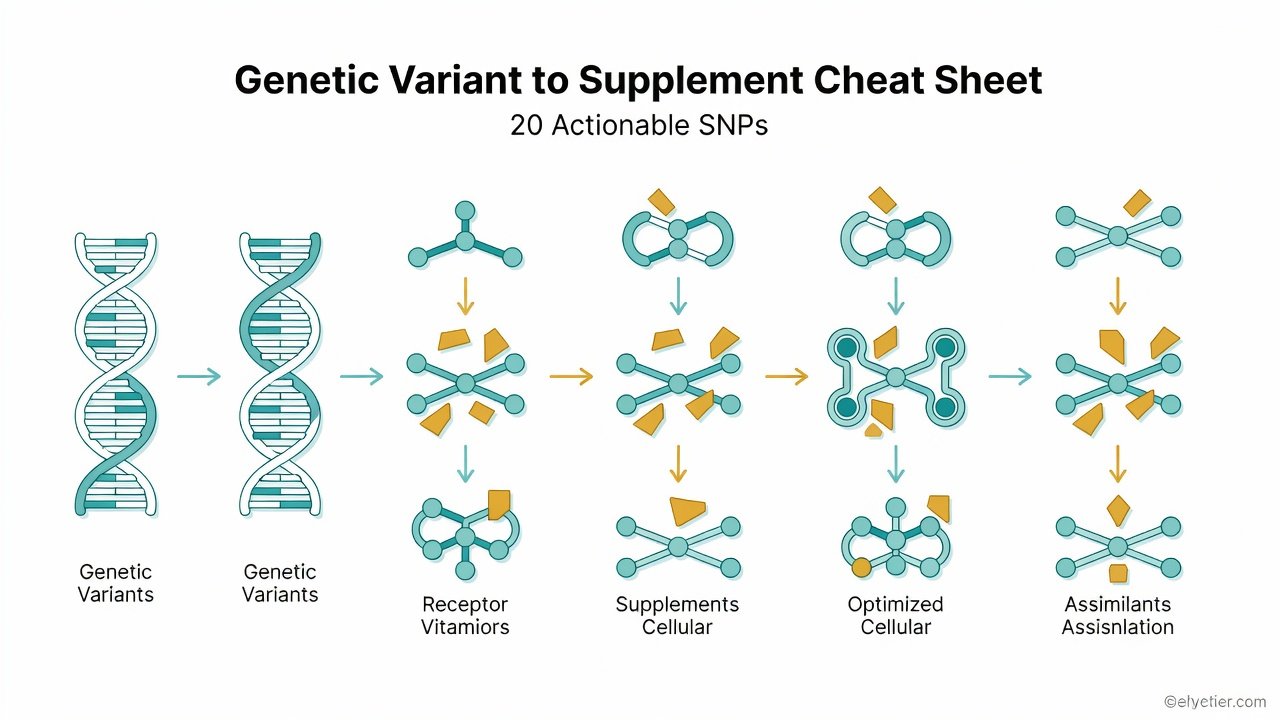
Quick Answer: Your genes can tell you which supplements you actually need vs. which ones your body already handles fine. MTHFR variants mean you need methylfolate, not folic acid. APOE e4 means you should prioritize DHA and be cautious with choline. FUT2 non-secretors can’t absorb B12 efficiently from the gut. This guide covers 20 of the most clinically actionable genetic SNPs, what they mean, and the exact supplement protocol for each.
Key Takeaways
- MTHFR C677T is one of the most commonly discussed actionable SNPs — TT homozygotes make up roughly 8–18% of European and North American populations (varies by ancestry) and are the group most likely to benefit from methylfolate (5-MTHF) over synthetic folic acid, particularly when homocysteine is elevated.
- APOE e4 carriers should prioritize high-dose DHA and be cautious about excessive supplemental choline.
- FUT2 non-secretors (rs601338 AA genotype) cannot secrete intrinsic factor efficiently and need sublingual or high-dose oral B12.
- BCMO1 variants impair conversion of beta-carotene to retinol — these individuals need preformed vitamin A, not just beta-carotene supplements.
- FADS1/FADS2 variants impair fatty acid elongation — affected individuals need preformed EPA/DHA rather than ALA from flaxseed.
- SNP-based supplementation is personalization, not replacement — foundational lifestyle habits remain primary.
How Genetics Affects Your Supplement Needs
Most supplement recommendations are population averages. But your genome shapes how you absorb, convert, transport, and metabolize specific nutrients — sometimes dramatically.
A person with two copies of the MTHFR C677T variant metabolizes folate at only 30–40% the efficiency of someone with no variant. Giving them standard folic acid — the synthetic form in most multivitamins and fortified foods — may not adequately support their methylation pathway, and may even competitively inhibit uptake of natural folate at high doses.
A BCMO1 variant carrier who eats carotenoid-rich vegetables is getting beta-carotene. But if they can’t efficiently convert it to retinol (the active form of vitamin A), they may have adequate beta-carotene levels and still be functionally vitamin A deficient.
These are not rare edge cases. Many of the variants in this guide affect 10–30% of the population.
How to Get Your Genetic Data
Step 1: Test with 23andMe, AncestryDNA, or a clinical genetics lab. For the cheapest actionable option, 23andMe’s basic plan is sufficient for most SNP lookups.
Step 2: Download your raw DNA data file (a .txt file containing your full SNP genotyping data).
Step 3: Upload to one or more interpretation services:
– Genetic Genie (free, excellent for methylation and detox SNPs)
– SelfDecode (subscription, comprehensive health reports)
– FoundMyFitness (Rhonda Patrick’s platform, nutrition-focused)
– SNPedia + Promethease (comprehensive, technical, research database)
– NutraHacker (nutrition-focused, free basic report)
Step 4: Work with a functional medicine physician, genetic counselor, or knowledgeable nutritionist to interpret results and tailor protocols — especially for complex interactions between multiple variants.
The 20 Most Actionable SNPs
SNP 1: MTHFR C677T (rs1801133)
Gene function: MTHFR (methylenetetrahydrofolate reductase) converts folic acid to 5-methyltetrahydrofolate (5-MTHF), the active form of folate that donates methyl groups to hundreds of biological reactions.
Variant: C677T. TT genotype (homozygous) has roughly 20–35% residual in-vitro enzyme activity under standard conditions; CT (heterozygous) has intermediate activity; CC is normal (Frosst et al., Nat Genet 1995; Weisberg et al., 1998).
Prevalence: Roughly 8–18% of people of European ancestry are TT, with frequencies varying by region and ancestry (higher in southern Europe, Mexico, and some Middle Eastern populations; lower in sub-Saharan African populations).
Biological consequences: Impaired methylation affects neurotransmitter production, DNA methylation (gene regulation), homocysteine clearance (elevated homocysteine is a cardiovascular risk factor), and myelin sheath maintenance.
Supplement protocol:
– Take methylfolate (5-MTHF) — the bioactive form — instead of folic acid. Jarrow, Thorne, and Seeking Health make reliable methylfolate products.
– Typical doses: 400–800 mcg for CT, up to 1,000–5,000 mcg for TT (under guidance).
– Also consider methylcobalamin (B12) and riboflavin (B2) — both cofactors in the MTHFR reaction.
– Caution: Some people with MTHFR and COMT variants react poorly to high-dose methyl donors (anxiety, irritability). Start low and titrate.
Avoid: High-dose folic acid supplementation if homozygous TT. At high doses, unmetabolized folic acid (UMFA) can competitively inhibit folate receptors.
SNP 2: MTHFR A1298C (rs1801131)
Gene function: Same MTHFR enzyme, different variant. A1298C affects a different part of the enzyme — particularly the regeneration of BH4 (tetrahydrobiopterin), a cofactor for neurotransmitter synthesis (serotonin, dopamine, norepinephrine) and nitric oxide production.
Variant: CC genotype has greater impact; AC is intermediate.
Biological consequences: Low BH4 can manifest as mood disorders, reduced resilience to stress, and impaired nitric oxide synthesis.
Supplement protocol:
– Methylfolate (same as C677T — these often occur together)
– Riboflavin (B2) — reduces homocysteine and supports MTHFR function at the enzymatic level; 25–100 mg/day
– 5-HTP or tyrosine (with cofactors P5P, folate, iron) to support neurotransmitter synthesis if BH4 pathway is symptomatic
– Some practitioners use BH4 directly for specific conditions (requires physician involvement)
SNP 3: COMT Val158Met (rs4680)
Gene function: COMT (catechol-O-methyltransferase) breaks down dopamine, epinephrine, and norepinephrine in the prefrontal cortex and also clears catechol estrogens.
Variant: Val/Val = fast COMT (rapid dopamine clearance). Met/Met = slow COMT (dopamine persists longer). Val/Met = intermediate.
Prevalence: Roughly equal distribution of each genotype.
Biological consequences:
– Slow COMT (Met/Met): Higher baseline dopamine in prefrontal cortex — better working memory under normal conditions, but greater anxiety under stress, worse response to pain, potential estrogen accumulation (relevant for breast cancer risk). “Warriors and worriers” model.
– Fast COMT (Val/Val): Lower dopamine — less anxiety, worse working memory, may benefit more from dopamine-supporting supplements.
Supplement protocol for Met/Met (slow COMT):
– Reduce high-dose methyl donors (methylfolate, SAMe, methylcobalamin) — these can overmethylate and worsen anxiety in slow COMT individuals.
– Magnesium glycinate — COMT requires magnesium as a cofactor; adequate magnesium supports healthy COMT activity.
– B6 (P5P form) — supports COMT enzyme activity
– DIM or calcium d-glucarate — supports catechol estrogen clearance if estrogen accumulation is a concern
Supplement protocol for Val/Val (fast COMT):
– Tyrosine (500–2,000 mg/day) — dopamine precursor to compensate for rapid clearance
– Higher-dose methylfolate may be better tolerated
SNP 4: VDR Taq1 (rs731236)
Gene function: VDR (vitamin D receptor) binds 1,25-dihydroxyvitamin D3 (calcitriol) and initiates gene transcription for hundreds of vitamin D-dependent processes.
Variant: tt genotype has reduced receptor function — less responsive to circulating vitamin D. TT is normal. Tt is intermediate.
Biological consequences: Despite adequate blood vitamin D levels, cellular vitamin D signaling is impaired. This means normal supplementation doses may be insufficient, and standard “sufficient” blood levels may not reflect cellular adequacy.
Supplement protocol:
– Higher-dose vitamin D3 (typically 4,000–8,000 IU/day) — target blood levels of 50–80 ng/mL rather than the standard “sufficient” threshold of 30 ng/mL
– Vitamin K2 MK-7 (150–200 mcg/day) — always accompany higher-dose D3
– Magnesium — cofactor for vitamin D conversion and activation; deficiency impairs the entire vitamin D pathway regardless of VDR genotype
SNP 5: APOE e4 (rs429358 and rs7412)
Gene function: APOE (apolipoprotein E) plays a central role in lipid transport, neuronal repair, and amyloid clearance in the brain. APOE has three alleles (e2, e3, e4).
Variant: Relative to APOE e3/e3, APOE e4 heterozygotes have roughly 2–3× increased Alzheimer’s disease risk and e4/e4 homozygotes have roughly 8–15× increased risk in most large cohorts (Farrer et al., JAMA 1997; Genin et al., Mol Psychiatry 2011). Also associated with higher LDL-C and cardiovascular risk.
Prevalence: Roughly 20–25% of the general population carries at least one APOE e4 allele; e4/e4 homozygotes are about 2–3% of the general population.
Biological consequences: APOE e4 impairs amyloid beta clearance, reduces synaptic plasticity, and alters lipid metabolism in the brain.
Supplement protocol:
– High-dose DHA (1–2 g/day pure DHA) — APOE e4 carriers have reduced DHA in neuronal membranes; supplementation may partially compensate. Several studies suggest benefit specifically in e4 carriers.
– Omega-3 from marine sources — the full EPA+DHA profile, not ALA-based
– Caution with high-dose choline — some research (controversial) suggests high choline may increase TMAO production in APOE e4 carriers, potentially worsening cardiovascular risk. Moderate food-based choline is fine; avoid supplemental choline chloride at high doses until research is clearer.
– Vitamin E (mixed tocopherols/tocotrienols) — some neuroprotective evidence in e4 context
– Resveratrol and NMN — both have mechanistic plausibility for APOE e4 via SIRT1 and NAD+ pathways
SNP 6: CYP1A2 (rs762551)
Gene function: CYP1A2 is a liver cytochrome P450 enzyme that metabolizes caffeine, certain drugs, and activates/detoxifies some carcinogens.
Variant: AA genotype = fast metabolizer (caffeine is cleared quickly). AC/CC = slow metabolizer (caffeine stays in the system longer).
Biological consequences for slow metabolizers (CC/AC):
– Standard coffee intake associated with increased (not decreased) heart attack risk in some studies
– Greater caffeine-related anxiety, insomnia, and blood pressure effects
– Slower clearance of certain supplements and drugs metabolized by CYP1A2
Supplement protocol:
– Limit caffeine to <200 mg/day (or avoid) if slow metabolizer
– NAC (N-acetyl cysteine) — supports hepatic detoxification pathways
– Indole-3-carbinol (I3C) or DIM — induces CYP1A2, potentially accelerating clearance; found naturally in cruciferous vegetables
SNP 7: CYP2D6 Poor Metabolizer
Gene function: CYP2D6 metabolizes approximately 25% of all pharmaceutical drugs, as well as several herbal supplements including codeine conversion to morphine.
Variant: Multiple variants. Poor metabolizers have significantly reduced enzyme activity.
Relevant to supplements:
– St. John’s Wort interacts with CYP2D6 and can dramatically alter levels of co-administered medications
– Kava and valerian are metabolized by CYP2D6 — poor metabolizers may have stronger and longer-lasting effects
– Melatonin is partially metabolized by CYP1A2 and CYP2D6 — slow metabolizers may need much lower doses
Protocol: Be cautious with herbal supplements with significant CYP2D6 metabolism if you are a known poor metabolizer. Prioritize supplements with simpler metabolic pathways.
SNP 8: CYP2C9 2/3 (rs1799853)
Gene function: CYP2C9 metabolizes NSAIDs, warfarin, and several botanical compounds including curcumin and some herbal anti-inflammatories.
Biological consequences: Slow metabolizers accumulate higher levels of CYP2C9 substrates — which can mean greater effect but also greater risk of adverse effects from supplements processed by this enzyme.
Protocol:
– Use lower doses of curcumin and boswellia (both partially metabolized by CYP2C9)
– Exercise caution if combining these supplements with medications metabolized by CYP2C9 (warfarin, ibuprofen, diclofenac)
– Monitor effects carefully at low doses before titrating up
SNP 9: CYP19A1 (Aromatase) (rs700519)
Gene function: CYP19A1 encodes aromatase, the enzyme that converts androgens (testosterone, DHEA) to estrogens.
Variant: Some variants increase aromatase activity (higher estrogen conversion); others reduce it.
Biological consequences: High aromatase activity: higher estrogen relative to testosterone in both men and women; potential for estrogen dominance symptoms, increased breast tissue in men (gynecomastia), reduced testosterone.
Protocol for high aromatase activity:
– DIM (Diindolylmethane, 100–300 mg/day) — modulates estrogen metabolism
– Calcium d-glucarate (500–1,000 mg/day) — inhibits beta-glucuronidase, supporting estrogen clearance via the glucuronidation pathway
– Zinc — mild aromatase inhibitor at supplement doses
SNP 10: SOD2 Val16Ala (rs4880)
Gene function: SOD2 (superoxide dismutase 2) is the primary mitochondrial antioxidant enzyme, converting superoxide radicals to hydrogen peroxide.
Variant: Val/Val genotype has impaired import of the enzyme into mitochondria — resulting in higher mitochondrial oxidative stress.
Biological consequences: Greater susceptibility to mitochondrial oxidative damage — relevant for metabolic disease, cardiovascular disease, and potentially neurodegeneration.
Protocol:
– CoQ10 (200–400 mg/day, ubiquinol form) — essential mitochondrial electron transport chain component; reduces superoxide production at the source
– Manganese (1–3 mg/day) — essential cofactor for SOD2 (it is a manganese-dependent enzyme)
– PQQ (pyrroloquinoline quinone, 10–20 mg/day) — stimulates mitochondrial biogenesis; may compensate for impaired SOD2 function
– Alpha lipoic acid (300–600 mg/day) — both mitochondrial antioxidant and cofactor recycler
SNP 11: FUT2 Secretor Status (rs601338)
Gene function: FUT2 determines “secretor status” — whether you secrete blood group antigens (and other compounds, including intrinsic factor) into mucosal secretions.
Variant: AA genotype = non-secretor (~20% of Europeans). GA/GG = secretor.
Biological consequences: Non-secretors have altered gut microbiome composition (different Bifidobacterium population), are more susceptible to norovirus (which uses secretor antigens as entry points), and have impaired secretory IgA. Most relevantly for supplements: non-secretors may have impaired intrinsic factor secretion, reducing vitamin B12 absorption via the standard intrinsic factor-dependent pathway.
Protocol:
– Methylcobalamin (B12) sublingual — bypasses the intrinsic factor-dependent pathway entirely
– Higher-dose oral B12 (1,000–2,000 mcg/day) — at these doses, passive diffusion absorption is sufficient even without intrinsic factor
– Bifidobacterium-rich probiotic — non-secretors have lower Bifidobacterium; targeted probiotic support may be beneficial
SNP 12: BCMO1 R267S (rs12934922)
Gene function: BCMO1 (beta-carotene monooxygenase 1) converts beta-carotene to retinol (vitamin A).
Variant: The minor allele of R267S (and the related A379V, rs7501331) has been associated with reduced catalytic activity of BCMO1 in volunteer studies. Leung et al. (FASEB J 2009) reported reductions in beta-carotene conversion on the order of ~30–70% in carriers of one or both minor alleles, with compound carriers showing the largest effects. Upstream SNPs (rs6420424, rs11645428, rs6564851) have been reported to reduce BCMO1 catalytic activity by ~48–59% in female volunteers (Lietz et al., J Nutr 2012).
Prevalence: Minor allele frequencies of roughly 42% (R267S) and 24% (A379V) have been reported in European-ancestry women (Leung et al., 2009), so a substantial fraction carry at least one reduced-activity allele.
Biological consequences: Eating a diet high in beta-carotene does not adequately supply vitamin A in poor converters. This is clinically significant — vitamin A is essential for vision, immune function, skin health, and reproductive function.
Protocol:
– Preformed vitamin A (retinol) — not beta-carotene. Use retinyl palmitate or retinyl acetate.
– Typical supplemental dose: 2,500–5,000 IU retinol (not in excess — vitamin A is fat-soluble and can accumulate)
– Avoid relying on beta-carotene supplements as a vitamin A source — they won’t convert
– Test periodically: Serum retinol testing is available; blood carotenoid levels may be falsely “good” while retinol is low
SNP 13: GAD1 (rs769407)
Gene function: GAD1 encodes glutamic acid decarboxylase, the enzyme that converts glutamate to GABA — the brain’s primary inhibitory neurotransmitter.
Variant: Some GAD1 variants reduce enzyme efficiency, resulting in higher glutamate-to-GABA ratios (more excitatory signaling, less inhibition).
Biological consequences: Anxiety, sleep difficulty, sensitivity to stress, possibly increased seizure susceptibility.
Protocol:
– P5P (Pyridoxal-5-phosphate, active B6, 25–100 mg/day) — essential cofactor for GAD1 enzyme. Supplementing P5P (not regular pyridoxine) directly supports GABA synthesis.
– Magnesium glycinate (300–400 mg/day) — NMDA receptor antagonist; reduces excitatory glutamate signaling
– L-Theanine (100–400 mg/day) — promotes alpha brainwave activity and may enhance GABA activity
SNP 14: HFE C282Y (rs1800562)
Gene function: HFE regulates hepcidin expression and thus controls iron absorption in the gut.
Variant: C282Y homozygotes have hereditary hemochromatosis — unregulated iron absorption leading to iron overload. Heterozygotes absorb somewhat more iron than average.
Biological consequences: Iron overload causes liver damage, diabetes, cardiomyopathy, arthritis, and endocrine dysfunction.
Protocol:
– Absolutely avoid iron supplements unless specifically prescribed after confirmed deficiency
– IP6 (Inositol hexaphosphate, 2–8 g/day on empty stomach) — chelates excess iron in the gut; often used as a supportive measure (not as a replacement for therapeutic phlebotomy in confirmed hemochromatosis)
– Curcumin — has iron-chelating properties
– Avoid high-dose vitamin C around meals — vitamin C significantly enhances iron absorption
– Confirmed hemochromatosis requires regular therapeutic phlebotomy — supplements do not replace this
SNP 15: FADS1 (rs174547)
Gene function: FADS1 encodes delta-5-desaturase, which elongates DGLA (20:3n6) to arachidonic acid (AA, 20:4n6).
Variant: T allele reduces FADS1 activity, impairing omega-6 fatty acid elongation.
Biological consequences: Reduced arachidonic acid production, impaired eicosanoid balance, potentially reduced inflammatory response capacity.
Protocol:
– GLA (gamma-linolenic acid) from borage or evening primrose oil (1,000–3,000 mg/day) — GLA bypasses the rate-limiting delta-6-desaturase step and provides direct substrate for the FADS1 pathway
– Monitor inflammation-related symptoms as responses may differ from typical omega-6 supplementation predictions
SNP 16: FADS2 (rs1535)
Gene function: FADS2 encodes delta-6-desaturase, responsible for the first step in converting both ALA (alpha-linolenic acid, 18:3n3) to EPA and LA (linoleic acid, 18:2n6) to GLA.
Variant: T allele reduces FADS2 activity, significantly impairing ALA-to-EPA/DHA conversion.
Biological consequences: Plant-based omega-3s (ALA from flaxseed, chia, walnuts) provide almost no EPA or DHA in poor FADS2 converters. This is a population-level concern — conversion efficiency is poor in everyone, but FADS2 variants make it even worse.
Protocol:
– Preformed EPA+DHA (2–3 g/day from fish oil or algae oil) — do not rely on ALA conversion
– Algae-based omega-3 is an excellent choice for plant-based eaters with this variant — it provides DHA directly
– Avoid describing flaxseed oil as adequate omega-3 for these individuals
SNP 17: PPARG Pro12Ala (rs1801282)
Gene function: PPARG (peroxisome proliferator-activated receptor gamma) regulates fat cell differentiation, insulin sensitivity, and glucose metabolism.
Variant: Ala allele (the minor variant) has reduced PPARG activity — associated with improved insulin sensitivity and lower type 2 diabetes risk. Pro/Pro (major variant) is associated with reduced insulin sensitivity in certain dietary contexts.
Biological consequences (Pro/Pro): Greater susceptibility to diet-induced insulin resistance, particularly with high saturated fat intake.
Protocol (Pro/Pro):
– Berberine (500 mg 2–3x/day with meals) — AMPK activator; improves insulin sensitivity via a different pathway
– Chromium picolinate (200–400 mcg/day) — supports insulin receptor sensitivity
– Omega-3 (EPA+DHA, 2–3 g/day) — activates PPARG directly, compensating for reduced intrinsic receptor activity
– Alpha lipoic acid (600 mg/day) — insulin sensitizer with robust clinical evidence
SNP 18: TCN2 C776G (rs1801198)
Gene function: TCN2 encodes transcobalamin II, the primary transport protein that carries B12 from the gut to cells.
Variant: GG genotype reduces transcobalamin II binding efficiency, impairing B12 delivery to tissues even when blood B12 appears normal.
Biological consequences: “Normal” blood B12 does not guarantee adequate cellular B12. Holotranscobalamin (active B12) may be low even with adequate total B12.
Protocol:
– Higher-dose B12 (1,000–2,000 mcg/day) — to compensate for impaired transport efficiency; more B12 in circulation increases passive diffusion into cells
– Methylcobalamin or adenosylcobalamin preferred over cyanocobalamin — these are the bioactive forms
– Request holotranscobalamin (holoTC) testing rather than total serum B12 — holoTC is a more accurate indicator of functional B12 status with this variant
SNP 19: NOS3 eNOS (rs1799983)
Gene function: NOS3 encodes endothelial nitric oxide synthase (eNOS), which produces nitric oxide in blood vessel walls — crucial for vasodilation, blood pressure regulation, and endothelial health.
Variant: T allele (Glu298Asp) reduces eNOS activity.
Biological consequences: Reduced nitric oxide production, impaired vasodilation, higher cardiovascular risk, reduced exercise-induced blood flow.
Protocol:
– L-Citrulline (3–6 g/day) — more effectively raises arginine levels (and thus NO) than arginine supplementation alone, as it bypasses first-pass metabolism in the liver
– Beet root extract or juice (500 mg extract or 250 ml juice daily) — dietary nitrates are converted to nitric oxide via a non-enzymatic pathway that bypasses eNOS deficiency entirely
– Arginine AKG (2–3 g pre-workout) — additional NO substrate support
– CoQ10 (100–200 mg/day) — supports eNOS coupling; uncoupled eNOS produces superoxide rather than NO
SNP 20: SLC23A1 / Vitamin C Transporter (rs33972313)
Gene function: SLC23A1 encodes sodium-dependent vitamin C transporter 1 (SVCT1), which reabsorbs vitamin C from the kidney tubules, preventing urinary loss.
Variant: Certain variants reduce SVCT1 efficiency, leading to higher urinary vitamin C losses and lower circulating ascorbate levels for the same dietary intake.
Biological consequences: Relative vitamin C insufficiency despite average dietary intake.
Protocol:
– Higher-dose vitamin C (1,000–2,000 mg/day in divided doses)
– Liposomal vitamin C — encapsulated in phospholipid liposomes for superior absorption; reduces the GI tolerance issues that limit standard ascorbic acid at high doses
– Sodium ascorbate or mineral ascorbates — buffered forms may be better tolerated at higher doses and may have slightly better tissue retention
SNP Interaction: What Happens With Multiple Variants?
Most people don’t carry just one relevant variant. A common interaction pattern:
MTHFR C677T (TT) + COMT Met/Met: This combination is tricky. MTHFR suggests you need more methyl donors (methylfolate, methylcobalamin). But COMT Met/Met means you’re already clearing dopamine slowly — excess methyl donors can push methylation too high, potentially causing anxiety, irritability, or mood disruption. Solution: titrate methyl donors very slowly, monitor response carefully. Some practitioners use hydroxocobalamin rather than methylcobalamin in this combination.
APOE e4 + FADS2 poor converter: Both point strongly toward prioritizing preformed EPA+DHA in high doses, making fish or algae oil a particularly critical supplement for this genotype combination.
VDR Taq1 + SOD2 Val/Val + MTHFR: This triple combination affects mitochondrial antioxidant capacity, vitamin D response, and methylation simultaneously. Addressing each with appropriate supplements is warranted, but prioritization matters: vitamin D + K2 first, then magnesium (which supports all three pathways), then methylfolate.
Summary Table: 20 SNPs at a Glance
| Gene / Variant | rs Number | Key Action |
|---|---|---|
| MTHFR C677T | rs1801133 | Take methylfolate (5-MTHF), not folic acid |
| MTHFR A1298C | rs1801131 | Methylfolate + riboflavin B2 |
| COMT Val158Met | rs4680 | Met/Met: reduce methyl donors, add Mg + B6 |
| VDR Taq1 | rs731236 | Higher-dose D3 + K2; target 50–80 ng/mL |
| APOE e4 | rs429358 | High DHA; caution with excess choline |
| CYP1A2 *1F | rs762551 | Slow: limit caffeine; add NAC, cruciferous |
| CYP2D6 PM | various | Caution with St. John’s Wort, kava |
| CYP2C9 2/3 | rs1799853 | Lower curcumin/boswellia doses |
| CYP19A1 | rs700519 | DIM + calcium d-glucarate + zinc |
| SOD2 Val16Ala | rs4880 | CoQ10 + Mn + PQQ + ALA |
| FUT2 (Se/se) | rs601338 | Non-secretor: sublingual/high-dose B12 |
| BCMO1 R267S | rs12934922 | Preformed retinol, not beta-carotene |
| GAD1 | rs769407 | P5P (active B6) + magnesium + L-theanine |
| HFE C282Y | rs1800562 | Avoid iron supps; IP6 if excess iron |
| FADS1 | rs174547 | GLA from borage/evening primrose |
| FADS2 | rs1535 | Preformed EPA+DHA — not ALA/flax |
| PPARG Pro12Ala | rs1801282 | Berberine + chromium + omega-3 |
| TCN2 C776G | rs1801198 | Higher B12 dose; test holoTC |
| NOS3 eNOS | rs1799983 | L-citrulline + beet root + CoQ10 |
| SLC23A1 | rs33972313 | Higher/liposomal vitamin C |
FAQ
Do I need genetic testing to benefit from this guide?
No — you can apply some of these recommendations empirically based on symptoms, blood tests, and clinical history. However, genetic testing enables you to personalize with confidence rather than guesswork. A positive MTHFR result, for instance, can be confirmed through blood testing (elevated homocysteine, low folate).
Is 23andMe or AncestryDNA good enough for supplement SNPs?
Yes, for most of the SNPs in this guide. Both platforms genotype over 600,000 SNPs. The limitation is that neither includes full sequencing — rare variants may be missed. For clinical decision-making, whole exome or whole genome sequencing gives the most complete picture.
Can SNP data from direct-to-consumer tests be wrong?
Genotyping accuracy is high (>99%) for SNPs within the test’s coverage. Errors are uncommon but possible. If a result seems inconsistent with your phenotype and clinical markers, consider verification through a clinical laboratory.
What if I have MTHFR and react badly to methylfolate?
This happens, particularly in COMT Met/Met combinations. Reactions can include increased anxiety, insomnia, or irritability. In that case, reduce the dose significantly (start with 50–100 mcg rather than 400–800 mcg) or switch to hydroxocobalamin (non-methyl B12) and folinic acid (5-formyltetrahydrofolate) rather than methylfolate. Work with a practitioner familiar with MTHFR.
Should children be supplemented based on their SNPs?
Pediatric supplementation based on genetics should always involve a healthcare provider — a pediatrician or functional medicine physician with genetics expertise. Don’t self-prescribe high-dose supplements for children based on SNP data alone.
How do I find a practitioner who understands nutrigenomics?
Search for integrative medicine physicians, functional medicine practitioners (IFMCP credential), or certified genetic counselors. The Institute for Functional Medicine maintains a practitioner directory. Rhonda Patrick’s FoundMyFitness platform also has a provider referral feature.
Sources
- Frosst P, et al. “A candidate genetic risk factor for vascular disease: a common mutation in methylenetetrahydrofolate reductase.” Nat Genet. 1995;10(1):111–113.
- Weisberg I, et al. “A second genetic polymorphism in methylenetetrahydrofolate reductase (MTHFR) associated with decreased enzyme activity.” Mol Genet Metab. 1998;64(3):169–172.
- Lachman HM, et al. “Human catechol-O-methyltransferase pharmacogenetics: description of a functional polymorphism and its potential application to neuropsychiatric disorders.” Pharmacogenetics. 1996;6(3):243–250.
- Uitterlinden AG, et al. “Genetics and biology of vitamin D receptor polymorphisms.” Gene. 2004;338(2):143–156.
- Farrer LA, et al. “Effects of age, sex, and ethnicity on the association between apolipoprotein E genotype and Alzheimer disease: a meta-analysis.” JAMA. 1997;278(16):1349–1356.
- Cornelis MC, El-Sohemy A, Kabagambe EK, Campos H. “Coffee, CYP1A2 genotype, and risk of myocardial infarction.” JAMA. 2006;295(10):1135–1141.
- Leung WC, et al. “Two common single nucleotide polymorphisms in the gene encoding β-carotene 15,15′-monoxygenase alter β-carotene metabolism in female volunteers.” FASEB J. 2009;23(4):1041–1053.
- Lietz G, et al. “Single nucleotide polymorphisms upstream from the β-carotene 15,15′-monoxygenase gene influence provitamin A conversion efficiency in female volunteers.” J Nutr. 2012;142(1):161S–165S.
- Kelly RS, Kelly MP, Kelly P. “Metabolomics, physical activity, exercise and health: A review of the current evidence.” Biochim Biophys Acta Mol Basis Dis. 2020;1866(12):165936. (Representative overview of nutrigenomics principles.)
- Koletzko B, et al. “FADS1/FADS2 gene variants and fatty acid metabolism.” Prostaglandins Leukot Essent Fatty Acids. 2019;141:30–37.
- Ferrucci L, et al. “Relationship of plasma polyunsaturated fatty acids to circulating inflammatory markers.” J Clin Endocrinol Metab. 2006;91(2):439–446.
- Kalungia AC, Chirwa PS, et al. “FUT2 non-secretor status and gut microbiota.” (See also Wacklin et al., PLoS One. 2011;6(5):e20113 — FUT2 genotype and gut Bifidobacterium composition.)
- Genin E, et al. “APOE and Alzheimer disease: a major gene with semi-dominant inheritance.” Mol Psychiatry. 2011;16(9):903–907.
- Lin et al. (2025). Takeaways from meta-analysis: indications of combinational treatments for glioblastoma. Journal of neuro-oncology. PMID: 40839241
- Turbutt et al. (2019). The impact of hot food takeaways near schools in the UK on childhood obesity: a systematic review of the evidence. Journal of public health (Oxford, England). PMID: 29590382
- Suárez et al. (2025). Cancer immunotherapy insights: key takeaways from the ADSCC bone marrow and cellular therapy congress 2024. Frontiers in immunology. PMID: 41641269
- Maslove et al. (2021). Two Key Takeaways From a Year of Pandemic Research. Critical care medicine. PMID: 33938710
- Kadri SS (2020). Key Takeaways From the U.S. CDC’s 2019 Antibiotic Resistance Threats Report for Frontline Providers. Critical care medicine. PMID: 32282351
- Encisco et al. (2022). Top 10 key takeaways from the 2021 pediatric surgery update course. Journal of pediatric surgery. PMID: 35351315
Related Articles
- Supplement Starter Kit by Goal: The 3-Tier Guide for 12 Health Goals
- Supplement Side Effects Demystified: Harmless vs. Warning Signs
- The Complete Guide to B Vitamins: Forms, Functions, and Who Needs What
- Vitamin D3 and K2: Why You Need Both and How Much to Take
- Fish Oil vs. Algae Oil: Which Omega-3 Source Is Better?
Disclaimer: This guide is for informational and educational purposes only. It does not constitute medical or genetic advice. Genetic data interpretation for health decisions should involve a qualified healthcare provider or genetic counselor. Do not adjust medications or supplements based solely on genetic data without professional guidance.
AI-assisted content disclosure: This guide was drafted with the help of AI tools and then reviewed against peer-reviewed nutrigenomics literature and public allele-frequency databases (gnomAD, 1000 Genomes, SNPedia). Effect sizes for single SNPs on complex traits are usually modest, the research base for specific supplement protocols per SNP is often small, and interactions between multiple variants are poorly understood. Treat this material as a starting point for conversation with a qualified practitioner — not a prescription.