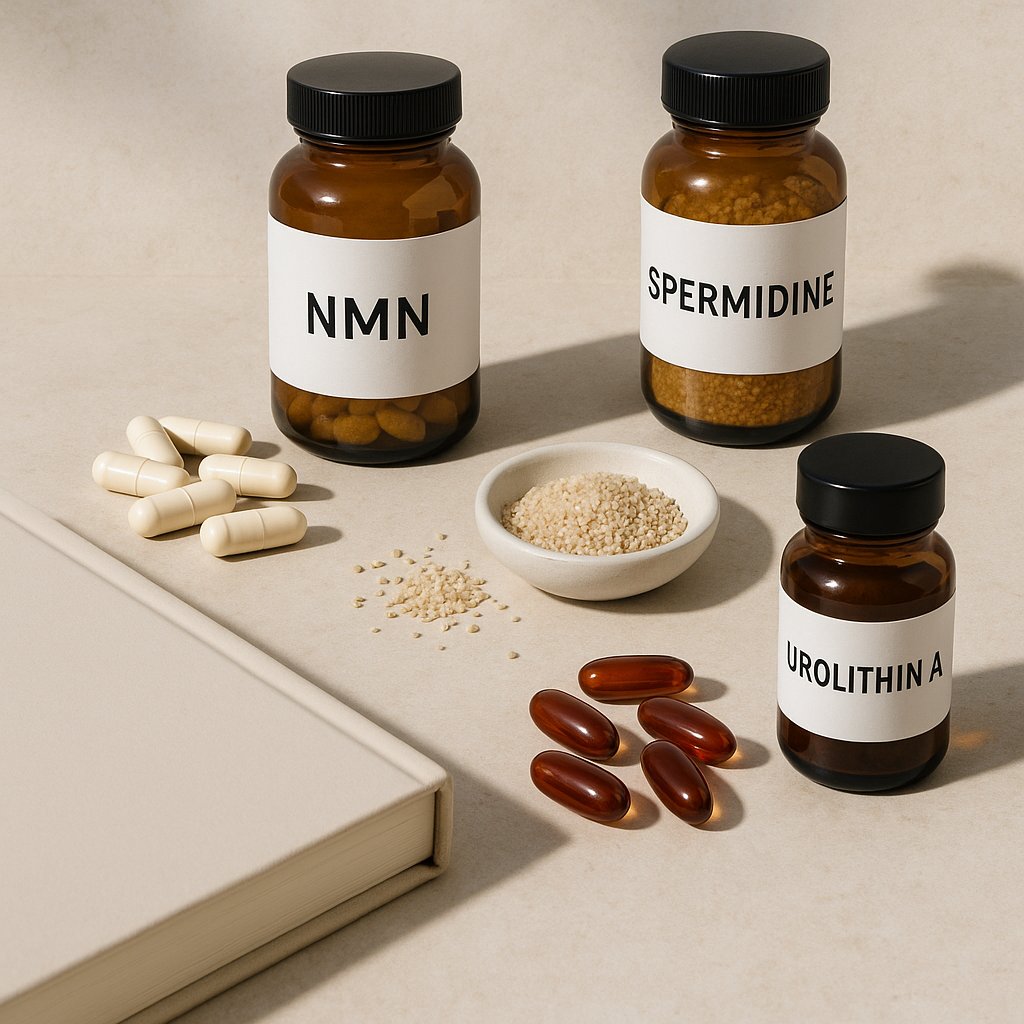
Quick Answer: Longevity supplements target the biological mechanisms of aging: mitochondrial decline, NAD+ depletion, cellular senescence, autophagy impairment, and oxidative damage. The most evidence-backed ingredients — NMN/NR for NAD+ replenishment, spermidine for autophagy, urolithin A for mitochondria, and fisetin/quercetin as senolytics — have promising animal data and early human trials, but no longevity supplement has been proven to extend human lifespan. This guide separates real science from expensive hope.
What’s in This Guide
- The Biology of Aging: What Supplements Try to Target
- NAD+ and Its Precursors: NMN, NR, and Niacin
- Spermidine: The Autophagy Activator
- Urolithin A: Mitochondrial Rescue
- Ergothioneine: The Longevity Vitamin
- Senolytics: Fisetin and Quercetin
- Low-Dose Methylene Blue
- Resveratrol and Pterostilbene
- GlyNAC: Glycine and NAC for Aging
- Longevity Stacks: How to Combine Safely
- Honest Limitations: What We Don’t Know
- Frequently Asked Questions
- Sources
- Related Articles
The Biology of Aging: What Supplements Try to Target
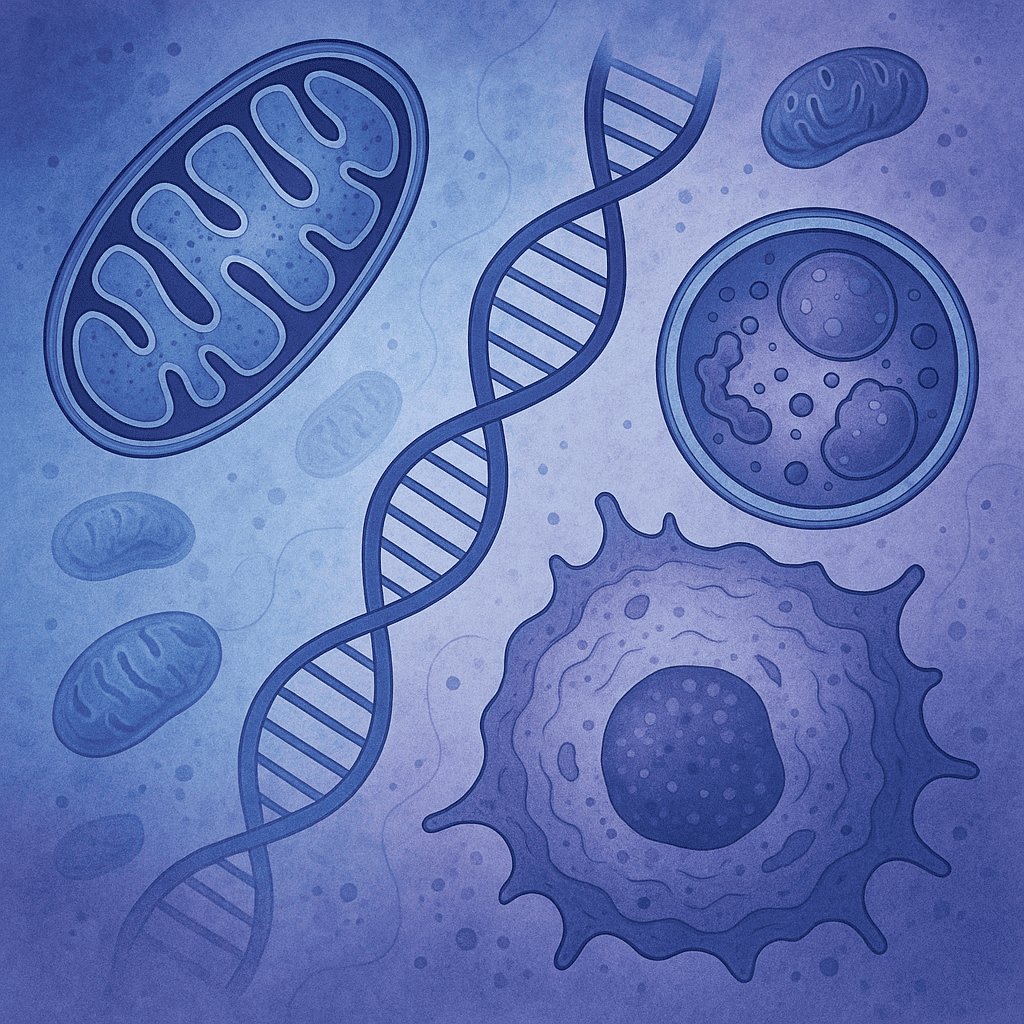
The “hallmarks of aging” framework (López-Otín et al., 2013; updated 2023) identifies twelve interconnected mechanisms that drive biological aging. Longevity supplements typically target a handful of these:
- NAD+ decline: Nicotinamide adenine dinucleotide (NAD+) is a coenzyme essential for cellular energy production, DNA repair, and sirtuin activity. NAD+ levels drop roughly 50% between ages 40 and 60. NMN and NR aim to replenish it.
- Mitochondrial dysfunction: Your cells’ power plants become less efficient with age. Mitophagy (recycling damaged mitochondria) slows down. Urolithin A specifically targets this pathway.
- Cellular senescence: Aged, damaged cells that refuse to die accumulate and secrete inflammatory molecules (the SASP — senescence-associated secretory phenotype). Senolytics like fisetin and quercetin aim to clear these “zombie cells.”
- Impaired autophagy: The cell’s recycling system slows with age. Spermidine is the most studied autophagy inducer available as a supplement.
- Epigenetic alterations: Changes in gene expression patterns accumulate. Some researchers believe NAD+ replenishment and sirtuin activation may slow epigenetic drift.
Understanding these mechanisms helps you evaluate whether a given supplement is targeting something real or just riding a buzzword. For a broader overview of whether longevity supplements deliver on their promises, see our honest review of longevity supplement evidence.
NAD+ and Its Precursors: NMN, NR, and Niacin
NAD+ supplementation is the biggest category in longevity. The logic is straightforward: NAD+ is essential for hundreds of enzymatic reactions, it declines with age, so replenishing it should help. The question is whether oral precursors actually raise NAD+ in the tissues that matter and whether that translates to functional benefits.
NMN (nicotinamide mononucleotide) is the precursor closest to NAD+ in the biosynthesis pathway. Human trials are now emerging. A 2022 study in Science (n=48) showed that 250 mg NMN daily for 12 weeks increased blood NAD+ metabolites and improved muscle insulin sensitivity in prediabetic older women. The MIB-626 trial showed dose-dependent NAD+ increases. However, no long-term human lifespan trial exists or is feasible in the near term.
NR (nicotinamide riboside) has a longer history of human data. The CHROMAVIT trial and several smaller studies confirm that NR reliably raises blood NAD+ levels. Whether this translates to anti-aging benefits in humans remains unproven — positive rodent data hasn’t fully replicated in human functional outcomes yet.
Plain niacin (nicotinic acid) also raises NAD+ and costs a fraction of NMN or NR. The tradeoff: niacin flushing (uncomfortable but harmless), and high doses affect liver function and lipids. Some longevity researchers argue niacin is underrated because it’s not patentable.
Our NMN vs NR vs NAD+ boosters comparison covers the biochemistry, trial data, and cost analysis in detail.
Spermidine: The Autophagy Activator
Spermidine is a naturally occurring polyamine found in wheat germ, aged cheese, mushrooms, and fermented soy. It’s the most studied dietary autophagy inducer, and the epidemiological data is striking: a 2018 study in the American Journal of Clinical Nutrition (n=829, 20-year follow-up) found that the highest tertile of dietary spermidine intake was associated with a 5.7-year survival advantage compared to the lowest tertile.
Observational data isn’t proof of causation, but the mechanistic evidence is solid. Spermidine induces autophagy through multiple pathways, including inhibition of the acetyltransferase EP300. In animal models, spermidine supplementation consistently extends lifespan in yeast, flies, worms, and mice.
Human supplementation trials are early-stage. The SmartAge trial (2018) found that 1.2 mg/day of spermidine from wheat germ extract improved memory performance in older adults at risk for dementia over 3 months. Larger trials are ongoing.
We cover the full evidence in our spermidine supplements guide, the comparison with resveratrol in spermidine vs resveratrol, the autophagy mechanism in spermidine for autophagy, dosing and safety in spermidine side effects and dosing, and whether it’s worth it after 50 in is spermidine worth taking after 50.
Urolithin A: Mitochondrial Rescue
Urolithin A is a gut metabolite produced when certain bacteria ferment ellagitannins from pomegranates, berries, and walnuts. The problem: only about 40% of people have the right gut bacteria to produce meaningful amounts. Supplemental urolithin A bypasses this bottleneck.
The mechanism is specific and well-characterized: urolithin A activates mitophagy — the selective recycling of damaged mitochondria. The ATLAS trial (2022, n=66) showed that 1,000 mg/day of urolithin A for 4 months improved muscle endurance and plasma biomarkers of mitochondrial health in middle-aged adults.
Mitopak (the branded form) is the most studied, but it’s expensive — roughly $50–60/month. The question of whether improved mitochondrial biomarkers translate to actual healthspan or lifespan gains remains open.
Our detailed coverage: urolithin A for mitochondrial health, urolithin A for healthy aging, is urolithin A worth the cost, urolithin A for muscle endurance, and the head-to-head urolithin A vs NMN comparison.
Ergothioneine: The Longevity Vitamin
Ergothioneine is an amino acid produced by certain fungi and soil bacteria, concentrated in mushrooms (especially king oyster, shiitake, and porcini). Your body has a dedicated transporter for it (OCTN1/SLC22A4) — unusual for a dietary compound, suggesting evolutionary importance.
Ergothioneine acts as a powerful antioxidant with particular affinity for mitochondria and sites of tissue injury. Epidemiological data from the Singapore Chinese Health Study (n=3,236) found that higher blood ergothioneine levels were associated with lower risk of cardiovascular disease, frailty, and cognitive decline over 10+ years.
Supplemental doses typically range from 5–25 mg/day. It’s extremely safe — no adverse effects have been reported at any studied dose. The main limitation is cost and that intervention trials (vs observational data) are still in early stages.
Our coverage spans ergothioneine for healthy aging, ergothioneine vs glutathione, mushrooms vs capsules, and the best ergothioneine supplements guide.
Senolytics: Fisetin and Quercetin
Senolytic compounds selectively kill senescent cells — aged cells that have stopped dividing but refuse to die, instead pumping out inflammatory molecules that damage surrounding tissue. Clearing these cells in mice dramatically improves healthspan measures.
Fisetin (found in strawberries) emerged as the most potent natural senolytic in a 2018 EBioMedicine screening study. Mayo Clinic is running the AFFIRM trial in humans. Typical supplemental doses being studied are 20 mg/kg intermittently (not daily).
Quercetin, often combined with dasatinib (a prescription drug) in the dasatinib+quercetin (D+Q) protocol, has shown senolytic activity in human trials for conditions like idiopathic pulmonary fibrosis. Quercetin alone is a weaker senolytic but has broader anti-inflammatory and antioxidant properties.
Key practical note: senolytic protocols are typically intermittent — a few days on, weeks off — not daily. Continuous high-dose use may impair normal apoptosis pathways. This is an area where protocol design matters enormously.
See our fisetin supplements guide for the full evidence review.
Low-Dose Methylene Blue
Methylene blue is a century-old pharmaceutical compound that, at very low doses (0.5–2 mg/kg), acts as a mitochondrial electron carrier — essentially bypassing damaged points in the electron transport chain and improving mitochondrial efficiency.
Animal data is intriguing: low-dose methylene blue extended lifespan in C. elegans and improved cognitive function in aged mice. Human evidence is limited to small studies in Alzheimer’s disease (using a proprietary form, LMTM) and anecdotal biohacker reports.
This is one of the higher-risk longevity compounds. Methylene blue has significant drug interactions (especially with serotonergic medications — risk of serotonin syndrome), stains everything it touches blue, and has a very narrow therapeutic window. We strongly advise medical supervision.
Full coverage in our low-dose methylene blue guide, methylene blue for mitochondria, who should avoid methylene blue, and methylene blue stacking cautions.
Resveratrol and Pterostilbene
Resveratrol — the red wine compound — was once the poster child of longevity supplements. The reality has been humbling. Despite dramatic lifespan extension in yeast and short-lived fish, human trials have been largely disappointing. Bioavailability is poor (rapid metabolism in the gut and liver), and the doses that work in animals don’t translate well to human supplementation.
Pterostilbene, a methylated analog of resveratrol, has better bioavailability (roughly 4x) and similar biological activity. Some researchers have pivoted to pterostilbene as the more practical sirtuin activator, though human evidence remains limited.
Neither compound has strong enough human evidence to be a priority longevity supplement in 2026. They’re not harmful at typical doses, but the cost-to-evidence ratio is unfavorable compared to spermidine, urolithin A, or NMN.
GlyNAC: Glycine and NAC for Aging
GlyNAC (glycine + N-acetylcysteine) is a glutathione precursor combination studied by Dr. Rajagopal Sekhar at Baylor. A 2021 pilot study in older adults (n=24) found that 16 weeks of GlyNAC supplementation improved glutathione levels, oxidative stress, mitochondrial function, inflammation, insulin resistance, endothelial function, body composition, exercise capacity, and cognitive function. The magnitude of improvements across so many markers was striking.
The limitation: this was a single-center pilot study. Larger confirmatory trials are needed. But glycine and NAC are both well-studied individually, inexpensive, and safe at the doses used (glycine 100 mg/kg + NAC 100 mg/kg, roughly 7 g each for a 70 kg person).
Our coverage: GlyNAC longevity stack guide, best GlyNAC supplements, GlyNAC benefits for aging adults, and glycine vs collagen for sleep.
Longevity Stacks: How to Combine Safely
Many longevity enthusiasts stack multiple compounds. A common science-backed approach targets different hallmarks simultaneously:
- NAD+ support: NMN or NR (250–500 mg/day)
- Autophagy: Spermidine (1–5 mg/day from wheat germ)
- Mitochondria: Urolithin A (500–1,000 mg/day) or CoQ10
- Senolytic: Fisetin (intermittent, not daily)
- Glutathione: GlyNAC (glycine 3–7 g + NAC 600–1,800 mg/day)
- Antioxidant/cellular protection: Ergothioneine (5–25 mg/day)
This is an expensive protocol and most of it is based on mechanistic reasoning and animal data rather than proven human lifespan extension. Start with one or two compounds, give each 2–3 months, and track biomarkers rather than stacking everything at once.
Our longevity stack for beginners covers a practical starting point.
Honest Limitations: What We Don’t Know
The biggest gap in longevity supplement science: no supplement has been proven to extend human lifespan. Every claim is extrapolated from animal models, biomarker improvements, or epidemiological associations. Human lifespan trials would take decades and cost billions — they’re never going to happen for supplements.
What we can measure are surrogate endpoints: NAD+ levels, mitochondrial function biomarkers, inflammatory markers, epigenetic clocks (GrimAge, DunedinPACE). These are meaningful but imperfect proxies. A supplement that improves your epigenetic age by 2 years might or might not translate to 2 more years of life.
The honest framework: these supplements are bets on biological plausibility, not proven therapies. Some bets are better than others. Spermidine has strong epidemiological support. Urolithin A has specific, well-characterized mechanism plus human trial data. High-dose resveratrol has mostly disappointed. Calibrate your spending accordingly.
Frequently Asked Questions
What’s the single best longevity supplement to start with?
If forced to choose one, spermidine from wheat germ extract has the best combination of epidemiological evidence, mechanistic clarity, safety profile, and reasonable cost. GlyNAC is a strong second choice based on the Baylor pilot data and the low cost of the individual components.
Are longevity supplements safe long-term?
Most are, with the exception of methylene blue (narrow therapeutic window, drug interactions) and fisetin/quercetin at continuous high doses (intermittent protocols are preferred). NMN, NR, spermidine, ergothioneine, glycine, and NAC all have good safety profiles at standard doses. Long-term data beyond 1–2 years is limited for most.
Can I just eat mushrooms instead of taking ergothioneine?
Yes, to a degree. King oyster mushrooms, shiitake, and porcini are the richest dietary sources. A serving of king oyster mushrooms provides roughly 2–5 mg of ergothioneine. Supplemental doses (5–25 mg) are higher, but regular mushroom consumption is a reasonable dietary approach. See our mushrooms vs capsules comparison.
What age should you start longevity supplements?
Most longevity researchers suggest that the biological rationale strengthens after age 35–40, when NAD+ decline, senescent cell accumulation, and mitochondrial dysfunction become measurable. Before that, the fundamentals — sleep, exercise, diet, stress management — have far more impact than any supplement.
Do longevity supplements interact with medications?
Some do. Methylene blue with serotonergic drugs is dangerous. NAC at high doses can interact with nitroglycerin. Quercetin affects CYP enzymes and can alter drug metabolism. Always disclose supplements to your physician, especially if you’re on prescription medications.
Sources
- López-Otín C, et al. “Hallmarks of aging: An expanding universe.” Cell. 2023;186(2):243-278.
- Yoshino M, et al. “Nicotinamide mononucleotide increases muscle insulin sensitivity in prediabetic women.” Science. 2021;372(6547):1224-1229.
- Kiechl S, et al. “Higher spermidine intake is linked to lower mortality: a prospective population-based study.” Am J Clin Nutr. 2018;108(2):371-380.
- Wirth A, et al. “The effect of spermidine on memory performance in older adults at risk for dementia.” Cortex. 2018;109:181-188. (SmartAge)
- Liu S, et al. “Effect of urolithin A supplementation on muscle endurance and mitochondrial health in older adults.” JAMA Netw Open. 2022;5(1):e2144279. (ATLAS)
- Yousefzadeh MJ, et al. “Fisetin is a senotherapeutic that extends health and lifespan.” EBioMedicine. 2018;36:18-28.
l>
Related Articles
- Do Longevity Supplements Actually Work?
- Best Longevity Stack for Beginners
- NMN vs NR vs NAD+ Boosters
- Spermidine Supplements: Benefits & Evidence
- Spermidine vs Resveratrol
- Spermidine for Autophagy
- Is Spermidine Worth Taking After 50?
- Urolithin A for Mitochondrial Health
- Urolithin A for Healthy Aging
- Is Urolithin A Worth the Cost?
- Urolithin A vs NMN
- Ergothioneine for Healthy Aging
- Ergothioneine vs Glutathione
- Best Ergothioneine Supplements
- Fisetin Supplements: Senolytic Guide
- Low-Dose Methylene Blue Guide
- GlyNAC Longevity Stack
- Best GlyNAC Supplements
- Taurine for Aging
Related Supplement Guides
These comprehensive guides cover related topics that intersect with this one:
- Blood Sugar Supplements Guide
- Omega-3 Supplements Guide
- Magnesium Supplements Guide
- Creatine Supplements Guide
📝 Cite This Article
Richard Shoemake. “Longevity Supplements in 2026: NMN, Spermidine, Urolithin A, and What the Science Actually Shows.” New Online Products, 2026-04-09. https://newonlineproducts.com/2026/04/09/longevity-supplements-complete-guide-2026/