
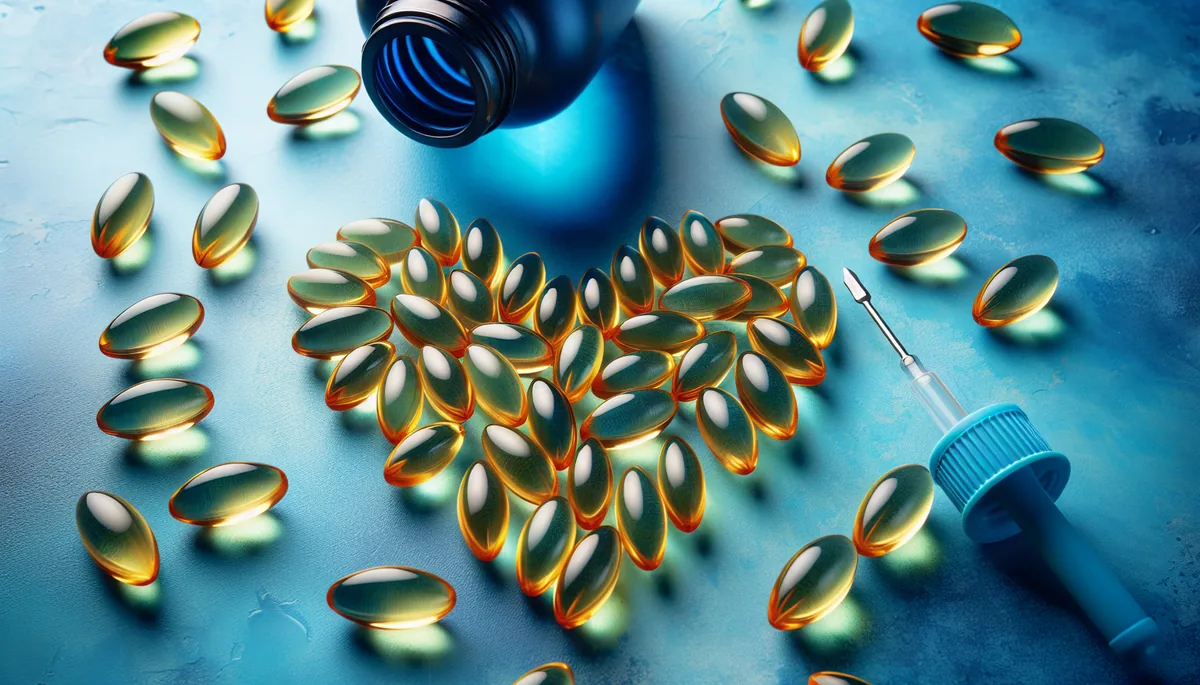
EPA (eicosapentaenoic acid) is the omega-3 fatty acid with the strongest clinical evidence for antidepressant effects. Meta-analyses consistently show that high-EPA omega-3 formulations (?60% EPA, dosed at 1-2 g EPA/day) significantly reduce depressive symptoms versus placebo. DHA-dominant or balanced EPA+DHA formulations show less consistent antidepressant effects. EPA is most effective as an adjunct to antidepressants in people with treatment-resistant or inflammatory depression, and in those with elevated inflammatory markers.
- EPA (eicosapentaenoic acid) – not DHA – is the primary omega-3 responsible for antidepressant effects; formulations providing ?60% EPA show the most consistent benefit in meta-analyses.
- A 2019 meta-analysis of 26 RCTs found that omega-3 supplementation significantly reduced depression scores, with the largest effects from high-EPA preparations at ?1 g EPA/day.
- EPA reduces neuroinflammation – it competes with arachidonic acid to reduce pro-inflammatory eicosanoid production; depression in people with elevated CRP or IL-6 may respond especially well to EPA.
- EPA works best as an augmentation strategy alongside antidepressants, not as a standalone replacement for moderate-to-severe depression requiring prescription treatment.
- Fish oil quality matters: only products from third-party certified (IFOS or similar) sources with low TOTOX oxidation values should be used for therapeutic omega-3 dosing.
Of all the supplements studied for depression, omega-3 fatty acids – specifically eicosapentaenoic acid (EPA) – have arguably the strongest overall evidence base. That does not make them antidepressants. It means the data is real and worth understanding honestly.
What the Meta-Analyses Actually Found
The headline numbers
- A 2019 meta-analysis in Translational Psychiatry analyzed 26 RCTs with 2,160 participants and found omega-3 supplementation significantly reduced depressive symptoms (standardized mean difference: ?0.28, which is a small to moderate effect).
- A 2020 Cochrane-level review confirmed benefit but noted high heterogeneity across studies.
- A 2021 Molecular Psychiatry meta-analysis found omega-3s were effective for depression but emphasized that EPA ?60% of total omega-3 content was the key predictor of efficacy.
Why EPA, not DHA?
This is one of the more consistent findings: formulations where EPA makes up at least 60% of the omega-3 content perform significantly better than DHA-dominant or balanced EPA/DHA products. The proposed mechanisms:
- EPA reduces neuroinflammation via resolution pathways
- EPA competes with arachidonic acid, reducing pro-inflammatory eicosanoid production
- DHA is structurally important for the brain but may not have the same acute anti-inflammatory mood effects
Practical implication: When buying fish oil for mood support, choose an EPA-dominant product. A 1,000 mg EPA / 200 mg DHA ratio is more appropriate than a balanced 500/500 split.
Effective Dosing
- Most positive studies used 1-2 g EPA per day
- Some studies used up to 4 g/day, but side effects increase
- Below 1 g EPA/day, results become inconsistent
- Benefits typically appear after 4-8 weeks of consistent use
Who Benefits Most?
The evidence is strongest for:
- People with diagnosed major depressive disorder using omega-3s as an adjunct to standard treatment
- Individuals with elevated inflammatory markers (CRP, IL-6)
- People with low baseline omega-3 levels (measurable via omega-3 index testing)
The evidence is weaker for:
- General population with no diagnosis (“I feel a bit down”)
- Anxiety disorders specifically (some signal, but less consistent)
- Prevention of first depressive episodes in healthy people
Honest Limitations
- Effect sizes are small to moderate. Omega-3s are not going to replace SSRIs for moderate to severe depression.
- Publication bias is a concern. Negative trials are less likely to be published, which may inflate meta-analytic results.
- Most trials are short-term (8-16 weeks). Long-term data is limited.
- Placebo response in depression trials is notoriously high, making it harder to demonstrate supplement effects.
- Compliance matters. People frequently under-dose because fish oil capsules are large and sometimes unpleasant.
What About Anxiety?
A 2018 JAMA Network Open meta-analysis (Su et al.) found a statistically significant anxiolytic effect of omega-3s, but:
- The effect was primarily in people with clinical anxiety diagnoses, not subclinical worry
- Doses ?2 g/day showed stronger effects
- The overall evidence is weaker and less consistent than for depression
How to Choose an Omega-3 for Mood Support
- EPA ? 60% of total omega-3 content (ideally higher)
- 1-2 g EPA per day (this may require 2-4 capsules depending on concentration)
- Triglyceride or re-esterified triglyceride form for better absorption
- Third-party tested for purity (IFOS, ConsumerLab, or NSF)
- Avoid products that list total “fish oil” rather than actual EPA/DHA amounts
The Bottom Line
Omega-3s, specifically EPA-dominant formulations at 1-2 g/day, have legitimate evidence for reducing depressive symptoms, particularly as adjuncts to standard treatment. They are not miracle cures. They are a well-supported nutritional intervention that belongs in the conversation alongside – never instead of – professional care.
This article is for educational purposes and does not constitute medical advice. Always consult a healthcare provider before starting supplements, especially alongside psychiatric medication.
FAQ
Does fish oil help with depression?
High-EPA fish oil has significant evidence for reducing depressive symptoms. The key is using a formulation with at least 1 g of EPA per day and ?60% EPA content. Standard balanced EPA+DHA or DHA-dominant fish oil shows less consistent antidepressant effects. Look for IFOS-certified products for quality assurance.
How long does omega-3 take to help with depression?
Most RCTs showing mood benefits for omega-3 run 8-12 weeks. Some symptom improvement may begin within 4-6 weeks, but full effect builds over time. Omega-3s are not an acute antidepressant – they require consistent daily use.
What is the best omega-3 dose for depression?
Clinical trials for depression typically use 1-2 g EPA/day. If using a standard fish oil (e.g., 30% EPA), you would need approximately 3-6 capsules depending on capsule strength. Prescription EPA-only options (like Vascepa) are sometimes used off-label for mood at 2-4 g/day.
Can omega-3 replace antidepressants?
For mild-to-moderate depression in people who prefer to avoid medication, high-EPA omega-3s have evidence comparable to low-dose SSRIs in some meta-analyses. For moderate-to-severe depression, antidepressants have substantially stronger evidence and faster onset. Never discontinue prescribed antidepressants without medical guidance. For more detail, see our related guide on omega-3s and depression EPA evidence.
Related Articles
- Best Supplements for Depression in 2026: What the Evidence Actually Shows
- Berberine and Blood Sugar: What the Clinical Evidence Actually Shows
- Can Probiotics Help With Hair Loss? What the Evidence Actually Shows
- Benefits of Clove Oil and Clove Supplements in 2026: What the Evidence Actually Shows
- Best Vitamin D3 + K2 Supplements for Bone and Heart Health in 2026: What the Evidence Actually Shows
Sources
- Omega-3 polyunsaturated fatty acids and depression: a review of the evidence and a methodological critique. Preventive medicine. 2006. PMID: 16337677.
- Omega-3 fatty acids and perinatal depression: a review of the literature and recommendations for future research. Prostaglandins, leukotrienes, and essential fatty acids. 2006. PMID: 16930971.
- Adaptogens in Fatigue (2009)
- Vitamin D and Depression
- Dietary Fat and Mental Health
📝 Cite This Article
Richard Shoemake. “Omega-3s for Depression: What the EPA Evidence Shows.” New Online Products, 2026-03-27. https://newonlineproducts.com/2026/03/27/omega-3s-for-depression-what-the-epa-evidence-actually-shows/


Leave a Reply