

Best Astaxanthin Supplements in 2026
Quick Answer: Astaxanthin benefits, the best astaxanthin supplements in 2026, ideal dosing, and what research says about eye strain, skin health, exercise recovery, and safety.
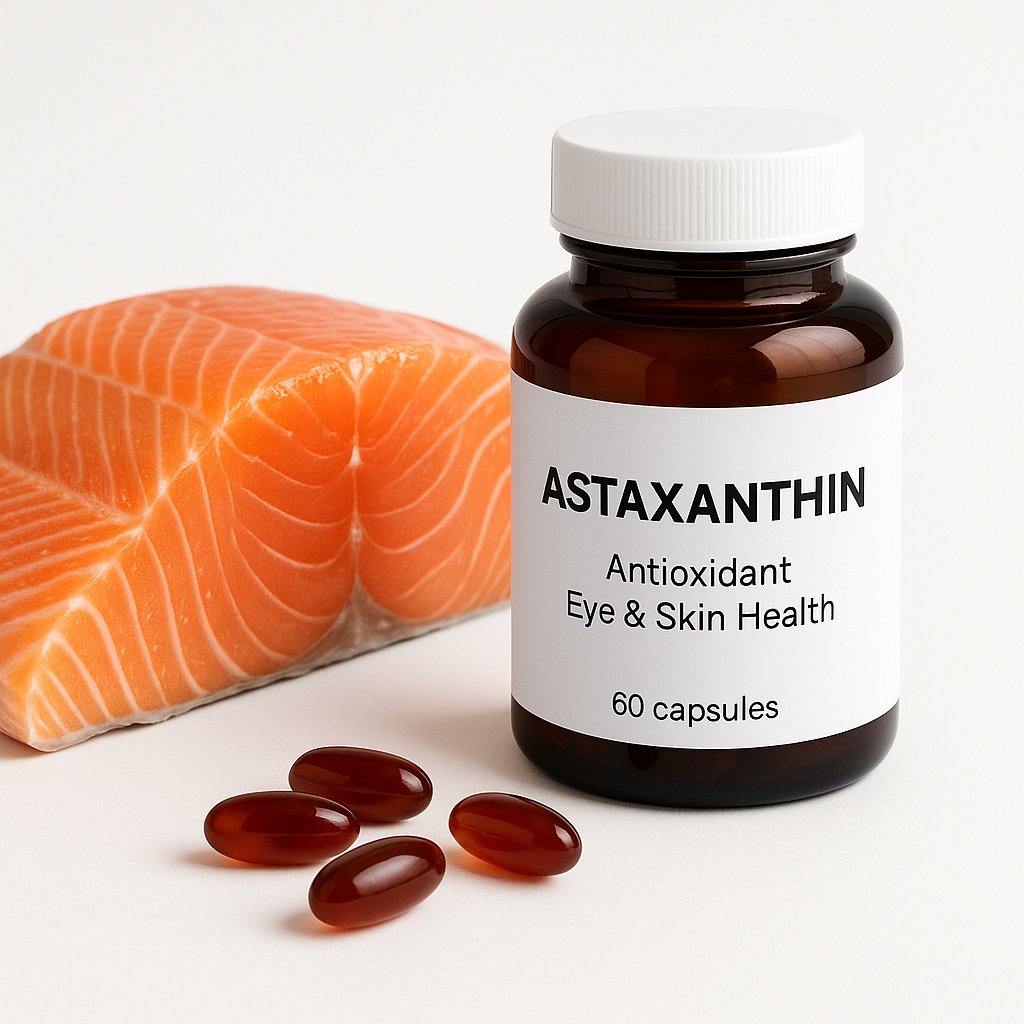
Astaxanthin is one of the better-known carotenoid supplements, but it still sits in an odd middle ground: not as mainstream as omega-3s, not as trendy as collagen, and often oversold as a miracle antioxidant. The better framing is simpler. Astaxanthin is a useful antioxidant carotenoid with decent evidence for eye comfort, skin support, and exercise recovery, and weaker evidence for everything else.
Astaxanthin is just one option. For a broader look at supplements that support glowing skin, we cover the full evidence-based lineup.
It is naturally produced by microalgae and gives salmon, shrimp, and flamingos their pink-red color. In supplements, the highest-quality products usually use natural astaxanthin from Haematococcus pluvialis rather than synthetic material.
What Is Astaxanthin Good For?
Astaxanthin works mainly as an antioxidant that can insert into cell membranes. That structure may help protect tissues exposed to oxidative stress, especially the eyes, skin, and muscles.
The most evidence-backed uses
- Digital eye strain and visual fatigue
- Skin moisture, elasticity, and photoprotection support
- Recovery from exercise-induced oxidative stress and fatigue
What the Research Shows
Eye strain and visual fatigue
This is one of the cleaner use cases. Randomized trials in screen users and people with visual fatigue suggest astaxanthin may improve eye comfort, accommodation, and perceived fatigue. More recent trials continue to support the idea that 4 to 12 mg daily can help people who spend long hours on screens.
Skin support
A systematic review of clinical studies published in 2020 found that astaxanthin supplementation showed benefits for skin elasticity, moisture, and wrinkle-related markers in several human trials. That does not make it a replacement for sunscreen or topical skincare, but it is a legitimate “inside-out” skin support supplement.
Exercise recovery and fatigue
The evidence is mixed but respectable. A 2024 meta-analysis of randomized trials found potential benefits for fatigue and exercise efficiency, though results were not universally strong across all outcomes. In plain English: promising, not magical.
Best Astaxanthin Supplements in 2026
Best overall: BioAstin Hawaiian Astaxanthin
This is still one of the most recognizable and credible astaxanthin products on the market. It uses natural microalgae-derived astaxanthin and comes in several dose options.
Best for: most people who want a straightforward, reputable daily astaxanthin.
Best premium pick: Sports Research Astaxanthin with Coconut Oil
A clean softgel formula that combines natural astaxanthin with fat for easier absorption.
Best for: buyers who want a polished, easy-to-take softgel from a strong supplement brand.
Best value: NOW Foods Astaxanthin
Reliable pricing, widely available, and a practical option for long-term use.
Best for: budget-conscious users who still want a branded, natural-source product.
Best higher-dose option: Nutrex Hawaii BioAstin 12 mg
Useful for people intentionally targeting eye strain or skin support and wanting to stay within a commonly used evidence-based range.
Best for: heavier screen users and people running an 8- to 12-week trial.
How Much Astaxanthin Should You Take?
Most users do well with 4 to 12 mg daily.
Practical dose ranges
- 4 mg/day: good starting dose for general antioxidant support
- 6 to 8 mg/day: common middle ground for eye strain and skin support
- 12 mg/day: often used in more targeted protocols
Astaxanthin is fat-soluble, so take it with a meal that contains some fat.
Who Should Consider Astaxanthin?
Astaxanthin is worth a look for:
- People with high daily screen exposure
- Adults interested in skin aging support
- Endurance exercisers seeking mild recovery support
- People already using omega-3s and wanting another membrane-focused antioxidant
What to Look for in a Good Product
Choose natural astaxanthin
The best supplement labels will specify natural astaxanthin from Haematococcus pluvialis.
Check the dose per softgel
A lot of products underdose at 2 mg. That is not useless, but it is also not where much of the clinical interest sits.
Prefer oil-based softgels
Because astaxanthin is fat-soluble, softgels with olive oil, safflower oil, or coconut oil usually make more sense than dry capsules.
Safety and Side Effects
Astaxanthin is generally considered safe at standard supplemental doses. Side effects tend to be mild when they happen.
Possible side effects
- Mild stomach upset
- Stool color changes
- Rare skin tone changes at very high intake
If you are pregnant, breastfeeding, or taking medications for autoimmune disease or blood pressure, check with your clinician before long-term use.
FAQ
Is astaxanthin worth taking every day?
If your goal is eye strain support, skin support, or mild recovery support, yes, it can be a sensible daily supplement. It is not essential, but it is more evidence-backed than many “beauty from within” products.
What does astaxanthin do for the eyes?
Research suggests astaxanthin may reduce visual fatigue and support eye comfort, especially in people spending long hours on digital devices.
Is astaxanthin better than lutein?
Not necessarily. They do different things. Lutein is more closely associated with macular pigment and retinal support, while astaxanthin is often used for eye strain, skin, and systemic antioxidant support. Some people stack them.
Can astaxanthin help skin aging?
It may help support skin moisture, elasticity, and wrinkle-related measures, but it should be viewed as an adjunct to sunscreen, good skincare, sleep, and protein intake.
When should I take astaxanthin?
Take it with food, ideally a meal containing fat, to improve absorption.
References
- Ambati RR, Phang SM, Ravi S, Aswathanarayana RG. Astaxanthin: Sources, Extraction, Stability, Biological Activities and Its Commercial Applications. Mar Drugs. 2014;12(1):128-152.
- Donoso A, Gonzalez-Duran J, Munoz AA, et al. Therapeutic Uses of Natural Astaxanthin: An Evidence-Based Review Focused on Human Clinical Trials. Pharmacol Res. 2021;166:105479.
- Nagaki Y, Hayasaka S, Yamada T, et al. Effects of astaxanthin on accommodation, critical flicker fusion, and pattern visual evoked potential in visual display terminal workers. J Trad Med. 2002;19(5):170-173.
- Wu H, Niu H, Shao A, et al. Astaxanthin as a Potential Neuroprotective Agent for Neurological Diseases. Mar Drugs. 2015;13(9):5750-5766.
Key Takeaways
- Astaxanthin has the best evidence for digital eye strain, skin hydration, and exercise recovery — not as a general miracle antioxidant.
- Choose natural astaxanthin from Haematococcus pluvialis in oil-based softgels for best absorption.
- A practical dose range is 4–12 mg daily, taken with a fat-containing meal.
- Expect at least 4–8 weeks of consistent use before judging results.
- Safe for most adults; check with a clinician if pregnant, breastfeeding, or on blood pressure or autoimmune medications.
Related Articles
- Longevity Supplements in 2026
- Ergothioneine: The Longevity Vitamin You’ve Never Heard Of
- Best Performance and Recovery Supplements in 2026
This article is for informational purposes only and does not constitute medical advice. Consult your healthcare provider before starting any new supplement regimen.
Sources
- Fakhri S, Abbaszadeh F, Dargahi L, Jorjani M. Astaxanthin: a mechanistic review on its biological activities and health benefits. Pharmacol Res. 2018;136:1-20.
- Ambati RR, Phang SM, Ravi S, Aswathanarayana RG. Astaxanthin: sources, extraction, stability, biological activities and its commercial applications. Mar Drugs. 2014;12(1):128-152.
- Yuan JP, Peng J, Yin K, Wang JH. Potential health-promoting effects of astaxanthin: a high-value carotenoid mostly from microalgae. Mol Nutr Food Res. 2011;55(1):150-165.
- Davinelli S, Nielsen ME, Scapagnini G. Astaxanthin in skin health, repair, and disease: a comprehensive review. Nutrients. 2018;10(4):522.
- Brendler T, Williamson EM. Astaxanthin: how much is too much? A safety review. Phytother Res. 2019;33(12):3090-3111.


Leave a Reply