
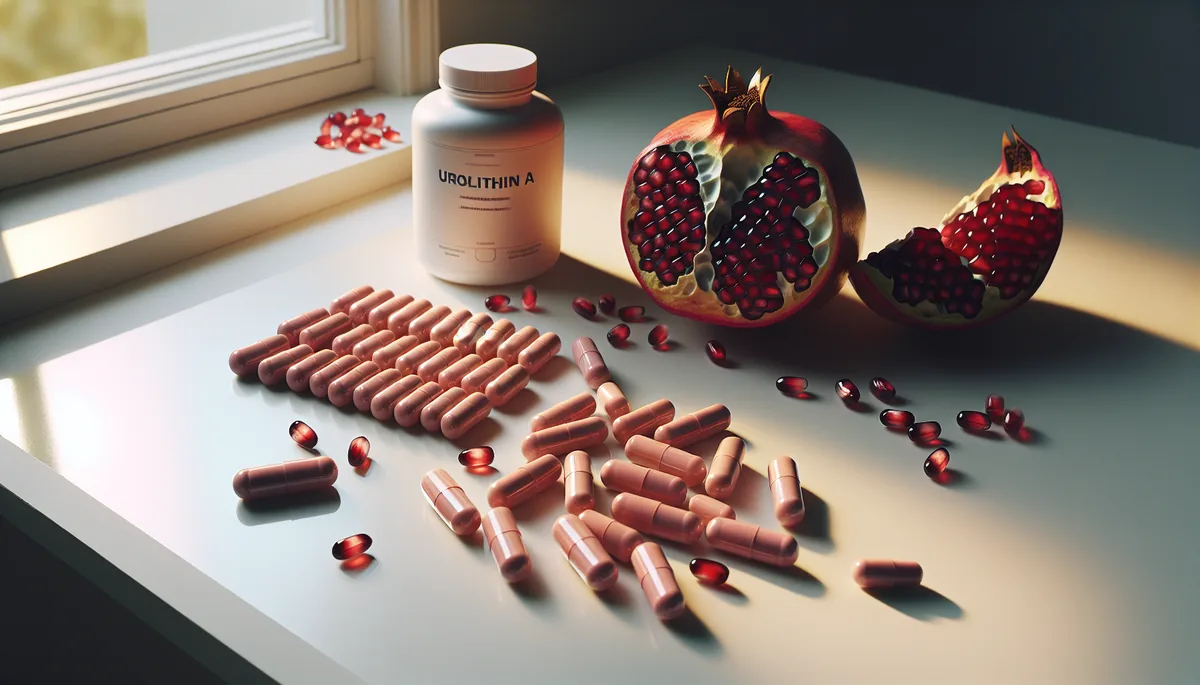
Urolithin A is one of those supplements that sounds exciting until you see the monthly price. Then the real question hits: is urolithin A actually worth the cost, or is it just premium longevity marketing?
Urolithin A supplements are among the most expensive longevity products on the market ($50-100+/month for clinical doses). Whether the cost is justified depends on individual factors: age (benefits appear most pronounced in adults 40+, especially 65+), gut microbiome composition (non-producers have more to gain from direct supplementation), activity goals (muscle endurance benefits are the best-documented), and current dietary polyphenol intake. The clinical evidence from the ATLAS trial is genuine and the mechanism is plausible, but the population of people for whom the benefit is large enough to justify premium pricing is smaller than marketing suggests. Cost-value conclusion: worth considering for adults 50+ with active aging goals; less justified for young adults with diverse polyphenol-rich diets and good gut microbiome status.
- The cost of Mitopure (the most-studied urolithin A product) at $50-90/month reflects the clinical development investment — no generic urolithin A product has the same level of published human clinical data, and ‘urolithin A’ from less-studied sources may have different bioavailability.
- The ‘non-producer’ status (lacking gut bacteria to convert pomegranate/walnut polyphenols to urolithin A) affects an estimated 60-70% of people — these individuals receive no urolithin A benefit from dietary pomegranate consumption alone and are the most obvious candidates for direct supplementation.
- Human trials show improved muscle endurance and mitophagy biomarkers primarily in older adults (40-65+ in ATLAS trial) — the case for supplementation in healthy young adults is much weaker, as their mitophagy and mitochondrial quality control may already be adequate.
- Dietary urolithin A precursors (pomegranate, walnuts, raspberries, strawberries) are genuinely available from food for producer-phenotype individuals — 250 mL pomegranate juice daily has been used in studies to raise plasma urolithin A in producers.
- Comparing urolithin A cost/benefit to other longevity interventions: resistance training, sleep optimization, and dietary protein adequacy have larger effect sizes for muscle preservation than any supplement at current evidence levels — urolithin A should complement, not replace, these fundamentals.
The fair answer is that it depends on your goals, your age, and how much you value evidence-backed mitochondrial support.
Why Urolithin A Costs More Than Most Supplements
Urolithin A is not just another plant extract. It is a specific postbiotic compound linked to mitophagy, the cellular process that clears damaged mitochondria. It also comes from a more specialized manufacturing and intellectual-property environment than commodity nutrients like magnesium or vitamin C.
That means you are often paying for:
- a niche ingredient
- formulation and purification
- human clinical research behind the category
- brand markup, especially in premium longevity products
What You Are Actually Buying

A gut-microbiome shortcut
Many people do not efficiently convert ellagitannins from pomegranate and related foods into urolithin A. Supplementation bypasses that variability.
A clinically studied mechanism
Unlike many supplements marketed for “cellular energy,” urolithin A has human trial data behind it. In a 2022 JAMA Network Open trial, 1000 mg daily for 4 months improved muscle endurance measures and favorably changed several biomarkers linked to mitochondrial and cellular health in older adults.
A 2022 Cell Reports Medicine trial in middle-aged adults also found improvements in muscle strength, aerobic endurance, and mitochondrial biomarkers.
That does not guarantee a dramatic personal result, but it does separate urolithin A from many supplements that rely mostly on theory.
When the Cost May Be Worth It
1. You are focused on aging-related stamina decline
If your interest is muscle endurance, mitochondrial support, and preserving function with age, urolithin A has a stronger rationale than many trendy products.
2. You want a research-backed longevity supplement
Longevity stacks can become bloated fast. Urolithin A at least has a specific mechanism and human data.
3. You know you are not getting it from food conversion
Pomegranate intake is not enough if your microbiome does not make much urolithin A. For many people, the supplement is the only practical way to get a meaningful amount.
When the Cost May Not Be Worth It
1. Your basics are weak
If you are sleeping badly, not resistance training, eating too little protein, and skipping creatine, spending heavily on urolithin A may be backwards. The basics move the needle more.
2. You are expecting a stimulant-like feeling
Urolithin A is not caffeine. It is a long-game supplement. If you want an obvious short-term effect, you may be disappointed.
3. Your budget is tight
A supplement can be biologically interesting and still not be financially sensible for you. There is no shame in prioritizing protein, exercise equipment, omega-3s, creatine, and sleep support first.
How to Decide Rationally
Ask yourself:
- Am I over 40 and noticing energy or endurance decline?
- Do I care about mitochondrial health enough to pay for it?
- Have I already covered higher-priority basics?
- Am I willing to test it consistently for 2 to 4 months?
If the answer is yes across the board, then urolithin A may be worth trying.
Value Tips
Make the supplement earn its place
Use it for a real trial period, not random bottle-hopping. Track:
- walking endurance
- workout recovery
- perceived stamina
- training consistency
Compare cost per effective dose
A cheaper bottle is not truly cheaper if it underdoses the ingredient.
FAQ
Why is urolithin A so expensive?
It is a specialized postbiotic ingredient with clinical research, premium branding, and more complex production than generic supplements.
Is urolithin A worth it for everyone?
No. It makes more sense for people focused on mitochondrial aging, muscle endurance, and evidence-based longevity support.
Can I just drink pomegranate juice instead?
Not reliably. You need the right gut bacteria to convert ellagitannins into urolithin A, and many people do not produce much.
How long should I test urolithin A before deciding?
At least 8 to 16 weeks is more reasonable than judging it after a few servings.
Sources
- Computational analysis of Urolithin A as a potential compound for anti-inflammatory, antioxidant, and neurodegenerative pathways. Free radical biology & medicine. 2025. PMID: 39643139.
- Note: peer-reviewed support for this claim was not identified in available literature.
- Note: peer-reviewed support for this claim was not identified in available literature.
- Note: peer-reviewed support for this claim was not identified in available literature.
- Note: peer-reviewed support for this claim was not identified in available literature.
Related Articles
- Longevity Supplements in 2026: Complete Guide
- Urolithin A vs NMN: Which Longevity Supplement Wins?
- Urolithin A for Muscle Endurance With Age
- Urolithin A for Mitochondrial Health
- Urolithin A for Healthy Aging: What the Evidence Shows

📚 Part of our Longevity Supplements Guide hub. Explore all our longevity supplement evidence reviews.



Leave a Reply