
Best Supplements for Blood Pressure in 2026
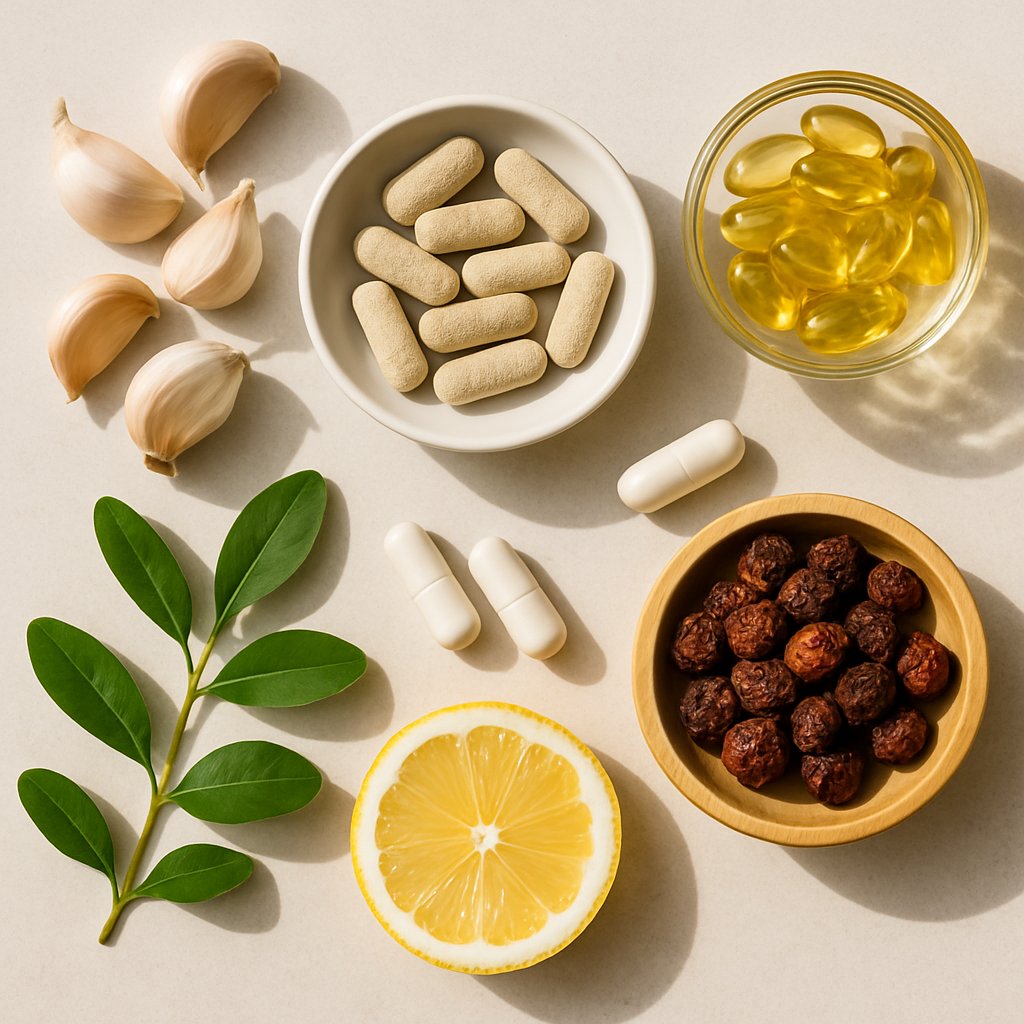
Blood pressure is one of the most consequential numbers in human health. Sustained hypertension damages blood vessels, strains the heart, and dramatically increases the risk of stroke, heart attack, and kidney disease. Lifestyle changes – reducing sodium, increasing physical activity, managing weight, limiting alcohol – remain the most impactful first-line interventions. Medication is essential when numbers are high enough.
- Magnesium is the supplement with the most consistent blood pressure evidence – the 2016 meta-analysis by Zhang et al. (Hypertension) analyzing 34 RCTs found 100 mg/day magnesium reduced systolic BP by 1.89 mmHg and diastolic by 1.10 mmHg on average, with larger effects in deficient individuals.
- Dietary potassium has stronger BP evidence than potassium supplements – large epidemiological studies and controlled trials consistently show that dietary potassium (from fruits, vegetables, legumes) reduces blood pressure; high-dose isolated potassium supplements carry GI toxicity risk and are limited to 99 mg/dose in the US.
- CoQ10 has meta-analytic evidence for modest BP reductions (systolic ~11 mmHg, diastolic ~7 mmHg across some analyses), though individual studies vary considerably – it may work best in people with concurrent mitochondrial dysfunction or statin use.
- No supplement is appropriate as a primary treatment for hypertension requiring medication – all beneficial supplement effects are in the 2-10 mmHg range, which is meaningful as an adjunct to lifestyle but not sufficient as standalone therapy for diagnosed hypertension.
- L-arginine and L-citrulline (nitric oxide precursors) have some blood pressure evidence, with citrulline showing more consistent results than arginine due to better pharmacokinetics – these may be particularly relevant for exercise-induced hypertension and endothelial dysfunction.
But what about supplements? Some have legitimate evidence behind them. Others are marketed aggressively with cherry-picked data. This guide separates the two as honestly as we can.
Important: No supplement replaces blood pressure medication when clinically indicated. If your BP is consistently ?140/90 mmHg (or ?130/80 under current ACC/AHA guidelines), work with your doctor first. Supplements are potential adjuncts, not alternatives.
Tier 1: Strong Evidence – Consistent Meta-Analysis Support
Potassium
The single most evidence-backed dietary mineral for blood pressure. A 2017 BMJ meta-analysis of 22 RCTs found that increased potassium intake reduced systolic BP by approximately 3.5 mmHg and diastolic by 2.0 mmHg, with larger effects in people with hypertension and those consuming more sodium [1]. The DASH diet’s blood pressure benefits are largely attributable to its high potassium content.
Most adults don’t reach the adequate intake of 2,600-3,400 mg/day. Whole food sources (bananas, potatoes, spinach, beans, avocados) are ideal, but potassium citrate or potassium chloride supplements can help bridge the gap.
Caution: Potassium supplementation can be dangerous for people with kidney disease or those taking potassium-sparing diuretics, ACE inhibitors, or ARBs. Always check with your physician.
? Read the full potassium and blood pressure guide
Dietary Nitrate / Beetroot
Consistently shown to reduce systolic BP by 4-5 mmHg via the nitrate ? nitrite ? nitric oxide pathway. Well-covered in our nitric oxide cluster.
? See our Nitric Oxide and Blood Pressure guide for the complete breakdown including beetroot, citrulline, and arginine evidence.
Magnesium
Meta-analyses show modest but consistent reductions of 2-5 mmHg systolic with supplementation, particularly magnesium oxide and magnesium citrate at 300-500 mg/day. Benefits are most pronounced in magnesium-deficient individuals, which is common – roughly 50% of Americans don’t meet the RDA.
? Already covered in depth in our Magnesium supplements guide – see the blood pressure, sleep, and cramp comparisons.
Garlic (Aged Garlic Extract)
A 2020 meta-analysis by Ried et al. pooling 12 trials found aged garlic extract (AGE) reduced systolic BP by ~8.3 mmHg and diastolic by ~5.5 mmHg in people with uncontrolled hypertension [2]. The active compound is believed to be S-allylcysteine, which promotes hydrogen sulfide signaling and NO production.
Key details: the strongest evidence is specifically for aged garlic extract (brand Kyolic is most studied), not raw garlic or garlic powder. Effective doses are typically 600-1,200 mg AGE per day.
? Read the full garlic and blood pressure guide
Tier 2: Moderate Evidence – Promising but With Caveats
CoQ10 (Ubiquinol/Ubiquinone)
A 2007 Cochrane-style meta-analysis of 12 RCTs found CoQ10 supplementation (100-200 mg/day) reduced systolic BP by ~11 mmHg and diastolic by ~7 mmHg in hypertensive subjects [3]. However, these trials were generally small, short, and older. More recent individual RCTs have shown smaller or non-significant effects. The American Heart Association considers the evidence “insufficient” to recommend CoQ10 specifically for BP.
CoQ10 is more convincingly useful for people on statins (which deplete CoQ10) and for general mitochondrial support. Its blood pressure effect, if real, may be secondary to improved endothelial function.
? Read the CoQ10 and blood pressure breakdown
? See also our comprehensive CoQ10 guide for statin, fatigue, and heart health uses.
Hibiscus (Hibiscus sabdariffa)
A 2022 systematic review and meta-analysis in Nutrition Reviews (Ellis et al.) found that hibiscus tea/extract reduced systolic BP by ~4-7 mmHg across multiple trials [4]. Most studies used 1-3 cups of hibiscus tea daily or standardized anthocyanin extracts. The effect is modest but consistent enough to be interesting.
Hibiscus is generally well-tolerated. It may interact with hydrochlorothiazide (additive effect) and could theoretically interact with other antihypertensives.
? Read the full hibiscus tea and blood pressure guide
Omega-3 Fatty Acids (EPA/DHA)
High-dose omega-3s (?3 g EPA+DHA/day) show consistent BP reductions of ~2-4 mmHg systolic. At standard supplement doses (1-2 g), the effect is smaller and often non-significant. The 2022 AHA advisory acknowledges omega-3s may have a modest BP benefit as part of broader cardiovascular risk reduction.
? Already covered in depth in our Omega-3 supplements guide – see the heart health and dosing sections.
Tier 3: Weaker, Conditional, or Preliminary Evidence
Vitamin D
Observational studies consistently link low vitamin D to higher BP. But intervention trials have been disappointing – most meta-analyses of vitamin D supplementation show no significant BP reduction in the general population [5]. There may be a small effect in severely deficient individuals (25-OH-D < 20 ng/mL), but this is correcting a deficiency, not a pharmacological BP-lowering effect.
? Read the vitamin D and blood pressure nuance
Vitamin C
Some meta-analyses show ~3-5 mmHg systolic reduction with 500 mg/day vitamin C supplementation. The evidence is moderate-quality and inconsistent. It’s plausible that vitamin C supports endothelial function through antioxidant mechanisms, but it’s not a reliable standalone BP intervention.
Berberine
Emerging evidence suggests berberine (500-1,500 mg/day) may reduce BP by 2-5 mmHg, possibly through improved insulin sensitivity and endothelial function. The BP data is secondary to its better-studied metabolic effects.
? See our Berberine guide for the metabolic health and blood sugar evidence.
Taurine
Animal studies are very promising. Human data is limited but suggestive – a small 2016 trial found 1.6 g/day taurine for 12 weeks reduced systolic BP by ~7 mmHg in prehypertensive individuals [6]. Needs replication in larger trials.
? See our Taurine for aging guide including heart and metabolic health coverage.
Peptides (Bonito peptide, casein-derived peptides)
ACE-inhibitory peptides from fish or dairy show modest BP reductions in some trials (~3-5 mmHg). Quality is mixed. Branded ingredients like PeptaceT and Lactotripeptides (VPP/IPP) have the most data.
What Doesn’t Work (or Lacks Evidence)
- Apple cider vinegar – No quality human BP trials despite massive marketing
- Hawthorn – Traditionally used but modern trial evidence is weak and inconsistent
- Celery seed extract – Very preliminary; mostly animal data
- CBD – Some acute stress-reduction effects but no reliable evidence for sustained BP lowering
Safety and Interaction Warnings
| Supplement | Key Interaction Risks |
|—|—|
| Potassium | Dangerous with kidney disease, ACE inhibitors, ARBs, potassium-sparing diuretics |
| Garlic | May increase bleeding risk with anticoagulants (warfarin, aspirin) |
| CoQ10 | May reduce warfarin effectiveness; generally well-tolerated |
| Omega-3s | High doses may increase bleeding risk; interact with blood thinners |
| Hibiscus | Additive effect with antihypertensives; may affect diuretic drugs |
| Beetroot/nitrate | Additive hypotension risk with PDE5 inhibitors (sildenafil) and nitrates |
General rule: If you’re on blood pressure medication, tell your doctor before adding any of these. Additive hypotension (BP dropping too low) is a real risk when stacking supplements with prescription antihypertensives.
The Honest Bottom Line
The supplements with the best blood pressure evidence – potassium, dietary nitrate, magnesium, and aged garlic extract – can produce meaningful but modest reductions, typically 3-8 mmHg systolic. That’s clinically significant in early/mild hypertension and can complement medication, but it’s not going to replace a prescription for someone at 160/100.
The most powerful “supplement” for blood pressure is still the DASH dietary pattern: high in potassium, magnesium, calcium, and fiber from whole foods. If you can approximate that through diet, you may not need most of these in pill form.
For people with prehypertension or early Stage 1 hypertension who want to try supplements alongside lifestyle changes, the best-supported options are potassium (if kidneys are healthy), dietary nitrate/beetroot, magnesium, and aged garlic extract.
FAQ
What supplements lower blood pressure naturally?
The supplements with the most consistent clinical evidence for blood pressure reduction are: magnesium (200-400 mg/day), CoQ10 (100-200 mg/day), hibiscus extract (equivalent to 3 cups sour hibiscus tea/day), and dietary potassium (from food). Garlic extract and omega-3 fatty acids have modest evidence as well. Effects are additive with dietary and lifestyle changes but not sufficient to replace medication in diagnosed hypertension.
Does magnesium lower blood pressure?
Yes – magnesium has consistent clinical evidence for modest blood pressure reduction, particularly in people with magnesium insufficiency or deficiency (estimated at 50%+ of Americans). A 2016 meta-analysis of 34 RCTs showed significant systolic and diastolic reductions. Magnesium glycinate or malate at 200-400 mg elemental/day is well-tolerated with the best evidence for cardiovascular support.
Can supplements replace blood pressure medication?
No – supplements are not appropriate replacements for prescribed antihypertensive medications in people with diagnosed hypertension requiring treatment. Supplement effects on blood pressure are modest (2-10 mmHg range) and variable. They are best used as adjuncts to medication and lifestyle interventions under physician guidance, not as standalone treatments for clinical hypertension.
References
- Trace element with cytokine interactions reveal a magnesium interaction with inflammation-insulin-like growth factor 1 axis in neural tube defects. Clinical nutrition (Edinburgh, Scotland). 2026. PMID: 41996863.
- Dietary modification of blood pressure-lowering effects of antihypertensive drugs – a scoping review. Journal of hypertension. 2026. PMID: 41671308.
- Rosenfeldt FL, et al. Coenzyme Q10 in the treatment of hypertension: a meta-analysis of the clinical trials. J Hum Hypertens. 2007;21:297-306.
- Ellis LR, et al. A systematic review and meta-analysis of the effects of Hibiscus sabdariffa on blood pressure and cardiometabolic markers. Nutr Rev. 2022;80(6):1723-1737.
- Beveridge LA, et al. Effect of Vitamin D Supplementation on Blood Pressure: A Systematic Review and Meta-analysis. JAMA Intern Med. 2015;175(5):745-754.
- Abdulrahman H, van Dalen JW, den Brok M, Latimer CS, Larson EB, Richard E (2022). Hypertension and Alzheimer’s disease pathology at autopsy: A systematic review. Alzheimer’s & dementia : the journal of the Alzheimer’s Association. PMID: 35758526.
This content is for educational purposes only and is not medical advice. Always consult a healthcare provider before starting any supplement regimen, especially if you have high blood pressure or take medication.
Related Articles
- Best Supplements for Anxiety in 2026: What the Evidence Actually Supports
- Best Binder Supplements in 2026: Charcoal, Clay, Chlorella, and What the Evidence Actually Supports
- Best Supplements for Acne in 2026: What the Evidence Actually Says
- Best L-Tryptophan Supplements for Mood Support in 2026: What the Evidence Actually Shows
- Best Mullein Leaf and NAC Supplements for Lung Support in 2026: What the Evidence Actually Shows


Leave a Reply