Most people get their lab results, hear “everything’s in normal range,” and leave. But “normal range” is not the same as “optimal range.” The reference ranges printed on standard lab reports represent population averages — and in many cases, those population averages reflect a population that is substantially unwell.
Vitamin D “normal” starts at 20 ng/mL. But the research literature consistently shows optimal immune function, cancer protection, and mood stability at 40–60 ng/mL. Fasting insulin is “normal” below 25 uIU/mL on most lab reports. But pre-diabetic insulin resistance frequently starts at 8–10 uIU/mL. These distinctions matter enormously for what you supplement, how much, and when.
This decision tree covers 20 key biomarkers. For each, it provides: the lab ranges (dangerous → deficient → borderline → adequate → optimal), what each level means, and the specific supplement interventions appropriate at each level.
Quick Answer: The most commonly suboptimal labs in the general population are Vitamin D (deficient in ~40% of adults), Magnesium RBC (deficient in ~68%), Omega-3 Index (inadequate in most Western adults), B12 (low-normal in 15–30%), and Ferritin (depleted in 20%+ of women). These five tests alone can reveal most common deficiencies. Get them, then act on the data.
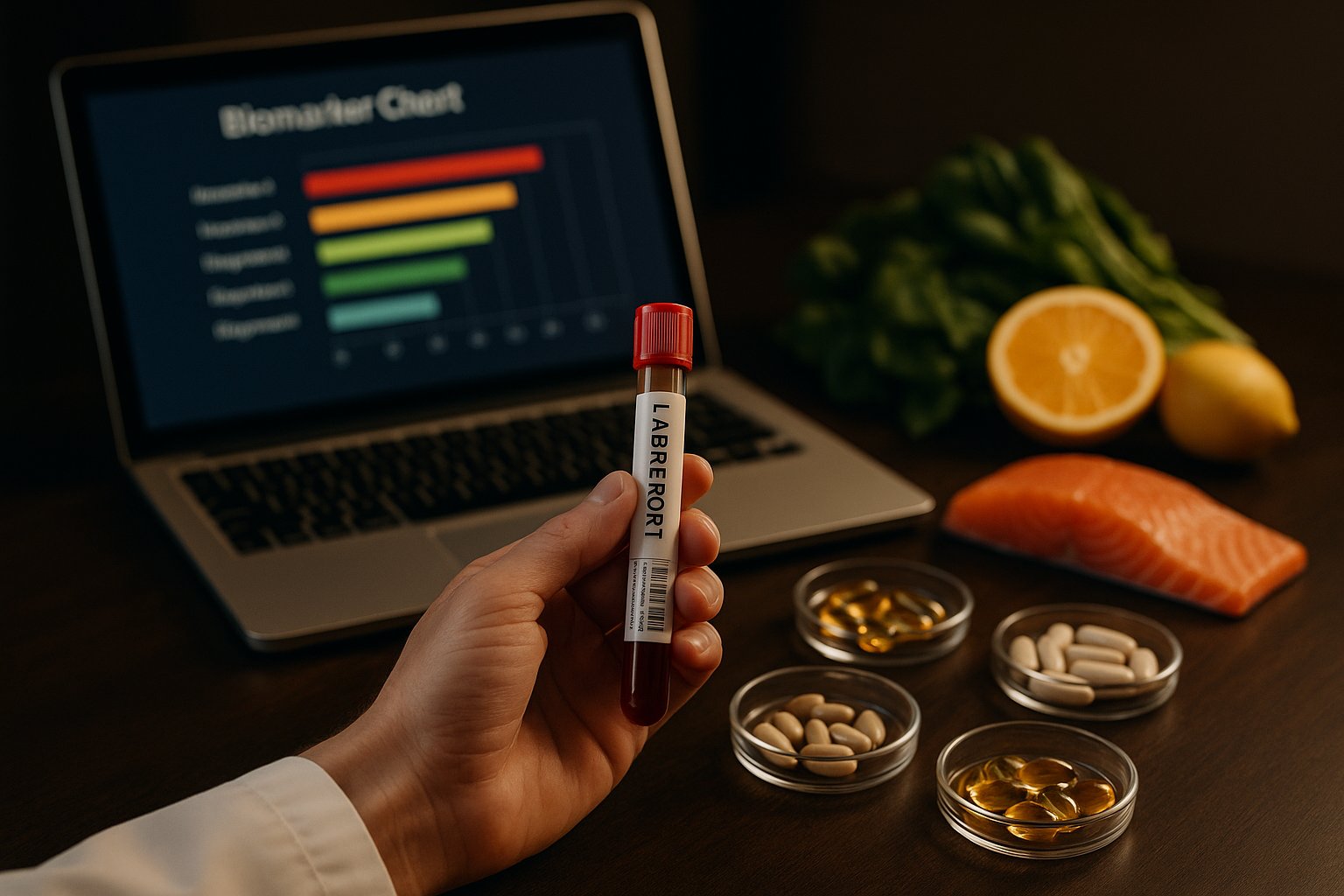
Each bar shows the zone spectrum from dangerous low (dark red) through deficient, borderline, adequate, optimal (green star), and borderline/dangerous high. Supplement action is triggered at Borderline or below.
How to Use This Decision Tree
- Get the lab test (specific test names listed under each biomarker)
- Find your result in the range table
- Take the supplement action listed for that range
- Retest in 3–6 months to confirm response
- Adjust dose based on follow-up
Important disclaimer: This guide is for educational purposes. Supplement decisions based on lab results should be discussed with a knowledgeable healthcare provider, especially when results fall in the deficient or dangerous ranges.
1. Vitamin D — 25(OH)D
Test name: 25-Hydroxyvitamin D (the correct test — not 1,25-dihydroxy)
| Range (ng/mL) | Status | Supplement Action |
|---|---|---|
| <10 | Dangerous Deficiency | 10,000 IU/day D3 + K2 for 12 weeks; retest; may need weekly high-dose Rx |
| 10–20 | Deficient | 5,000–8,000 IU/day D3 + K2 (100–200 mcg) + Magnesium |
| 20–30 | Borderline | 4,000–5,000 IU/day D3 + K2 + Magnesium |
| 30–50 | Adequate | 2,000–3,000 IU/day maintenance; retest annually |
| 50–80 | Optimal ★ | Maintain current dose; monitor annually |
| 80–100 | Borderline High | Reduce dose to 1,000–2,000 IU; ensure K2 and Mg adequate |
| >100 | Risk of Toxicity | Discontinue supplementation; check calcium levels; consult physician |
Clinical notes: Magnesium is required to convert D3 to calcitriol. If magnesium is inadequate, D3 supplementation may not raise levels effectively. Always pair D3 with K2 (MK-7, 100–200 mcg) to direct calcium to bone. Darker skin, obesity, and limited sun exposure dramatically increase deficiency risk. [1]
2. Vitamin B12 — Serum Cobalamin
Test name: Serum Vitamin B12 (note: serum B12 is insensitive; MMA and homocysteine are better functional markers)
| Range (pg/mL) | Status | Supplement Action |
|---|---|---|
| <200 | Deficient | Methylcobalamin 1,000 mcg sublingual daily; consider intramuscular injection for severe deficiency |
| 200–300 | Low-Normal / Borderline | Methylcobalamin 500–1,000 mcg daily sublingual |
| 300–400 | Adequate (low end) | 250–500 mcg methylcobalamin; dietary increase (meat, eggs, dairy) |
| 400–600 | Adequate | Low-dose B12 or dietary; no urgent intervention |
| 600–900 | Optimal ★ | Maintain; no supplementation needed if diet is adequate |
| >900 | Above optimal | Review for supplementation excess; B12 toxicity is rare but persistent high levels may indicate liver or blood disorders — consult physician |
Clinical notes: Serum B12 above 200 pg/mL can mask deficiency. If you suspect B12 insufficiency, order methylmalonic acid (MMA) and homocysteine. Elevated MMA is the most sensitive marker for functional B12 deficiency. Metformin, PPIs, and gastric bypass all impair B12 absorption. [2]
3. Ferritin — Iron Storage
Test name: Serum Ferritin
| Range (ng/mL) | Status | Supplement Action |
|---|---|---|
| <12 | Depleted | Iron bisglycinate 36–65mg with Vitamin C; investigate bleeding; physician evaluation |
| 12–20 | Deficient (no anemia yet) | Iron bisglycinate 25–36mg + Vitamin C daily; dietary iron increase |
| 20–30 | Borderline | Moderate supplementation 18–25mg; iron-rich diet focus |
| 30–100 | Adequate | No supplementation needed; dietary maintenance |
| 100–200 | Optimal ★ (for athletes) | No intervention; monitor |
| 200–300 | Borderline High | Investigate cause; reduce iron supplementation if using |
| >300 | High / Inflammatory | Do NOT supplement iron; ferritin rises with inflammation — order CRP and transferrin saturation; evaluate for hemochromatosis |
Clinical notes: Ferritin is an acute-phase reactant — it rises with infection, inflammation, and metabolic syndrome even when body iron stores are adequate or depleted. Always order with transferrin saturation for full picture. Never supplement iron based on ferritin alone without checking transferrin saturation. [3]
4. HbA1c — Glycated Hemoglobin (3-Month Glucose Average)
Test name: Hemoglobin A1c (HbA1c)
| Range (%) | Status | Supplement Action |
|---|---|---|
| <4.5 | Dangerously Low | Investigate hypoglycemia; seek immediate evaluation |
| 4.5–5.0 | Optimal ★ | Maintain; keto or low-carb diet |
| 5.0–5.6 | Normal | No intervention; diet vigilance |
| 5.7–6.4 | Pre-Diabetic | Berberine 500mg 3x/day with meals; Magnesium; Chromium 200mcg; dietary carb reduction |
| 6.4–6.9 | Diabetic (Low) | Berberine + physician-supervised supplement stack; strict dietary intervention |
| 7.0–8.0 | Diabetic (Moderate) | Physician management primary; supplements adjunctive only |
| >8.0 | Dangerous | Medical management required; supplements adjunctive |
Supplement actions for pre-diabetic range:
– Berberine (500mg 3x/day with meals) — clinical evidence comparable to Metformin for glucose control [4]
– Magnesium glycinate (400mg) — insulin resistance is associated with magnesium deficiency
– Chromium picolinate (200–400mcg) — improves insulin sensitivity
– Alpha lipoic acid (600mg R-ALA) — improves glucose uptake
– Cinnamon extract (500mg, Ceylon) — modest HbA1c reduction in several RCTs
5. Fasting Insulin
Test name: Fasting Insulin (must be drawn after 8h fast)
| Range (uIU/mL) | Status | Supplement Action |
|---|---|---|
| <2 | Too Low | Investigate hypoglycemia |
| 2–5 | Optimal ★ | Maintain; ideal metabolic state |
| 5–8 | Good | Normal; continue low-carb or balanced diet |
| 8–15 | Borderline IR | Berberine; Magnesium; dietary carb reduction; time-restricted eating |
| 15–25 | Insulin Resistant | Aggressive dietary intervention; Berberine, Chromium, ALA, Metformin discussion with physician |
| >25 | Severe IR | Medical evaluation required |
Clinical notes: Fasting insulin is a more sensitive early marker of metabolic dysfunction than HbA1c. Many people with “normal” HbA1c (5.5–5.7%) already have elevated fasting insulin indicating insulin resistance. This is the lab test most frequently missed by standard panels. [5]
6. Homocysteine
Test name: Plasma Homocysteine
| Range (umol/L) | Status | Supplement Action |
|---|---|---|
| <5 | Borderline Low | Generally fine; investigate if unexplained symptoms |
| 5–8 | Optimal ★ | Maintain methylation nutrients |
| 8–10 | Adequate | Monitor; ensure adequate B vitamins |
| 10–15 | Elevated | L-Methylfolate 400–800mcg + Methylcobalamin 1,000mcg + B6 (P5P) 25mg + Trimethylglycine (TMG) 1–2g |
| 15–20 | High | Aggressive methylation stack; investigate MTHFR genetics |
| >20 | Dangerous | Physician evaluation; cardiovascular risk marker; possible genetic methylation disorder |
Why it matters: Elevated homocysteine is an independent cardiovascular risk factor. It’s also a sensitive functional marker for B12, folate, and B6 adequacy. Homocysteine above 15 umol/L more than doubles the risk of cardiovascular events. [6]
7. hs-CRP — High-Sensitivity C-Reactive Protein (Inflammation Marker)
Test name: hs-CRP (order specifically — standard CRP has poor sensitivity)
| Range (mg/L) | Status | Supplement Action |
|---|---|---|
| <0.5 | Optimal ★ | Maintain anti-inflammatory lifestyle |
| 0.5–1.0 | Low Risk | Diet, sleep, and exercise focused |
| 1–3 | Average Risk / Elevated | Omega-3 (3g EPA+DHA), Curcumin + Piperine, Vitamin D adequacy |
| 3–5 | High Risk | Omega-3, Curcumin, Vitamin D; investigate root causes (infection, gut, metabolic) |
| 5–10 | Very High | Physician evaluation; supplements adjunctive to investigation |
| >10 | Acute Inflammation | Active infection or disease likely — seek evaluation |
Supplement actions for elevated hs-CRP:
– Omega-3 (EPA+DHA 3–4g/day): Most robust anti-inflammatory evidence [7]
– Curcumin + Piperine (1,000mg + 20mg): Comparable to low-dose NSAIDs for chronic inflammation
– Vitamin D3 (optimize to 50–70 ng/mL): Immune modulation and anti-inflammatory
– Magnesium: Deficiency associated with elevated CRP
8. Magnesium RBC — Red Blood Cell Magnesium
Test name: Red Blood Cell (RBC) Magnesium — not serum magnesium (serum is insensitive and nearly always “normal”)
| Range (mg/dL) | Status | Supplement Action |
|---|---|---|
| <2.2 | Deficient | Magnesium glycinate 400–800mg/day; may need 3–6 months to replete |
| 2.2–2.5 | Borderline | 400mg magnesium glycinate or malate daily |
| 2.5–2.7 | Low Adequate | 200–400mg maintenance supplementation |
| 2.7–3.1 | Optimal ★ | Maintenance dosing 200mg; dietary adequacy |
| 3.1–3.5 | High Normal | Reduce supplementation; dietary adjustment |
| >3.5 | High | Investigate supplementation dose; high intake or impaired excretion |
Clinical notes: RBC magnesium correlates much better with intracellular magnesium stores than serum magnesium. Serum magnesium is kept tightly regulated by the kidneys — it’s maintained in the normal range even as tissue stores deplete. [8] Always request RBC magnesium specifically.
9. Zinc (Plasma or Serum)
Test name: Plasma Zinc or Serum Zinc (RBC Zinc is more accurate but less available)
| Range (mcg/dL) | Status | Supplement Action |
|---|---|---|
| <60 | Deficient | Zinc bisglycinate 30–50mg with small meal; monitor copper |
| 60–70 | Low | 25–30mg zinc bisglycinate daily |
| 70–80 | Borderline | 15–20mg maintenance zinc |
| 80–110 | Optimal ★ | Maintain dietary zinc; no supplementation needed if diet adequate |
| 110–150 | High Normal | Monitor; possible supplementation excess |
| >150 | Elevated | Discontinue zinc supplementation; check copper |
Clinical notes: Zinc status is difficult to measure accurately — plasma zinc is affected by time of day, fasting status, and inflammation. A trial of zinc supplementation (8 weeks) with reassessment is sometimes more clinically useful than relying on a single lab value. Monitor copper concurrently if supplementing >25mg/day. [9]
10. TSH — Thyroid Stimulating Hormone
Test name: TSH (always get Free T3 and Free T4 as well for full picture)
| Range (mIU/L) | Status | Supplement Action |
|---|---|---|
| <0.3 | Dangerous Low (Hyperthyroid) | Medical evaluation required; no stimulating supplements |
| 0.3–0.5 | Low (possible hyperthyroid/subclincal) | Physician evaluation; no iodine supplementation |
| 0.5–2.5 | Optimal ★ | Ensure iodine, selenium, zinc, iron adequacy |
| 2.5–4.0 | Adequate (high end) | Optimize iodine (150–300mcg), selenium (200mcg), zinc, iron; retest |
| 4.0–10 | Borderline Hypothyroid | Selenium 200mcg, Iodine 150mcg (if low), Zinc, Vitamin D; physician co-management |
| >10 | Hypothyroid | Physician management (Levothyroxine); supplements adjunctive |
Supplement support for borderline hypothyroid: Selenium is critical for thyroid hormone conversion (T4 → T3). Iodine is the thyroid’s raw material, but supplementing iodine without adequate selenium in autoimmune thyroid disease can worsen inflammation. Check TPO antibodies first. [10]
11. Testosterone (Total)
Test name: Total Testosterone (also order Free Testosterone and SHBG for complete picture)
| Range — Men (ng/dL) | Status | Supplement Action |
|---|---|---|
| <200 | Clinically Low | Physician evaluation for TRT; supplements adjunctive |
| 200–400 | Borderline Low | Zinc (30mg), Vitamin D3 (5,000 IU), Ashwagandha (KSM-66), Boron (6mg), Magnesium, resistance training |
| 400–600 | Adequate | Optimize sleep, stress, body fat; lifestyle-first |
| 600–900 | Optimal ★ | Maintain |
| 900–1200 | High Normal | Monitor if using supplements/TRT |
| >1200 | Elevated | Investigate TRT or anabolic use; monitor hematocrit |
Supplement evidence for testosterone support:
– Zinc: Direct testosterone biosynthesis cofactor; even mild deficiency reduces T [11]
– Vitamin D3 at 3,332 IU/day for 1 year raised total testosterone significantly versus placebo in overweight men on a weight-loss program (Pilz et al., 2011). Reported increases were in the ~20% range; effect sizes in other populations (non-deficient, non-overweight men) have been smaller or null.
– Ashwagandha KSM-66 (300–600mg/day): Multiple RCTs show testosterone increases on the order of 14–17% in men, with larger effects on semen parameters in infertile men.
– Boron (6–10mg): Increases free testosterone by reducing SHBG
12. DHEA-S
Test name: DHEA-Sulfate
| Range (mcg/dL) | Status | Supplement Action |
|---|---|---|
| <100 | Low | Physician evaluation; DHEA 25–50mg; assess adrenal function |
| 100–175 | Borderline Low | DHEA 10–25mg (age-dependent); lifestyle: stress, sleep, resistance training |
| 175–400 | Optimal ★ (age-adjusted) | Maintain |
| 400–500 | High Normal | Monitor; no intervention |
| >500 | Elevated | Investigate adrenal cause; discontinue DHEA supplement |
Clinical notes: DHEA-S declines 2–3% per year after age 30. At 70, levels are typically 20–30% of peak. DHEA supplementation should be physician-supervised as it converts to both testosterone and estrogen and may affect hormone-sensitive conditions. [12]
13. Lipid Panel — LDL Cholesterol
Test name: Advanced Lipid Panel (LDL-P or ApoB is more accurate than calculated LDL-C)
| LDL-C (mg/dL) | Status | Supplement Action |
|---|---|---|
| <70 | Optimal for high-risk | No supplementation goal — medical management if on statins |
| 70–100 | Optimal ★ (general population) | Omega-3, CoQ10 (if on statins) |
| 100–130 | Borderline | Omega-3 (3–4g), Berberine, Red Yeast Rice (if not on statins) |
| 130–160 | Elevated | Physician discussion; Omega-3, Berberine, dietary change |
| >160 | High | Physician evaluation; supplement adjunctive |
14. Omega-3 Index
Test name: Omega-3 Index (LabCorp or Quest; measures EPA+DHA as % of red blood cell fatty acids)
| Range (%) | Status | Supplement Action |
|---|---|---|
| <4 | Deficient | 3–4g EPA+DHA/day; retest in 4 months |
| 4–6 | Borderline | 2–3g EPA+DHA/day |
| 6–8 | Adequate | 1–2g EPA+DHA/day |
| 8–12 | Optimal ★ | Maintain; 1–2g/day |
| >12 | High Normal | Reduce to 1g/day; monitor |
Why this matters: The Omega-3 Index is one of the strongest predictors of cardiovascular death risk — an Omega-3 Index of 8%+ is associated with a 90% lower rate of sudden cardiac death compared to an index of 4%. [13]
15. Homocysteine, Folate, Copper, Selenium, Cortisol AM, Uric Acid — Quick Reference
| Lab | Optimal Range | Key Supplement If Low | Key Action If High |
|---|---|---|---|
| Folate (ng/mL) | 12–20 | L-Methylfolate 400–800mcg | Reduce synthetic folic acid |
| Copper (mcg/dL) | 85–120 | Copper bisglycinate 1–2mg | Investigate cause; separate from zinc |
| Selenium (ng/mL) | 120–160 | Selenium (selenomethionine) 100–200mcg | Do NOT exceed 400mcg — narrow therapeutic window |
| Cortisol AM (mcg/dL) | 14–20 | If low: Licorice root, DHEA; assess adrenals | If high: Ashwagandha, Phosphatidylserine, Rhodiola |
| Uric Acid (mg/dL) | 3.5–5.5 men; 2.5–4.5 women | — | Tart cherry (500mg), quercetin, reduce fructose; physician if >7.5 |
| Vitamin A (mcg/dL) | 30–65 | Beta-carotene (not retinol); liver and eggs | Do NOT supplement retinol at high levels without testing |
Building Your Lab-Optimized Supplement Stack
Step 1: Order the Core Panel
Minimum recommended panel for supplement optimization:
1. 25(OH)D (Vitamin D)
2. B12 + MMA + Homocysteine
3. Ferritin + Transferrin Saturation
4. RBC Magnesium
5. Zinc + Copper
6. Omega-3 Index
7. HbA1c + Fasting Insulin
8. hs-CRP
9. TSH + Free T3 + Free T4
10. Testosterone + SHBG (men) / Estradiol + FSH (women)
11. DHEA-S
12. Cortisol AM
Step 2: Prioritize by Deficiency Severity
Address deficient markers before borderline ones. A Vitamin D level of 15 ng/mL deserves aggressive correction before you tweak the details of your nootropic stack.
Step 3: Retest at 3–6 Months
Most nutrients take 60–120 days to fully equilibrate in tissue after supplementation begins. Vitamin D half-life in tissue is ~2 months. Omega-3 index reflects 2–3 months of intake. Retest, adjust, and maintain.
Frequently Asked Questions
Can I order these labs without a doctor?
In most US states, yes. Services like Ulta Lab Tests, Walk-In Lab, Own Your Labs, and LifeExtension Blood Test Super Sale allow direct-to-consumer lab ordering at competitive prices. Some states (NY, NJ, MA, MD, RI) restrict certain direct orders — check your state.
Which labs are most commonly low in the general population?
Vitamin D is deficient in ~41% of US adults. RBC magnesium is suboptimal in an estimated 68% of Americans. Omega-3 index is below 6% in approximately 80% of the Western population. These are the “likely deficient” starting points before you even order labs.
What’s the difference between serum magnesium and RBC magnesium?
Serum magnesium measures magnesium floating in blood plasma — a tightly regulated number that stays “normal” until you’re critically depleted. RBC magnesium measures magnesium inside red blood cells, which reflects intracellular and tissue stores much more accurately. Ask specifically for RBC magnesium.
When should HbA1c be taken?
HbA1c reflects the average blood glucose over 2–3 months and doesn’t require fasting. However, fasting insulin does require a true 8-hour fast. Order both — they give complementary information about glucose metabolism.
How often should I retest?
For deficiency correction (Vitamin D <20, Iron <12, etc.): retest at 8–12 weeks. For optimization tracking: retest at 6 months. For annual health maintenance: full panel annually. Testosterone, DHEA-S, and cortisol can vary significantly based on sleep, stress, and time of day — standardize conditions for comparison.
Related Articles
- Supplement Timing Guide: Morning Through Bedtime Stacks
- Supplement-Supplement Interaction Database
- Supplement Forms Guide: Glycinate vs Citrate vs Oxide
- Supplement Safety Ceiling Database: When More Becomes Dangerous
Sources
- Holick MF. Vitamin D deficiency. N Engl J Med. 2007;357(3):266-281.
- Stabler SP. Vitamin B12 deficiency. N Engl J Med. 2013;368(2):149-160.
- Cook JD, Flowers CH, Skikne BS. The quantitative assessment of body iron. Blood. 2003;101(9):3359-3364.
- Yin J, Xing H, Ye J. Efficacy of berberine in patients with type 2 diabetes mellitus. Metabolism. 2008;57(5):712-717.
- Kraft JR. Detection of diabetes mellitus in situ (occult diabetes). Lab Med. 1975;6(2):10-22.
- Boushey CJ, Beresford SA, Omenn GS, Motulsky AG. A quantitative assessment of plasma homocysteine as a risk factor for vascular disease. JAMA. 1995;274(13):1049-1057.
- Calder PC. Omega-3 fatty acids and inflammatory processes: from molecules to man. Biochem Soc Trans. 2017;45(5):1105-1115.
- Witkowski M, Hubert J, Mazur A. Methods of assessment of magnesium status in humans: a systematic review. Magnes Res. 2011;24(4):163-180.
- Prasad AS. Zinc in human health: effect of zinc on immune cells. Mol Med. 2008;14(5-6):353-357.
- Zimmermann MB, Köhrle J. The impact of iron and selenium deficiencies on iodine and thyroid metabolism. Thyroid. 2002;12(10):867-878.
- Prasad AS, Mantzoros CS, Beck FW, et al. Zinc status and serum testosterone levels of healthy adults. Nutrition. 1996;12(5):344-348.
- Labrie F, Bélanger A, Cusan L, et al. Marked decline in serum concentrations of adrenal C19 sex steroid precursors and conjugated androgen metabolites during aging. J Clin Endocrinol Metab. 1997;82(8):2396-2402.
- Harris WS, Von Schacky C. The Omega-3 Index: a new risk factor for death from coronary heart disease? Prev Med. 2004;39(1):212-220.
- Pilz S, Frisch S, Koertke H, et al. Effect of vitamin D supplementation on testosterone levels in men. Horm Metab Res. 2011;43(3):223-225.
AI-Assisted Content Disclosure
This lab-value decision tree was researched and drafted with AI assistance, then reviewed and edited for accuracy. The “optimal” ranges listed here are more aggressive than most lab-report reference ranges and reflect functional-medicine and integrative-medicine perspectives, not universally agreed-upon clinical thresholds. Specific interventions (dose, duration) reflect common evidence-based practice but may not be appropriate for every individual. Results should always be interpreted by a licensed clinician — especially when values fall in the deficient or dangerous ranges, when you are pregnant or trying to conceive, or when you are on medication. This content is educational and is not a substitute for personalized medical care.