Best Pet Supplements: Nutrition for Dogs & Cats
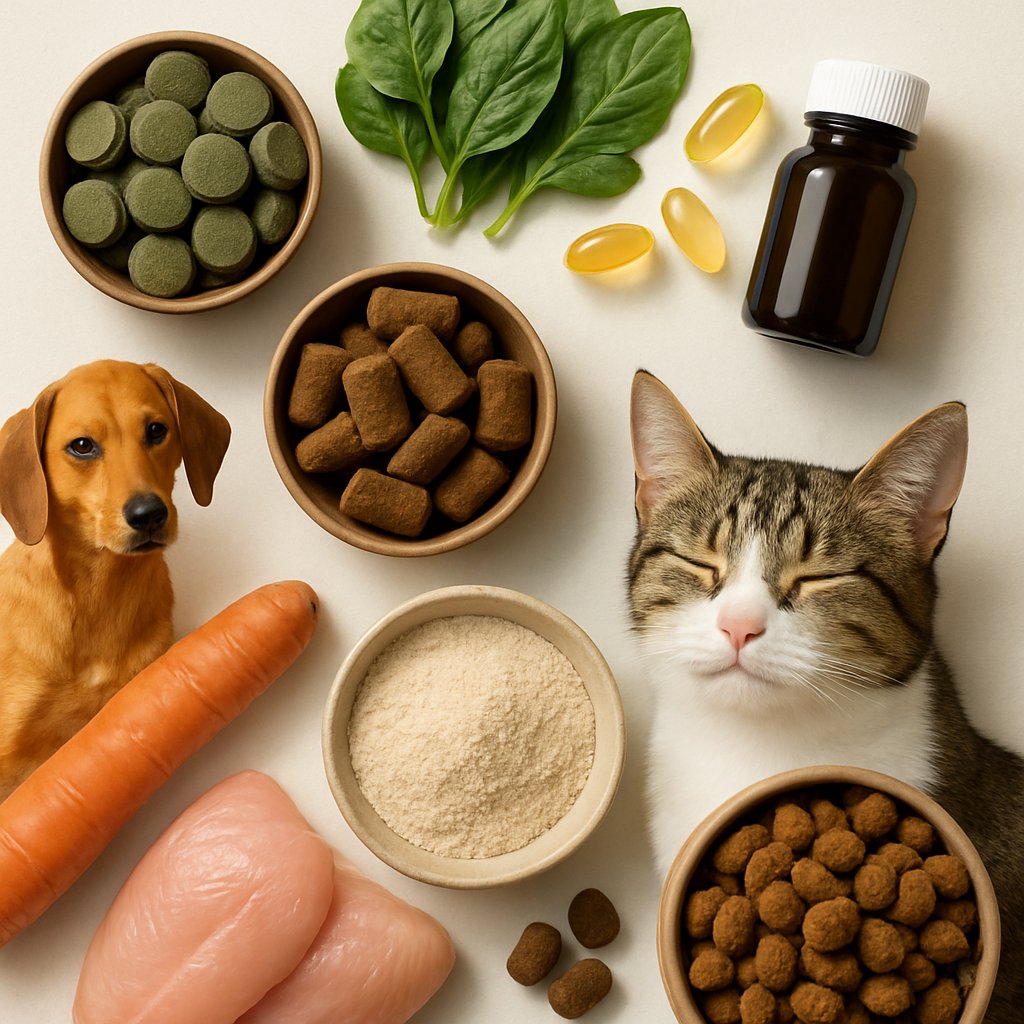
The most evidence-supported pet supplements are omega-3 fatty acids (EPA/DHA from fish oil) for skin, coat, and joint health, and probiotics for digestive health and some immune conditions. Joint supplements containing glucosamine and chondroitin have modest evidence in dogs. Many supplements marketed for pets have minimal species-specific clinical data. Veterinary guidance is essential before starting any supplement regimen, as human supplements are often unsafe for pets and dosing differs significantly by species and weight.
- Omega-3 fatty acids (EPA/DHA) have the most consistent evidence in pets for skin and coat health, reducing inflammation in joint disease, and supporting heart health in some conditions.
- Probiotics show benefits in dogs for antibiotic-associated diarrhea and some stress-related digestive issues; strain specificity matters and human probiotic strains may not be optimal for pets.
- Glucosamine/chondroitin supplements for joint health in dogs show modest benefits in clinical trials; effectiveness may be more consistent in dogs than in humans.
- Never give human supplements to pets without veterinary guidance: dosing, formulation, and species-specific safety differ significantly; xylitol, for example, is lethal to dogs at small doses.
- Joint supplements, fish oil, and probiotics should be third-party tested for purity and free of fillers or additives that may be harmful to pets (especially dogs, which are sensitive to many compounds safe for humans).
Pet supplement spending has exploded past $2 billion annually, but most products lack real evidence. Meanwhile, the ones that actually work — joint support, omega-3s, probiotics, and emerging longevity compounds — can meaningfully extend your pet’s healthspan.
Here’s what’s worth your money and what’s marketing fluff.
Why Pets Need Supplements
Processed Diets Fall Short
Even premium kibble undergoes high-heat processing that degrades heat-sensitive nutrients. Omega-3 fatty acids, certain B vitamins, and enzymes are commonly depleted.
Age-Related Decline
Dogs and cats experience the same age-related changes humans do — joint degradation, cognitive decline, gut microbiome shifts, and increased inflammation. Targeted supplementation can address these proactively.
Breed-Specific Risks
Large breed dogs face joint issues earlier. Flat-faced breeds have respiratory inflammation. Purebreds carry genetic predispositions that nutrition can mitigate.
Best Supplements by Category
🏆 Joint Health: Cosequin DS Plus MSM
The most-studied joint supplement in veterinary medicine. Glucosamine + chondroitin + MSM with published efficacy data in dogs (McCarthy et al., Veterinary Record, 2007).
Best for: Senior dogs, large breeds, dogs with early arthritis signs
Omega-3 Fish Oil: Nordic Naturals Omega-3 Pet
High-concentration EPA/DHA from wild-caught fish. Omega-3s reduce inflammatory markers in dogs and support skin, coat, joints, and cognitive function (Bauer, JAVMA, 2011).
Best for: All dogs and cats — the single most universally beneficial pet supplement
Probiotic: Purina FortiFlora
Veterinarian-recommended Enterococcus faecium SF68 strain with published veterinary research. Sachet format ensures viability.
Best for: Pets with digestive issues, during/after antibiotic courses, stress-related GI upset
Multivitamin: VetriScience Canine Plus
Comprehensive daily vitamin with chelated minerals for bioavailability. Good safety profile for long-term use.
Best for: Dogs on home-cooked or raw diets that may have nutritional gaps
Cognitive Support: Purina Bright Minds (Senior Formula)
Contains medium-chain triglycerides (MCTs) that provide alternative brain fuel. Clinical evidence for improved cognitive function in senior dogs (Pan et al., British Journal of Nutrition, 2010).
Best for: Dogs over 7 showing cognitive decline signs (confusion, nighttime restlessness)
Emerging Pet Longevity Supplements
Rapamycin for Dogs
The Dog Aging Project is studying rapamycin’s effect on canine lifespan. Early results suggest improved cardiac function in older dogs (Urfer et al., GeroScience, 2017). Not yet available OTC but worth watching.
NMN / NAD+ Precursors for Pets
Several companies now offer pet-specific NAD+ precursors. While the evidence is extrapolated from human/mouse research, the biological pathways are conserved across mammals.
Spore-Based Probiotics for Pets
Bacillus spore probiotics survive gastric acid better than traditional strains and show promise for pets with chronic GI issues.
Cat-Specific Considerations
Cats have unique nutritional needs that differ from dogs:
- Taurine — Essential for cats (they can’t synthesize it). Deficiency causes heart disease and blindness
- L-lysine — Commonly recommended for feline herpesvirus, though evidence is mixed (Bol & Bunnik, BMC Veterinary Research, 2015)
- Omega-3s — Critical for kidney health in senior cats
- Probiotics — Choose feline-specific strains; cat gut microbiomes differ from dogs
Best cat-specific supplement: Vetriscience NuCat Senior Multivitamin
What to Avoid
- Human supplements — Dosages and ingredients (like xylitol) can be toxic to pets
- Unregulated “superfood” blends — No evidence, potential contaminants
- Over-supplementing — Fat-soluble vitamins (A, D, E, K) can reach toxic levels in small animals
- Garlic-containing supplements — Toxic to cats, questionable for dogs despite traditional claims
How to Choose Quality Pet Supplements
- Look for NASC (National Animal Supplement Council) seal — The closest thing to regulation in pet supplements
- Verify veterinary research — Named strains, published studies
- Check the form — Soft chews often contain fillers and sugars; powders and oils are generally cleaner
- Match the species — Dog and cat supplements are NOT interchangeable
- Consult your vet — Especially for pets on medication or with chronic conditions
FAQ
What supplements should I give my senior dog?
The core senior dog stack includes omega-3 fish oil (EPA/DHA), a joint supplement with glucosamine and chondroitin, a probiotic, and potentially MCT oil for cognitive support. Blood work can identify specific deficiencies to target.
Are human supplements safe for pets?
Generally no. Human supplements often contain doses too high for animals, plus inactive ingredients like xylitol, grape seed extract, or essential oils that are toxic to pets. Always use pet-specific formulations.
Do pet probiotics actually work?
Yes, specific strains with veterinary research do work. Enterococcus faecium SF68 (FortiFlora) and Bacillus spore probiotics have the strongest evidence. Generic “probiotic blends” without strain identification are less reliable.
How do I give supplements to a picky cat?
Liquid or powder supplements mixed into wet food work best. Fish oil is often accepted readily due to the flavor. Avoid pill forms unless your cat takes pills easily. Some supplements come in treat form, but check sugar and filler content.
Can I give my pet too many supplements?
Yes. Over-supplementation is a real risk, especially with fat-soluble vitamins and minerals like calcium and zinc. More is not better. Stick to evidence-based choices and consult your veterinarian for a tailored protocol.
This article is for informational purposes only and does not constitute veterinary medical advice. Consult your veterinarian before starting any new supplement for your pet.
Related Articles
- Best Longevity Supplements in 2026: Evidence-Based Picks for Healthy Aging, Energy, and Resilience
- Best Menopause Supplements in 2026: Evidence-Based Relief for Hot Flashes, Sleep, and Mood
- Cruciferous Vegetables and Sulforaphane Supplements in 2026: Benefits, Evidence, and Best Sources
- Best Supplements to Reduce Cortisol and Belly Fat in 2026: Evidence vs. Hype
- Best Supplements for Blood Pressure in 2026: What the Evidence Actually Supports
Sources
- Adverse effects of exposure to petrol-generator exhaust fumes on the reproductive hormones, testis and spermatozoa in male dogs. Reproductive toxicology (Elmsford, N.Y.). 2024. PMID: 38042436.
- Plant-based enteral nutrition outperforms ultra-processed formulas in mitigating consequences of antibiotic-induced dysbiosis. JCI insight. 2026. PMID: 41955508.
- Early enteral nutrition may reduce the incidence of refeeding syndrome for patients with severe corona virus disease 2019 and high nutritional risk. Experimental and therapeutic medicine. 2026. PMID: 41383252.
- Maternal nutrition as a key determinant of placental and developing blood-brain barrier xenobiotic protective functions. The Journal of physiology. 2026. PMID: 41935021.
- Recent Advances in the Nutrition and Metabolism of Dogs and Cats. Advances in experimental medicine and biology. 2024. PMID: 38625522.