
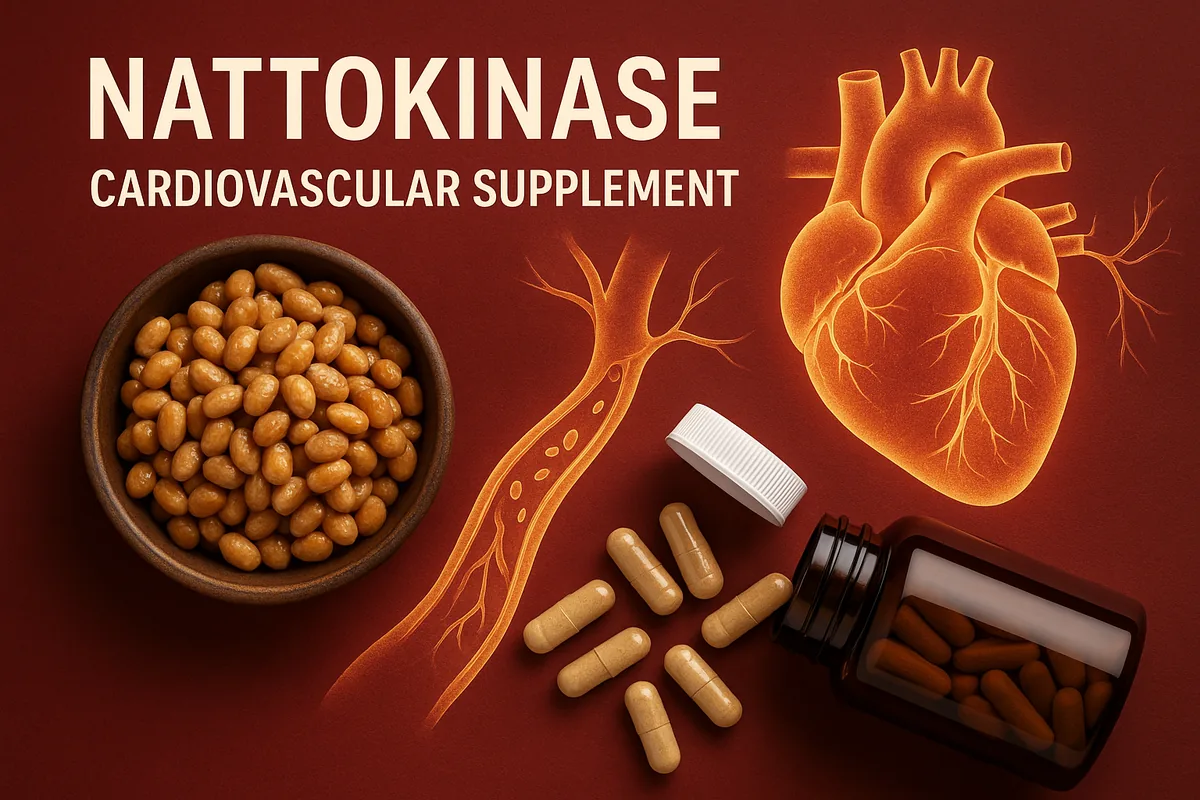
Nattokinase: Cardiovascular Benefits & Safety
1. Direct fibrinolysis: NK directly cleaves fibrin and fibrinogen (fibrin precursor). It can dissolve existing thrombi (clots) in animal studies and ex vivo human blood models. This is the primary mechanism distinguishing it from most supplements.
2. Enhancement of tissue plasminogen activator (tPA): NK potentiates the body’s own clot-dissolving system by increasing tPA activity. The body naturally produces tPA to dissolve clots; NK amplifies this effect.
3. Inhibition of plasminogen activator inhibitor-1 (PAI-1): PAI-1 blocks tPA. NK inhibits PAI-1, allowing the body’s natural fibrinolytic system to operate more effectively. PAI-1 levels correlate with thrombotic and cardiovascular risk; elevated PAI-1 is seen in metabolic syndrome, obesity, and type 2 diabetes.
4. Antiplatelet activity: NK inhibits platelet aggregation through prostaglandin pathway modulation, reducing the “stickiness” of platelets that initiates clot formation.
5. Blood pressure reduction: Multiple mechanisms, including degradation of amyloid fibrils (relevant to arterial stiffness) and modulation of angiotensin-converting enzyme (ACE) activity.
Clinical Evidence
Blood Pressure
The JAMA Hypertension-relevant trial: A 2008 randomized controlled trial in Hypertension Research (Kim et al.) enrolled 86 participants with pre-hypertension or stage 1 hypertension and treated them with nattokinase (2,000 FU/day) or placebo for 8 weeks. The NK group showed significant reductions in systolic BP (-5.5 mmHg) and diastolic BP (-2.8 mmHg) compared to placebo.
Additional BP studies: Several other small-to-medium RCTs have confirmed BP reduction with nattokinase. Meta-analyses suggest a mean reduction of approximately 3-6 mmHg systolic BP.
Carotid Atherosclerosis
A 2017 RCT in Atherosclerosis enrolled 1,062 participants with carotid plaque and randomized them to nattokinase (6,000 FU/day), statin (atorvastatin 20 mg), or both. After 26 weeks:
- Nattokinase alone reduced carotid plaque size by 36.6%
- Statin alone reduced plaque by 11.5%
- Combination reduced plaque by 43.5%
- Nattokinase outperformed the statin on plaque volume reduction in this trial – a striking result
This is one of the most impressive findings for any supplement in an atherosclerosis trial, though replication in larger trials is needed.
Deep Vein Thrombosis (DVT) Prevention
A 2003 study in Clinical Hemorheology and Microcirculation found that long-distance airline passengers taking nattokinase (2,400 FU) before an international flight had significantly lower rates of DVT and “economy class syndrome” compared to placebo. This is the only indication where there’s direct prophylactic DVT trial evidence.
Fibrinogen Reduction
Multiple studies show nattokinase reduces plasma fibrinogen levels – elevated fibrinogen is an independent cardiovascular risk factor associated with both thrombosis and inflammation. Reductions of 15-30% in fibrinogen have been documented.
Dosing and Fibrinolytic Units (FU)
Nattokinase is measured in fibrinolytic units (FU), not milligrams. This is the relevant potency metric – a product listing mg without FU is less useful.
| Use | Dose | Notes |
|---|---|---|
| Blood pressure support | 2,000 FU/day | Once daily; typical product dose |
| Carotid plaque/atherosclerosis | 6,000 FU/day | Higher dose used in atherosclerosis trial |
| DVT prevention (travel) | 2,400 FU pre-flight | Single dose before long flight |
| General cardiovascular support | 2,000-4,000 FU/day | Divided doses may be preferable |
Best taken: On an empty stomach for maximum fibrinolytic activity (food proteins compete for absorption). Many practitioners recommend morning and evening doses on an empty stomach.
Safety and Drug Interactions: Critical Considerations
This is the most important section for practical use.
Blood thinners (warfarin/Coumadin): Nattokinase has additive anticoagulant effects and can increase bleeding risk when combined with warfarin. This combination should only be used under physician supervision with regular INR monitoring.
Antiplatelet drugs (aspirin, clopidogrel/Plavix): Similar concern – additive effects on platelet inhibition. Caution is warranted.
Direct oral anticoagulants (DOACs – rivaroxaban, apixaban, dabigatran): No specific clinical trials, but the additive fibrinolytic/anticoagulant effects suggest caution.
NSAIDs: Possible additive antiplatelet effects.
Surgery: Discontinue nattokinase at least 7-14 days before elective surgery due to bleeding risk.
Allergy: Nattokinase is derived from soy/fermented soy; those with serious soy allergies should use caution (though the enzyme protein is different from typical soy allergens, individual sensitivity varies).
Pregnancy and breastfeeding: Insufficient safety data; avoid during pregnancy.
Nattokinase vs. Pharmaceutical Fibrinolytics
Pharmaceutical fibrinolytic drugs (alteplase, streptokinase, tenecteplase) used for acute stroke and heart attack are vastly more potent than nattokinase – they produce rapid, complete fibrinolysis and are used in acute life-threatening emergencies. Nattokinase is not a replacement for these treatments.
Nattokinase’s utility is preventive – reducing ongoing fibrinogen burden, supporting vascular health over time, and potentially reducing thrombotic risk in cardiovascular disease prevention. It operates over days to weeks, not minutes.
Key Takeaways
- Nattokinase is a fibrinolytic enzyme that breaks down fibrin clots, reduces plasma fibrinogen, inhibits PAI-1, and reduces blood pressure
- The 2017 RCT showing 36.6% carotid plaque reduction at 6,000 FU/day is remarkable and warrants attention, though replication in larger trials is needed
- Blood pressure reduction (~3-6 mmHg systolic) is consistent across multiple RCTs at 2,000 FU/day
- Take on an empty stomach for best fibrinolytic activity; measure potency in FU, not mg
- Critical: Nattokinase has additive effects with blood thinners and antiplatelet drugs – always disclose to your cardiologist or physician before combining
- Most commercial products are vitamin K-free to allow safe use in patients on warfarin – but still discuss with your physician
- This is one of the more clinically evidence-backed supplements for vascular health, particularly for people with elevated cardiovascular risk who want natural approaches
Frequently Asked Questions
Can nattokinase prevent strokes or heart attacks?
Nattokinase reduces fibrin, platelet aggregation, fibrinogen, and blood pressure – all cardiovascular risk factors – and has shown carotid plaque regression in one RCT. Whether it reduces actual cardiovascular events (MI, stroke incidence) has not been tested in large prospective outcome trials. The risk factor evidence supports potential benefit, but direct outcome evidence is not yet available.
How is nattokinase different from serrapeptase?
Both are proteolytic enzymes used for cardiovascular and anti-inflammatory purposes. Serrapeptase is derived from silkworm intestinal bacteria; nattokinase from natto fermentation. Nattokinase has more specific and better-documented fibrinolytic activity in human cardiovascular studies. Serrapeptase has more evidence for anti-inflammatory use (sinus, joint). They’re sometimes combined in supplements.
Should I take nattokinase with vitamin K2?
This depends on your context. If you’re on warfarin, you want vitamin K-free nattokinase – the major brands are formulated this way. If you’re not on warfarin, the combination of nattokinase (fibrinolytic, cardiovascular) and vitamin K2 MK-7 (arterial calcification prevention, bone health) is complementary and makes sense – as both come from natto foods naturally.
How long before I see effects on blood pressure?
Most blood pressure studies show significant effects at 8 weeks of consistent supplementation. Some individuals report changes within 4 weeks. Don’t expect overnight results.
Is there a best time of day to take nattokinase?
On an empty stomach is recommended for best absorption. Morning (before breakfast) and evening (2+ hours after dinner) are common protocols. Some practitioners recommend bedtime dosing, reasoning that fibrin accumulation may be higher during overnight immobility. For more on this topic, see our related guide on potassium supplements for blood pressure.
Sources
- Sumi H et al. “A novel fibrinolytic enzyme (nattokinase) in the vegetable cheese Natto; a typical and popular soybean food in the Japanese diet.” Experientia. 1987. https://doi.org/10.1007/BF01945359
- Kim JY et al. “Effects of nattokinase on blood pressure: a randomized, controlled trial.” Hypertension Research. 2008. https://pubmed.ncbi.nlm.nih.gov/18971838/
- Ren NN et al. “A clinical study on the effect of nattokinase on carotid artery atherosclerosis and hyperlipidaemia.” Atherosclerosis. 2017. https://doi.org/10.1016/j.atherosclerosis.2017.03.039
- Cesarone MR et al. “Prevention of venous thrombosis in long-haul flights with Flite Tabs.” Angiology. 2003. https://pubmed.ncbi.nlm.nih.gov/14626722/
- Weng Y et al. “Nattokinase: An Oral Antithrombotic Agent for the Prevention of Cardiovascular Disease.” International Journal of Molecular Sciences. 2017. https://pubmed.ncbi.nlm.nih.gov/28257088/



Leave a Reply