
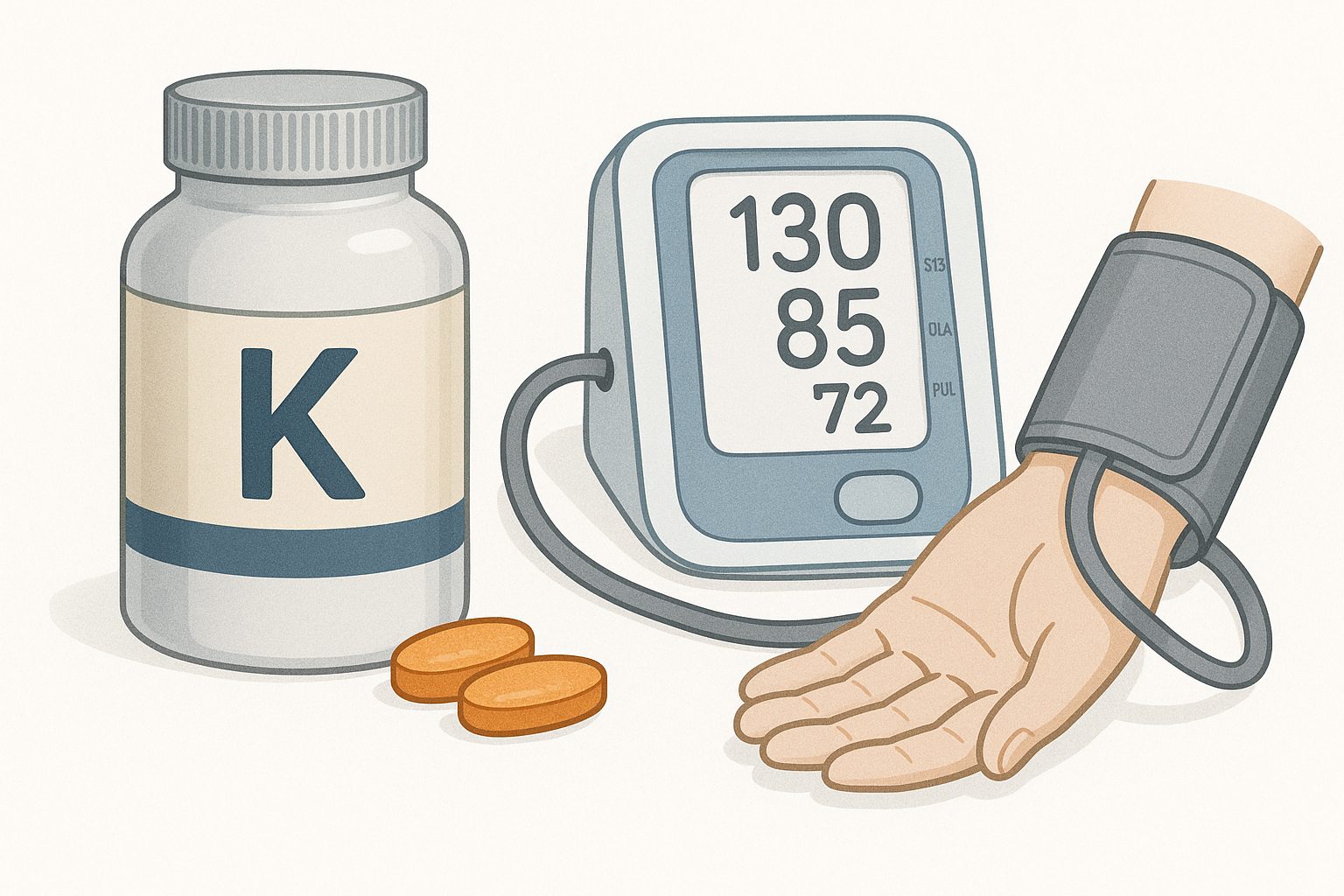
- Sodium excretion: Potassium promotes renal sodium excretion (natriuresis), directly opposing sodium’s BP-raising effect
- Vascular relaxation: Potassium hyperpolarizes vascular smooth muscle cells, promoting vasodilation
- Reduced sympathetic nervous system activity: Higher potassium intake dampens catecholamine-driven vasoconstriction
The sodium-to-potassium ratio may matter more than absolute sodium intake. Populations with high potassium intake consistently have lower hypertension rates, even when sodium intake is moderate [1].
What the Meta-Analyses Show
Aburto et al. (2013, BMJ) — 22 RCTs: Increased potassium intake reduced SBP by 3.5 mmHg (95% CI: 1.5–5.5) overall, with larger effects (~6 mmHg) in hypertensive subjects [1].
Filippini et al. (2020, J Am Heart Assoc) — 32 trials: Confirmed ~3–4 mmHg SBP reduction with potassium supplementation. Effects were dose-dependent up to ~3,500–4,000 mg/day total intake, with diminishing returns above that [2].
DASH diet trials — The DASH pattern’s BP-lowering effect (~5.5/3.0 mmHg) is largely driven by high potassium content (~4,700 mg/day from fruits, vegetables, and dairy) [3].
Food vs. Supplements
Whole foods are preferred. Potassium from foods comes packaged with other beneficial compounds (fiber, magnesium, phytochemicals) and is absorbed gradually. Top sources:
| Food | Potassium (mg per serving) |
|—|—|
| Baked potato (1 medium) | ~925 |
| White beans (½ cup) | ~600 |
| Spinach (½ cup cooked) | ~420 |
| Banana (1 medium) | ~420 |
| Avocado (½) | ~490 |
| Sweet potato (1 medium) | ~540 |
| Salmon (3 oz) | ~420 |
Supplements are limited by regulation — OTC potassium supplements in the US are capped at 99 mg per dose (far below therapeutic levels) due to safety concerns. Prescription potassium chloride (K-Dur, Klor-Con) provides higher doses but requires monitoring. Potassium citrate is available in higher doses in some formulations but should still be used with medical guidance.
Who Benefits Most
- People with hypertension eating a high-sodium diet
- Anyone not meeting the adequate intake (~2,600 mg women / ~3,400 mg men)
- People with adequate kidney function
Who Should NOT Supplement
This is the most critical section. Potassium supplementation is genuinely dangerous in certain populations:
- Chronic kidney disease (CKD) stage 3+ — Impaired renal excretion can cause hyperkalemia (dangerously elevated blood potassium), which can cause cardiac arrest
- People taking ACE inhibitors or ARBs (lisinopril, losartan, etc.) — These drugs reduce potassium excretion
- People taking potassium-sparing diuretics (spironolactone, amiloride) — Additive hyperkalemia risk
- People with adrenal insufficiency — Aldosterone deficiency impairs potassium excretion
Bottom line: Increasing potassium from food is generally safe for most people. Taking potassium supplements beyond OTC doses requires physician guidance, especially if you take any blood pressure or heart medication.
Practical Takeaway
For most adults with borderline or mild hypertension, the practical target is 3,500–4,700 mg of potassium daily from vegetables, legumes, and fruit – while also moderating sodium. That shift alone can produce 3–6 mmHg systolic reduction. Supplements are a secondary option when diet falls short, but therapeutic doses require physician oversight.
Frequently Asked Questions
How much potassium should I take to lower blood pressure?
Most clinical trials use 2–4 grams of supplemental potassium per day (in addition to dietary intake). However, OTC potassium supplements are capped at 99 mg per serving by regulation. To reach therapeutic levels, dietary sources (or prescription potassium under medical supervision) are typically needed.
Why are potassium supplements limited to 99 mg?
The FDA limits OTC potassium supplement doses to 99 mg per tablet due to the risk of hyperkalemia (dangerously high blood potassium) in susceptible individuals, particularly those with kidney disease or on certain medications. Higher doses are available by prescription.
Is it better to get potassium from food than supplements?
Yes, for most people. Food sources provide potassium alongside fiber, magnesium, and other beneficial compounds. They’re also absorbed more slowly and less likely to cause GI irritation or sudden potassium spikes than supplement forms.
Can potassium supplements be dangerous?
Yes, in certain populations. People with chronic kidney disease, those taking ACE inhibitors, ARBs, or potassium-sparing diuretics, and those with adrenal conditions are at risk for hyperkalemia, which can cause cardiac arrhythmias. Always consult a physician before supplementing with potassium.
References
- Aburto NJ, et al. Effect of increased potassium intake on cardiovascular risk factors and disease. BMJ. 2013;346:f1378.
- Filippini T, et al. Potassium Intake and Blood Pressure: A Dose‐Response Meta‐Analysis of Randomized Controlled Trials. J Am Heart Assoc. 2020;9(12):e015719.
- Appel LJ, et al. A clinical trial of the effects of dietary patterns on blood pressure. N Engl J Med. 1997;336(16):1117-24.
Related Articles
- Best Berberine Supplements in 2026: Blood Sugar, Weight Loss, and What the Research Actually Shows
- Best Supplements for Blood Pressure in 2026: What the Evidence Actually Supports
- Nitric Oxide and Blood Pressure: What Supplements Actually Help
- Nitric Oxide Supplements and Exercise Performance: What the Research Shows
- Beetroot and Nitrate Supplements: Performance, Blood Pressure, and Dosing


Leave a Reply