Beetroot juice might be the most well-studied ergogenic supplement you’ve never considered boring. Unlike most sports supplements, the mechanism is clear, the doses are established, and the evidence base includes hundreds of studies. The catch: the effects are modest, and not everyone responds equally.
Dietary nitrate from beetroot and concentrated beetroot shots improves exercise performance and reduces blood pressure through the nitrate-nitrite-nitric oxide (NO) pathway: dietary nitrate is reduced to nitrite by oral bacteria, then to nitric oxide in hypoxic tissues. Performance benefits are well-documented in recreational-to-masters athletes: reduced oxygen cost at submaximal exercise, improved time-to-exhaustion by 10-16% in high-intensity efforts, and meaningful time-trial improvements in 5-30 minute duration events. Blood pressure reductions of 3-5 mmHg systolic are among the most robust effects in the supplement literature. Elite athletes show blunted or absent response, likely due to ceiling effects on existing NO production. Effective dose: 6-8 mmol nitrate (equivalent to ~500 mL standard beetroot juice or one 70 mL concentrated shot), taken 2-3 hours pre-exercise.
If you use nitrate supplements, your choice of mouthwash matters. Certain antibacterial rinses can interfere with the oral bacteria that convert nitrate to nitrite. See our mouthwash guide for 2026 for details.
- The nitrate-nitrite-NO pathway is entirely distinct from the arginine-NOS pathway: dietary nitrate bypasses NOS enzyme activity and provides direct NO availability via the bacterial reduction pathway – this is why beetroot works where L-arginine and L-citrulline often fail, particularly during hypoxic exercise.
- Oral bacteria are essential for dietary nitrate’s benefits: commensal bacteria on the tongue reduce nitrate to nitrite; antibacterial mouthwash use before beetroot supplementation abolishes the blood pressure and performance effects – an important practical point for users.
- Blood pressure reduction from dietary nitrate (3-5 mmHg systolic in meta-analyses) is one of the most reliably replicated supplement effects – benefit is strongest in hypertensive individuals and those with elevated baseline BP; the effect is both acute (2-3 hours post-ingestion) and sustained with chronic daily use.
- Elite athletes (VO2max >65 mL/kg/min) frequently show reduced or absent performance response to beetroot supplementation – hypothesized mechanisms include higher baseline NO production, enhanced nitrate metabolism, and near-ceiling exercise efficiency; higher doses (12+ mmol) may overcome non-response in some elites.
- Concentrated standardized shots (e.g., Beet It Sport, ~6.4 mmol/70 mL) are preferable to whole beetroot juice for reproducible dosing – natural juice nitrate content varies significantly with growing conditions and soil nitrogen content.
The Nitrate-Nitrite-NO Pathway
Beetroot works through a pathway entirely distinct from L-citrulline and L-arginine. Dietary nitrate (NO??) is absorbed in the gut, concentrated in saliva by the salivary glands, and then reduced to nitrite (NO??) by commensal bacteria on the tongue. This nitrite is swallowed and further reduced to nitric oxide in the stomach and in hypoxic tissues [1].
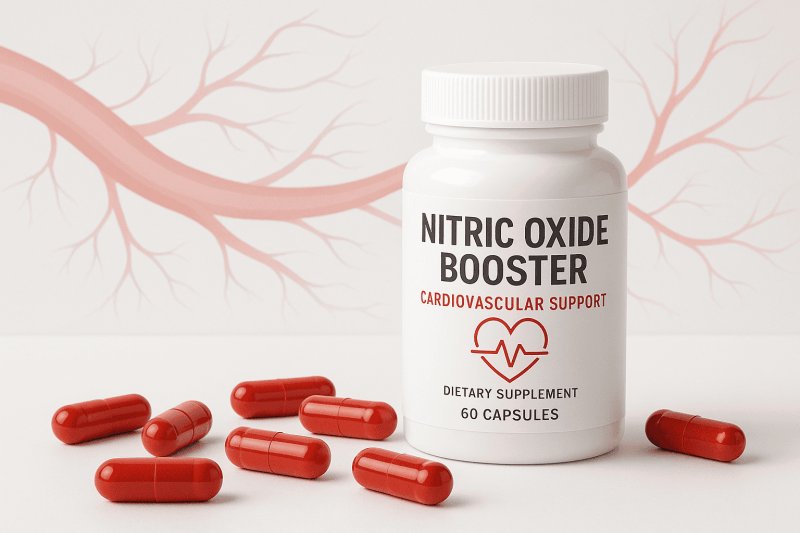
Critical detail: This pathway requires oral bacteria. Studies consistently show that antibacterial mouthwash attenuates or abolishes the blood pressure-lowering and performance-enhancing effects of dietary nitrate [2]. If you’re using beetroot for these purposes, skip the Listerine.
Exercise Performance: The Flagship Benefit
The landmark evidence
Bailey et al. (2009) published the study that launched beetroot juice into sports nutrition. Subjects drinking ~500 mL beetroot juice daily (~6.2 mmol nitrate) for 6 days showed:
- Reduced oxygen cost of submaximal exercise (lower VO? at the same work rate)
- Extended time to exhaustion by ~16% during severe-intensity exercise [3]
That 16% figure got enormous attention. Subsequent studies and meta-analyses have consistently shown a positive effect, though the magnitude is typically smaller:
- McMahon et al. (2017) meta-analysis: significant improvement in time-trial performance and time-to-exhaustion, with a small-to-moderate effect size [4]
- The benefit is most reliable for exercise lasting 5-30 minutes at high intensity
- Effects on very short (<1 min) or very long (>1 hour) efforts are less consistent
The elite athlete problem
Multiple studies in highly trained athletes (VO?max > 65 mL/kg/min) have shown reduced or absent responses to nitrate supplementation [5]. Proposed explanations:
- Elite athletes already have highly developed NOS pathways and higher baseline NO production
- They may have enhanced nitrate metabolism that limits further augmentation
- Their exercise efficiency is already near ceiling
Practical translation: If you’re a recreational exerciser, weekend warrior, or master’s athlete, you’re more likely to benefit. If you’re an elite endurance athlete, don’t expect beetroot to be a game-changer – though some studies suggest higher doses (12+ mmol) may still help [6].
Older adults and clinical populations
An underappreciated finding: older adults and people with cardiovascular risk factors often show larger performance benefits from nitrate supplementation than young healthy subjects [7]. This makes physiological sense – these populations tend to have impaired NOS function, making the nitrate-nitrite backup pathway more important.
Blood Pressure: Robust and Well-Replicated
The blood pressure evidence for dietary nitrate is arguably stronger than for any other NO precursor supplement.
Key meta-analyses:
- Siervo et al. (2013): 16 trials, mean reduction of ?4.4 mmHg systolic [8]
- Bahadoran et al. (2017): confirmed similar reductions, noting that the acute effect (within 2-3 hours of ingestion) and chronic effect (daily supplementation for weeks) are both present [9]
- Effects are strongest in people with elevated baseline BP and in those not already taking antihypertensive medication
Dose-response: Blood pressure reductions appear with as little as 4 mmol nitrate (~250 mL beetroot juice), with increasing effects up to ~8 mmol. Higher doses don’t seem to add much additional benefit [10].
Cognitive Function: Early but Interesting
Several small studies suggest that dietary nitrate improves cerebral blood flow and may benefit cognitive function, particularly in older adults:
- Presley et al. (2011) showed that a high-nitrate diet increased cerebral blood flow in frontal lobe regions in older adults [11]
- Wightman et al. (2015) found improved cognitive task performance following acute beetroot juice consumption [12]
This area is still early – the studies are small and short-term. But the mechanistic rationale (improved cerebral perfusion) is sound, and it’s a space worth watching.
Dosing and Timing
| Goal | Dose (nitrate) | Form | Timing |
|——|—————-|——|——–|
| Acute performance | 6-8 mmol | Concentrated shot (70 mL) | 2-3 hours pre-exercise |
| Chronic loading | 6-8 mmol/day | Juice or concentrated shot | Daily for 3-7 days, plus pre-exercise |
| Blood pressure | 4-8 mmol/day | Juice, shot, or high-nitrate foods | Daily, any time |
| Higher-dose protocol | 12-16 mmol | Double shots or larger juice volume | Elite athletes attempting to overcome non-response |
Nitrate content varies: Whole beetroot juice (~250-500 mL) provides roughly 5-8 mmol nitrate, but this varies with growing conditions, soil, and processing. Concentrated shots (e.g., Beet It, ~70 mL) are standardized to ~6.4 mmol, which is why researchers prefer them.
Choosing a Product
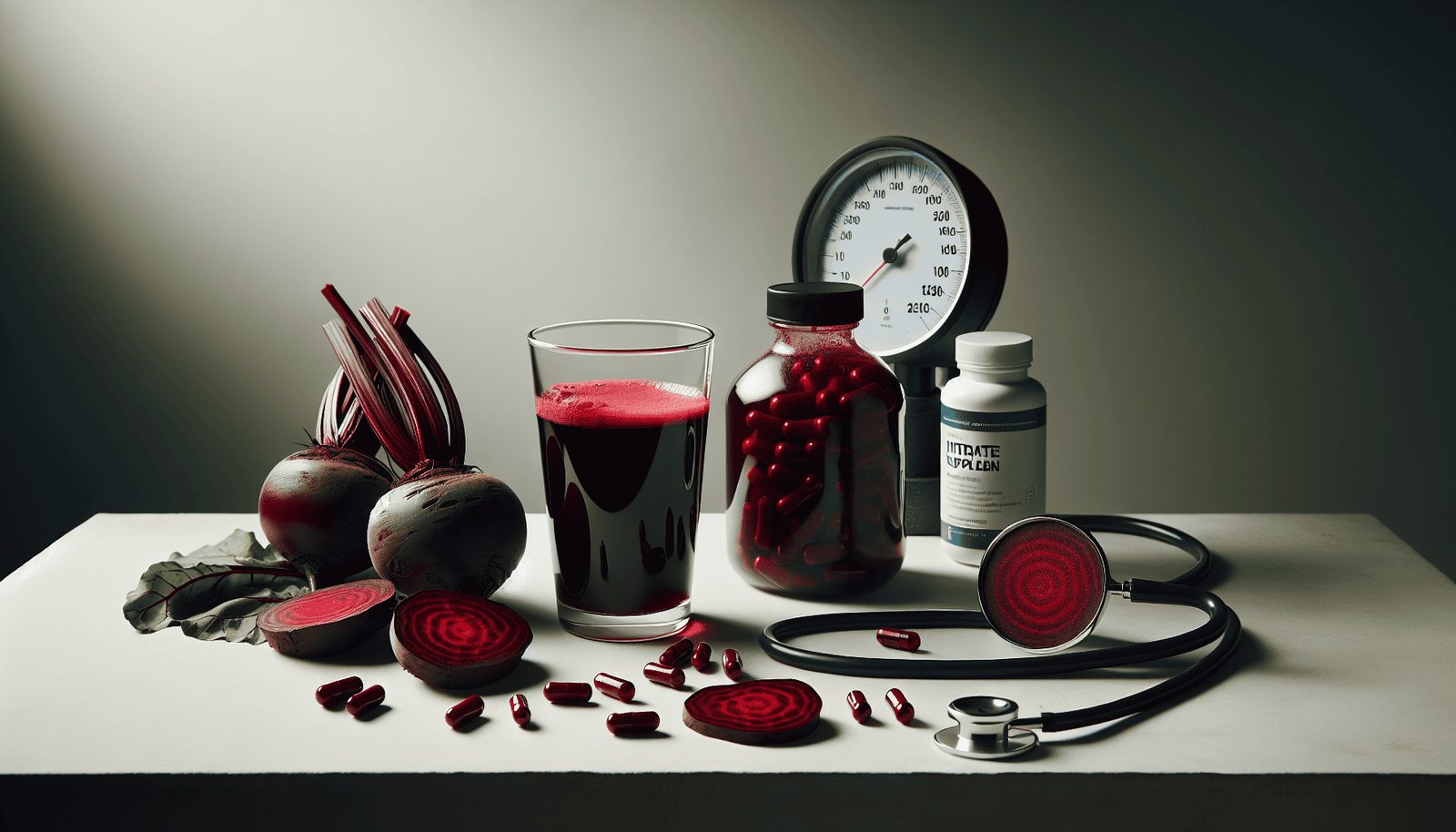
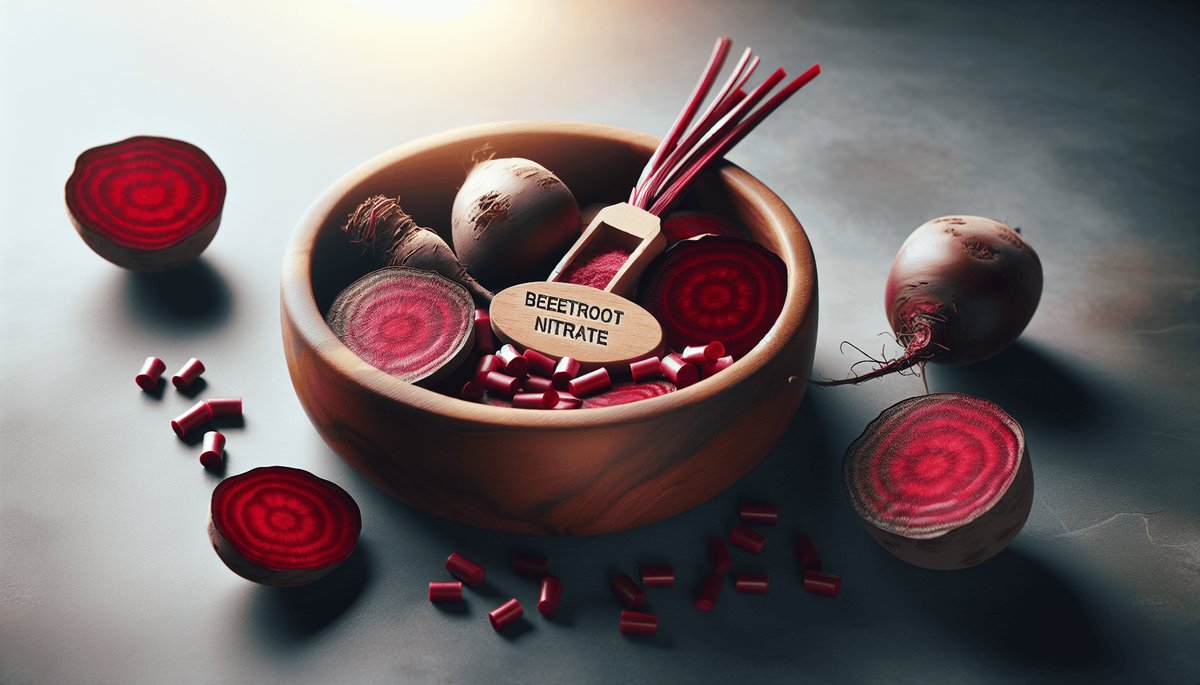
Concentrated beetroot shots (standardized to nitrate content) are the gold standard for supplement use. They deliver a known dose in a small volume.
Beetroot powders and capsules are popular but problematic:
- Many don’t declare nitrate content per serving
- Processing (especially heating and dehydration) can reduce nitrate levels
- Without standardization, you’re guessing at the dose
- Some products contain trivially small amounts of actual beet compounds
What to look for:
- Declared nitrate content in millimoles (mmol) or milligrams per serving
- Third-party testing for contaminants (beets can concentrate heavy metals from soil)
- Minimal processing if using juice/powder forms
What to avoid:
- “Beetroot extract” capsules with no nitrate standardization
- Products that list beet powder low in the ingredient list of a multi-ingredient formula
- Any product making claims about “500% more NO” or similar nonsense
Safety
Beetroot and dietary nitrate are very safe at supplement doses:
- Beeturia (red urine/stool) occurs in ~10-14% of people. Completely harmless but can alarm those who aren’t expecting it.
- GI discomfort is rare but possible with large volumes of juice.
- Nitrate ? nitrosamine: Dietary nitrate from vegetables is not the same as nitrate/nitrite preservatives in processed meat. Vegetable-derived nitrate does not appear to carry the same cancer risk, likely because vegetables contain antioxidants (vitamin C, polyphenols) that inhibit nitrosamine formation [13].
- Drug interactions: Same caution as other NO precursors with blood pressure medications and PDE5 inhibitors.
FAQ
How much beetroot juice should I drink for performance?
For acute exercise performance, 1-2 standardized concentrated shots (70 mL each, 6-8 mmol total nitrate) taken 2-3 hours before exercise is the most studied protocol. For daily blood pressure management, a similar nitrate dose from juice or shots can be taken at any time daily. Whole beetroot juice (~500 mL standard commercial juice) provides roughly 5-8 mmol nitrate but varies with brand and production method – standardized shots provide more reliable dosing.
Does beetroot help with blood pressure?
Yes – beetroot and other dietary nitrate sources are among the best-studied supplements for blood pressure reduction. Multiple meta-analyses show 3-5 mmHg systolic reductions with consistent dietary nitrate intake. Effects are strongest in hypertensive individuals and those with elevated baseline blood pressure. The mechanism (nitrate to nitrite to NO vasodilation) is well-established, and the dose needed (~4-8 mmol/day) is achievable with a single concentrated shot or 250 mL juice.
What is the best time to take beetroot for exercise?
2-3 hours before exercise is the optimal timing based on pharmacokinetic data – plasma nitrite peaks at approximately 2-3 hours post-ingestion of dietary nitrate. For chronic loading protocols (7+ days of daily beetroot), timing is less critical since blood nitrite remains elevated throughout the day. Acute single-dose supplementation should be timed at the 2-3 hour window to align with peak nitrite availability and exercise performance.
Does beetroot help elite athletes?
Elite endurance athletes (VO2max >65 mL/kg/min) consistently show reduced or absent performance responses to dietary nitrate supplementation compared to recreational athletes. Proposed reasons include higher baseline NO production, optimized nitrate metabolism, and near-ceiling exercise efficiency. Some research suggests very high doses (12-16 mmol) may still benefit elites; average recreational exercisers and masters athletes are much more likely to see meaningful performance improvements.
References
- Lundberg JO, Weitzberg E, Gladwin MT. The nitrate-nitrite-nitric oxide pathway in physiology and therapeutics. Nat Rev Drug Discov. 2008.
- Bailey SJ, et al. Dietary nitrate supplementation reduces the oxygen cost of exercise. J Appl Physiol. 2009.
- McMahon NF, Leveritt MD, Pavey TG. Dietary nitrate supplementation and endurance exercise performance. Sports Med. 2017.
- Wylie LJ, et al. Beetroot juice and exercise: pharmacodynamic and dose-response relationships. J Appl Physiol. 2013.
- Siervo M, et al. Inorganic nitrate and beetroot juice supplementation reduces blood pressure in adults. J Nutr. 2013.
Related Articles
- Best Nitric Oxide Supplements for Blood Flow
- Beetroot vs Citrulline for Pumps
- Nitric Oxide Supplements and Exercise Performance
- Nitric Oxide and Blood Pressure
- L-Citrulline Supplements: Dosing and Evidence
Sources
- Systematic reviews on beetroot juice and exercise performance. PubMed search.
- Systematic reviews on dietary nitrate and performance. PubMed search.
- Meta-analyses on beetroot juice and blood pressure. PubMed search.
- Reviews on nitrate dosing strategies and timing. PubMed search.
- Reviews on beetroot, nitrate, and nitric oxide pathways. PubMed search.
📚 Part of our Complete Guide to Blood Pressure Supplements hub. Explore all our blood pressure supplement evidence reviews.
📚 Part of our Best Nitric Oxide Supplements 2026 hub. Explore all our nitric oxide and blood flow guides.