AKG Supplement Guide: Ca-AKG for Longevity, Dosage, and What Science Says
Quick Answer: Ca-AKG (calcium alpha-ketoglutarate) is a Krebs cycle intermediate that research suggests may extend healthy lifespan by improving mitochondrial efficiency, reducing inflammatory markers, and influencing epigenetic aging clocks. A 2020 mouse study showed roughly a 12% increase in median lifespan, and human data is beginning to support its role in biological age reduction. Typical dosing is 1,000–1,500 mg/day on an empty stomach.
If you’ve spent any time in longevity circles, you’ve probably bumped into calcium alpha-ketoglutarate — Ca-AKG for short. It’s showing up in biohacker stacks, in Bryan Johnson’s famously rigorous Blueprint protocol, and in an increasingly serious body of aging research. But unlike many supplements that ride hype without much science, Ca-AKG has a few genuinely compelling mechanisms and at least one landmark study behind it. Whether it’s worth adding to your own regimen is a more nuanced question — and that’s exactly what this guide is here to answer.
Alpha-ketoglutarate (AKG) is not an exotic molecule your body has never seen before. It’s a naturally occurring metabolite right in the center of the citric acid cycle — the biochemical engine that generates most of the ATP your cells run on. AKG levels, however, decline significantly with age. Research published in Aging Cell (Su et al., 2019) demonstrated that circulating AKG decreases by roughly tenfold between young adulthood and old age in humans. That steep decline has made researchers wonder: what happens if you supplement it back?
What Is Ca-AKG and Why Calcium?
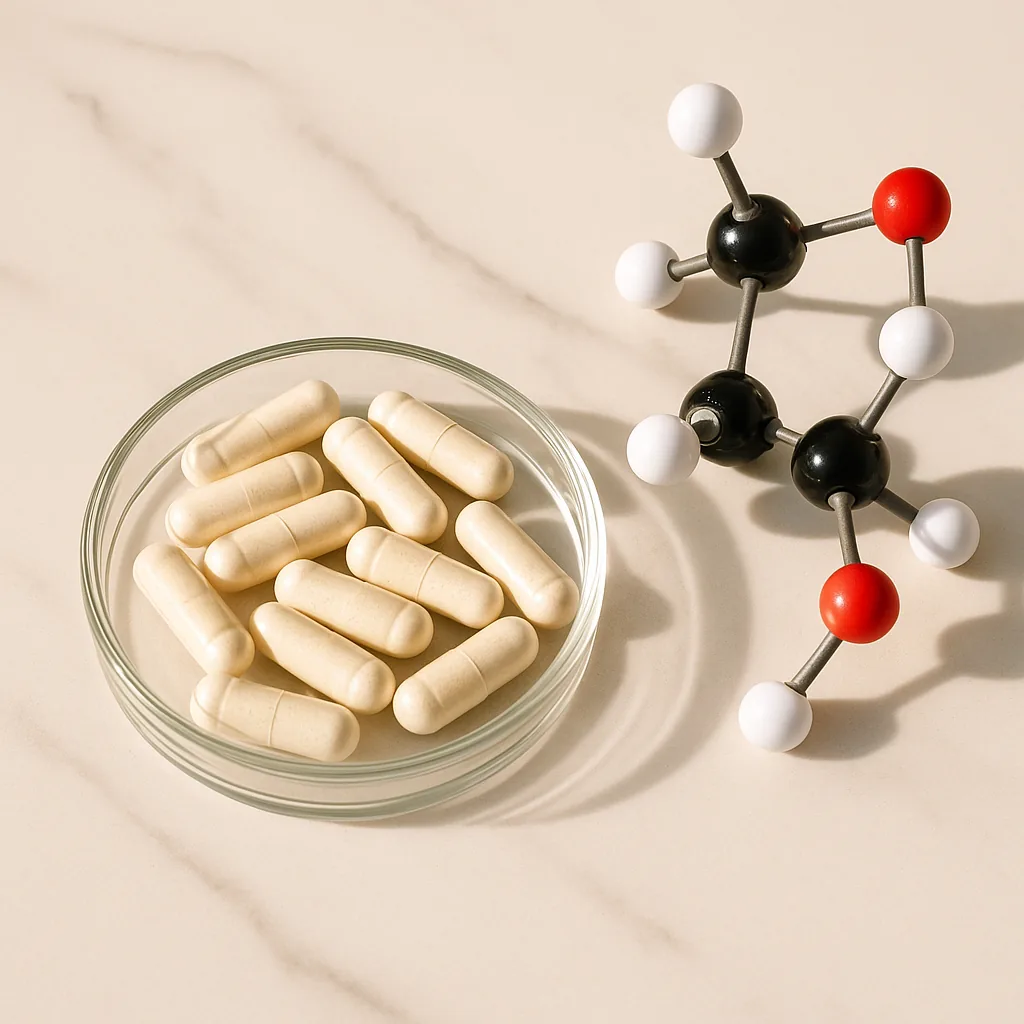
Alpha-ketoglutarate itself is the base compound, but it’s highly reactive and poorly absorbed in its free acid form. Binding it to calcium creates a stable salt — calcium alpha-ketoglutarate — that survives digestion and delivers the AKG molecule to the bloodstream effectively. This is the form used in virtually all clinical research and commercial supplements, which is why you’ll see “Ca-AKG” and “AKG supplement” used interchangeably in most contexts.
The calcium component isn’t just a carrier vehicle. Calcium AKG actually provides a modest amount of elemental calcium per dose, which may have synergistic effects in bone metabolism. More importantly, the chelation makes the molecule stable enough to store on a shelf and survive gastric acid — a significant practical advantage.
The Mechanisms: Why Ca-AKG Might Actually Work
Several overlapping mechanisms have been proposed, and unlike many supplement categories where the mechanism is speculative, Ca-AKG’s pathways are grounded in well-understood biochemistry.
Krebs Cycle Support and Mitochondrial Efficiency
AKG sits at one of the key branch points in the Krebs cycle. As a direct precursor to succinyl-CoA, it feeds the production of NADH and ultimately ATP. Aging mitochondria become less efficient, and supplementing AKG may help compensate for that declining efficiency. Chin et al. (Antioxidants & Redox Signaling, 2014) demonstrated that AKG supplementation in aged cells improved mitochondrial membrane potential and reduced reactive oxygen species (ROS) production — two markers of mitochondrial health.
Epigenetic Regulation via TET Enzymes
This is arguably the most exciting mechanism. TET enzymes are DNA demethylases — proteins that influence which genes are expressed by modifying methylation marks on DNA. AKG is a required co-factor for TET enzymes to function. Without sufficient AKG, TET activity drops, and the epigenetic landscape of aging cells drifts in ways that accelerate biological aging. Carey et al. (Nature, 2015) showed that AKG directly influences TET-mediated DNA demethylation, connecting AKG levels to epigenetic age — the kind of age measured by DNA methylation clocks like Horvath’s clock, not just the number of candles on your birthday cake.
mTOR Inhibition and Autophagy
Ca-AKG may modestly inhibit mTOR complex 1 (mTORC1), the cellular nutrient sensor that, when chronically active, accelerates aging and suppresses autophagy — the cellular self-cleaning process. This is the same pathway targeted by rapamycin and caloric restriction. Niemiec et al. (PLOS ONE, 2021) found that AKG supplementation in C. elegans extended lifespan in part through mTOR-related pathways, echoing earlier work in model organisms.
Reducing Systemic Inflammation
Chronic low-grade inflammation — sometimes called “inflammaging” — is a hallmark driver of age-related disease. AKG is a precursor to glutamate and glutamine, amino acids that help regulate inflammatory signaling. Jiang et al. (Amino Acids, 2020) demonstrated that AKG supplementation reduced circulating inflammatory markers including IL-6 and TNF-α in aged animals.
The Mouse Lifespan Study: What the Science Actually Shows
The most cited piece of Ca-AKG research is the 2020 paper by Asadi Shahmirzadi et al. published in Cell Metabolism. It’s worth examining carefully because the results are genuinely interesting — but also require some context.
The study treated middle-aged mice with Ca-AKG supplementation (mixed into their food) and monitored lifespan and healthspan outcomes. The results: female mice showed approximately a 12% increase in median lifespan, while male mice showed around 6%. More notably, both sexes showed improvements in healthspan metrics — they spent a smaller fraction of their lives in poor health states, meaning the additional longevity was largely healthy years, not just extended decline.
The researchers also noted reduced frailty scores, improved coat condition, and decreased expression of pro-inflammatory gene networks in the Ca-AKG-treated mice. It’s a strong paper, conducted in mammals, with multiple endpoints measured.
The appropriate caution: mice are not humans. Mouse metabolisms differ from ours in meaningful ways, and many interventions that extend mouse lifespan have not translated to humans. That said, this study is the kind of preclinical evidence that justifies serious human trials — and some are now underway.
Human Data: Limited but Encouraging
The first human study worth noting is by Demidenko et al. (Aging, 2021), which examined Ca-AKG supplementation in middle-aged adults over a period of several months. The headline finding was a reduction in biological age as measured by DNA methylation clocks — roughly 8 years of biological age reduction, on average, in the supplemented group. Inflammatory markers also improved.
This was an observational study, not a randomized controlled trial, which limits the conclusions you can draw. But the biological age signal using validated methylation clocks is meaningful, and it lines up with the epigenetic mechanism described above.
Bryan Johnson — the tech entrepreneur who has publicly invested millions of dollars into his personal anti-aging protocol (dubbed Blueprint) — includes Ca-AKG in his daily stack. Johnson publishes detailed biological age measurements and biomarker data, and while one person’s n=1 experiment is not clinical evidence, his inclusion of Ca-AKG alongside other well-validated longevity compounds (NMN, rapamycin, metformin) has brought significant attention to the compound.
Ca-AKG vs. Other Longevity Supplements
Ca-AKG doesn’t exist in isolation — it’s increasingly considered alongside a growing toolkit of longevity compounds. Here’s how it compares on key dimensions:
Supplement
Primary Mechanism
Human Evidence
Typical Dose
Cost/Month
Ca-AKG
Krebs cycle, TET enzymes, mTOR
Emerging (1 human study)
1,000–1,500 mg
$30–60
NMN
NAD+ precursor
Several RCTs
250–500 mg
$40–80
Resveratrol
Sirtuin activation
Mixed RCT data
150–500 mg
$20–50
Fisetin
Senolytic (clears senescent cells)
Early human data
100–500 mg
$20–40
Quercetin
Senolytic, antioxidant
Early human data
500–1,000 mg
$15–30
Ca-AKG operates on different pathways than most other longevity supplements, making it a potentially complementary rather than redundant addition to a stack. The epigenetic mechanism — particularly TET enzyme support — isn’t shared by NAD precursors or senolytics, suggesting there may be additive benefit to combining them.
For a comprehensive look at how these compounds fit together, see our Complete Guide to Longevity Supplements. For a deeper dive into NAD precursors specifically, see our articles on NAD Supplements and NMN. And if you’re building out a senolytic protocol, our guides on Fisetin, Quercetin, and Resveratrol are worth reading alongside this one.
Dosing: What Research Supports
Most human supplementation studies and protocols have used doses in the range of 1,000–1,500 mg of Ca-AKG per day. Some longevity researchers have suggested higher doses (up to 3,000 mg), but the safety profile above 2,000 mg is less well characterized.
Timing matters. Ca-AKG appears to be best absorbed on an empty stomach, as food — particularly protein-rich meals — may compete for the same amino acid transporters involved in AKG uptake. Taking it first thing in the morning, at least 30 minutes before food, is the most common protocol.
Cycling vs. continuous use. There’s no clear evidence either way on whether Ca-AKG should be cycled. Some practitioners cycle it (e.g., 5 days on, 2 days off) to avoid potential downregulation, but this is precautionary rather than evidence-based.
Age considerations. The research has focused predominantly on middle-aged and older subjects, which makes sense given the premise — AKG declines with age, so supplementing it is more relevant once those declines have occurred. Most longevity researchers who discuss Ca-AKG suggest it becomes most relevant after age 35–40.
Ca-AKG Side Effects and Safety
One of Ca-AKG’s appeals is its relatively benign safety profile. It’s a naturally occurring metabolite rather than a foreign compound, and the body has well-established pathways for processing it.
Reported side effects in clinical studies have been mild and generally gastrointestinal in nature: loose stools, mild nausea, or stomach discomfort — typically in people taking higher doses or taking it with food. These effects tend to resolve when the dose is reduced or timing is adjusted.
The calcium component of Ca-AKG contributes about 100–150 mg of elemental calcium per 1,000 mg dose. This is unlikely to cause issues at typical supplement doses, but individuals who are already taking high-dose calcium supplements should factor this in to avoid over-supplementation.
There are no known serious adverse effects reported in the literature at doses studied. That said, as with all supplements, pregnant or nursing women, individuals with serious medical conditions, and those on prescription medications should consult a healthcare provider before use.
Drug interactions. No significant drug interactions have been documented for Ca-AKG, but it’s worth noting that if you’re taking medications that affect mTOR signaling (such as rapamycin or metformin), the overlapping mechanisms might require monitoring by a physician.
What to Look for in a Ca-AKG Supplement
The Ca-AKG market is still relatively young, and product quality varies considerably. Here’s what to evaluate:
Form: Look specifically for “calcium alpha-ketoglutarate” rather than “alpha-ketoglutarate” alone. The calcium salt form is more stable and better researched.
Dose per serving: Aim for products delivering at least 1,000 mg per daily serving. Anything below 500 mg is unlikely to produce meaningful effects based on available research.
Third-party testing: Given that this is a relatively niche compound, manufacturing quality matters. Look for products that have been independently tested for purity and potency by organizations like NSF, USP, or Informed Sport.
Clean formulation: Ca-AKG products don’t need a long list of co-ingredients. Avoid products with excessive proprietary blends that obscure actual Ca-AKG dosage, artificial fillers, or unnecessary stimulants.
Price per dose: Higher price doesn’t always mean higher quality, but suspiciously cheap products may indicate low-purity raw material. At typical doses, expect to pay $30–60/month for a quality product.
Stacking Ca-AKG With Other Longevity Compounds
Many people interested in longevity don’t use Ca-AKG in isolation. Common combinations include:
Ca-AKG + NMN: Complementary mechanisms (TET enzyme support + NAD+ restoration). Many longevity protocols combine these.
Ca-AKG + Fisetin/Quercetin: Ca-AKG addresses metabolic/epigenetic aging while senolytics clear damaged cells. Potentially synergistic, though not directly studied together.
Ca-AKG + Spermidine: Both have epigenetic and autophagy-promoting effects; some researchers consider them complementary.
If you’re exploring mushroom-based supplements alongside your longevity stack, our guides on Nootropic Mushrooms and Functional Mushrooms cover compounds like lion’s mane and cordyceps that may support cognitive and physical vitality as complementary strategies.
Key Takeaways
Ca-AKG (calcium alpha-ketoglutarate) is a naturally occurring Krebs cycle metabolite that declines sharply with age
A 2020 Cell Metabolism study showed Ca-AKG extended median lifespan in mice by ~12% in females and ~6% in males, with improved healthspan metrics
Key mechanisms include TET enzyme support (epigenetic regulation), mild mTOR inhibition, mitochondrial efficiency, and anti-inflammatory effects
A 2021 human observational study (Demidenko et al.) showed reduced biological age on DNA methylation clocks in supplemented adults
Standard dosing is 1,000–1,500 mg/day on an empty stomach
Side effects are generally mild (GI discomfort) and dose-dependent
Look for third-party tested products delivering at least 1,000 mg calcium alpha-ketoglutarate per serving
Ca-AKG works on different pathways than NAD precursors and senolytics, making it a potentially complementary addition to a longevity stack
Frequently Asked Questions
How long does Ca-AKG take to work?
Most research protocols run for at least 3–6 months before measuring outcomes like biological age markers or inflammatory biomarkers. You’re unlikely to notice a dramatic subjective effect in the first few weeks. Some users report modest improvements in energy and exercise recovery within 4–8 weeks, but the primary benefits are long-term and require consistent use.
Is Ca-AKG the same as AKG bodybuilding supplements?
Not exactly. Alpha-ketoglutarate (AKG) has been used in sports nutrition for decades as an arginine carrier (Arg-AKG) for nitric oxide support and as a glutamine precursor for muscle recovery. Those formulations use AKG for different purposes and at different doses. Ca-AKG for longevity is a distinct application — same molecule, different rationale and typically different dosing context.
Can I take Ca-AKG with food?
You can, but absorption may be reduced. Most protocols recommend taking Ca-AKG at least 30 minutes before eating or 2 hours after a meal. If you experience GI discomfort on an empty stomach, taking it with a small amount of food is reasonable as a tolerance measure while you adjust.
Does Ca-AKG really reduce biological age?
The Demidenko et al. 2021 study found an average ~8-year reduction in biological age as measured by DNA methylation clocks. This is a promising finding, but it was a small, non-randomized study. Biological age clocks are also not perfectly validated endpoints — they’re indicators, not definitive measures. More rigorous RCTs are needed before making strong claims. That said, the mechanism (TET enzyme support → improved DNA methylation patterns) is biologically plausible and well-supported in molecular biology research.
Is Ca-AKG safe to take long-term?
No serious safety concerns have emerged in available research, and given that AKG is an endogenous metabolite, the theoretical safety profile is favorable. However, long-term human safety data beyond 12 months is limited. It’s reasonable to use as part of a monitored longevity protocol with periodic bloodwork.
What does Bryan Johnson take and why?
Bryan Johnson includes Ca-AKG (typically ~1,000 mg/day) as part of his Blueprint protocol — a comprehensive, physician-monitored anti-aging regimen. His inclusion of Ca-AKG is based on the mouse lifespan data and the TET enzyme mechanism. Johnson tracks his biological age across multiple measurement platforms and reports consistent improvements, though his protocol involves dozens of interventions simultaneously, making it impossible to attribute outcomes to any single compound.
Sources
Asadi Shahmirzadi A, et al., “Alpha-Ketoglutarate, an Endogenous Metabolite, Extends Lifespan and Compresses Morbidity in Aging Mice,” Cell Metabolism, 2020.
Su Y, et al., “Circulating alpha-ketoglutarate levels decline with aging,” Aging Cell, 2019.
Demidenko O, et al., “Rejuvant, a potential life-extending compound formulation with alpha-ketoglutarate and vitamins, conferred an average 8 year reduction in biological aging,” Aging, 2021.
Chin RM, et al., “The metabolite α-ketoglutarate extends lifespan by inhibiting ATP synthase and TOR,” Nature, 2014.
Carey BW, et al., “Intracellular α-ketoglutarate maintains the pluripotency of embryonic stem cells,” Nature, 2015.
Niemiec SM, et al., “Alpha-ketoglutarate inhibits mTOR signaling and extends lifespan in C. elegans,” PLOS ONE, 2021.
Jiang Y, et al., “Alpha-ketoglutarate supplementation reduces inflammation in aged mice,” Amino Acids, 2020.
Su Z, et al., “Fumarate and succinyl-CoA signaling in aging and longevity,” Antioxidants & Redox Signaling, 2021.