Functional Mushrooms: Complete Guide to Every Major Medicinal Mushroom Species
Quick Answer: Functional mushrooms are a diverse group of medicinal fungal species used to support immune function, gut health, inflammation, energy, and overall wellness. The most evidence-backed species include turkey tail (immune support via PSK/PSP), lion’s mane (nerve growth factor and neuroprotection), reishi (immune modulation and stress), and shiitake (cardiovascular and immune). Quality, extraction method, and species selection matter enormously — not all mushroom products are equal.
Functional mushrooms are having a cultural moment, but they’ve been central to East Asian traditional medicine for well over two thousand years. What’s new isn’t the mushrooms — it’s the science. Over the last two decades, researchers have begun unpacking the specific bioactive compounds responsible for the health benefits attributed to these fungi, and what they’re finding is a surprisingly rich pharmacological toolkit built on beta-glucans, triterpenes, polysaccharides, and novel small molecules that modulate immune function, gut microbiome, and organ health in measurable ways.
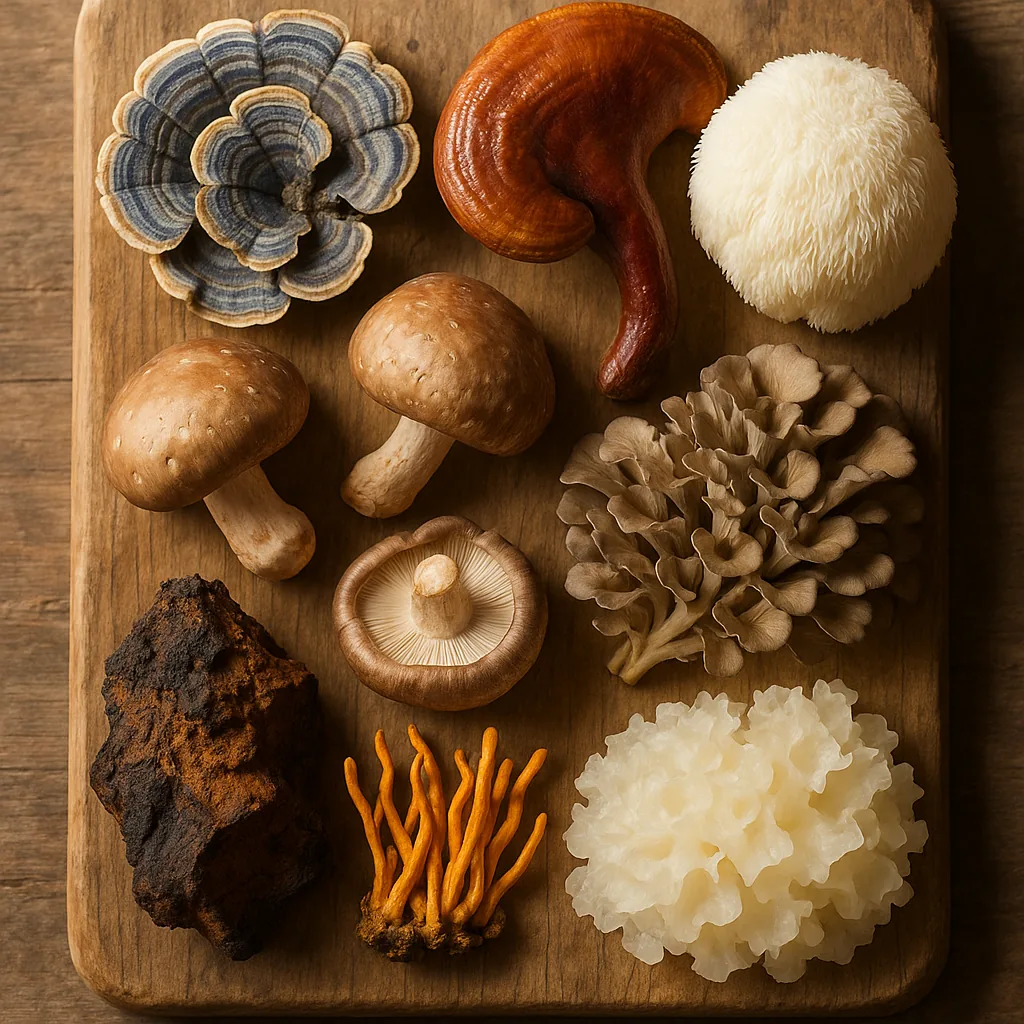
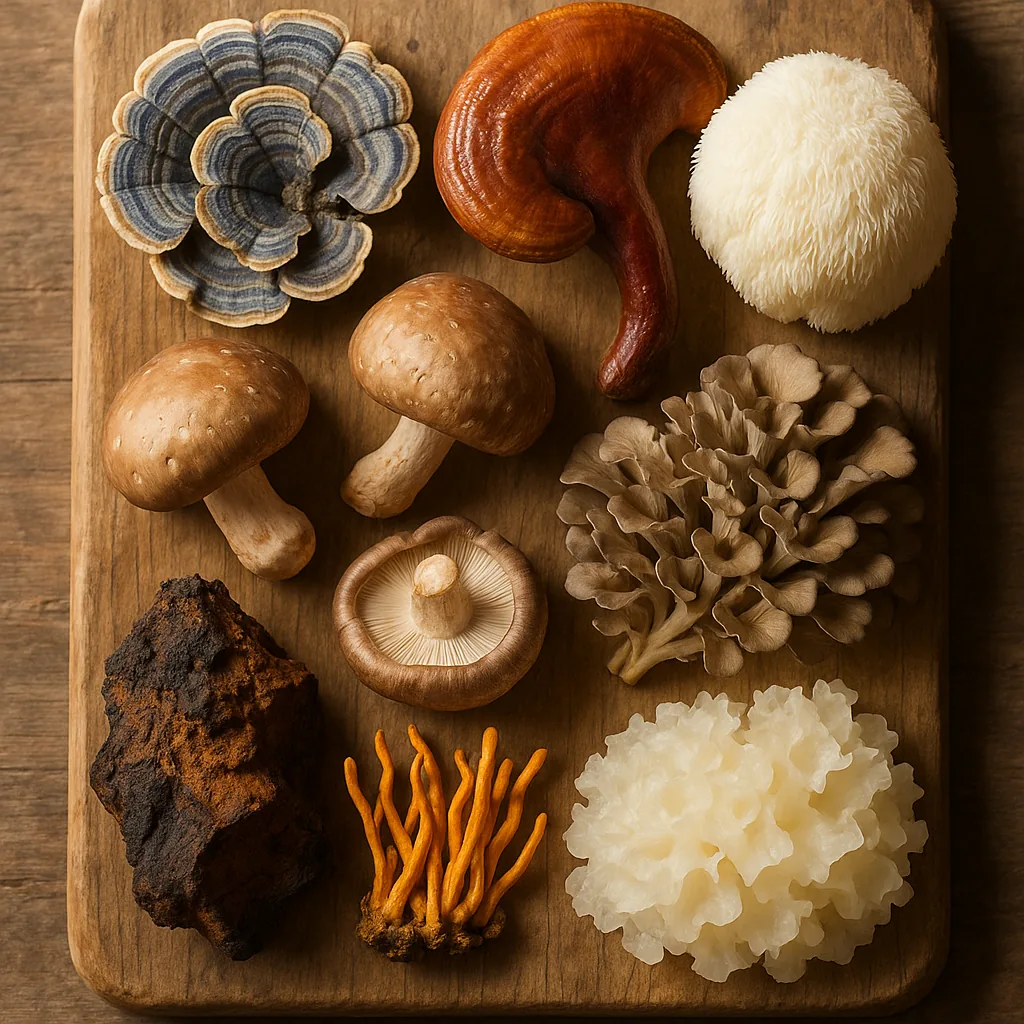
This guide covers the major functional mushroom species — lion’s mane, cordyceps, reishi, chaga, turkey tail, maitake, shiitake, and tremella — with the emphasis on immune support, gut health, and whole-body wellness. If you’re primarily interested in the cognitive angle, our companion guide Nootropic Mushrooms covers the brain-specific evidence in depth. The Ca-AKG longevity angle pairs well with several of these species; see our AKG Supplement Guide for context on how mushrooms fit into a broader longevity protocol.
What Makes a Mushroom “Functional”?
The term “functional mushroom” distinguishes medicinal species used for their pharmacological properties from culinary mushrooms used primarily as food (though the line blurs — shiitake and maitake are both edible and medicinal). The defining characteristic is the presence of bioactive compounds at concentrations sufficient to produce measurable health effects.
The most important class of bioactives across virtually all functional mushrooms is beta-glucans — complex polysaccharides made of glucose molecules in a β-1,3 and β-1,6 linkage configuration. Beta-glucans are recognized by immune receptors called Dectin-1, TLR-2, and CR3, triggering immune modulation — enhancing pathogen surveillance without causing excessive inflammatory activation. This makes beta-glucans uniquely suited to immune support: they prime defenses rather than simply inflaming them.
Beyond beta-glucans, different mushroom species contain distinct compound classes that drive their unique effects: triterpenes in reishi and chaga, ergosterol (precursor to vitamin D2) across many species, cordycepin in cordyceps, hericenones and erinacines in lion’s mane, and polysaccharopeptides (PSK, PSP) in turkey tail.
Species by Species: The Evidence
Lion’s Mane (Hericium erinaceus) — Neuroprotection and Immune Support
Lion’s mane is best known for its cognitive effects (covered in detail in our Nootropic Mushrooms guide), but it also has meaningful functional health properties. The beta-glucan content supports immune function, and preclinical research has explored potential anti-cancer properties through NK (natural killer) cell activation (Kim SP, Evidence-Based Complementary Medicine, 2011).
From a gut health perspective, lion’s mane has shown prebiotic effects in animal models, supporting growth of beneficial Bifidobacterium and Lactobacillus species. A 2021 study by Wang et al. (International Journal of Biological Macromolecules) found that lion’s mane polysaccharides improved gut microbiota composition and reduced intestinal inflammation in mice with colitis.
Cordyceps (Cordyceps militaris) — Energy, Immunity, and Inflammation
Cordyceps is the functional mushroom category’s answer to fatigue and physical performance. Beyond the mitochondrial and oxygenation benefits discussed in the nootropic context, cordyceps has well-documented immune-modulating effects. The beta-glucan fraction activates macrophages and NK cells, while cordycepin has demonstrated anti-inflammatory activity through NF-κB pathway inhibition (Ng TB, Journal of Pharmacy and Pharmacology, 2005).
A human clinical trial by Zhu et al. (Journal of Alternative and Complementary Medicine, 1998) — one of the earliest rigorous cordyceps studies — found significant improvements in oxygen capacity and reduced fatigue in elderly subjects over 6 weeks. More recent work by Chen et al. (Evidence-Based Complementary and Alternative Medicine, 2014) replicated improved physical performance in healthy adults.
Cordyceps is particularly relevant for individuals dealing with chronic fatigue, immune surveillance support, or demanding physical schedules.
Reishi (Ganoderma lucidum) — The Immune Adaptogen
If lion’s mane owns the cognitive space, reishi owns the immune modulation space. Reishi’s gang of bioactives — particularly its high triterpenoid content — operates on immune pathways that most other mushrooms don’t reach. Ganoderic acids have been shown to inhibit histamine release, modulate Th1/Th2 immune balance, and reduce allergic-type inflammatory responses.
The clinical evidence for reishi in immune support is among the strongest in the functional mushroom category. Gao et al. (Journal of Medicinal Food, 2003) conducted a controlled trial showing reishi extract significantly enhanced NK cell activity and T-lymphocyte counts in cancer patients receiving chemotherapy — suggesting immunomodulatory effects that may support immune recovery alongside conventional treatment.
A 2012 Cochrane-style review by Jin et al. (Cochrane Database of Systematic Reviews) examined 5 randomized trials of reishi in cancer patients and concluded that reishi may stimulate host immunity and improve quality of life, while recommending more rigorous trials to establish firm conclusions.
Reishi also has hepatoprotective properties — multiple animal and human studies have shown liver enzyme normalization and protection from chemically-induced liver damage, attributed to the antioxidant triterpenes.
Chaga is extraordinary in its antioxidant density. Growing on birch trees in boreal forests, chaga accumulates betulinic acid from the host tree along with melanin complexes and inotodiol — compounds that collectively give it one of the highest ORAC values of any natural substance.
Chaga’s primary health applications are antioxidant protection, anti-inflammatory modulation, and preclinical evidence for immune support and anti-tumor effects. Glamklint et al. (Journal of Ethnopharmacology, 2011) found that chaga extract significantly reduced oxidative stress markers and inflammatory cytokines in human blood cell cultures. Animal studies have consistently shown immune-stimulatory activity via macrophage activation and increased NK cell function.
Human RCT data for chaga is limited — the best evidence is from Eastern European (particularly Russian and Finnish) observational and traditional use records, where chaga tea has been consumed for centuries for digestive and immune health. Modern science is beginning to validate these uses but has not yet produced definitive human clinical trials for specific disease endpoints.
From a gut health angle, chaga’s anti-inflammatory polysaccharides show promise in preclinical colitis models, and its prebiotic potential is being investigated.
Turkey Tail (Trametes versicolor) — The Immune MVP
Turkey tail is arguably the best-studied functional mushroom for immune function, and it has the most compelling clinical evidence of any mushroom species for immunological endpoints. This is largely thanks to two specific polysaccharopeptides: PSK (polysaccharide-K, also called Krestin) and PSP (polysaccharide peptide).
PSK has been an approved pharmaceutical agent in Japan since the 1980s and is used as an adjunct therapy in cancer treatment, where it has shown benefits for immune recovery and survival outcomes in several tumor types. A landmark study by Tsang et al. (Phytotherapy Research, 2006) and a meta-analysis by Oba et al. (Cancer Immunology and Immunotherapy, 2007) found that PSK supplementation improved 5-year survival rates in gastric and colorectal cancer patients receiving standard treatment.
Beyond cancer supportive care, turkey tail’s PSP has shown significant prebiotic effects. A human clinical trial by Pallav et al. (Gut Microbes, 2014) found that turkey tail supplementation (900 mg/day) altered the gut microbiome composition in healthy volunteers within 8 weeks — increasing beneficial bacteria including Bifidobacterium longum, Lactobacillus, and Clostridiales, while decreasing potentially pathogenic Clostridium species. For anyone focused on gut health and the gut-immune axis, this is significant.
Turkey tail is the functional mushroom with the clearest case for broader integration into gut health and immune protocols. See our Probiotics and Gut Health Guide for more context on the gut microbiome.
Maitake (Grifola frondosa) — Blood Sugar and Immune Regulation
Maitake (“hen of the woods” in Japan) is a culinary and medicinal mushroom with particularly interesting effects on glucose metabolism and immune function. Its key immune bioactive is D-fraction — a beta-glucan/protein complex that has demonstrated activation of macrophages, NK cells, and T-cells in human studies.
Kodama et al. (Journal of Medicinal Food, 2002) conducted a human study showing that maitake D-fraction enhanced immune function in cancer patients, and multiple preclinical studies have shown anti-tumor activity, including inhibition of tumor growth in implanted mouse models.
The metabolic angle is where maitake stands out from other functional mushrooms. A study by Konno et al. (Alternative Medicine Review, 2001) showed that maitake whole mushroom powder reduced blood glucose levels in type 2 diabetic mice and improved insulin sensitivity markers. Human data is more limited but promising — a pilot study by Hanselin et al. (Diabetes Care, 2005) suggested maitake extract may modestly reduce post-meal blood glucose in type 2 diabetic patients.
This metabolic profile makes maitake relevant not just for immune health but for individuals managing blood sugar, insulin resistance, or metabolic syndrome — contexts where few other mushrooms offer specific benefits.
Shiitake (Lentinula edodes) — Cardiovascular and Immune Health
Shiitake is the most widely consumed medicinal mushroom in the world and has a solid evidence base for cardiovascular and immune benefits. The key bioactive is lentinan — a beta-1,3/1,6-glucan with confirmed immunomodulatory activity that has been used as an intravenous adjunct in cancer therapy in Japan.
For cardiovascular health, shiitake contains eritadenine — a compound demonstrated to lower serum cholesterol in animal studies through inhibition of lipid transfer proteins. While human data is less definitive, a study by Sugano et al. (Journal of Nutrition, 1997) showed that shiitake consumption reduced total cholesterol and LDL in healthy subjects over 8 weeks.
Shiitake is also a significant dietary source of ergosterol, which converts to vitamin D2 on sun exposure — making UV-exposed shiitake mushrooms one of the only non-animal food sources of meaningful vitamin D.
From an immune standpoint, a human clinical trial by Dai et al. (Journal of the American College of Nutrition, 2015) found that shiitake consumption (5–10 g/day of dried mushrooms) for 4 weeks improved gut immunity markers — specifically secretory IgA and NK cell activation — in healthy adults.
Tremella (Tremella fuciformis) — Skin, Hydration, and Neural Health
Tremella, the “snow mushroom” or “silver ear mushroom,” is less well-known in Western markets but has been used in Chinese medicine for longevity and skin health for centuries. It’s now gaining research attention for its unique polysaccharide structures.
Tremella polysaccharides have an extraordinary water-holding capacity — roughly 500 times their weight in water, comparable to hyaluronic acid — which explains their traditional reputation for skin hydration and the current interest from cosmetic formulators. A study by Wu et al. (Journal of Functional Foods, 2018) demonstrated that tremella polysaccharide supplementation improved skin hydration and reduced wrinkle depth in a human clinical trial over 8 weeks.
Beyond skin health, preclinical research has found that tremella polysaccharides support NGF synthesis and may protect against neuroinflammation (Zhang et al., Neural Regeneration Research, 2016), adding a neuroprotective dimension to its wellness profile. This makes tremella potentially relevant for both skin-conscious users and those interested in longevity and neural health — an audience overlap relevant to our Women’s Health Supplements Guide.
Functional Mushroom Comparison Table
Mushroom
Primary Benefits
Key Bioactives
Best Evidence For
Human Trials?
Lion’s Mane
Neuroprotection, nerve growth, gut
Hericenones, erinacines, beta-glucans
Cognitive function, gut microbiome
Yes
Cordyceps
Energy, O₂ utilization, anti-fatigue
Cordycepin, beta-glucans
Physical performance, immune activation
Yes
Reishi
Immune modulation, liver, stress
Ganoderic acids, beta-glucans, polysaccharides
Immune support, hepatoprotection
Yes
Chaga
Antioxidant, anti-inflammatory
Melanin, betulinic acid, inotodiol
Antioxidant status
Limited human
Turkey Tail
Gut microbiome, immune
PSK, PSP, beta-glucans
Gut microbiome, immune (oncology)
Yes — strong
Maitake
Blood sugar, immune, anti-tumor
D-fraction, beta-glucans
Immune activation, glucose metabolism
Yes — limited
Shiitake
Cardiovascular, immune
Lentinan, eritadenine, ergosterol
Immune activation, cholesterol
Yes
Tremella
Skin hydration, neuroprotection
Fucose-rich polysaccharides
Skin hydration
Yes — limited
Functional Mushrooms for Gut Health
The gut-immune connection is one of the most important emerging areas in functional medicine, and functional mushrooms are well-positioned at this intersection. Approximately 70% of the immune system is located in or adjacent to the gut, making gut microbiome diversity a primary driver of immune competence.
Several functional mushrooms have documented prebiotic activity — they feed beneficial gut bacteria, improving microbial diversity. Turkey tail’s PSP (Pallav et al., Gut Microbes, 2014) has the strongest human data. Lion’s mane polysaccharides improved gut microbial composition in colitis models. Chaga and shiitake both show anti-inflammatory activity in gut tissue models.
For a comprehensive approach to gut health, combining turkey tail and lion’s mane with a quality probiotic is a strategy supported by the evidence. See our Probiotics and Gut Health Guide for the full picture on how to build a microbiome-supportive supplement stack.
Functional Mushrooms for Immune Support
The immune-supportive properties of functional mushrooms are their most consistently documented benefit. All the major species activate innate immune cells — particularly macrophages and NK cells — through their beta-glucan content. The variation between species is in the depth and specificity of their immune modulation:
Turkey tail (PSK/PSP): The strongest evidence, including pharmaceutical-grade immune support in clinical oncology settings
Reishi: Immune regulation, particularly for allergic-type conditions and Th1/Th2 balance
For immune-focused applications, turkey tail and reishi offer the most robust evidence bases. A combination of the two addresses complementary immune mechanisms: turkey tail through innate immunity and microbiome support, reishi through adaptive immune modulation and Th1/Th2 balance.
Mushroom Supplement Quality: A Buyer’s Guide
The functional mushroom supplement market has significant quality variation, and this matters more here than in most supplement categories because the bioactive content is highly dependent on species verification, cultivation method, and extraction process.
Fruiting body vs. mycelium-on-grain. This is the most critical quality issue. Many budget products grow mycelium on oat or rice substrate, then sell the dried whole substrate — meaning you may be paying for grain starch rather than mushroom bioactives. Look for labels that specify “fruiting body” or explicitly state the beta-glucan content (which should be >25% for most species) and test for low starch content.
Extraction method. Most functional mushroom compounds require hot water extraction to break down the chitin cell walls and release polysaccharides. Reishi and chaga also benefit from alcohol (ethanol) extraction for their triterpene content. “Dual extraction” or “full spectrum extract” products that use both hot water and ethanol are preferable for these species.
Third-party testing. Given the complexity of fungal taxonomy and the potential for misidentification or adulteration, independent lab verification of species identity, beta-glucan content, and absence of contaminants (heavy metals, pesticides, mycotoxins) is important.
Organic sourcing. Mushrooms are bioaccumulators — they concentrate heavy metals and environmental contaminants from their growing substrate. USDA organic or equivalent certification significantly reduces this risk.
Key Takeaways
Functional mushrooms support immune function, gut health, cardiovascular health, skin, and overall wellness — distinct from the cognitive focus of nootropic mushrooms
Turkey tail has the strongest immune evidence, including pharmaceutical-grade use (PSK/Krestin) in Japanese oncology, and meaningful human data for gut microbiome improvement
Reishi is the best-studied species for immune modulation, liver protection, and stress/HPA axis regulation
Maitake offers unique metabolic benefits including blood sugar modulation — uncommon among mushroom species
Tremella addresses skin hydration and neural health with a distinct polysaccharide profile
Beta-glucan content is the single most important quality marker — look for fruiting body extracts with verified beta-glucan percentages
Avoid mycelium-on-grain products; confirm low starch content and third-party testing
Combining 2–3 complementary species (e.g., turkey tail + reishi + shiitake) addresses broader immune and gut health targets than any single species
Frequently Asked Questions
What are functional mushrooms good for?
Functional mushrooms are primarily evidence-backed for immune support, gut microbiome health, anti-inflammatory effects, and energy. Different species have specific strengths: turkey tail excels at immune and gut support, reishi at immune modulation and stress response, maitake at blood sugar and immune activation, shiitake at cardiovascular and immune health, and tremella at skin hydration. Cognitive benefits are covered in our Nootropic Mushrooms guide.
What is the most studied functional mushroom?
Turkey tail (Trametes versicolor) and reishi (Ganoderma lucidum) have the largest bodies of clinical research for immune-related outcomes. Turkey tail’s PSK (Krestin) has been an approved pharmaceutical in Japan for decades. Lion’s mane has the most clinical evidence specifically for cognitive function.
Are functional mushrooms safe to take daily?
Most functional mushrooms are well-tolerated for daily use. The most commonly reported side effects are mild GI discomfort (particularly with reishi at higher doses), skin flushing (rarely, with reishi), and occasional loose stools. People on anticoagulant medications should consult a doctor before taking reishi, which has some platelet-inhibiting activity. Those with mushroom allergies should obviously avoid these products.
What is a mushroom complex supplement?
A mushroom complex is a supplement containing multiple mushroom species in a single product, typically marketed for broad-spectrum immune and wellness support. Quality varies widely — look for products where each species is present at a clinically meaningful dose (not just a token amount), using fruiting body extracts, with disclosed beta-glucan content. A complex with 8 species at 50 mg each is unlikely to do much; one with 3–4 species at 400–600 mg each is more likely to be effective.
Are functional mushrooms adaptogens?
Some are, some aren’t. Reishi is often classified as an adaptogen based on its effects on the HPA axis and stress response, and cordyceps has adaptogenic properties related to physical stress tolerance. Turkey tail, chaga, shiitake, and maitake are not typically classified as adaptogens in the strict sense — their benefits are more targeted at immune, gut, and metabolic function. True adaptogens include herbs like ashwagandha and rhodiola, covered in our Energy and Stress Supplements Guide.
How do functional mushrooms support the immune system?
The primary immune mechanism is beta-glucan binding to Dectin-1, TLR-2, and CR3 receptors on immune cells, which activates macrophages, NK cells, and dendritic cells — essentially priming the innate immune system to recognize and respond to pathogens more effectively. This is sometimes called “immune modulation” rather than “immune stimulation” because the effect is more nuanced than simply amplifying immune activity — it helps calibrate immune responses appropriately.
Are functional mushrooms good for women’s health?
Several functional mushrooms have relevance for women’s health specifically. Tremella’s skin hydration and anti-aging properties, reishi’s hormonal modulation (it has mild anti-androgenic effects and may support estrogen metabolism), and turkey tail’s gut microbiome support (the estrobolome — gut bacteria involved in estrogen metabolism — is increasingly understood as important for hormonal balance) all have relevance. See our Women’s Health Supplements Guide for more.
Sources
Pallav K, et al., “Effects of polysaccharopeptide from Trametes versicolor and amoxicillin on the gut microbiome of healthy volunteers,” Gut Microbes, 2014.
Tsang KW, et al., “Coriolus versicolor polysaccharopeptide slows progression of advanced non-small cell lung cancer,” Respiratory Medicine, 2003.
Oba K, et al., “Efficacy of adjuvant immunochemotherapy with polysaccharide K for patients with curative resections of gastric cancer,” Cancer Immunology and Immunotherapy, 2007.
Gao Y, et al., “A randomized, placebo-controlled, multicenter study of Ganoderma lucidum in patients with advanced lung cancer,” Journal of Medicinal Food, 2003.
Jin X, et al., “Ganoderma lucidum (Reishi mushroom) for cancer treatment,” Cochrane Database of Systematic Reviews, 2012.
Dai X, et al., “Consuming Lentinula edodes mushrooms daily improves human immunity,” Journal of the American College of Nutrition, 2015.
Sugano M, et al., “Hypocholesterolemic action of eritadenine in rats,” Journal of Nutrition, 1997.
Kodama N, et al., “Effect of Maitake D-fraction on the activation of NK cells in cancer patients,” Journal of Medicinal Food, 2002.
Wang J, et al., “Lion’s mane polysaccharides modulate gut microbiota and intestinal inflammation,” International Journal of Biological Macromolecules, 2021.
Wu Y, et al., “Tremella fuciformis polysaccharide improves skin hydration in humans,” Journal of Functional Foods, 2018.
Zhang Z, et al., “Tremella polysaccharide: neuroprotective effects via NGF synthesis,” Neural Regeneration Research, 2016.
Kim SP, et al., “Mechanism of Hericium erinaceus anti-cancer activity via NK cell activation,” Evidence-Based Complementary Medicine, 2011.
Ng TB, et al., “Cordycepin, a bioactive component of Cordyceps, anti-inflammatory mechanisms,” Journal of Pharmacy and Pharmacology, 2005.
Glamklint S, et al., “Inonotus obliquus (Chaga) anti-inflammatory activity,” Journal of Ethnopharmacology, 2011.