Quick Answer: Vitamin D deficiency is significantly associated with depression in observational studies, and supplementation trials show improvements in depressive symptoms particularly in people with low baseline 25(OH)D levels. However, in people with already-adequate vitamin D, supplementation shows minimal antidepressant effect. A 2020 meta-analysis found vitamin D supplementation significantly reduced depression scores in deficient individuals (baseline <20 ng/mL). Standard dose for deficiency correction: 2000-4000 IU D3 daily with reassessment at 3 months.
Key Takeaways
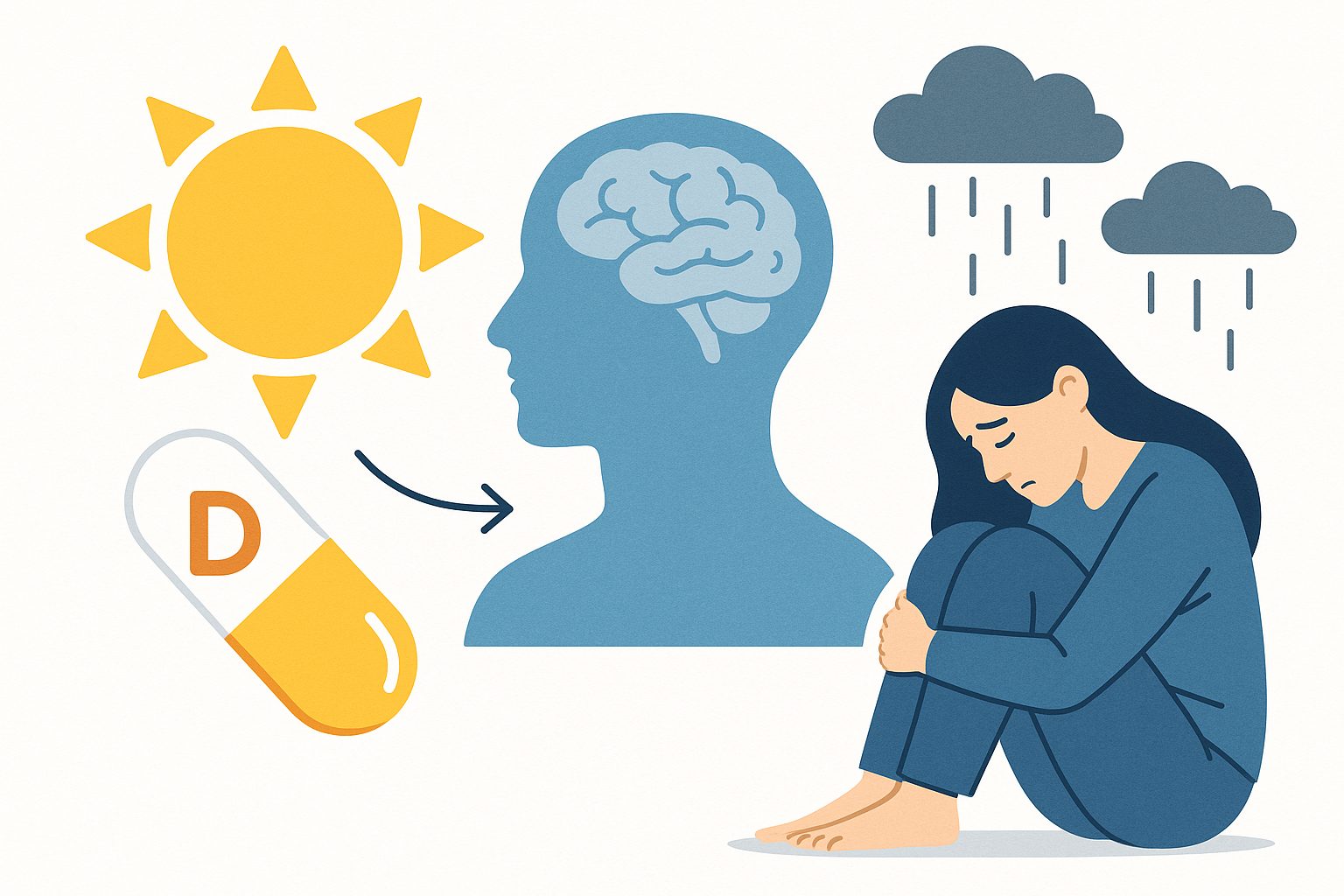
Vitamin D receptors are found throughout the brain, including in regions involved in mood regulation (prefrontal cortex, hippocampus, amygdala); deficiency impairs the synthesis of dopamine and serotonin.
Observational studies consistently find 1.3-1.5x higher odds of depression in people with vitamin D deficiency vs. sufficiency — but correlation vs. causation is debated.
Intervention trials show clearest benefit in people with baseline 25(OH)D below 20 ng/mL; those with already-adequate levels see minimal mood benefit from supplementation.
A 2020 systematic review and meta-analysis of 61 RCTs found vitamin D supplementation significantly improved depression scores in deficient participants (SMD = -0.58).
Vitamin D deficiency is common (estimated 40%+ of US adults) and is often missed because standard metabolic panels don’t routinely include 25(OH)D — testing is required to identify deficiency.
Vitamin D and depression have one of those relationships where the observational data looks impressive but the intervention data is frustratingly inconsistent. Understanding why helps you decide whether supplementation is worth it for you specifically.
The Observational Evidence Is Consistent
Multiple large studies and meta-analyses associate low vitamin D status with higher rates of depression:
A 2013 meta-analysis in British Journal of Psychiatry (Anglin et al.) found low vitamin D levels were associated with a significantly increased risk of depression across 31,424 participants.
A 2022 umbrella review in Critical Reviews in Food Science and Nutrition confirmed the association remains robust across multiple study types.
The relationship is dose-responsive in some analyses — the lower the vitamin D, the higher the depression risk.
But correlation is not causation
Depressed people go outside less → less sun → lower vitamin D
Depressed people may eat less nutrient-dense food
Both low vitamin D and depression correlate with obesity, sedentary lifestyle, and chronic illness
Supplementation Trials: The Complicated Part
Trials that showed benefit
A 2023 meta-analysis in Journal of Affective Disorders found vitamin D supplementation significantly reduced depressive symptoms, but only in people who were vitamin D deficient at baseline and who had existing depression (not as prevention in healthy people). Smaller trials in seasonal affective disorder (SAD) have also shown benefit, which makes biological sense since SAD is inherently linked to reduced sun exposure.
The big trial that showed no benefit
VITAL-DEP (Okereke et al., 2020, JAMA) enrolled 18,353 adults age ≥50, gave 2,000 IU vitamin D3/day vs. placebo, and found no significant difference in depression incidence over 5 years. Critically, participants were not selected for deficiency — mean baseline 25(OH)D was 30.8 ng/mL, which is generally considered sufficient.
What this pattern tells us
Vitamin D supplementation appears to help mood when correcting an actual deficiency. It does not appear to provide antidepressant effects in people who already have adequate levels. This is consistent with how most nutrient interventions work — they fix problems they cause, not problems they do not cause.
Who Is Most Likely to Be Deficient?
People living at northern latitudes (above 37°N in the US, roughly north of a line from Richmond, VA to San Francisco)
People with darker skin tones (melanin reduces vitamin D synthesis)
Indoor workers and those who rarely get midday sun exposure
Older adults (skin synthesizes vitamin D less efficiently with age)
People who are obese (vitamin D is sequestered in fat tissue)
People who cover most of their skin for cultural or religious reasons
Those taking certain medications (anticonvulsants, glucocorticoids)
If you are in multiple categories above and have depressive symptoms, getting your vitamin D level tested is one of the more sensible first steps.
Testing and Target Levels
25-hydroxyvitamin D (25(OH)D) is the standard blood test
Below 20 ng/mL — deficient (associated with increased depression risk)
2,000–4,000 IU vitamin D3 per day for maintenance and mild deficiency
5,000–10,000 IU/day for 8–12 weeks may be needed for severe deficiency, followed by maintenance dosing (under medical supervision)
Take with fat-containing food for better absorption (vitamin D is fat-soluble)
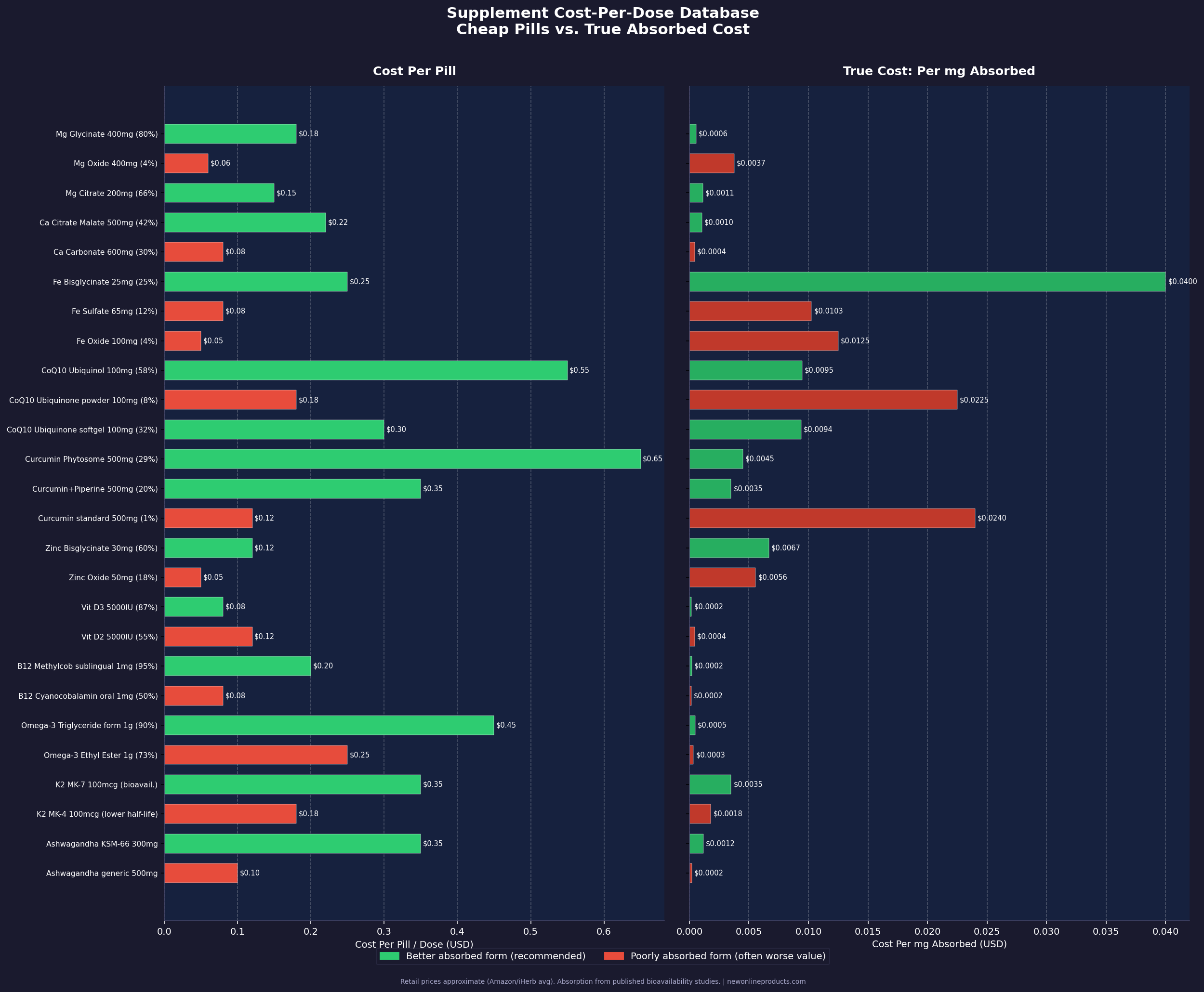
D3 (cholecalciferol) is preferred over D2 (ergocalciferol) — more effective at raising and maintaining blood levels
Retest after 3 months to confirm levels have improved
What About Seasonal Depression (SAD)?
This is the context where vitamin D makes the most intuitive sense:
SAD is definitionally linked to reduced sunlight
Light therapy is the gold-standard treatment for SAD
Some evidence suggests vitamin D supplementation may help alongside light therapy
A 2014 randomized trial (Gloth et al.) found vitamin D improved SAD symptoms more than phototherapy in a small sample, but larger trials are needed
Honest take: If you have SAD, start with a light therapy box (10,000 lux, 20–30 minutes in the morning). Test vitamin D and supplement if deficient. See a mental health provider if symptoms are moderate or severe.
The Bottom Line
Vitamin D is genuinely important for brain function, and deficiency is common. If you are deficient and depressed, correcting the deficiency is cheap, safe, and may meaningfully help. If you already have adequate levels, adding more vitamin D is unlikely to improve your mood. Test, do not guess. And do not treat clinical depression with vitamin D alone.
This article is for educational purposes and does not constitute medical advice.
FAQ
Does vitamin D help with depression?
Vitamin D supplementation reduces depression symptoms when the person is deficient (25(OH)D below 20 ng/mL). In people with adequate vitamin D levels, supplementation shows little antidepressant benefit. The first step is testing your vitamin D level — supplementing blindly is less effective than correcting confirmed deficiency.
How much vitamin D should I take for depression?
For confirmed deficiency (below 20 ng/mL), most adults need 2000-4000 IU D3 daily to restore levels to the optimal 40-60 ng/mL range. Retest at 3 months to confirm restoration. Doses above 4000 IU should be medically supervised and paired with vitamin K2 (100-200 mcg MK-7).
What is the optimal vitamin D level for mental health?
Studies associating vitamin D with better mood outcomes typically find optimal ranges at 40-60 ng/mL (100-150 nmol/L) for 25(OH)D. Most conventional labs flag deficiency at <20 ng/mL, but insufficiency at 20-30 ng/mL is also associated with mood issues in some studies.
Can low vitamin D cause anxiety?
Low vitamin D is associated with anxiety symptoms in observational studies, and some intervention trials show modest reduction in anxiety with supplementation in deficient individuals. The same mechanism (vitamin D’s role in neurotransmitter synthesis and neuroinflammation) applies to both depression and anxiety.