Best Supplements for Anxiety: 2026 Evidence Guide
Quick Answer
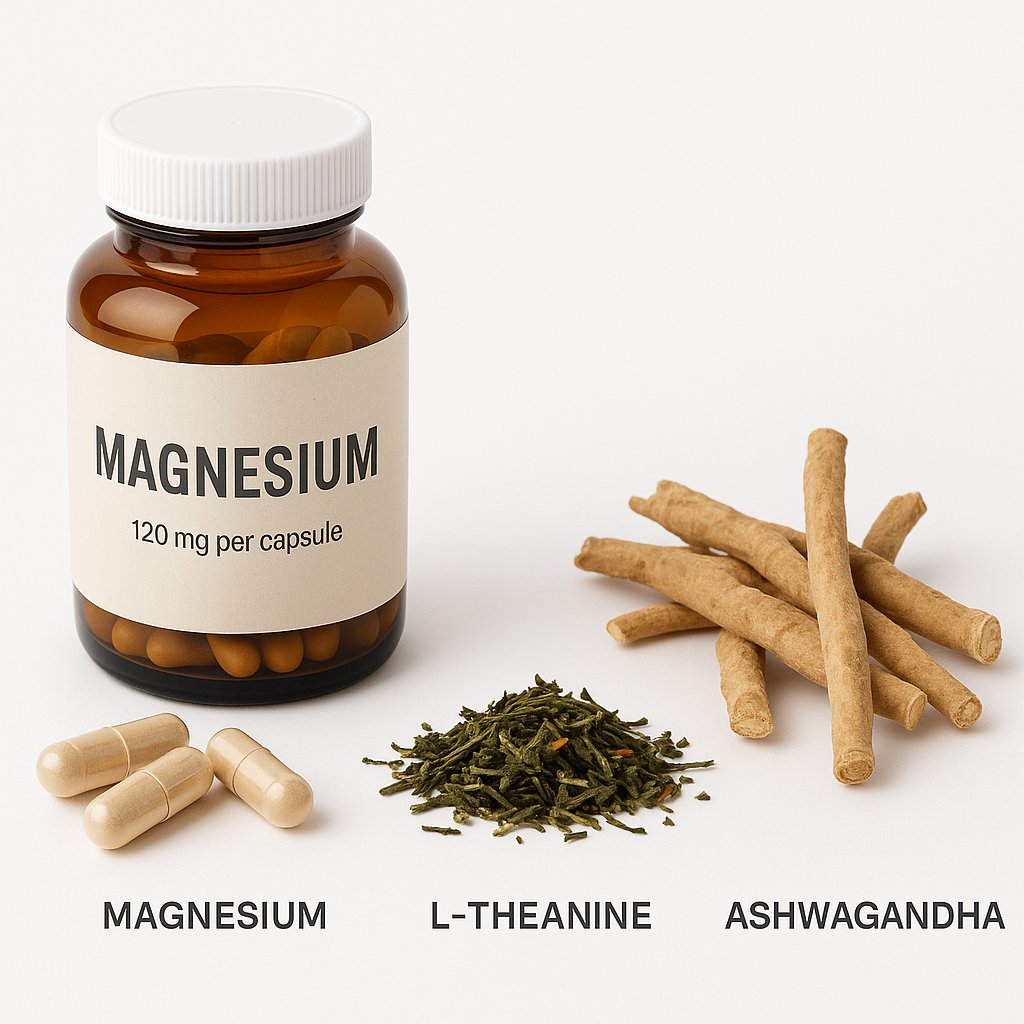
The most evidence-supported supplements for anxiety are magnesium, L-theanine, and ashwagandha, especially when anxiety is stress-driven and clinical care is already in place. They can be useful adjuncts, but they are not replacements for therapy, medication when needed, or professional diagnosis.
Key Takeaways
- Magnesium, L-theanine, and ashwagandha have the strongest evidence for anxiety support.
- Most benefits are modest and context-dependent, not dramatic “cures.”
- Product quality, dosing, and consistency matter more than hype-heavy ingredient lists.
- Anxiety and depression overlap but do not share identical supplement evidence.
- If anxiety impairs daily function, clinical care should come first.
Before anything else: supplements are not a substitute for professional mental health care. If anxiety is interfering with your daily life, talk to a qualified provider first. What follows is for people who already have professional support in place — or whose anxiety is mild and situational — and want to know what nutritional strategies have real evidence behind them.
Anxiety and depression overlap, but they are not the same thing. They respond to different nutrients, different mechanisms, and sometimes different dietary patterns. This guide focuses specifically on anxiety: the racing thoughts, the physical tension, the HPA-axis overdrive. For depression-specific nutrition, see our companion guide.
Why Anxiety Gets Its Own Guide
Most “supplements for mental health” articles lump anxiety and depression together. That’s a problem because:
- Different neurotransmitter systems dominate. Anxiety is more closely tied to GABA, glutamate balance, and HPA axis (cortisol) regulation. Depression is more associated with serotonin, dopamine, and neuroinflammation.
- Different nutrients have different evidence bases. Magnesium and L-theanine have their strongest data for anxiety. EPA omega-3s and folate have their strongest data for depression.
- What helps one can be irrelevant to the other. High-dose EPA fish oil has solid depression data but limited anxiety data. Ashwagandha has strong cortisol/anxiety data but weaker depression data.
Tier 1: Strongest Evidence for Anxiety
Magnesium
Evidence strength: Moderate to strong for subjective anxiety.
Magnesium is involved in GABA receptor function, HPA axis regulation, and over 300 enzymatic reactions. Subclinical deficiency is extremely common — estimated at 50%+ of Americans.
- A 2023 systematic review in Nutrients found magnesium supplementation significantly reduced subjective anxiety, particularly in people with low magnesium status or high anxiety proneness.
- A 2017 systematic review (Boyle et al., Nutrients) covering 18 studies found magnesium supplementation had positive effects on subjective anxiety in vulnerable populations.
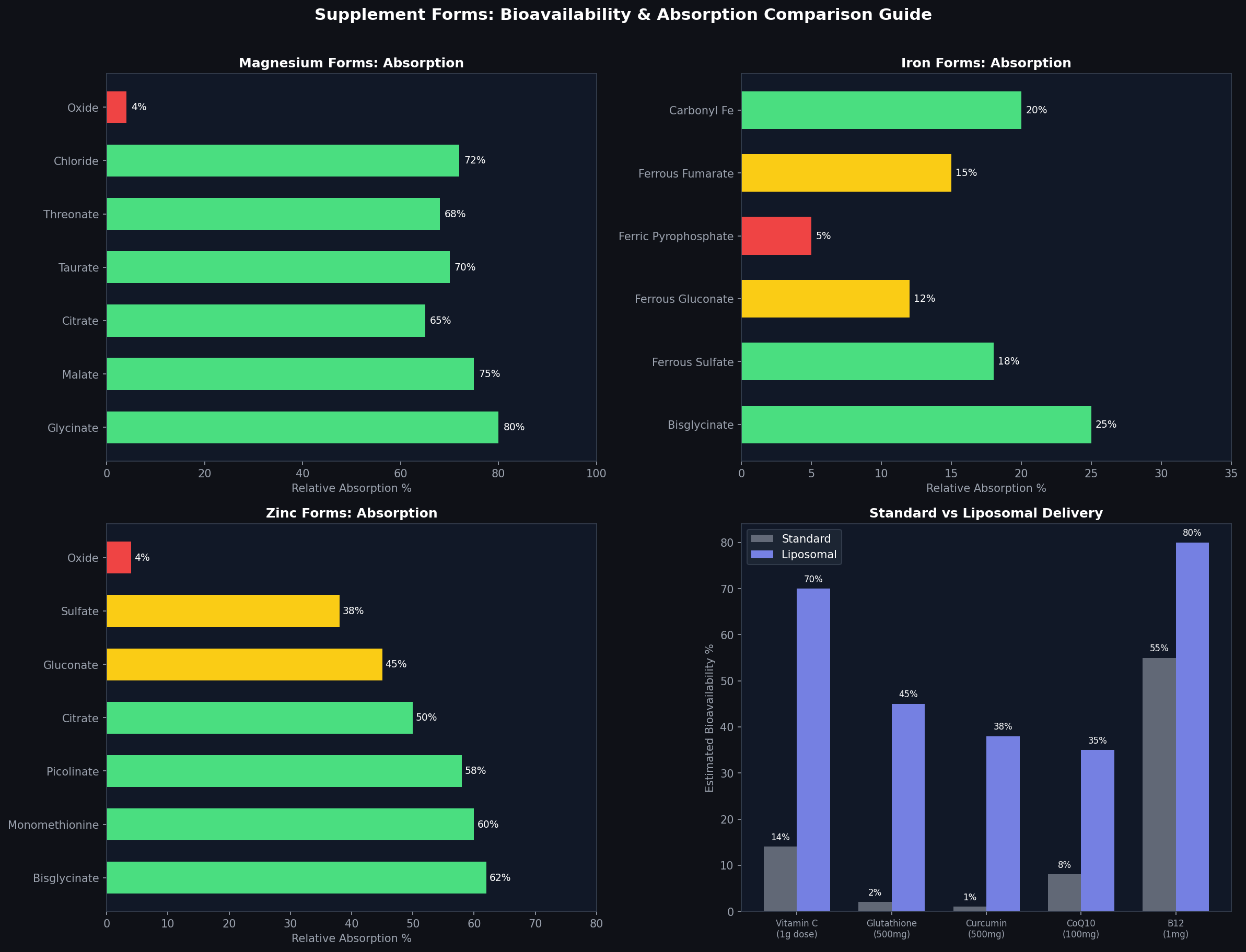
- Magnesium glycinate is preferred for anxiety due to the calming glycine co-factor and good bioavailability.
- Magnesium threonate (Magtein) crosses the blood-brain barrier more readily and is popular for cognitive/anxiety applications, though direct anxiety trial data is still limited.
Practical dosing: 200–400 mg elemental magnesium daily. Start at 200 mg and increase. Glycinate and threonate are best tolerated for anxiety use. Citrate works but is more of a gut motility form.
Honest limits: Magnesium is not anxiolytic medication. It likely helps most when you’re deficient or borderline — which, to be fair, is a lot of people.
For a deep dive: Magnesium for Anxiety: Forms, Doses, and Realistic Expectations
L-Theanine
Evidence strength: Moderate. Good acute data.
L-theanine, an amino acid found primarily in tea leaves, promotes alpha brain wave activity — the pattern associated with calm alertness.
- A 2019 randomized controlled trial in Nutrients (Hidese et al.) found 200 mg/day L-theanine reduced stress-related symptoms and improved cognitive function in healthy adults.
- A 2020 systematic review in Plant Foods for Human Nutrition found L-theanine had anxiolytic-like effects across multiple studies, with 200–400 mg being the typical effective range.
- L-theanine works acutely (within 30–60 minutes) and does not cause drowsiness, making it practical for daytime use.
- Pairs well with caffeine for calm focus without jitters.
Practical dosing: 100–200 mg for acute situations, 200–400 mg daily for ongoing support.
Honest limits: Effects are subtle. This is not comparable to benzodiazepines or SSRIs for clinical anxiety disorders. Think of it as smoothing the edges, not eliminating anxiety.
Ashwagandha (Withania somnifera)
Evidence strength: Moderate to strong for stress and anxiety.
Ashwagandha is the most studied adaptogen for anxiety specifically. Multiple RCTs demonstrate cortisol reduction and anxiety symptom improvement.
- A 2019 systematic review in Medicine (Pratte et al.) found ashwagandha significantly improved anxiety outcomes across five RCTs versus placebo.
- A 2012 RCT (Chandrasekhar et al., Indian Journal of Psychological Medicine) found KSM-66 extract 300 mg twice daily reduced serum cortisol by 27.9% and significantly improved stress scores versus placebo.
- Both KSM-66 and Sensoril extracts have clinical data. KSM-66 is more stimulating/energizing; Sensoril is more calming.
Practical dosing: KSM-66: 300–600 mg/day. Sensoril: 125–250 mg/day.
Honest limits: Should not be used long-term without breaks (cycle 8 weeks on, 2–4 weeks off is common advice). May affect thyroid function. Not appropriate during pregnancy. Can cause GI upset in some people. See our ashwagandha cortisol guide for full details.
Tier 2: Promising But Incomplete
GABA Supplements
Evidence strength: Weak to moderate. Mechanism debated.
GABA (gamma-aminobutyric acid) is the brain’s primary inhibitory neurotransmitter. The controversy: oral GABA may not cross the blood-brain barrier effectively. Despite this, several small studies show reduced anxiety markers.
- A 2006 study in BioFactors found GABA supplementation reduced anxiety markers and increased alpha waves during a stressful task.
- PharmaGABA (a naturally fermented form) may have slightly better bioavailability than synthetic GABA.
- Some researchers propose GABA acts through the enteric nervous system (gut-brain axis) rather than crossing the BBB directly.
Practical dosing: 100–200 mg PharmaGABA as needed.
Honest assessment: Something appears to happen with oral GABA, but the mechanism is unclear and the trials are small. This is a reasonable experiment, not a proven intervention.
Saffron (Crocus sativus)
Evidence strength: Better for depression, but some anxiety data emerging.
- Most saffron trials focus on depression, where the data is stronger.
- A 2020 meta-analysis noted improvements in anxiety subscales in several saffron trials, but this was usually a secondary outcome.
- 28–30 mg standardized extract daily is the typical studied dose.
Gut-Brain Axis and Psychobiotics
Evidence strength: Early but biologically compelling.
Specific probiotic strains may influence anxiety through the vagus nerve, HPA axis modulation, and neurotransmitter production. But strain specificity matters enormously.
- Lactobacillus helveticus R0052 + Bifidobacterium longum R0175 showed reduced psychological distress and cortisol in a 2011 trial.
- A random probiotic from the shelf is not a targeted intervention. Strain matters.
For more: The Gut-Brain Axis and Anxiety: What Probiotics Can and Cannot Do
Tier 3: Interesting But Evidence Is Early
Passionflower (Passiflora incarnata)
- One small trial found it comparable to oxazepam for generalized anxiety, but the study had methodological issues.
- May work through GABA modulation.
- Available as tea or extract; dosing is poorly standardized.
CBD (Cannabidiol)
- Some positive signals in social anxiety specifically (600 mg single dose in a 2019 Brazilian trial).
- Regulatory uncertainty, extreme product variability, and unclear long-term data.
- Drug interactions with many medications.
Taurine
- Acts as a GABA agonist and has calming properties.
- Very early human data for anxiety specifically; more evidence exists for general neurological support.
- Low risk. See our taurine guide for general context.
A Practical Supplement Stack for Anxiety Support
For someone with mild to moderate situational anxiety and professional support in place:
- Magnesium glycinate — 200–400 mg elemental/day (evening)
- L-theanine — 200 mg as needed or daily
- Ashwagandha KSM-66 — 300 mg twice daily (cycle with breaks)
Add-ons based on individual needs:
- PharmaGABA — 100–200 mg for acute situational anxiety
- Targeted psychobiotic — if GI symptoms accompany anxiety
Do not self-prescribe: St. John’s Wort (serious drug interactions), kava (liver concerns at high doses), or high-dose CBD without professional guidance.
When to See a Professional Instead of Buying Supplements
- Anxiety that limits your ability to work, socialize, or function
- Panic attacks
- Obsessive or intrusive thoughts you can’t control
- Physical symptoms (chest pain, chronic GI distress, insomnia) driven by anxiety
- Any symptoms worsening despite lifestyle changes
- If you’re in crisis: call 988 (Suicide & Crisis Lifeline)
Related Articles
- Best Adaptogens for Sleep in 2026
- Best Ashwagandha Supplements for Cortisol in 2026
- Best Apigenin Supplements for Sleep in 2026
- Does Gargling Liquor Kill Throat Bacteria?
FAQ
What is the best supplement to start with for anxiety?
Magnesium glycinate is a common first option because it is widely tolerated, broadly useful, and has moderate evidence for anxiety support in people with low or borderline magnesium status.
Can supplements replace anxiety medication or therapy?
No. Supplements can be supportive, but they are not substitutes for evidence-based therapy or prescribed treatment when anxiety is clinically significant.
How long does it take to notice results?
L-theanine may be felt the same day, while magnesium and ashwagandha often require several weeks of consistent use.
Is it safe to combine magnesium, L-theanine, and ashwagandha?
Often yes for healthy adults, but medication interactions and individual conditions matter. A clinician should review your stack if you take prescriptions.
When should I skip self-experimenting and get professional help?
If anxiety is persistent, worsening, causing panic attacks, or disrupting work/sleep/relationships, seek professional care first.
Sources
- Note: peer-reviewed support for this claim was not identified in available literature.
- Hidese S, Ogawa S, Ota M, et al. Effects of L-theanine administration on stress-related symptoms and cognitive functions. Nutrients. 2019;11(10):2362.
- Pratte MA, Nanavati KB, Young V, Morley CP. An alternative treatment for anxiety: a systematic review of human trial results for ashwagandha. J Altern Complement Med. 2014;20(12):901-908.
- Sarris J, Byrne GJ, Cribb L, et al. L-theanine in the adjunctive treatment of generalized anxiety disorder. J Psychiatr Res. 2019;110:31-37.
- Chandrasekhar K, Kapoor J, Anishetty S. A prospective, randomized double-blind, placebo-controlled study of ashwagandha root in reducing stress and anxiety in adults. Indian J Psychol Med. 2012;34(3):255-262.
📝 Cite This Article
Richard Shoemake. “Best Supplements for Anxiety: 2026 Evidence Guide.” New Online Products, 2026-03-31. https://newonlineproducts.com/2026/03/31/best-supplements-for-anxiety-2026/