
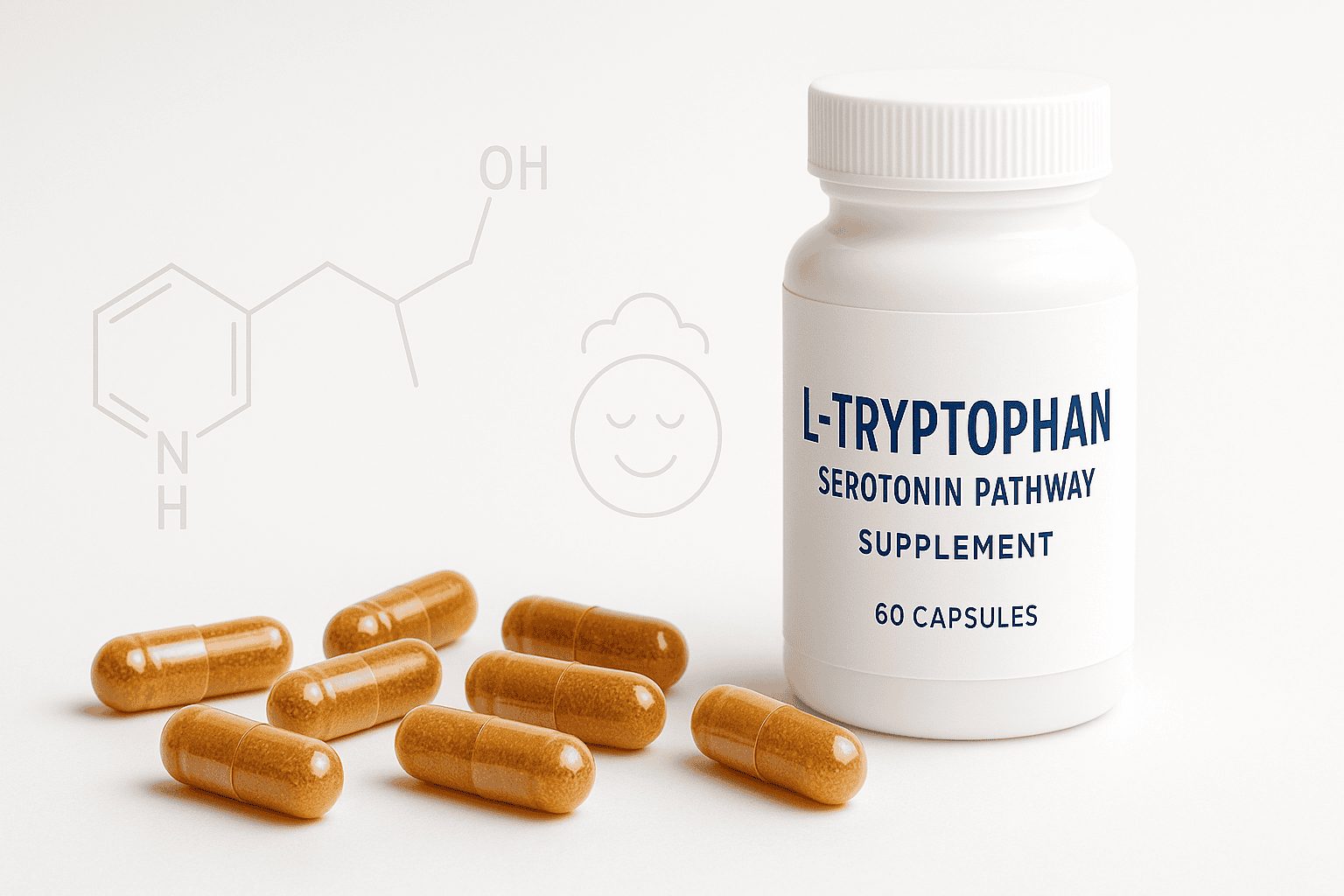
The pathway from tryptophan to serotonin to melatonin is one of the most commercially exploited biochemical routes in the supplement industry. Here’s what the actual science supports.
Quick Answer
The tryptophan ? serotonin ? melatonin pathway is real, but supplement outcomes vary by step. Low-dose melatonin has the strongest practical evidence for sleep timing and sleep onset, while tryptophan and 5-HTP can help in narrower contexts and carry more interaction/safety complexity.
Key Takeaways
- Melatonin has the strongest evidence for sleep and circadian use cases.
- Tryptophan has modest evidence for sleep onset and limited mood data.
- 5-HTP may help short-term, but chronic use raises balance and interaction concerns.
- Serotonergic supplements can interact with antidepressants and migraine meds.
- For related neurotransmitter-pathway context, see the hormone precursors parent guide and companion pages on dopamine precursors and estrogen/progesterone claims.
The Pathway
L-Tryptophan ? 5-HTP ? Serotonin (5-HT) ? N-acetylserotonin ? Melatonin
Key enzymes:
- Tryptophan hydroxylase (TPH): Rate-limiting step. Converts tryptophan to 5-HTP. Exists as TPH1 (gut, periphery) and TPH2 (brain).
- Aromatic amino acid decarboxylase (AADC): Converts 5-HTP to serotonin. Fast, not rate-limiting.
- AANAT + ASMT: Convert serotonin to melatonin in the pineal gland, regulated by light/dark cycle.
Critical fact: ~95% of serotonin is in the gut, not the brain. Peripheral serotonin doesn’t cross the blood-brain barrier. To affect brain serotonin, precursors must cross the BBB – and tryptophan competes with other large neutral amino acids (LNAAs) for the same transporter.
L-Tryptophan
The Evidence
Sleep:
- Hartmann et al. (1979): 1 g L-tryptophan reduced sleep latency (time to fall asleep). One of the earliest studies.
- Silber & Schmitt (2010) review: Concluded tryptophan has modest sleep-promoting effects at doses ?1 g, particularly for sleep onset.
- Hudson et al. (2005): 250 mg enriched-tryptophan cereal improved sleep quality. Effects are mild.
Mood/Depression:
- Shaw et al. (2002) Cochrane review of tryptophan for depression: Only 2 trials met inclusion criteria. Some benefit over placebo, but evidence quality was “low.”
- Acute tryptophan depletion studies reliably worsen mood in people with depression history, suggesting tryptophan/serotonin is involved – but this doesn’t mean supplementing tryptophan reliably improves mood in everyone.
Why it’s modest:
- Only ~1% of dietary tryptophan goes to serotonin. The majority enters the kynurenine pathway (producing NAD+, immune signaling molecules).
- Inflammation shifts more tryptophan toward kynurenine and away from serotonin (via IDO enzyme upregulation). So in people most likely to have “low serotonin” (those with chronic stress/inflammation), tryptophan supplementation may be partially diverted away from serotonin synthesis.
- LNAA competition means tryptophan absorption into the brain depends on the ratio of tryptophan to other amino acids, not just the absolute amount.
Dose: 0.5-2 g before bed for sleep. Take on empty stomach or with carbohydrates (insulin drives competing amino acids into muscle, improving tryptophan’s BBB access).
The 1989 EMS Crisis
L-tryptophan was pulled from the US market in 1989 after an outbreak of eosinophilia-myalgia syndrome (EMS) linked to a contaminated batch from one Japanese manufacturer (Showa Denko). The contamination was traced to changes in their fermentation process. Tryptophan itself was not the cause, but the ban lasted until 2005 and created lasting stigma. Modern tryptophan from reputable manufacturers is considered safe.
5-HTP (5-Hydroxytryptophan)
What Makes It Different From Tryptophan
5-HTP bypasses the rate-limiting TPH step and doesn’t compete with LNAAs for BBB transport. It also bypasses the kynurenine pathway diversion. This means it more reliably increases serotonin synthesis than tryptophan.
It’s derived from the seeds of Griffonia simplicifolia.
The Evidence
Depression:
- Poldinger et al. (1991): 300 mg/day 5-HTP was comparable to fluvoxamine (an SSRI) in a 6-week trial. Small study, but notable.
- Shaw et al. (2002) Cochrane review included 5-HTP and tryptophan together: “Better than placebo,” but evidence quality was poor.
- Jangid et al. (2013): 5-HTP improved depression scores in Indian outpatients, but again, small and limited.
Sleep:
- Shell et al. (2010): 5-HTP + GABA combination significantly improved sleep quality and duration vs. placebo. But this was a combination – can’t attribute solely to 5-HTP.
- The serotonin ? melatonin conversion means 5-HTP could theoretically support sleep, but direct melatonin supplementation is simpler and better studied.
Appetite/weight:
- Cangiano et al. (1992): 900 mg/day 5-HTP reduced caloric intake and body weight in obese subjects. Serotonin is involved in satiety signaling.
- High doses and more replication needed.
The Critical Safety Issue: Catecholamine Depletion
This is rarely discussed in marketing materials but well-established in pharmacology:
5-HTP is converted to serotonin by AADC – the same enzyme that converts L-DOPA to dopamine. Chronic 5-HTP supplementation without a peripheral decarboxylase inhibitor can:
- Deplete dopamine, norepinephrine, and epinephrine precursors by competing for AADC.
- Lead to dopamine deficiency symptoms: low motivation, anhedonia, movement issues.
- Potentially worsen the very depression it’s meant to treat (via catecholamine depletion).
Hinz et al. (2012) argued that 5-HTP should always be co-administered with L-DOPA or tyrosine to prevent this imbalance. This is standard practice in clinical amino acid therapy but completely ignored by supplement brands selling standalone 5-HTP.
Other risks:
- Serotonin syndrome risk when combined with SSRIs, SNRIs, MAOIs, tramadol, or triptans.
- GI side effects (nausea, diarrhea) from peripheral serotonin increase.
- Potential for eosinophilic conditions (rare, and some researchers attribute this to Griffonia contaminants rather than 5-HTP itself).
Practical Guidance
- Short-term use (4-8 weeks) at 50-200 mg/day is likely safe for most people not on serotonergic medications.
- Chronic daily use is where risk increases. Consider co-supplementing with L-tyrosine (2:1 or 3:1 tyrosine:5-HTP ratio) if using long-term.
- Do not combine with SSRIs or other serotonergic drugs without medical supervision.
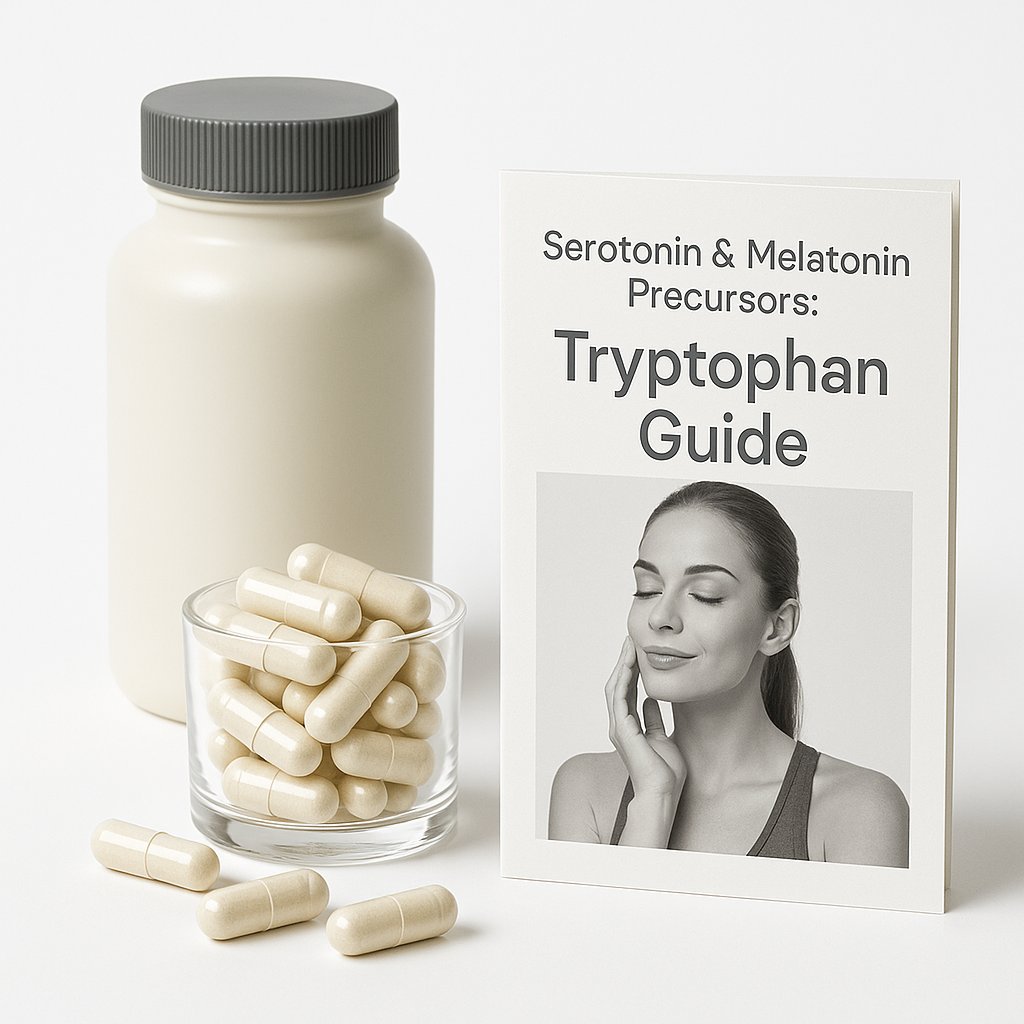
Melatonin: The End Product
Unlike most hormones discussed in this series, supplemental melatonin actually works – because you’re supplementing the end hormone directly rather than hoping precursors navigate a regulated pathway.
The Evidence (Strong)
- Ferracioli-Oda et al. (2013) meta-analysis of 19 RCTs: Melatonin reduced sleep onset latency by 7 minutes, increased total sleep time by 8 minutes, improved overall sleep quality. Effects are statistically significant but modest.
- Jet lag: Herxheimer & Petrie (2002) Cochrane review – melatonin is “remarkably effective” for preventing/reducing jet lag when taken close to target bedtime.
- Circadian rhythm disorders: Shift workers, delayed sleep phase – well-supported.
- Children with neurodevelopmental disorders: Consistent evidence for sleep improvement (Rossignol & Frye, 2011).
Dose Reality
- 0.3-1 mg is physiological and sufficient for most people. This matches the dose that raises melatonin to normal nighttime levels.
- Most commercial products sell 3-10 mg, which produces supraphysiological levels. Higher is not better – there’s a U-shaped response curve where very high doses can fragment sleep.
- Extended-release formulations may help with sleep maintenance vs. immediate-release for sleep onset.
Why Melatonin Beats the Precursor Route
Taking tryptophan ? 5-HTP to eventually make melatonin is like shipping raw iron ore to someone who needs a wrench. The conversion pathway is long, inefficient, and dependent on the pineal gland’s light-regulated enzyme machinery. Melatonin supplementation skips all of that.
Serotonin Through Diet?
The “tryptophan-rich foods boost serotonin” narrative is popular but misleading:
- Turkey famously contains tryptophan, but not more than other protein sources (chicken, cheese, fish).
- Protein-rich meals actually reduce brain tryptophan uptake because competing amino acids increase proportionally.
- Carbohydrate-rich meals more effectively boost brain tryptophan (insulin drives competing amino acids into muscle) – which may partially explain carb cravings in depression.
- Wurtman & Wurtman (1995) explored this extensively: serotonin synthesis from food is more about macronutrient ratios than tryptophan content per se.
Bottom Line
| Supplement | Evidence Level | Best Use Case | Key Risk | |———–|—————|—————|———-| | L-Tryptophan | Moderate (sleep), Weak (mood) | Mild sleep onset support | Minimal at standard doses | | 5-HTP | Moderate (mood, sleep) | Short-term mood/sleep support | Catecholamine depletion with chronic use; serotonin syndrome risk | | Melatonin | Strong | Sleep onset, circadian rhythm, jet lag | Oversold at high doses; quality varies |
For sleep: melatonin (low dose) is the clear winner. For mood: 5-HTP has some evidence but safety trade-offs make it a worse starting point than it appears. For both: lifestyle factors (light exposure, sleep hygiene, exercise, stress management) remain more impactful than any supplement.
? See also: L-Tryptophan for Mood Support for a deeper dive on tryptophan specifically.
FAQ
Which is better for sleep: tryptophan, 5-HTP, or melatonin?
For most people, low-dose melatonin is the most evidence-supported and predictable starting option for sleep timing and onset.
Is 5-HTP safe to combine with antidepressants?
Not without medical supervision. Combining serotonergic agents can raise serotonin syndrome risk.
Why does tryptophan sometimes not work well for mood?
Much of tryptophan is diverted into non-serotonin pathways, and brain uptake depends on transport competition and physiology.
Are higher melatonin doses always better?
No. More is not always better, and high doses can cause next-day grogginess or sleep fragmentation in some people.
Can diet alone raise serotonin effectively?
Diet influences precursor availability, but effects are usually modest versus sleep/light/stress behaviors and clinically indicated treatment.
Not medical advice. Serotonin-related supplements can interact dangerously with psychiatric medications. Consult a healthcare provider before combining with any serotonergic drug.
Related Articles
Sources
- Richard DM, Dawes MA, Mathias CW, et al. L-tryptophan: basic metabolic functions, behavioral research and therapeutic indications. Int J Tryptophan Res. 2009;2:45-60.
- Silber BY, Schmitt JA. Effects of tryptophan loading on human cognition, mood, and sleep. Neurosci Biobehav Rev. 2010;34(3):387-407.
- Jenkins TA, Nguyen JCD, Polglaze KE, Bertrand PP. Influence of tryptophan and serotonin on mood and cognition with a possible role of the gut-brain axis. Nutrients. 2016;8(1):56.
- Friedman M. Analysis, nutrition, and health benefits of tryptophan. Int J Tryptophan Res. 2018;11:1178646918802282.
- National Institutes of Health Office of Dietary Supplements. Fact Sheets for Health Professionals.
- Richard DM, Dawes MA, Mathias CW, Acheson A, Hill-Kapturczak N, Dougherty DM. L-tryptophan: basic metabolic functions, behavioral research and therapeutic indications. Int J Tryptophan Res. 2009;2:45-60.
- Silber BY, Schmitt JA. Effects of tryptophan loading on human cognition, mood, and sleep. Neurosci Biobehav Rev. 2010;34(3):387-407.
- Jenkins TA, Nguyen JCD, Polglaze KE, Bertrand PP. Influence of tryptophan and serotonin on mood and cognition with a possible role of the gut-brain axis. Nutrients. 2016;8(1):56.


Leave a Reply