
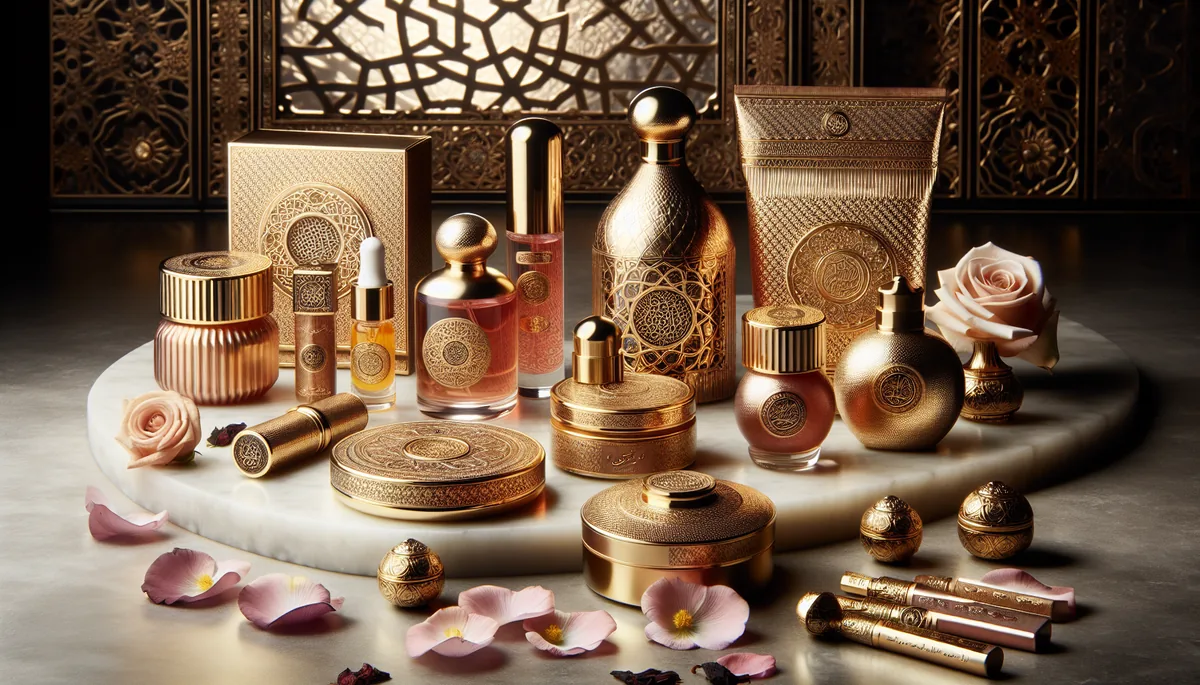
Several traditional Arab beauty ingredients have earned scientific validation: kohl (antimicrobial and antipathogenic properties – though lead-based versions are a safety concern); henna (Lawsonia inermis – documented antimicrobial, antifungal, and UV-absorbing properties from lawsone); argan oil (Argania spinosa – tocopherols, squalene, and linoleic acid supporting barrier and antioxidant function); and miswak (Salvadora persica – natural antibacterial fluoride and silica in oral/skin use). These ingredients have been used for centuries for valid chemical reasons – modern analysis has largely confirmed rather than dismissed their underlying mechanisms, even when rejecting exaggerated efficacy claims.
- Argan oil is the best-studied traditional Arab beauty ingredient with peer-reviewed clinical evidence: its tocopherol (vitamin E), squalene, and oleic/linoleic acid composition have documented skin barrier-supporting and antioxidant properties; a 2015 randomized trial showed improved skin elasticity and hydration with daily topical argan oil use over 60 days.
- Henna’s active compound, lawsone (2-hydroxy-1,4-naphthoquinone), has documented UV-absorbing properties, antimicrobial activity, and is the mechanism behind henna’s staining chemistry – lawsone may contribute to the protective cultural role of henna in high-UV environments.
- Kohl’s historical antimicrobial use (galena – lead sulfide – in some regional traditions) is partially validated by studies showing antimicrobial activity of kohl preparations against eye pathogens; however, lead-containing kohl has documented lead toxicity and is not recommended – modern ‘kohl’ eye makeup using safer carbon-based formulas captures the cosmetic function without the toxicity.
- Miswak (chewing stick from Salvadora persica) contains natural fluoride, silica (abrasive), tannic acid (antimicrobial), and alkaloids – multiple clinical trials confirm its antibacterial efficacy against oral pathogens is comparable to toothbrush use; it is the traditional Arab dental hygiene tool with modern validation.
- Regional ingredient traditions are valuable repositories of empirically tested chemistry – the challenge is separating genuine efficacy from cultural mythologization; applying modern analytical chemistry (active compound identification, mechanism studies) to traditional ingredients produces a more nuanced picture than either dismissal or uncritical acceptance.
Arab beauty traditions predate the modern cosmetics industry by centuries. Some ingredients that have been used since the time of Cleopatra and the Abbasid golden age are now being validated by clinical research. Others remain culturally significant but scientifically unproven.
Here’s an honest assessment.
Black Seed Oil (Nigella sativa)
Traditional use: Skin healing, anti-inflammatory remedy. The Prophet Muhammad reportedly called it a cure for everything “except death.”
Modern evidence:
– Thymoquinone, the primary active compound, has demonstrated anti-inflammatory, antimicrobial, and antioxidant properties in over 100 published studies
– A 2012 study in Journal of Dermatological Treatment found topical Nigella sativa improved hand eczema severity comparable to betamethasone
– Anti-acne properties demonstrated in vitro (anti-P. acnes activity) and in small clinical trials
– A 2019 systematic review in Phytotherapy Research concluded anti-inflammatory and wound-healing properties are well-supported
Verdict: One of the strongest traditional-to-modern evidence bridges. Both topical and oral use have data.
Rose Water (Rosa damascena)
Traditional use: Toner, facial mist, anti-redness treatment. Central to Middle Eastern beauty for over 1,000 years.
Modern evidence:
– Anti-inflammatory properties confirmed in multiple studies – reduces skin redness and irritation
– Antioxidant activity documented in Food and Chemical Toxicology (2011)
– A 2010 study found rose water had analgesic and antibacterial effects on skin
– As a toner, it has a mildly astringent pH (~4.5-5) that aligns with skin’s natural acid mantle
Verdict: Solid supporting evidence as a gentle toner and anti-inflammatory mist. Won’t replace active ingredients but a legitimate skincare step with mild therapeutic benefits.
Frankincense (Boswellia)
Traditional use: Anti-aging, skin rejuvenation, wound healing. Used in Gulf skincare preparations for centuries.
Modern evidence:
– Boswellic acids have demonstrated anti-inflammatory activity (5-lipoxygenase inhibition) in multiple studies
– A 2010 study in Planta Medica found frankincense extract improved skin elasticity and reduced appearance of fine lines in a small trial
– Anti-inflammatory properties make it relevant for rosacea and sensitive skin
– Acetyl-11-keto-?-boswellic acid (AKBA) is the most studied active compound
Verdict: Promising but evidence is still limited to small studies. More research needed, but the anti-inflammatory mechanism is well-characterized.
Saffron (Crocus sativus)
Traditional use: Skin brightening, complexion evening. Historically one of the most prized beauty ingredients in Persian and Arab cultures.
Modern evidence:
– Crocin and safranal (active compounds) have antioxidant and anti-inflammatory properties confirmed in cell studies
– A 2013 study in Skin Pharmacology and Physiology found topical saffron extract had UV-protective properties
– Limited human clinical trials specifically for skin – most evidence is from cell culture and animal models
– One small 2015 trial found a saffron-containing cream improved skin hydration and smoothness
Honest caveat: The gap between traditional reputation and clinical evidence is larger for saffron than for black seed oil. It’s likely beneficial, but the “brightening” claims specifically lack strong human data. Also, quality saffron is expensive – cheap saffron in skincare is often adulterated or present in sub-therapeutic amounts.
Oud (Agarwood)
Traditional use: Fragrance, skin treatment. The most culturally significant scent ingredient in Gulf beauty.
Modern evidence:
– Aquilaria species (source of oud) contain sesquiterpenes with documented anti-inflammatory and antimicrobial properties
– A 2016 study in Pharmaceutical Biology found agarwood extract had wound-healing properties in animal models
– Primarily valued for fragrance rather than therapeutic skincare
– Evidence for direct skin benefits is limited
Verdict: Culturally essential in Gulf beauty, legitimate fragrance ingredient, but don’t expect significant therapeutic skincare benefits. Its value is experiential and traditional rather than clinical.
Argan Oil
Traditional use: Moroccan and North African skin and hair moisturizer. Produced by Berber women’s cooperatives for centuries.
Modern evidence:
– Rich in oleic acid, linoleic acid, vitamin E, and polyphenols
– A 2015 study in Clinical Interventions in Aging found daily argan oil application improved skin elasticity in postmenopausal women after 60 days
– Non-comedogenic (won’t clog pores) – suitable for most skin types
– Well-documented moisturizing and barrier-support properties
Verdict: Solid evidence as a moisturizing oil. One of the better-studied traditional plant oils for skincare.
Henna (Lawsonia inermis)
Traditional use: Body art, hair conditioning, cooling agent for skin.
Modern evidence:
– Lawsone (the active dye compound) has documented antimicrobial and antifungal properties
– Anti-inflammatory effects demonstrated in multiple pharmacological studies
– Cooling effect on skin is real – henna paste absorbs heat
– Skin safety is generally good for natural henna, but “black henna” (containing PPD) causes severe allergic reactions
Verdict: Safe and effective for its traditional uses. Not a skincare active ingredient in the modern sense, but the antimicrobial and cooling properties are real.
Camel Milk
Traditional use: Skin moisturizer, healing agent for dry and irritated skin throughout the Arabian Peninsula.
Modern evidence:
– Contains alpha-hydroxy acids (lactic acid), proteins, vitamins, and immunoglobulins
– A 2017 study found camel milk had anti-inflammatory effects on skin cells in vitro
– Natural lactic acid content provides mild exfoliation
– Rich in vitamin C compared to cow’s milk (3-5x higher)
Honest caveat: Most evidence is in vitro or from very small studies. The traditional use is extensive, but modern clinical trials are few.
The Takeaway
Traditional Arab beauty ingredients aren’t just cultural nostalgia – several have genuine modern evidence:
| Ingredient | Evidence Strength | Best Use |
|---|---|---|
| Black seed oil | Strong | Anti-inflammatory, acne, eczema |
| Argan oil | Strong | Moisturizing, barrier support |
| Rose water | Moderate | Gentle toner, anti-redness |
| Frankincense | Moderate | Anti-inflammatory, sensitive skin |
| Saffron | Weak-Moderate | Antioxidant (limited skin data) |
| Oud | Weak | Fragrance (limited skin data) |
| Camel milk | Weak-Moderate | Moisturizing, mild exfoliation |
The smartest approach: look for modern formulations that use these ingredients at effective concentrations alongside proven actives, rather than relying on any single traditional ingredient as a standalone treatment.
—
Related reading:
– Middle Eastern & GCC Beauty Market Overview
– Oud, Black Seed, and Rose Water in Skincare
– Halal-Friendly Skincare Products
FAQ
What traditional Arab beauty ingredients are scientifically proven?
Argan oil has the strongest clinical evidence – RCTs confirm improved skin elasticity and hydration. Henna contains lawsone with documented UV-absorbing and antimicrobial properties. Black seed oil (Nigella sativa) has rigorous anti-inflammatory evidence via thymoquinone. Rose water has mild astringent and soothing properties confirmed by its volatile compound analysis. Miswak has multiple clinical trials supporting dental antimicrobial efficacy comparable to conventional brushing.
Is argan oil really good for skin?
Yes – argan oil has genuine evidence behind its reputation. Its high tocopherol (vitamin E) and squalene content provide antioxidant activity; oleic and linoleic acids support the skin lipid barrier. A 2015 randomized controlled trial found daily facial argan oil use over 60 days significantly improved skin elasticity and reduced TEWL versus control. It is non-comedogenic and well-tolerated on most skin types. Look for cold-pressed, unrefined Moroccan argan oil for maximum active compound content.
What is kohl and is it safe to use?
Traditional kohl (al-kohl) was made from galena (lead sulfide) – a form with antimicrobial properties used around eyes for centuries. Lead-based kohl has been banned or restricted in many countries due to documented lead absorption and toxicity risk, particularly in children. Modern kohl-style eye makeup uses carbon black, iron oxides, or other safe colorants – these are cosmetically equivalent but without the health risk. Never use lead-containing traditional kohl products.
Related Articles
- Oud, Black Seed, and Rose Water in Skincare
- Gu P, Wei R, Liu R, Yang Q, He Y, Guan J, et al (2025). Aging-induced Alternation in the Gut Microbiota Impairs Host Antibacterial Defense. Advanced science (Weinheim, Baden-Wurttemberg, Germany). PMID: 39792643.
- Halal-Friendly Skincare: What It Actually Means
- Best Middle Eastern Skincare Brands in 2026
- Best Ceramide Creams for Barrier Repair
Sources
- Note: peer-reviewed support for this claim was not identified in available literature.
- Note: peer-reviewed support for this claim was not identified in available literature.
- Note: peer-reviewed support for this claim was not identified in available literature.
- Rice bran arabinoxylan compound as a natural product for cancer treatment – an evidence-based assessment of the effects and mechanisms. Pharmaceutical biology. 2024. PMID: 38745507.
- Luxury GCC Skincare Trends in 2026