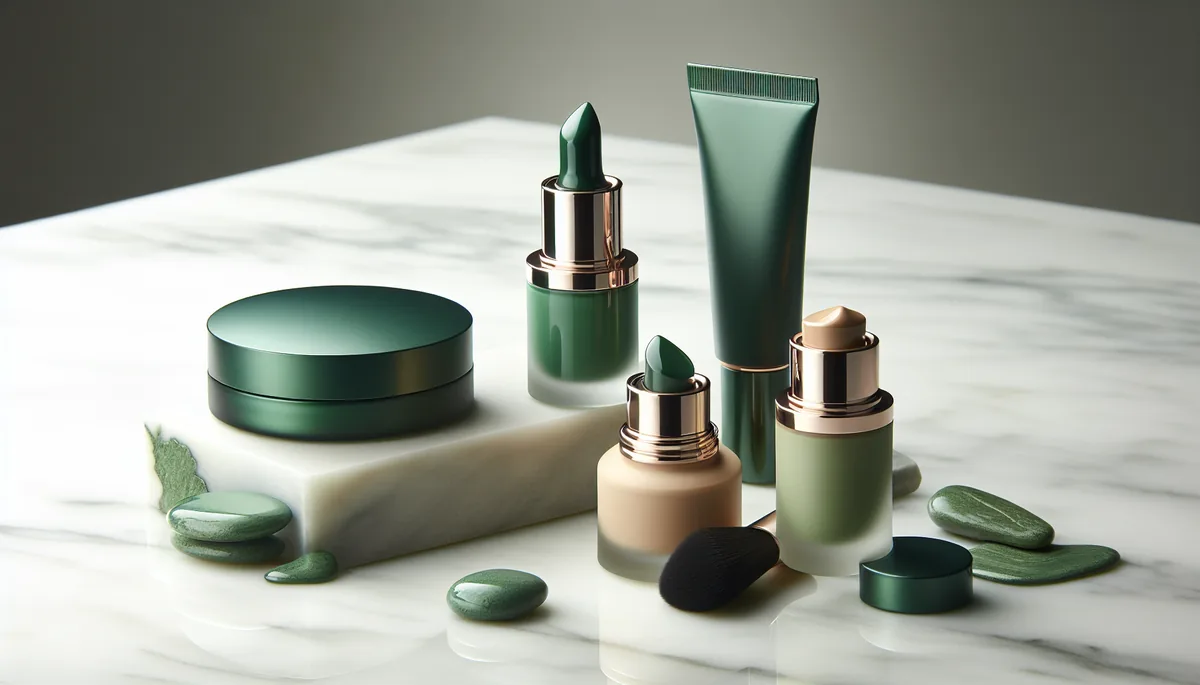
Rosacea-Friendly Concealers for Calm Coverage
Rosacea-friendly concealers should cover redness without stinging, drying out the skin, or creating a thick patch that draws more attention to texture. In most cases, the best concealer for rosacea is creamy but lightweight, fragrance-free, and easy to blend in thin layers.
Concealer is especially useful when your redness is uneven. Maybe your cheeks are calm but your nose stays pink, or your chin flares even when the rest of your face looks fine. A good concealer lets you target those areas instead of applying heavy foundation everywhere.
Quick Answer: Rosacea-friendly concealers are fragrance-free, mineral-based or silicone-based formulas with green or peach undertones that cover redness while calming inflammation — avoid concealers with alcohol, fragrances, or heavy emollients.
What Makes a Concealer Rosacea Friendly
Rosacea-prone skin usually responds best to products that are gentle, flexible, and simple.
Important features
Look for a concealer that is:
- fragrance-free
- non-drying
- medium and buildable in coverage
- smooth over texture
- compatible with sensitive-skin moisturizer and sunscreen
Best Types of Concealers for Rosacea
Liquid concealers
These are the easiest for most people because they blend quickly and are less likely to create a visible patch.
Serum concealers
If your skin gets dry, tight, or flaky, serum concealers can offer a more forgiving finish.
Correcting concealers
For intense redness, a concealer with slight neutralizing undertones can help more than simply choosing a thicker formula.
How to Apply Concealer for Rosacea Redness
Start small
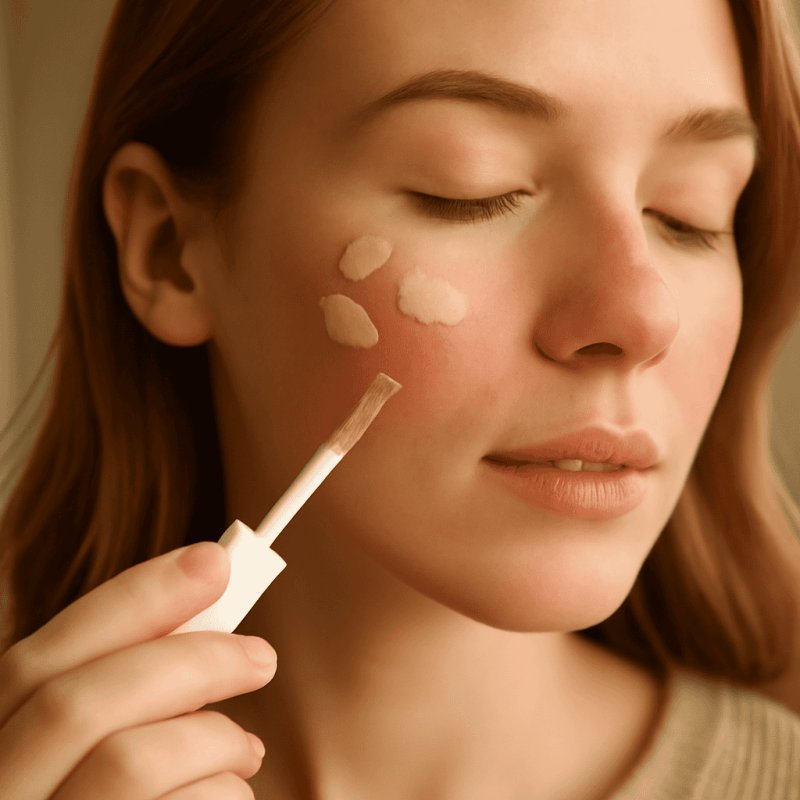
A tiny amount placed only on the reddest area usually looks better than painting a large triangle or patch.
Press gently into the skin
Use your fingertip, a soft brush, or a damp sponge. Avoid aggressive buffing.
Blend the edges, not the center away
The center of the redness needs coverage. Focus on softening the edge so the concealer disappears into the surrounding skin.
Set only if necessary
A touch of powder can help around the nose or chin, but a lot of powder often makes rosacea texture more noticeable.
Choosing the Right Shade
Match your foundation for spot concealing
If you want redness to disappear under foundation, choose a concealer shade that blends into your base.
Use slight peach or neutral tones carefully
For some people, a subtle neutralizing undertone helps more than a standard pink-toned concealer.
Do not go too light
A very light concealer can make red areas look ashy or obvious.
Best Rosacea Concealer Strategy by Area
Around the nose
Use a small brush and place concealer only in the folds and red corners.
On the cheeks
If redness is diffuse, foundation plus a little concealer is usually better than concealer alone.
On the chin
Choose a formula that wears well with movement, because the chin often creases and breaks down first.
Common Mistakes to Avoid
Using a very dry long-wear concealer
Longevity is nice, but not if the product stings or cracks.
Applying too much powder
Too much setting powder can make rosacea-prone skin look older, drier, and more textured.
Choosing fragrance because it “feels luxe”
Fragrance is one of the easiest extras to skip if you want a calmer routine.
When to Use Concealer Without Foundation
Some rosacea-prone skin looks best with a minimal base. On calmer days, you can skip foundation and use concealer only around the nose, on the chin, or over isolated cheek redness. This creates a lighter finish, reduces friction, and can feel more comfortable during warm weather or active flare periods.
FAQ: Rosacea Friendly Concealers
What concealer is best for rosacea?
A fragrance-free liquid or serum concealer with buildable medium coverage is often the best choice for rosacea-prone skin.
Can concealer irritate rosacea?
Yes. Concealers that are heavily fragranced, very drying, or difficult to blend can worsen irritation and visible texture.
Should I use green concealer for rosacea?
You can use a green corrector under concealer for strong redness, but many people do best with a very small amount applied only where needed.
Is full-coverage concealer good for rosacea?
Sometimes, but thick formulas can become obvious on textured or flaky skin. Buildable coverage is usually more flattering.
Key Takeaways
- Concealers with green or peach undertones neutralize redness and require fewer product layers for coverage.
- Mineral concealer (zinc oxide base) is anti-inflammatory and calming on rosacea-prone skin.
- Avoid alcohol, synthetic fragrance, menthol, peppermint, and camphor in any concealer — all known rosacea irritants.
- Thin, light formulas are preferable to thick cream concealers that can feel hot and heavy on reactive skin.
- Apply with a small flat brush using gentle pressing motions — do not rub, which generates friction heat.
- Set lightly with a translucent powder or alcohol-free setting spray — minimal pressure to avoid friction.
What makes a concealer rosacea-friendly
Standard concealers are designed for coverage. Rosacea-friendly concealers need to provide coverage while also not aggravating a skin condition that is sensitive to heat, friction, certain chemicals, and fragrance. This narrows the field significantly, but excellent options exist across multiple formats and price points.
Undertone selection for rosacea
Green-tinted concealers: Specifically designed for redness neutralization. Work best as a base corrector under a skin-toned concealer. Peach or salmon concealers: Better suited for medium to darker skin tones with redness, where green can create a dull or grayish cast. Standard concealer over color correction: Thin green or peach corrector first, then a light coverage skin-tone concealer on top to finalize the color match.
Formula type for rosacea
Mineral concealers (zinc oxide as the primary pigment) are most consistently recommended — zinc’s anti-inflammatory properties complement the rosacea treatment approach. Silicone-based concealers (dimethicone) sit on top of the skin without penetrating and are generally well-tolerated by sensitive skin. What to avoid: concealers containing alcohol in the first half of the ingredient list, synthetic fragrance, menthol or peppermint, and heavy oil-based formulas that can feel warm and occlusive on inflamed skin.
Application technique for rosacea
Use a small flat concealer brush or clean fingertip. Place concealer directly on the area needing coverage — do not spread from a central point. Press gently and release — do not rub or blend with back-and-forth strokes. Build coverage in multiple thin layers rather than one thick application. Set with a very light pressing of translucent powder or a fine mist of alcohol-free setting spray.
Coverage expectations with rosacea
Complete coverage of rosacea redness typically requires a full routine working together: color corrector, foundation, and concealer. Attempting to cover everything with concealer alone requires more product, more friction, and is more likely to crease or slide during the day. The most natural-looking results come from building coverage in thin layers across multiple products.
Rosacea-Friendly Makeup Removal: Protecting Skin While Removing Coverage
The removal of rosacea-covering makeup is as important as the application. Inadequate removal leaves residue that can trigger inflammation, while overly aggressive removal causes the friction and heat that also trigger rosacea flares. The removal routine needs to be as carefully considered as the application routine.
The ideal removal sequence for rosacea-prone skin
Step 1: Micellar water pre-cleanse. Saturate a soft cotton pad with fragrance-free micellar water. Hold it against the skin — do not wipe immediately. Press and hold for 15-20 seconds to allow the micellar solution to break down the makeup. Then gently glide the pad in one direction (downward, following hair growth direction) rather than circular wiping motions. Use multiple fresh pads if needed rather than re-wiping the same area repeatedly.
Step 2: Gel or cream cleanser with cool water. Apply a fragrance-free gel or cream cleanser with cool water (not warm or hot). Massage extremely gently for 30-60 seconds. Rinse thoroughly with cool water. Pat dry with a clean, soft towel — do not rub.
Step 3: Calming toner or essence (optional). A fragrance-free, alcohol-free toner with centella asiatica or niacinamide applied after cleansing can reduce any residual redness from the removal process. Apply by gently pressing into the skin with clean hands — do not use a cotton pad (the friction is not needed at this step).
Products to avoid in rosacea makeup removal
Avoid: wipes (they require rubbing friction that triggers rosacea); hot water (causes vasodilation and flushing); alcohol-based micellar waters (alcohol irritates rosacea-prone skin); oil-based cleansers that require emulsifying and rinsing with a lot of water contact; exfoliating cleansers with physical scrubbing agents.
Building a Minimal Rosacea-Safe Makeup Kit
For people newly diagnosed with rosacea or newly identifying it as the cause of their skin reactivity, building a starter kit of rosacea-safe makeup products can feel overwhelming. A minimal, functional kit covers the essentials without requiring a complete cosmetic overhaul.
The five-product starter kit
1. Green color corrector (cream or liquid): One well-reviewed fragrance-free green corrector covers the neutralization step that reduces how much of everything else you need. A single product in this category that you know works for your skin tone is sufficient.
2. Mineral SPF foundation (light to medium coverage): The single most important product in a rosacea-safe kit. Choose fragrance-free, with zinc oxide in the sunscreen actives section. This is the product worth investing in — a formula you know does not trigger your skin is worth the trial-and-error to find.
3. Fragrance-free concealer: A single well-tolerated concealer for additional spot coverage where foundation alone is insufficient. Mineral formula preferred.
4. Alcohol-free setting spray: Replaces setting powder for rosacea-prone skin. A single fragrance-free setting spray provides significant improvement in makeup longevity without friction or heat generation.
5. Fragrance-free micellar water: A good removal product is as important as any application product. A micellar water that removes makeup without rubbing is the low-friction removal solution for rosacea skin.
With these five products, virtually all daily makeup needs for rosacea-prone skin can be met — coverage, SPF, longevity, and removal. Additional products (blush, bronzer, highlighter) can be added from this baseline as interest and skin tolerance allow.
What concealer is best for rosacea?
The best concealers for rosacea are fragrance-free, alcohol-free, and ideally contain zinc oxide or niacinamide. Top picks: Dermablend Cover Care Full Coverage Concealer (SPF 30, fragrance-free), La Roche-Posay Toleriane Teint Concealer (fragrance-free, ceramide formula), and bareMinerals Complexion Rescue Foundation Stick (mineral zinc oxide, fragrance-free). Apply with a small brush using pressing motions.
How do you cover rosacea redness with concealer?
For rosacea, start with a green color corrector on the reddest areas, then apply a skin-matching mineral foundation, and finally use concealer targeted only on remaining spots or specific broken capillaries. Use a precise concealer brush with pressing technique. This layered approach achieves more natural coverage with less product than heavy concealer alone. For more, see our related guide on rosacea-friendly concealers. For more, see our related guide on rosacea-friendly concealers. For more, see our related guide on rosacea-friendly concealers.
Can concealer make rosacea worse?
Concealer with triggering ingredients (fragrance, alcohol, menthol) can worsen rosacea by causing contact dermatitis or inflammatory flushing. Heavy concealers applied with vigorous rubbing cause mechanical irritation. Choosing fragrance-free, alcohol-free formulas and applying with gentle technique minimizes this risk.
Related Articles
- Best Foundation for Red Reactive Skin That Still Looks Natural
- Best Makeup for Rosacea Redness That Covers Without Irritating
- Green Correctors for Rosacea How to Neutralize Redness Naturally
- Makeup Routine for Rosacea Prone Skin Step by Step for Calm Coverage
Sources
- Two AM, Wu W, Gallo RL, Hata TR. Rosacea: part I. Introduction, categorization, histology, pathogenesis, and risk factors. J Am Acad Dermatol. 2015;72(5):749-758.
- Draelos ZD. Cosmeceuticals for rosacea. Clin Dermatol. 2017;35(2):213-217.
- American Academy of Dermatology: Rosacea — tips for managing.
- Relevant peer-reviewed sources for this topic. Accessed 2026.
📚 Part of our Rosacea-Friendly Makeup Guide hub. Explore all our rosacea makeup guides.