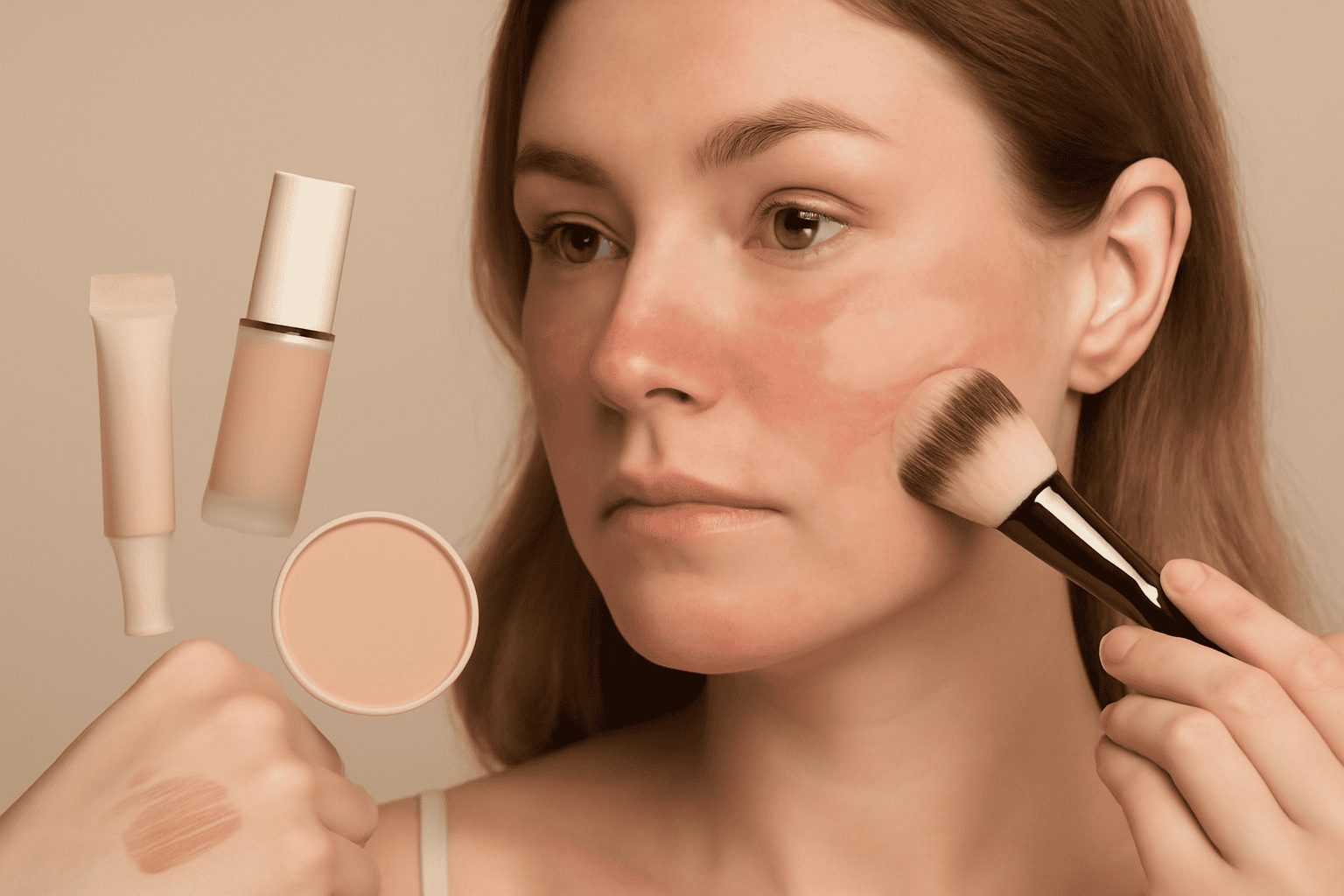
Best Makeup for Rosacea and Redness
The best makeup for rosacea redness combines gentle ingredients, calming coverage, and a finish that does not exaggerate heat, dryness, or flushing. For most people, the winning combination is a fragrance-free base, targeted green correction, and a lightweight foundation with a natural or soft-matte finish.
Rosacea-prone skin is not just red. It is often hot, sensitive, dry in some areas, reactive to friction, and easily overwhelmed by heavy makeup. That is why the best makeup routine for rosacea is not about maximum coverage. It is about strategic coverage.
Quick Answer: The best makeup for rosacea redness uses mineral pigments (zinc oxide), green color correctors, and fragrance-free formulas — coverage that calms while concealing, without triggering the heat, fragrance, or irritation that worsens rosacea flares.
What Rosacea Friendly Makeup Should Do
A good rosacea-friendly product should even out visible redness without stinging, clinging to flakes, or creating a mask-like layer.

Key features to look for
The best makeup for rosacea redness is often:
- fragrance-free
- non-drying
- easy to blend in thin layers
- compatible with sensitive-skin sunscreen
- free of obvious irritants like strong essential oils
Best Product Types for Rosacea Redness
Green corrector
A small amount of green corrector can neutralize visible redness before foundation. The trick is using less than you think. Too much can turn the skin gray.
Light to medium coverage foundation
A buildable foundation usually performs better than a full-coverage heavy base. It gives you room to even out tone without making texture obvious.
Creamy concealer for isolated areas
If you have persistent redness around the nose or chin, a gentle concealer can provide extra help without requiring a thick layer of foundation all over.
Best Finishes for Rosacea Prone Skin
Natural finish
A natural finish usually looks the most skin-like and is forgiving on dry or flaky patches.
Soft-matte finish
Soft-matte formulas can work well if you also deal with oiliness. They offer a polished look without the shine that may visually amplify redness.
Avoid overly luminous formulas
Very glowy makeup can reflect extra warmth and draw attention to flushing.
How to Apply Makeup When You Have Rosacea
Start with calm skin
Apply makeup only after moisturizer and sunscreen have fully settled. Rushing into makeup can cause rubbing, pilling, and extra irritation.
Use fingers or a very soft sponge
Gentle pressing motions are often better than aggressive buffing with a dense brush.
Build in thin layers
A sheer first layer followed by spot correction looks more natural and usually feels better through the day.
Set lightly
Use powder only in areas where makeup moves or gets shiny. Too much powder can emphasize dryness and texture.
Ingredients and Features to Avoid
Fragrance and essential oils
These are common irritants for rosacea-prone skin.
Alcohol-heavy formulas
Fast-drying products can feel weightless at first but may leave the skin more reactive later.
Harsh long-wear claims
Some extreme long-wear formulas stay put by being very drying. That is not always a good trade for rosacea.
Best Makeup Strategy for Flare Days
On hot, reactive days, do less. A flare-day routine might be:
- calming moisturizer
- mineral or sensitive-skin sunscreen
- tiny amount of green corrector
- light concealer only where needed
- minimal powder
Sometimes less makeup looks better because the skin is not fighting through multiple layers.
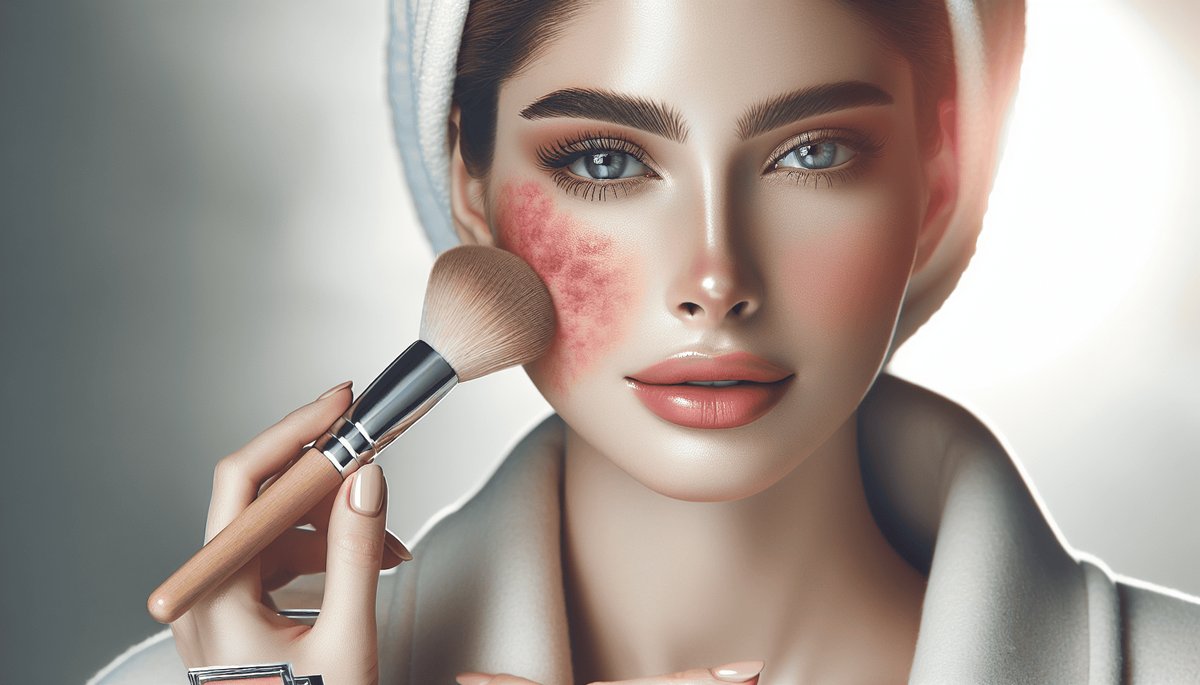
FAQ: Best Makeup for Rosacea Redness
What makeup is best for rosacea redness?
Fragrance-free, lightweight, buildable makeup is usually best for rosacea redness, especially when paired with targeted green correction.
Is full-coverage foundation good for rosacea?
Not always. Full-coverage foundation can look heavy and emphasize texture or dryness. Light to medium buildable coverage is often more flattering.
Should rosacea skin use powder or liquid foundation?
Most rosacea-prone skin does best with gentle liquid foundation, though some people like a small amount of powder for setting or spot evening.
How do I cover rosacea without irritating it?
Use calming skincare first, then apply thin layers of green corrector, foundation, and concealer with gentle pressing motions.
Key Takeaways
- Mineral foundations with zinc oxide have mild anti-inflammatory properties that suit rosacea-prone skin.
- Green color correctors neutralize redness before foundation, reducing the amount of coverage needed.
- Fragrance is a common rosacea trigger — always choose fragrance-free products for the face.
- Avoid products with alcohol, menthol, peppermint, eucalyptus, or camphor — all known rosacea aggravators.
- Matte or natural-finish foundations are preferable to dewy finishes that can amplify heat sensation.
- Light application layers build better coverage than one heavy coat, which can feel suffocating on rosacea-prone skin.
Makeup and rosacea: managing coverage without worsening triggers
Rosacea is a chronic inflammatory skin condition characterized by persistent facial redness, visible blood vessels, and heightened skin sensitivity. It is triggered by heat, sun, spicy food, alcohol, stress, and certain skincare and cosmetic ingredients. Choosing the right makeup is both a coverage question and a trigger-management question.
The green corrector foundation
The most effective makeup strategy for rosacea redness begins before foundation. Green color correctors neutralize red tones because green and red sit opposite each other on the color wheel. A very thin layer applied only to areas of visible redness allows you to use significantly less foundation while achieving better overall coverage. Use as little green corrector as needed and blend edges completely — over-applying creates a dull, grayish cast under foundation.
Mineral makeup for rosacea
Mineral foundations (zinc oxide + titanium dioxide base) are widely recommended for rosacea-prone skin. Zinc oxide has established anti-inflammatory properties that complement rosacea management. Mineral pigments sit on the skin surface without penetrating or adding heat — relevant for skin that already runs inflamed. Most mineral foundations are fragrance-free. Loose mineral powder or pressed mineral formats tend to have the simplest ingredient lists with the fewest potential irritants.
Application technique and trigger avoidance
Avoid rubbing or dragging application tools across rosacea-affected areas — friction generates heat, which can trigger flushing. Use soft, fluffy brushes or gentle pressing motions with a sponge. Apply in light layers. Allow skin to fully cool before applying makeup — applying immediately after a hot shower makes it harder to achieve even coverage and can worsen redness during application.
Key ingredients to avoid in all makeup products if you have rosacea: synthetic fragrance, alcohol (ethanol or isopropyl alcohol in the first half of the ingredient list), menthol, peppermint, camphor, eucalyptus oil, and cinnamon. These are well-established rosacea aggravators.
Rosacea Makeup: Adapting for Flare Days vs. Maintenance Days
Managing rosacea makeup well requires two different modes: a maintenance approach for relatively calm skin days and a flare-day approach when redness is significantly elevated and the skin is particularly reactive.
Maintenance day approach
On days when rosacea is relatively controlled, the routine described above provides full coverage with minimal trigger risk. The goal on maintenance days is building a sustainable daily routine that is efficient enough to be done consistently without feeling burdensome.
A streamlined maintenance routine that takes under 10 minutes: fragrance-free moisturizer and mineral SPF (combined if possible), green corrector on active red spots only, mineral foundation applied with a fluffy brush using light pressing motions, alcohol-free setting spray. This is the repeatable daily baseline.
Flare day approach
During a rosacea flare — when background redness is elevated, skin feels hot, and capillary visibility is increased — the standard routine may need adjustment. The goals on flare days are: maximize calming effect, minimize friction on skin, reduce product layers where possible.
On flare days: skip primer entirely (one fewer application step, one fewer potential trigger). Apply a thin fragrance-free moisturizer with centella asiatica or niacinamide — these ingredients provide calming benefit beyond just hydration. Apply green corrector more generously than usual. Use a lighter-coverage mineral powder only where needed rather than full-face coverage. Accept a more natural look on flare days rather than attempting full coverage that requires more application pressure.
Makeup removal on flare days
Flare-day makeup removal requires extra gentleness. Avoid any friction-based removal. Soak a cotton pad with fragrance-free micellar water and press against the skin — do not wipe. Follow with a gentle cleanse using cool water and a fragrance-free cleanser. Avoid exfoliating cleansers, washcloths, or any rubbing motion on flushed skin. After rinsing, pat dry gently and apply calming serum or centella asiatica essence before moisturizer.
Rosacea Skincare That Complements Your Makeup Routine
The most effective rosacea makeup routine is supported by a skincare regimen that reduces baseline redness and barrier reactivity over time. Understanding which skincare ingredients have evidence specifically for rosacea helps build a regimen that produces cumulative improvement alongside daily makeup management.
Evidence-based topical treatments for rosacea redness
Azelaic acid (15-20% prescription or 10% OTC): Has among the strongest evidence for reducing rosacea inflammatory lesions and background erythema. Anti-inflammatory, antibacterial, and anti-pigmentation properties make it particularly useful for rosacea. Available as a prescription foam or gel (Finacea, Azelex) or OTC at 10% from clean-beauty brands. Well-tolerated by most rosacea skin types.
Metronidazole (0.75-1% prescription): One of the most commonly prescribed topical treatments for rosacea papules and pustules. Anti-inflammatory mechanism. Typically well-tolerated. Requires prescription but is widely available.
Niacinamide (4-5% OTC): Reduces inflammatory cytokines, strengthens the skin barrier, and visibly minimizes redness over 8-12 weeks of daily use. Available in many serums and moisturizers. Can be used in the morning routine before mineral foundation for added redness management throughout the day.
Sun protection: the single most important rosacea management step
UV exposure is the most consistent and powerful rosacea trigger — and the most preventable. Mineral SPF 30+ applied every morning, reapplied when outdoors, provides the most impactful single intervention for reducing flare frequency. This is the one skincare step that has the greatest measurable effect on rosacea management, more impactful over time than any topical treatment alone.
What is the best makeup for covering rosacea?
The best makeup for rosacea uses green color corrector as a base to neutralize redness, followed by a mineral foundation with zinc oxide. Top recommendations: Dermablend Cover Care (high coverage, fragrance-free), La Roche-Posay Toleriane Teint, and Colorescience Sunforgettable. The color correction step significantly reduces how much foundation is needed.
What makeup ingredients should I avoid with rosacea?
Ingredients to avoid with rosacea: fragrance (synthetic and natural botanical), alcohol denat, menthol, peppermint, camphor, eucalyptus, and high concentrations of chemical exfoliants. Also avoid heavy matte formulas that require vigorous blending which triggers facial heat and flushing.
Does concealer help rosacea?
Concealer helps cover individual redness spots, but for diffuse rosacea redness, color-correcting primer (green) plus mineral foundation is more effective and requires less product than trying to conceal all redness with opaque concealer. Concealer works best for isolated persistent redness patches that remain after the foundation layer.
Related Articles
- Best Foundation for Red Reactive Skin That Still Looks Natural
- Green Correctors for Rosacea How to Neutralize Redness Naturally
- Makeup Routine for Rosacea Prone Skin Step by Step for Calm Coverage
- Rosacea Friendly Concealers for Calm Natural Looking Coverage
Sources
- Two AM, Wu W, Gallo RL, Hata TR. Rosacea: part II. Topical and systemic therapies in the treatment of rosacea. J Am Acad Dermatol. 2015;72(5):761-770.
- Draelos ZD. Cosmeceuticals for rosacea. Clin Dermatol. 2017;35(2):213-217.
- American Academy of Dermatology: Rosacea — tips for managing.
- Relevant peer-reviewed sources for this topic. Accessed 2026.
📚 Part of our Rosacea-Friendly Makeup Guide hub. Explore all our rosacea makeup guides.