Best Foundation for Red Reactive Skin
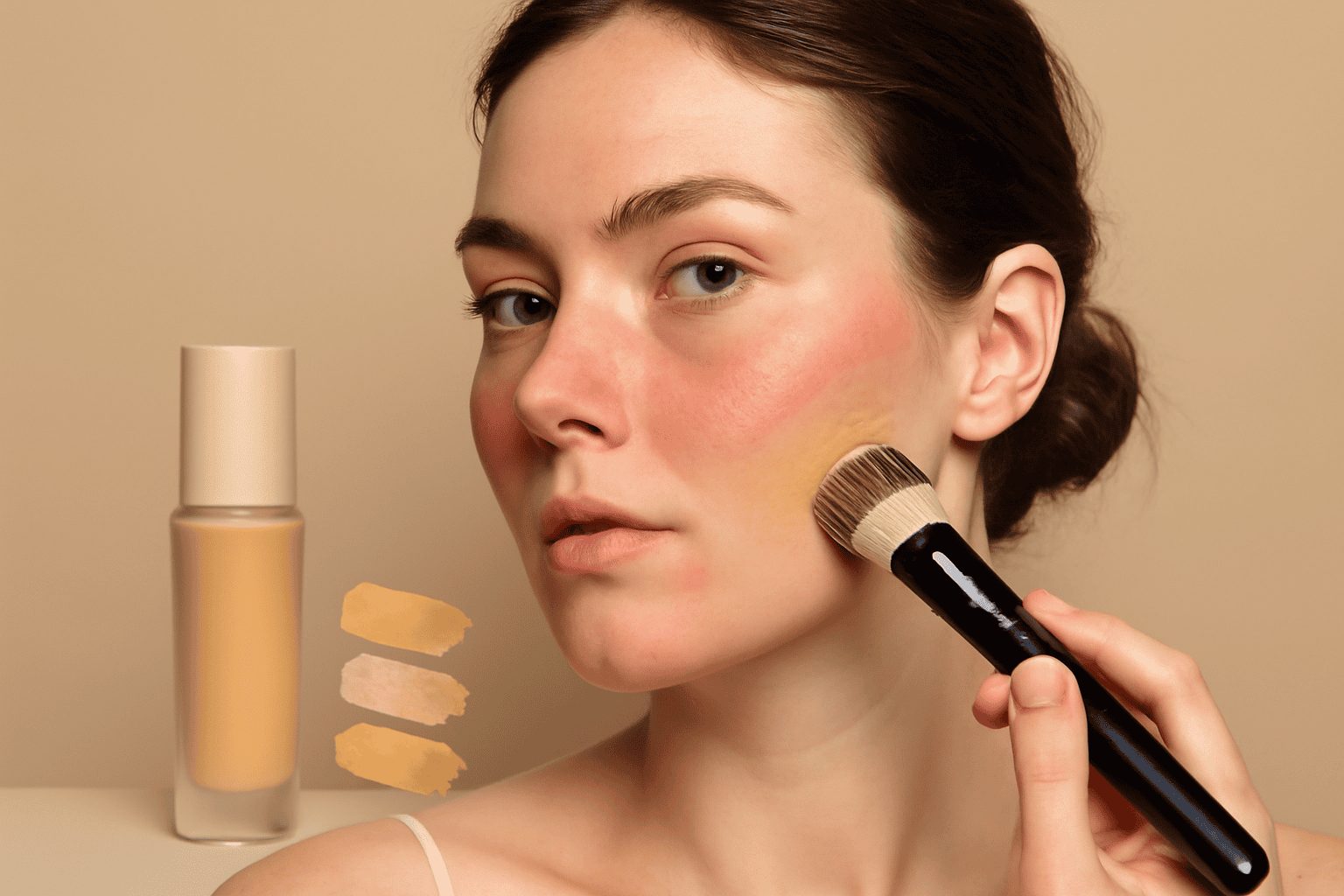
The best foundation for red reactive skin is usually fragrance-free, lightweight, and buildable enough to tone down redness without creating a thick, overheated mask. A natural or soft-matte finish tends to be the safest choice because it looks polished while staying gentle on dry, flushed, or sensitive areas.
Red reactive skin is different from simply having pink undertones. It can sting, flush, become patchy, or flare after heat, friction, weather changes, or irritating ingredients. That means the best foundation has to do more than cover. It has to cooperate with unstable skin.
Quick Answer: The best foundations for red reactive skin use mineral pigments, soothing actives like niacinamide or centella asiatica, and fragrance-free formulas — coverage that neutralizes redness without aggravating already-sensitized skin.
What Red Reactive Skin Needs From Foundation
A good foundation for this skin type should:
- reduce visible redness
- avoid common irritants
- sit smoothly over dryness or texture
- wear comfortably for hours
- layer well over sunscreen and moisturizer
Best Foundation Textures for Red Reactive Skin
Lightweight liquid foundation
This is usually the most dependable option. It spreads easily, can be built gradually, and tends to look less obvious than thick cream formulas.
Serum foundation
A serum foundation can be ideal when the skin feels dry or tight. It often gives a more flexible, skin-like finish.
Powder foundation for touch-ups
Powder foundation is not always the best full-face option for reactive skin, but it can work well in small amounts for midday touch-ups.
Finishes That Usually Work Best
Natural finish
A natural finish is often the most forgiving on dry patches and facial redness because it looks balanced, not too flat and not too shiny.
Soft-matte finish
If you get oilier through the day, soft-matte formulas can help. Just avoid foundations that feel aggressively drying.
Avoid overly luminous formulas
Too much glow can visually emphasize heat and redness, especially on the cheeks and nose.
Ingredients and Features to Prioritize
Fragrance-free formulas
Fragrance is one of the easiest things to avoid when you are dealing with sensitive or rosacea-prone skin.
Alcohol-light formulas
Some long-wear foundations depend on alcohol-heavy textures that may sting or dry the skin.
Buildable pigment
You want enough pigment to neutralize redness with a thin layer. That keeps the foundation more comfortable and more believable.
How to Pick the Right Shade
Do not match to your flare
If your face is redder than your neck and chest, matching foundation to the redness can leave your whole complexion looking too pink or too dark.
Match your non-flushed tone
Check the jawline, neck, or less reactive parts of your face. Then use color correction or concealer for red patches.
How to Apply Foundation on Reactive Skin
Prep with gentle skincare
Moisturizer and sunscreen should be fully set before makeup goes on.
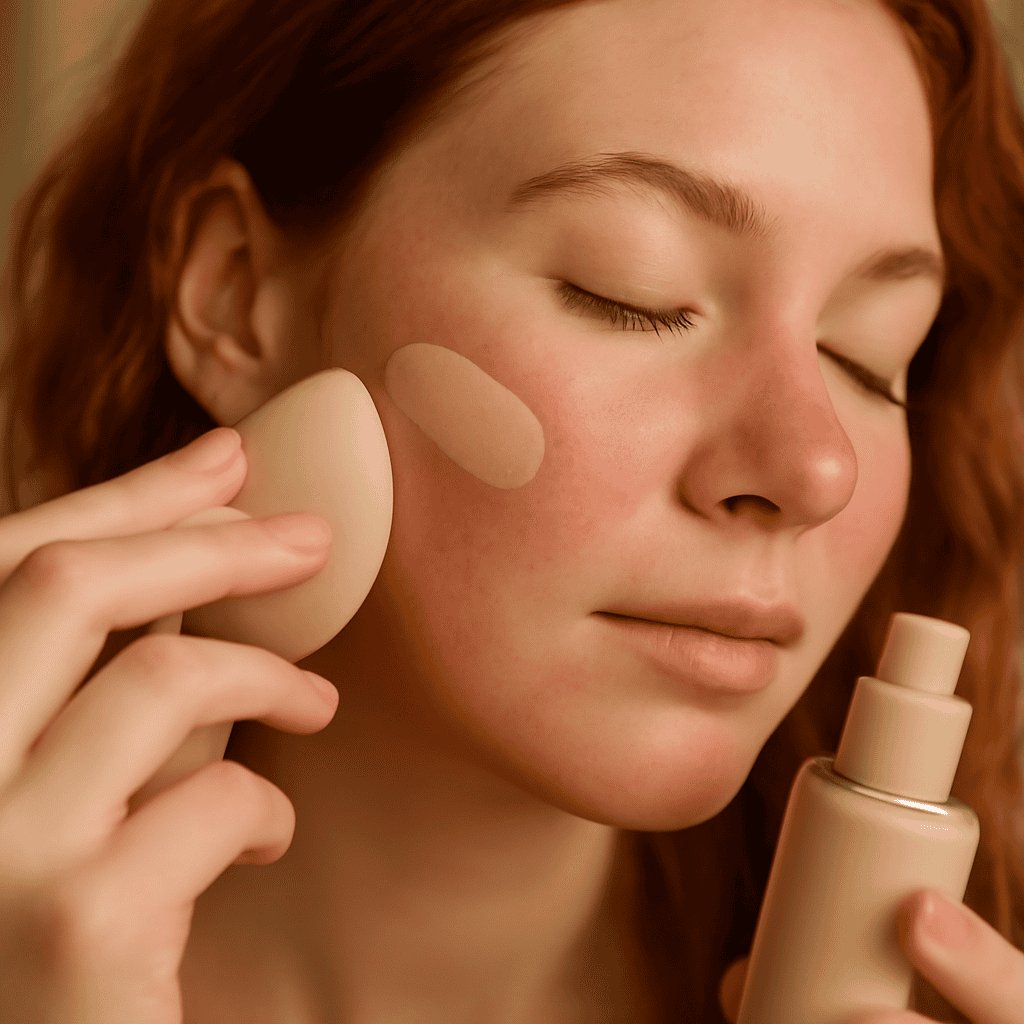
Apply with fingers or a damp sponge
Both methods are gentle and reduce friction.
Use thin layers
One thin layer plus a second only where needed usually outperforms one heavy layer.
Keep powder minimal
Too much powder can make reactive skin look dry and textured.
Common Mistakes to Avoid
Choosing maximum coverage first
Coverage is tempting, but comfort matters more. Many heavy formulas look worse after a few hours.
Ignoring the rest of the routine
A great foundation will not save a routine if your primer or sunscreen irritates your skin.
Over-buffing with dense brushes
Too much rubbing can trigger redness before you even finish your makeup.

FAQ: Best Foundation for Red Reactive Skin
What kind of foundation is best for red reactive skin?
A fragrance-free, lightweight liquid foundation with buildable coverage is usually best for red reactive skin.
Is matte foundation good for reactive skin?
Soft-matte can be good, but very flat or drying matte formulas often emphasize texture and discomfort.
How do I make redness less visible with foundation?
Use a small amount of green corrector first if needed, then apply a thin layer of buildable foundation.
Should sensitive red skin use full coverage foundation?
Usually not as a first choice. Buildable medium coverage is often more comfortable and looks more natural.
Key Takeaways
- Green color-correcting primer is the most efficient first step for neutralizing redness before foundation.
- Mineral foundations with zinc oxide provide gentle physical coverage that also soothes inflammation.
- Niacinamide in foundation helps calm reactive skin and reduce redness over time with consistent use.
- Fragrance is a common trigger for red reactive skin — always choose fragrance-free formulas.
- Buildable medium coverage is preferable to heavy full-coverage formulas that can feel suffocating on reactive skin.
- Look for centella asiatica (CICA) or green tea extract in foundations for added calming benefit.
Understanding red reactive skin
Red reactive skin can have several underlying causes — rosacea, sensitive skin, post-procedure reactivity, or genetic predisposition to flushing and visible capillaries. The makeup approach differs slightly depending on the root cause, but universal principles apply: avoid triggers, choose soothing formulas, and build coverage in thin layers.
Color correction as the foundation of the routine
The most efficient way to reduce the amount of foundation needed over redness is color correction. Green sits directly opposite red on the color wheel. A thin layer of green color corrector applied only to areas with active redness neutralizes the red tone at the source, meaning significantly less foundation is required. Apply only where needed, blend it out so no green tone remains visible before applying foundation.
Mineral foundations for reactive skin
Mineral foundations (titanium dioxide and zinc oxide as primary pigments) offer several advantages for reactive skin: zinc oxide has mild anti-inflammatory properties that can calm rather than aggravate already-reactive skin; mineral pigments sit on the surface without penetrating; most mineral foundations are fragrance-free; and they provide buildable natural finish that reads less mask-like than heavy full-coverage liquid formulas.
Ingredients that specifically help
Niacinamide (vitamin B3): Reduces sebum, visibly minimizes redness, and strengthens the skin barrier over time. Particularly valuable for reactive skin where barrier compromise is a contributing factor to the reactivity itself.
Centella asiatica (CICA): Well-established anti-inflammatory and skin-healing properties. Increasingly common in foundations targeting sensitive or redness-prone skin.
What to avoid: synthetic fragrance (a leading contact sensitizer), alcohol-heavy formulas (dry and irritate reactive skin), and heavy emollients in full-coverage formulas.
Red Reactive Skin: Long-Term Management Beyond Makeup
While the right foundation significantly improves the daily appearance of red reactive skin, the most meaningful long-term improvements come from a coordinated approach that addresses both makeup strategy and the underlying skin barrier function.
Skincare ingredients that reduce redness over time
Niacinamide (vitamin B3): One of the most consistently effective topical ingredients for visible redness reduction. At concentrations of 4-5%, it reduces inflammatory cytokines in the skin, minimizes capillary visibility, and strengthens the skin barrier that prevents reactivity. Daily use for 8-12 weeks produces measurable reduction in background redness in most people who use it consistently.
Centella asiatica (CICA): Anti-inflammatory botanical with well-established evidence for wound healing and barrier repair. Particularly useful for post-procedure reactivity or redness following treatments like chemical peels or laser. Available in serums, essences, and creams from Korean and Western brands.
Azelaic acid: A dicarboxylic acid with both anti-redness and anti-pigmentation effects. Particularly useful for rosacea-driven redness. Available OTC at 10% concentration and prescription at 15-20%. One of the few topical actives with strong evidence for reducing rosacea redness and inflammatory lesions.
Trigger identification and management
For reactive skin with a rosacea component, trigger identification is as important as any topical treatment. Common rosacea triggers include UV exposure, exercise in heat, alcohol consumption, spicy food, hot beverages, and temperature extremes. Keeping a brief trigger diary for 4-6 weeks — noting activities, foods, and skin reactions — identifies personal triggers with more accuracy than relying on general lists. Individual triggers vary significantly: not everyone reacts to all common triggers, and some people have highly specific triggers that are not commonly discussed.
Skincare and Makeup Working Together for Red Reactive Skin
The best results for red reactive skin come from skincare and makeup working as a coordinated system rather than treating them as separate concerns. Several strategies help these two elements reinforce each other.
Barrier repair as the foundation of redness reduction
Many cases of red reactive skin involve a compromised skin barrier — the lipid matrix between skin cells that prevents water loss and keeps irritants out. When this barrier is intact, skin is less reactive to the products and environmental factors that trigger redness. When it is compromised, the same products and exposures that would be neutral to healthy skin can trigger visible flushing and inflammation.
Barrier repair ingredients to prioritize in skincare: ceramides (specifically ceramide NP, ceramide AP, ceramide EOP), cholesterol, and fatty acids. These replenish the lipid matrix directly. Niacinamide supports barrier function by increasing ceramide synthesis. Hyaluronic acid supports hydration, which helps the barrier function optimally.
When the skin barrier is stronger, the skin becomes less reactive over time, which means foundation can be applied more easily, triggers cause fewer visible reactions, and the overall appearance of redness gradually decreases even on days without makeup.
Avoiding the stripping-cycle
One common pattern in reactive skin: harsh cleansers or over-exfoliation strips the barrier, causing dryness and reactivity, which prompts more product use to cover the resulting redness, which in turn requires more thorough removal, which further strips the barrier. Breaking this cycle requires using gentle, barrier-friendly cleansers (pH 4.5-5.5, no sulfates) and reducing exfoliation frequency to allow the barrier to rebuild.
What is the best foundation for red reactive skin?
The best foundations for red reactive skin are fragrance-free, alcohol-free, and mineral-based with zinc oxide. Top picks: Dermablend Cover Care Foundation, La Roche-Posay Toleriane Teint Fluid, and Colorescience Sunforgettable Total Protection Brush-On Shield SPF 50. Apply over a green color-correcting primer to neutralize redness and reduce foundation quantity needed.
What foundation is best for rosacea and redness?
Mineral foundations with zinc oxide are best for rosacea because zinc has anti-inflammatory activity relevant to rosacea’s inflammatory pathways and provides SPF protection against UV-triggered flares. La Roche-Posay Anthelios Mineral Foundation, Jane Iredale PurePressed Base, and IT Cosmetics CC+ Cream are frequently recommended. Always choose fragrance-free formulas.
Can foundation make rosacea worse?
Yes, if it contains sensitizing ingredients – fragrance, alcohol, menthol, and complex preservative systems are the most common rosacea triggers in makeup. However, a well-formulated fragrance-free mineral foundation with zinc oxide can actually help rosacea by providing UV protection and a physical barrier.
Related Articles
- Best Makeup for Rosacea Redness That Covers Without Irritating
- Green Correctors for Rosacea How to Neutralize Redness Naturally
- Makeup Routine for Rosacea Prone Skin Step by Step for Calm Coverage
- Rosacea Friendly Concealers for Calm Natural Looking Coverage
Sources
- Two AM, Wu W, Gallo RL, Hata TR. Rosacea: part I. Introduction, categorization, histology, pathogenesis, and risk factors. J Am Acad Dermatol. 2015;72(5):749-758.
- Draelos ZD. Sensitive skin: perceptions, evaluation, and treatment. Am J Contact Dermat. 2002;13(4):177-180.
- American Academy of Dermatology: Rosacea — tips for managing.
- Relevant peer-reviewed sources for this topic. Accessed 2026.
📚 Part of our Rosacea-Friendly Makeup Guide hub. Explore all our rosacea makeup guides.