
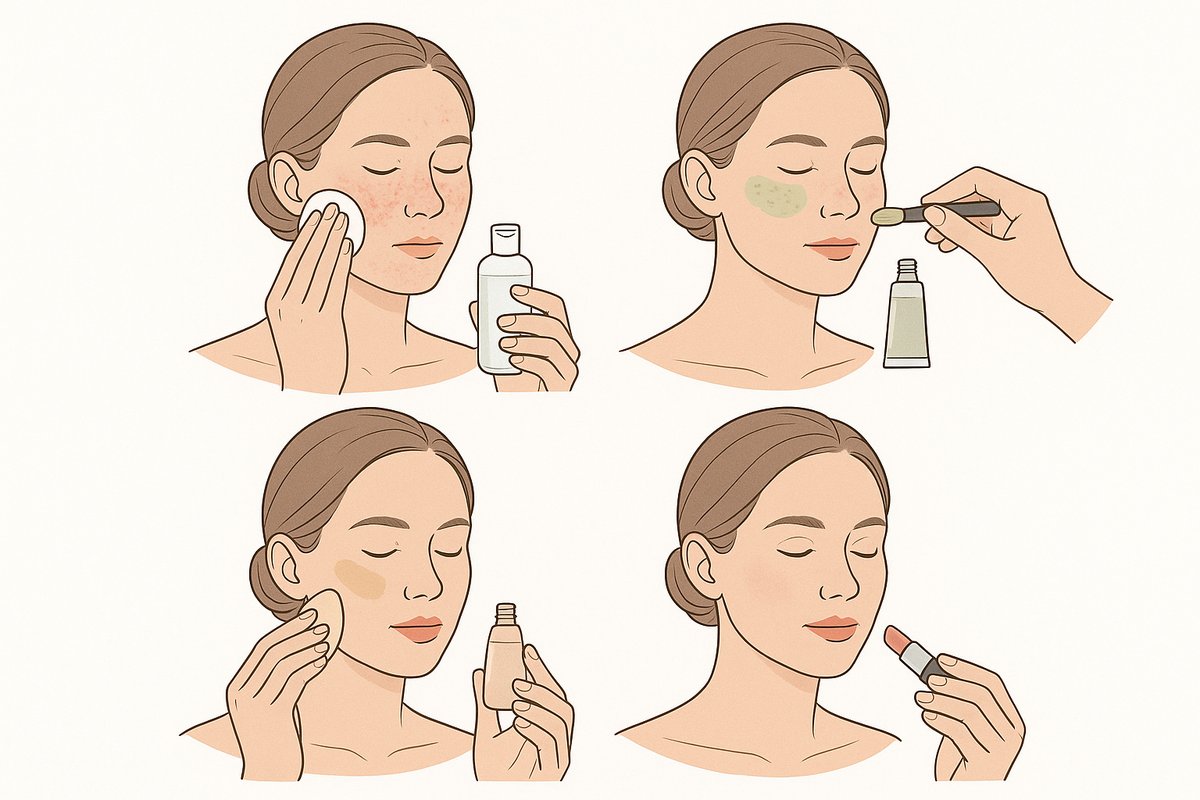
Makeup Routine for Rosacea-Prone Skin
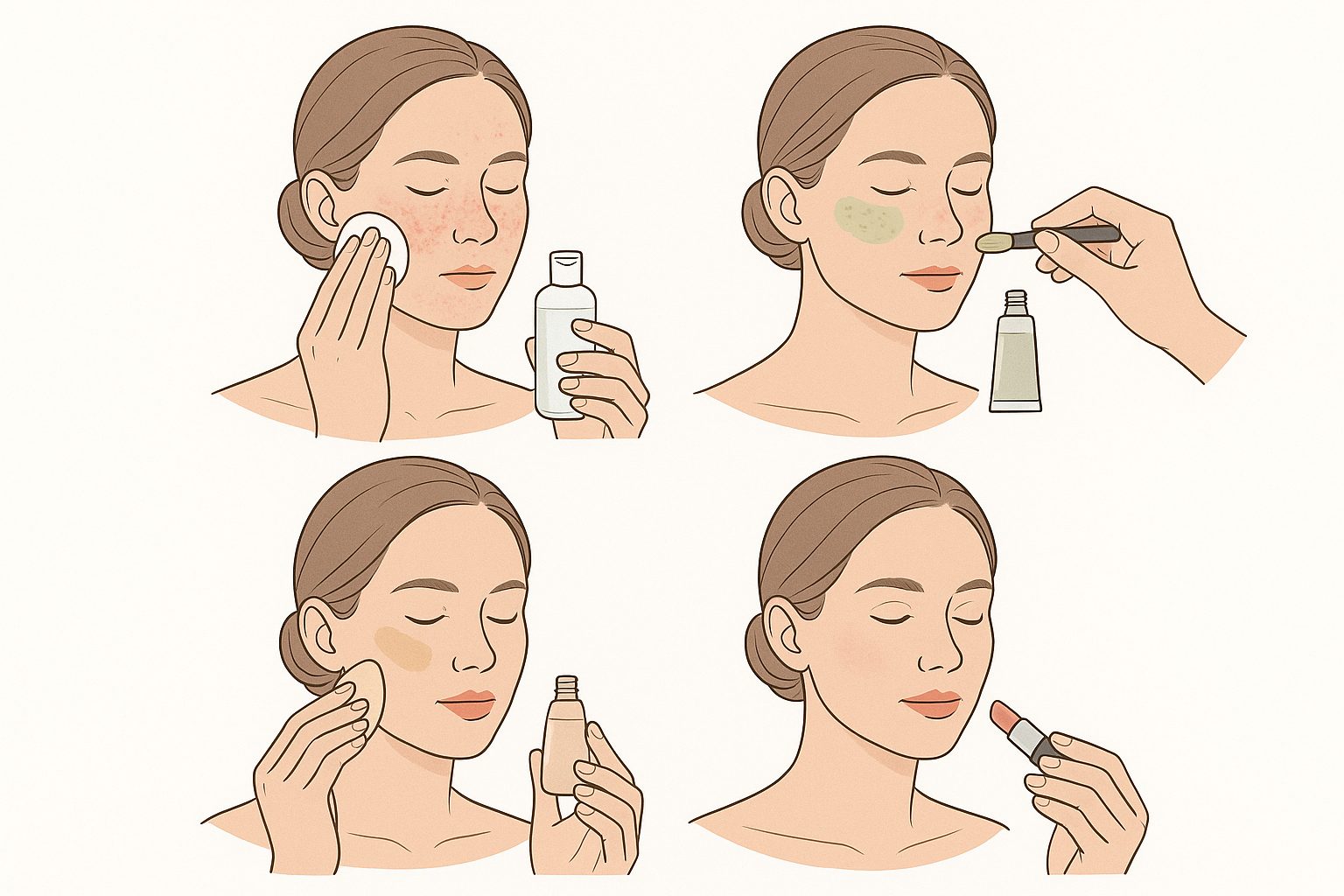
A good makeup routine for rosacea-prone skin should reduce visible redness without overheating the skin, worsening dryness, or triggering more irritation. The best routine is usually simple: gentle prep, strategic color correction, lightweight base makeup, minimal powder, and easy removal.
When skin is reactive, every extra step matters. Too much rubbing, too many fragranced products, or too many heavy layers can leave your face looking worse by the end of the day. A rosacea-friendly makeup routine is less about perfection and more about calm control.
Quick Answer: A makeup routine for rosacea-prone skin should prioritize fragrance-free, mineral-based products applied with gentle pressing motions — green color correction, mineral SPF foundation, and alcohol-free setting spray form the core of a rosacea-safe routine.
Step 1: Start With Barrier-Friendly Skin Prep
Before makeup, focus on comfort.
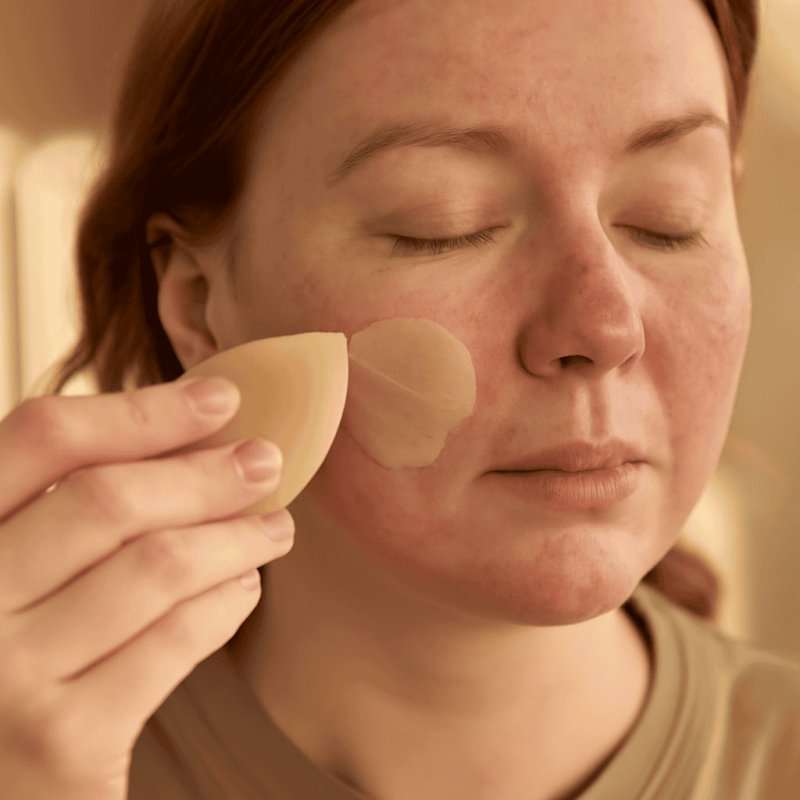
Use a gentle moisturizer
Choose a fragrance-free moisturizer that softens dry patches without feeling greasy. Give it a minute or two to settle.
Camouflage techniques used for rosacea overlap with approaches for other visible conditions. For the full skin-condition coverage guide, see camouflage makeup techniques for conditions like vitiligo, psoriasis, and scarring.
Apply sunscreen
A rosacea routine without sunscreen is incomplete. Mineral or sensitive-skin sunscreen is often the easiest match, but use what your skin tolerates best.
Step 2: Add Green Correction Only Where Needed
If you have noticeable redness on the cheeks, around the nose, or on the chin, use a tiny amount of green corrector.
Keep placement targeted
Do not spread green product across the whole face unless it is a very sheer tinted primer. Targeted correction looks more natural.
Step 3: Apply a Lightweight Foundation
Use a thin layer of rosacea-friendly foundation to even out the overall complexion.
Choose buildable coverage
Light to medium buildable foundation is often the most flattering because it tones down redness without looking heavy.
Press instead of buffing
Use a damp sponge or fingertips to press product into the skin gently.
Step 4: Conceal the Remaining Redness
After foundation, look at the face again. You may only need concealer in a few small areas.
Best spots for spot concealing
- nose corners
- chin
- persistent cheek patches
- visible broken capillary zones if texture allows
Step 5: Set Only the Areas That Need It
Too much powder can make rosacea-prone skin look dry and irritated.
Use powder strategically
Set around the nose, chin, or forehead if those areas get shiny or if makeup tends to slide.
Step 6: Add Gentle Color Back to the Face
When you neutralize redness, the complexion can sometimes look flat.
Choose soft cheek color
A muted blush or bronzer can restore dimension, but keep it subtle. Avoid overly sparkly formulas that highlight texture.
Step 7: Refresh Instead of Reapplying Heavy Layers
Midday touch-ups should be light.
Better touch-up method
Blot gently first, then add a tiny bit of concealer or powder only where needed. Reapplying a full layer of foundation rarely looks good on reactive skin.
Step 8: Remove Makeup Gently at Night
Makeup removal is part of the routine, not an afterthought.
Avoid scrubbing
Use a gentle remover and rinse without aggressive rubbing. Friction alone can keep rosacea looking angry.
Best Routine Adjustments for Flare Days
On flare days, simplify even more.
Flare-day version
- moisturizer
- sunscreen
- tiny amount of green corrector
- concealer only where needed
- little to no powder
Sometimes the smartest makeup routine is the shortest one.
Common Rosacea Makeup Routine Mistakes
Layering too many complexion products
Too many layers trap heat and increase the chance of pilling or irritation.
Using trendy products instead of gentle ones
A viral formula is not automatically a good choice for rosacea-prone skin.
Forgetting tools matter too
Scratchy brushes can trigger redness even when the makeup itself is fine.
FAQ: Makeup Routine for Rosacea Prone Skin
What is the best makeup routine for rosacea?
The best makeup routine for rosacea uses gentle prep, targeted green correction, lightweight foundation, spot concealing, and minimal powder.
Should I use primer if I have rosacea?
Only if you need it and the formula is gentle. Many people with rosacea do better with fewer layers.
How do I keep makeup from looking patchy on rosacea skin?
Prep dry areas well, use thin layers, and avoid aggressive buffing or over-powdering.
Is less makeup better for rosacea?
Often, yes. A simpler routine usually looks more natural and feels more comfortable on reactive skin.
Key Takeaways
- Fragrance-free products are essential for rosacea-prone skin — synthetic fragrance is a consistent trigger.
- Allow skin to fully cool before applying makeup — applying in heat or after a hot shower worsens redness.
- Green color corrector applied before foundation neutralizes redness and reduces coverage needed.
- Mineral foundation (zinc oxide, titanium dioxide) sits on top of skin without heat-generating chemical reactions.
- Apply all products with gentle pressing motions — rubbing generates friction heat that triggers flushing.
- Remove makeup gently with fragrance-free micellar water and a gentle cleanser — avoid scrubbing or hot water.
A step-by-step rosacea makeup routine
Building a makeup routine around rosacea requires managing both cosmetic product choices and application technique. Both matter equally — even the best products can trigger a flare if applied with too much friction or in a warm environment.
Step 1: Skin prep
Cool down first. Allow your skin 10-15 minutes to return to normal temperature after exercise or showering before applying anything. Fragrance-free moisturizer. A light, fragrance-free moisturizer with barrier-supporting ingredients (ceramides, niacinamide, or centella asiatica) creates a smooth base without tingles. Mineral SPF. SPF is non-optional for rosacea-prone skin — UV exposure is a major flare trigger. Choose mineral SPF only (zinc oxide or titanium dioxide).
Step 2: Color correction
Apply a small amount of green color corrector with a light touch only to actively red areas. Tap to blend, do not rub. Allow to set 30-60 seconds before proceeding to foundation.
Step 3: Foundation
Mineral loose powder or pressed mineral foundation is ideal. Apply with a large, soft brush using very gentle pressing motions — no back-and-forth rubbing. Build coverage in thin layers. For liquid foundation, use a damp beauty sponge with pressing (not dragging) motions from the center of the face outward.
Step 4: Spot concealing and setting
Apply a small amount of fragrance-free concealer with a clean brush pressed gently — do not rub. For setting, an alcohol-free finishing mist (setting spray) is preferable to heavy setting powder for rosacea-prone skin. Setting powder applied with pressure can add friction and warmth; a fine mist simply sets the look without physical pressure against the skin.
Removal
Remove makeup with fragrance-free micellar water (patting, not rubbing), followed by a gentle fragrance-free cleanser with lukewarm water. Hot water triggers vasodilation and flushing — always use lukewarm or cool water for the face when you have rosacea.
Rosacea and Mental Health: The Emotional Dimension of Makeup Routines
Rosacea is not just a skin condition — it affects self-image, social confidence, and daily emotional wellbeing for many people who live with it. Understanding the emotional dimension of developing a makeup routine for rosacea acknowledges the full picture of what effective management means.
The psychological impact of visible skin conditions
Research consistently shows that visible skin conditions, including rosacea, are associated with increased rates of anxiety, depression, and social avoidance. The face is our primary social signal — it is how we present ourselves to the world and how others read our emotional state. When the face looks different from how we feel, there can be a disconnect that affects confidence in professional and social contexts.
Makeup is, for many rosacea patients, both a practical tool (coverage) and a psychological one (restoration of perceived control and normalcy). This is not vanity — it is a legitimate component of quality of life management.
Finding the balance between camouflage and acceptance
Makeup routines for rosacea exist on a spectrum: from complete camouflage (maximum coverage, regardless of time and effort) to minimal coverage (acceptance of visible redness with only basic redness reduction). Neither extreme is universally right. The optimal point is where coverage provides enough confidence and comfort to live fully without requiring so much time, effort, or product that the routine itself becomes a burden.
Periodically reassessing where you want to land on this spectrum — especially as rosacea treatment improves the underlying condition — allows the makeup routine to evolve. Many people find that as systemic treatment (azelaic acid, prescription metronidazole, laser) improves their rosacea over months, they can comfortably reduce makeup coverage and simplify their routine, which itself feels like a meaningful milestone.
Managing Rosacea Makeup Across the Seasons
Rosacea behaves differently across seasons, and a makeup routine that works well in winter may need adjustment for summer. Understanding how seasonal factors affect rosacea — and how to adapt makeup accordingly — creates more consistent results year-round.
Winter adjustments
Cold weather and low humidity are significant rosacea factors. Cold air causes vasoconstriction and subsequent rebound vasodilation when entering warm indoor environments — a trigger for flushing. Low humidity dehydrates the skin barrier, making skin more reactive to wind and temperature changes.
Winter makeup adjustments: use a slightly more hydrating fragrance-free moisturizer before foundation to compensate for humidity loss. Keep an alcohol-free setting spray in your bag for refreshing coverage mid-day. If you wear scarves, ensure they are soft materials that do not rub the face directly (friction triggers rosacea even from fabrics).
Summer adjustments
Heat is the most consistent rosacea trigger. Summer sun, high ambient temperatures, and exercise in heat all increase flushing frequency. This makes mineral SPF in foundation not just a skincare recommendation but a direct rosacea management strategy.
Summer makeup adjustments: increase SPF — use at minimum SPF 50 foundation during summer months and reapply a physical SPF powder over makeup every 2 hours when outdoors. Carry ice packs or cold face mist for cooling the skin before makeup touch-ups on hot days. Accept that summer flares may require lighter coverage on flare days and build the expectation management into your routine rather than fighting it.
What is a good makeup routine for rosacea?
A rosacea-safe routine: gentle fragrance-free cleanser, ceramide moisturizer with niacinamide, mineral SPF 30 (zinc oxide, pressed application), green color corrector on reddest areas, mineral foundation with damp sponge, fragrance-free setting spray. Use all fragrance-free, alcohol-free products applied with pressing/stippling technique.
What triggers rosacea when wearing makeup?
The most common makeup triggers for rosacea: fragrance (synthetic and botanical), alcohol (denat.) in spray or liquid formulas, menthol or cooling agents in primers and setting sprays, and mechanical friction from brush application. Also: wearing heavy makeup in hot environments increases facial temperature and triggers flushing.
Can makeup help with rosacea?
Yes – the right makeup can help manage rosacea. Mineral foundations with zinc oxide provide anti-inflammatory benefit. Color-correcting with green corrector reduces visible redness. SPF protection from mineral foundation reduces UV-triggered flares. The key is using rosacea-specific fragrance-free formulas rather than conventional makeup that may contain sensitizing ingredients.
Related Articles
- Best Makeup for Sensitive Skin: Gentle Routine
- Fragrance-Free Makeup Routine for Sensitive Skin
- Best Fragrance-Free Makeup for Sensitive Skin in 2026
- Mature Skin Makeup: Foundations & Age-Flattering Tips
- Bakuchiol for Acne-Prone Skin: Benefits & Use
Sources
- Two AM, Wu W, Gallo RL, Hata TR. Rosacea: part II. Topical and systemic therapies in the treatment of rosacea. J Am Acad Dermatol. 2015;72(5):761-770.
- Draelos ZD. Cosmeceuticals for rosacea. Clin Dermatol. 2017;35(2):213-217.
- American Academy of Dermatology: Rosacea — tips for managing.
- Relevant peer-reviewed sources for this topic. Accessed 2026.
📚 Part of our Rosacea-Friendly Makeup Guide hub. Explore all our rosacea makeup guides.

Leave a Reply