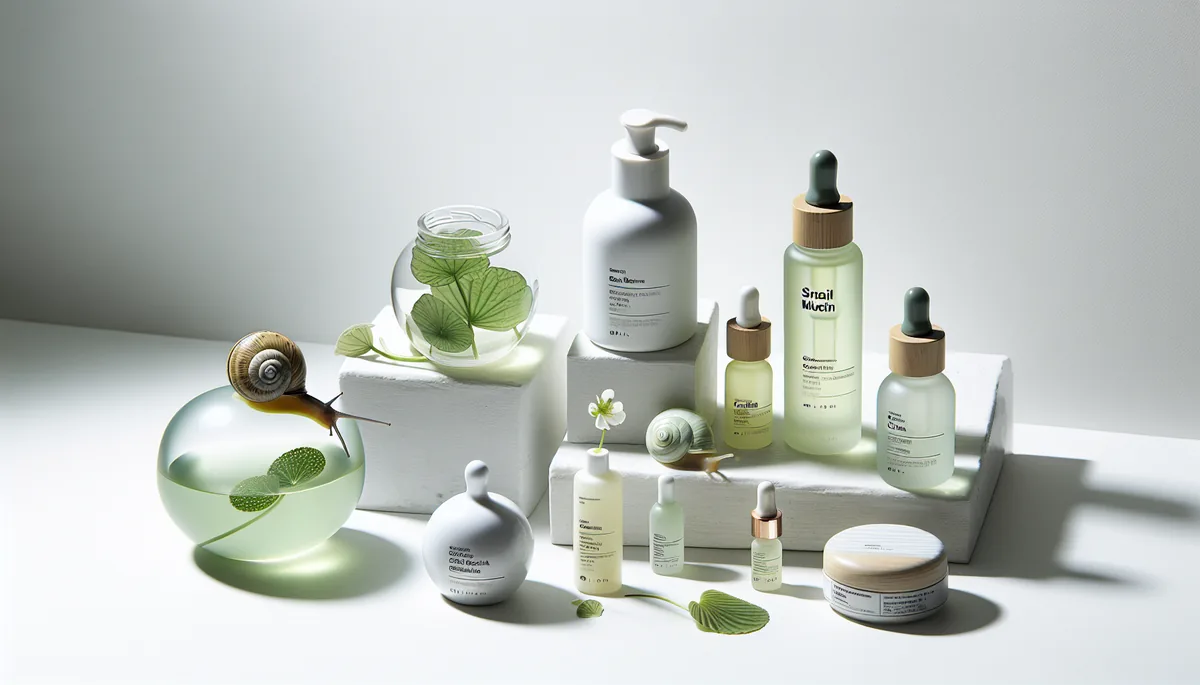
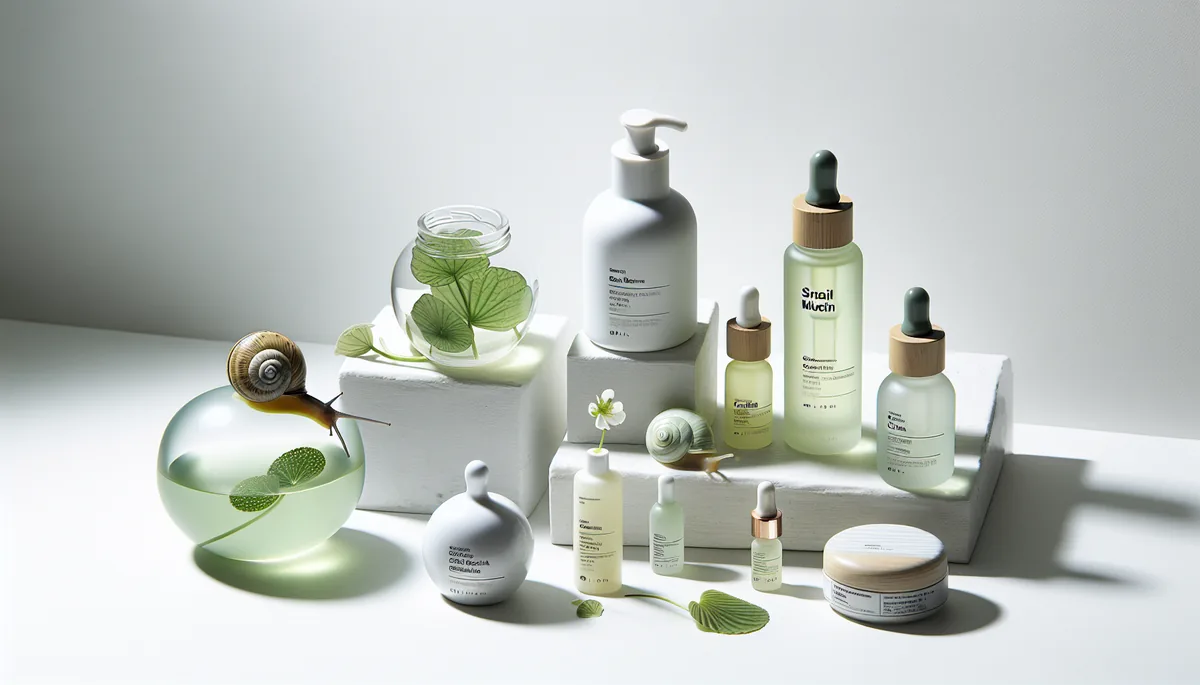
Korean beauty didn’t just popularize 10-step routines — it introduced the world to ingredients that Western skincare had overlooked for decades. From snail secretion to fermented rice water, these actives are backed by real science. Here’s a deep dive into the ones that matter most.
Korean beauty (K-beauty) has introduced or popularized several skincare ingredients that have since been adopted globally, often with clinical evidence supporting their efficacy. Key K-beauty innovations include: snail mucin filtrate (glycoproteins supporting wound healing and hydration), niacinamide (vitamin B3 for barrier, brightening, and pore minimization), centella asiatica (madecassoside, asiaticoside for barrier repair and anti-inflammation), propolis extract (antibacterial, anti-inflammatory), and galactomyces ferment filtrate (brightening and hydration). These ingredients are now available from both Korean and international brands.
Two of K-Beauty’s most popular calming actives deserve a closer look. See our head-to-head comparison of mugwort and green tea compared in Korean beauty ingredient guides.
Japanese skincare takes a different philosophy from K-Beauty. Our J-Beauty guide for 2026 covers rice bran, fermented ingredients, and the minimalist approach.
- Niacinamide (vitamin B3) is one of the most versatile and well-evidenced skincare actives in K-beauty and globally: it reduces hyperpigmentation (inhibiting melanosome transfer), improves barrier function, reduces sebum, and minimizes pores — all supported by RCTs.
- Centella asiatica (cica) and its active compounds madecassoside and asiaticoside stimulate collagen synthesis, reduce inflammation, and support barrier repair — making it a K-beauty staple for sensitive, compromised, and post-procedure skin.
- Snail mucin filtrate (Helix aspersa secretion filtrate) provides glycoproteins, hyaluronic acid, and allantoin that support wound healing, hydration, and skin regeneration; it has demonstrated results in RCTs for atrophic acne scars and skin quality.
- Galactomyces ferment filtrate (derived from sake fermentation yeast) provides brightening, pore-minimizing, and moisturizing effects; it is the hero ingredient in SK-II’s Pitera serum and several affordable K-beauty alternatives.
- The essence format — lightweight, highly concentrated aqueous serums applied after toner — is a K-beauty skincare layer that has become globally adopted for delivering hydration and active ingredients at high concentration without occlusion.
Snail Mucin (Snail Secretion Filtrate)
What It Is
Filtrate from the mucus that snails produce when stressed (humanely collected via mesh surfaces). Contains glycoproteins, glycolic acid, hyaluronic acid, copper peptides, and antimicrobial peptides — all in one natural cocktail.
What the Science Says
A 2013 study in the Journal of Drugs in Dermatology found snail mucin improved skin hydration, reduced wrinkles, and faded hyperpigmentation after 12 weeks. Its wound-healing properties are attributed to allantoin and glycoprotein content.
Benefits
Best for: Dehydrated skin, post-acne marks, sensitive skin, barrier repair.
> Product Pick: COSRX Advanced Snail 96 Mucin Power Essence — the cult classic. 96% snail secretion filtrate in a lightweight, viscous essence. Hydrates, repairs, and layers beautifully under any routine.
Centella Asiatica (Cica)
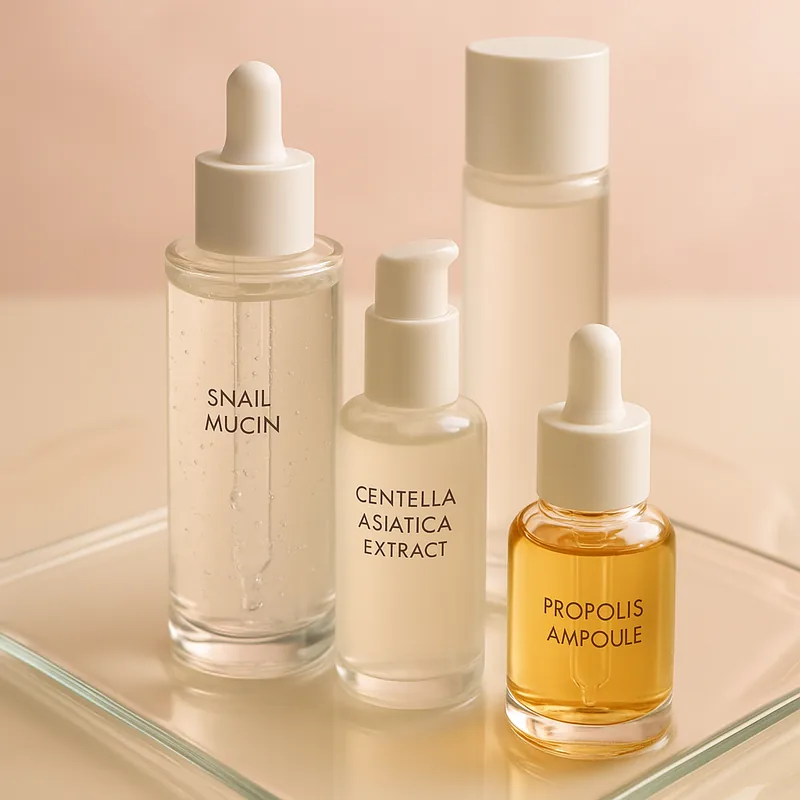
What It Is
A medicinal plant used in traditional Asian medicine for millennia. Its active compounds — madecassoside, asiaticoside, madecassic acid, and asiatic acid — are collectively called “centella triterpenes.”
What the Science Says
Centella is one of the most clinically studied botanical ingredients for wound healing and barrier repair. A systematic review in Phytomedicine (2016) confirmed its efficacy in promoting collagen synthesis, reducing inflammation, and accelerating wound closure.
Benefits
Best for: Sensitive and reactive skin, rosacea-prone skin, acne recovery, post-treatment healing.
> Product Pick: Dr. Jart+ Cicapair Tiger Grass Cream — combines centella triterpenes with niacinamide and panthenol. Color-correcting green formula that neutralizes redness.
Fermented Ingredients (Galactomyces, Saccharomyces, Rice Ferment)
What They Are
Fermented skincare uses yeast or bacterial fermentation to break down ingredients into smaller, more bioavailable molecules. The process also creates new beneficial byproducts — amino acids, peptides, antioxidants, and organic acids.
Key Fermented Ingredients
- Galactomyces Ferment Filtrate (GFF) — yeast fermentation byproduct popularized by SK-II. Rich in vitamins, amino acids, and organic acids.
- Saccharomyces Ferment Filtrate — similar to GFF, supports hydration and radiance
- Rice Ferment Filtrate (Sake Lees) — contains kojic acid (brightening), ferulic acid (antioxidant), and amino acids
Benefits
Best for: Dull skin, uneven tone, aging concerns, anyone seeking the coveted “glass skin” effect.
> Product Pick: SK-II Facial Treatment Essence — the original galactomyces essence. Expensive but iconic. For a budget alternative, try COSRX Galactomyces 95 Tone Balancing Essence — 95% galactomyces at a fraction of the price.
Propolis
What It Is
A resinous substance produced by bees to seal their hives. Rich in flavonoids, phenolic acids, and caffeic acid phenethyl ester (CAPE) — all potent antioxidants with antimicrobial properties.
Benefits
Best for: Acne-prone skin, combination skin, post-breakout healing.
> Product Pick: COSRX Full Fit Propolis Light Ampoule — 73.5% black bee propolis extract. Lightweight, non-sticky, absorbs completely. Excellent for acne-prone skin that needs hydration without breakout triggers.
Mugwort (Artemisia)
What It Is
Artemisia princeps (Korean mugwort, or ssuk) has been used in Korean traditional medicine for centuries. In skincare, it’s a calming, anti-inflammatory powerhouse.
Benefits
Best for: Ultra-sensitive skin, eczema-prone skin, redness, environmental stress.
> Product Pick: I’m From Mugwort Essence — 100% mugwort extract from Ganghwa Island. Pure, single-ingredient formula that calms everything.
Green Tea (Camellia Sinensis)
What It Is
EGCG (epigallocatechin gallate), the primary catechin in green tea, is one of the most potent natural antioxidants studied in dermatology.
What the Science Says
Research in the Journal of the American Academy of Dermatology shows topical green tea polyphenols reduce UV damage, sebum production, and inflammation.
Benefits
Best for: Oily skin, acne-prone skin, daily antioxidant protection.
> Product Pick: Innisfree Green Tea Seed Serum — Jeju Island green tea extract combined with green tea seed oil for hydration and antioxidant protection.
How to Build a K-Beauty Routine with These Ingredients
Simplified K-Beauty Routine (5 Steps)
- Oil cleanser → removes sunscreen and makeup
- Water cleanser → CosRX Low pH Good Morning Gel Cleanser
- Essence → Snail mucin OR galactomyces ferment
- Serum/Ampoule → Propolis (acne-prone) or Centella (sensitive)
- Moisturizer + SPF → Cica cream + Korean sunscreen
FAQ
Q: Is snail mucin cruelty-free?
A: Reputable brands collect mucin from snails crawling over mesh in dark, humid environments (mimicking natural habitat). The snails aren’t harmed. However, standards vary — look for brands that disclose their collection methods.
Q: What’s the difference between essence and serum in K-beauty?
A: Essences are thinner and more watery, designed for hydration and prep. Serums are more concentrated with targeted actives. Essences go first, serums second.
Q: Can I use multiple K-beauty actives together?
A: Yes — most K-beauty ingredients are gentle and complementary. Snail mucin + centella + niacinamide is a classic soothing combination.
Q: Is fermented skincare safe for fungal acne?
A: Some fermented ingredients can feed Malassezia yeast. If you have fungal acne, avoid galactomyces and saccharomyces ferments. Centella, mugwort, and green tea are safer choices.
Q: Why is Korean sunscreen so much better?
A: Korea’s cosmetic regulations allow newer UV filter technologies (like Tinosorb and Uvinul) that aren’t yet FDA-approved in the US. This enables lighter, more elegant textures with superior protection.
References: Fabi SG, et al. “Evaluation of a snail secretion filtrate.” J Drugs Dermatol. 2013; Bylka W, et al. “Centella asiatica in dermatology.” Phytomedicine. 2014; Kim S, et al. “Green tea catechins and skin health.” J Am Acad Dermatol. 2018.
Related Articles
- Middle Eastern Beauty: Skincare Ingredients & Trends
- Beauty FAQ: Makeup and Skincare Answers
- Traditional Arab Beauty Ingredients That Still Work
- J-Beauty Guide 2026: Japanese Skincare Philosophy
Sources
- Efficacy and Safety of a New Cosmeceutical Regimen Based on the Combination of Snail Secretion Filtrate and Snail Egg Extract to Improve Signs of Skin Aging. The Journal of clinical and aesthetic dermatology. 2020. PMID: 32308795.
- Hyaluronic acid, a promising skin rejuvenating biomedicine: A review of recent updates and pre-clinical and clinical investigations on cosmetic and nutricosmetic effects. International journal of biological macromolecules. 2018. PMID: 30287361.
- Pathophysiology and management of sensitive skin: position paper from the special interest group on sensitive skin of the International Forum for the Study of Itch (IFSI). Journal of the European Academy of Dermatology and Venereology : JEADV. 2020. PMID: 31660659.
- Efficacy and safety of a facial serum containing snail secretion filtrate, Calendula officinalis, and Glycyrrhiza glaba root extract in the treatment of maskne: A randomized placebo-controlled study. Journal of cosmetic dermatology. 2022. PMID: 35763437.
- Hidden benefits of snail mucus: A natural skincare marvel. Biomolecules & biomedicine. 2024. PMID: 39145612.