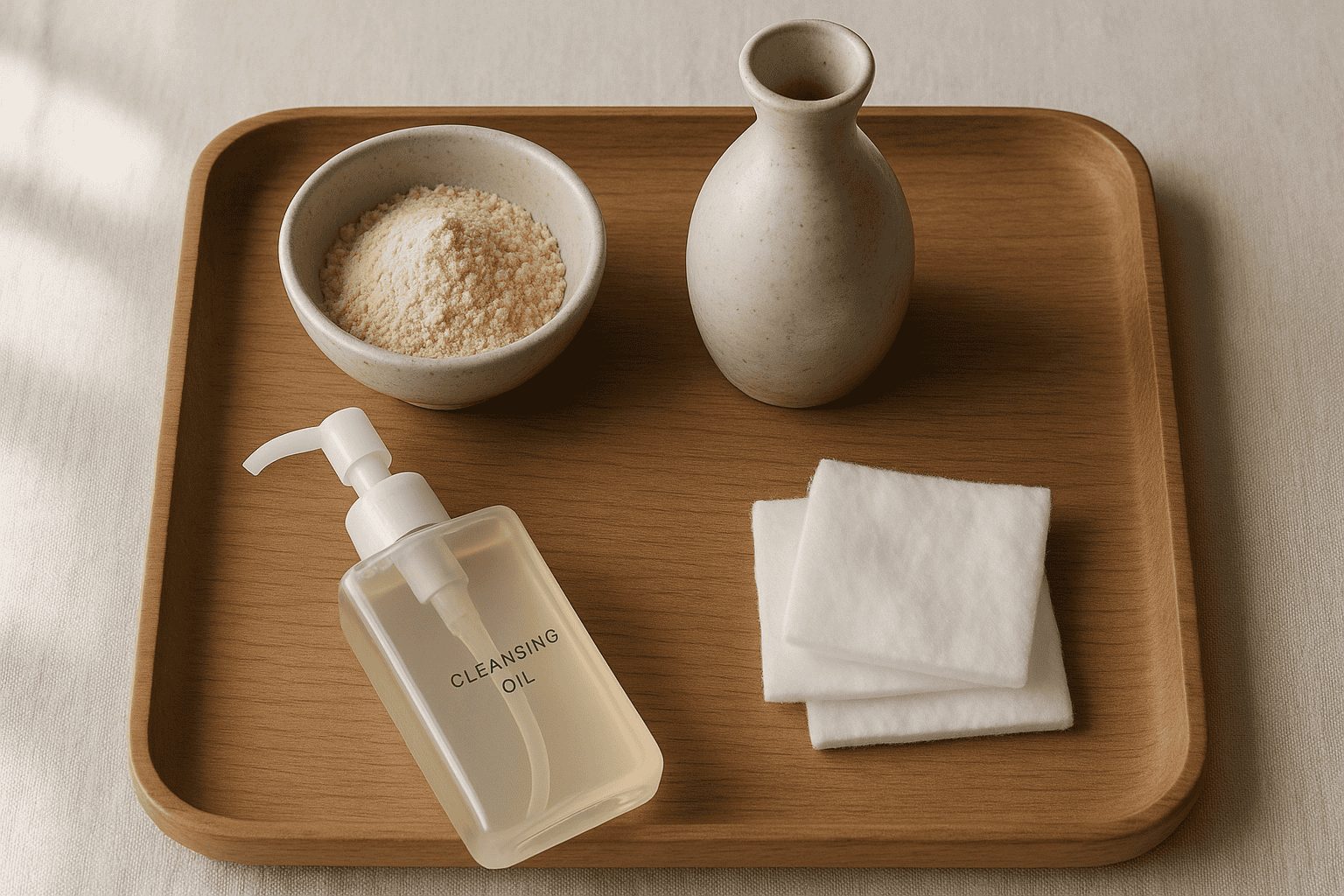
J-Beauty Guide 2026: Japanese Skincare Philosophy
Quick Answer: Japanese beauty philosophy prioritizes skin health over coverage – double cleansing (oil cleanser first, then water-based), layering thin hydrating essences, and long-term prevention. Rice bran, sake fermentation actives, and gentle surfactants define J-beauty’s core identity.
Japanese beauty — J-beauty — isn’t a trend. It’s a centuries-old philosophy about skin that has shaped modern global skincare more than most people realize. From the origin of double cleansing and the introduction of toners to the global spread of sheet masks and SPF culture, Japan’s influence on how the world thinks about skin is profound and ongoing. In 2026, as the skincare world reaches peak complexity and consumers seek simplicity, J-beauty’s core philosophy is more relevant than ever.
The Japanese Skincare Philosophy
J-beauty philosophy differs fundamentally from Western skincare in its foundational approach:
Prevention over correction. Japanese skincare culture emphasizes preventing skin damage from occurring rather than aggressively treating damage after the fact. This drives the deeply ingrained daily sunscreen culture, the focus on gentle cleansing, and the long-term consistency that characterizes Japanese routines.
Minimal intervention, maximum consistency. J-beauty routines tend to be shorter than their K-beauty counterparts (3–5 steps rather than 7–10), but they’re performed with discipline and consistency over decades. The Japanese concept of katachi (form and precision) applies to skincare as much as to any craft.
Moisturized, luminous skin as the ideal. The Japanese aesthetic ideal — mochi hada (mochi-smooth skin) or tamago hada (egg skin, a perfectly smooth, luminous complexion) — emphasizes hydration, translucency, and smoothness over dramatic textural transformation or aggressive exfoliation. This drives the emphasis on layered hydration, gentle cleansers, and sunscreen.
Squalane and minimalism. Japanese formulators have long used squalane (originally from shark liver oil, now from olives or sugarcane) as a lightweight, non-comedogenic emollient. The preference for squalane-based products reflects a minimalist, functional philosophy that Western luxury brands have only recently embraced.
Double Cleansing: Japanese Origins
Double cleansing — now a global skincare standard — originated in Japan. The method was standard practice among Japanese women before it was “discovered” by the Western beauty press in the early 2010s.
The method:
- First cleanse: An oil-based cleanser, balm, or micellar oil removes SPF, makeup, sebum, and oil-based pollutants. Oil-on-oil cleansing dissolves these substances without stripping the skin’s own lipids.
- Second cleanse: A gentle water-based cleanser removes water-based impurities (sweat, water-based makeup, residue from the first cleanse) and prepares the skin for subsequent products.
Why it works:
SPF, long-wear makeup, and sebum are oil-based. Water-based cleansers can’t fully remove them — “like dissolves like.” The first oil cleanse ensures complete removal; the second cleanse removes the residual oil from the first cleanse without double-stripping.
The Japanese implementation:
Japanese oil cleansers (cleansing oils, jelly cleansers) are formulated to emulsify with water, washing cleanly away without residue. The Shu Uemura cleansing oil is the iconic example — so effective it’s remained essentially unchanged for decades. DHC Deep Cleansing Oil, Tatcha’s Camellia Oil Cleanse, and Kose Softymo are all descended from this Japanese cleansing tradition.
Rice Bran: Japan’s Most Historic Skincare Ingredient
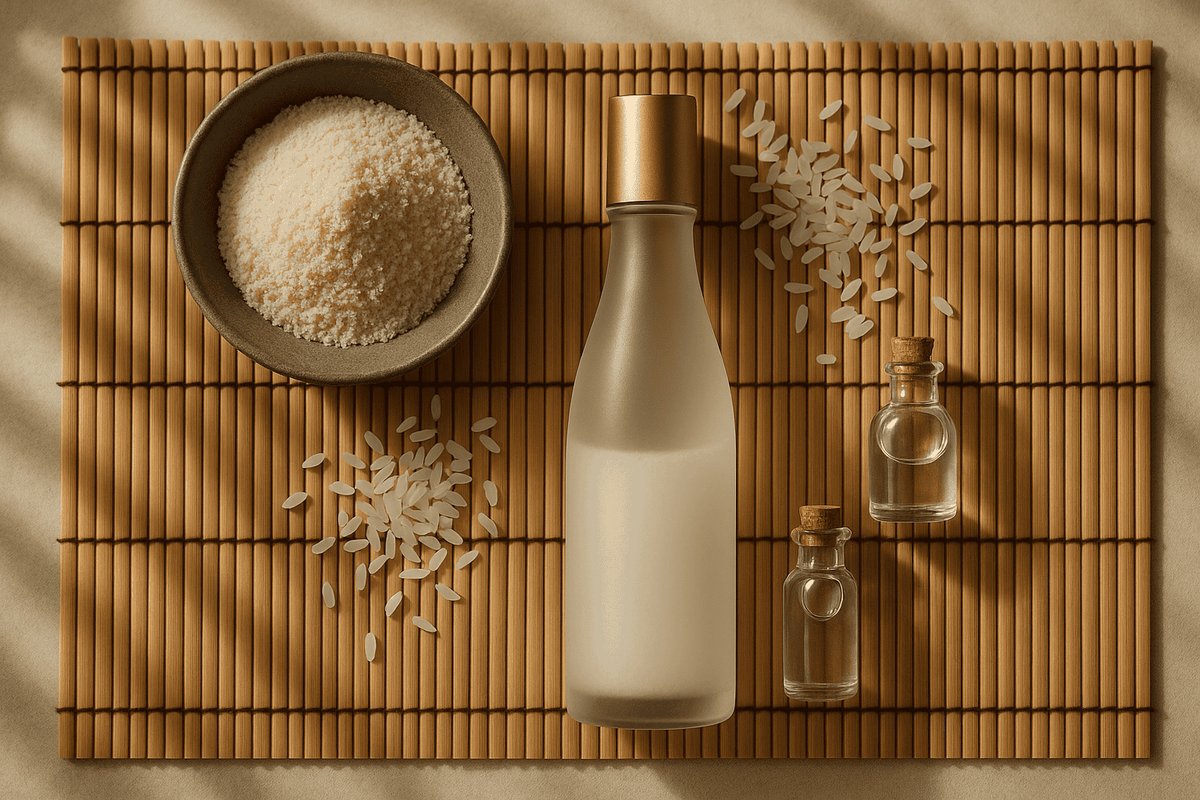
The connection between rice and Japanese skincare dates to the Edo period (17th–19th century). Japanese women — particularly those who worked in rice mills and handled nuka (rice bran) — were observed to have exceptionally smooth, youthful-looking hands compared to the rest of their bodies. This association led to the exploration of rice bran as a skincare ingredient.
The Science Behind Rice Bran
Squalane: Rice bran oil contains squalene (precursor to squalane) in notably high concentrations. Squalane closely mimics the skin’s own sebum, provides lightweight occlusion without congestion, and is remarkably non-irritating.
Ferulic acid: A potent antioxidant and UV-protective agent. This is the same ferulic acid used to stabilize vitamin C in premium serums (the CE Ferulic formulation). Rice bran is one of the richest natural sources.
Gamma-oryzanol: A plant sterol unique to rice bran with anti-inflammatory and antioxidant properties. Also inhibits tyrosinase, providing mild brightening effects.
Vitamin E (tocopherols): Rice bran oil is high in tocopherols, providing further antioxidant protection.
Ceramides and phytosterols: Support barrier function and skin hydration.
How it’s used in skincare:
- Rice bran oil (nuka oil): Applied directly or as a cleansing/body oil
- Rice bran extract: In toners, essences, and serums for brightening and antioxidant benefits
- Rice bran exfoliants: Ground nuka used historically as a gentle facial scrub; the precursor to modern enzymatic exfoliants
Sake and Fermented Ingredients
Japan is the birthplace of skincare fermentation. The Hada Labo brand (now a global bestseller) and many others trace their origins to observations in sake breweries — specifically that sake brewers’ hands were notably smooth and youthful despite physical labor.
The Sake Connection
Sake is produced through koji fermentation, converting rice starch to sugars and then to alcohol. The fermentation process:
- Produces kojic acid — a byproduct of Aspergillus oryzae (koji mold) fermentation. Kojic acid is a well-proven tyrosinase inhibitor and brightening agent, now widely used in skincare.
- Generates a rich mixture of amino acids, minerals, and B vitamins that nourish and hydrate skin
- Creates gluconic acid, lactic acid, and other naturally occurring AHAs from the fermentation process
- Produces galactomyces ferment filtrate — a yeast byproduct with proven brightening, barrier-strengthening, and anti-sebum effects
Galactomyces ferment (used in SK-II’s iconic PITERA essence, which is essentially sake ferment) contains 50+ minerals, vitamins, and amino acids. Clinical studies on SK-II’s Facial Treatment Essence (FTE) show improvements in skin texture, tone, and radiance with consistent use — the science behind the world’s most recognized Japanese skincare product.
Other Fermented J-Beauty Ingredients
- Kojic acid: From koji mold; used in brightening products at 1–4%
- Lactobacillus ferment: Probiotic benefits for skin barrier support
- Aspergillus extract: Broad-spectrum brightening and anti-aging properties
- Green tea ferment: Enhanced antioxidant activity vs standard green tea extract
Key J-Beauty Products and Categories
Essences
The Japanese toning essence predates K-beauty’s famous first essences. Applied after toner, these thin, water-rich formulas (like SK-II FTE) deliver ferment actives and preparing the skin for subsequent products. Hada Labo’s Gokujyun Premium lotion (an essence/lotion hybrid) brought layered hydration to global awareness.
Sunscreen
Japan produces some of the world’s most advanced and cosmetically elegant sunscreens, using UV filters not yet FDA-approved in the US. Japanese consumers treat daily sunscreen as non-negotiable — a cultural commitment reflected in consistently lower photoaging rates compared to Western populations with equivalent UV exposure.
Camellia Oil
Tsubaki (camellia) oil has been a Japanese skincare and haircare staple for centuries. High in oleic acid and polyphenols, it’s used for facial moisturizing, scalp care, and hair shine. Shiseido’s tsubaki products and HABA’s squalane line are quintessential J-beauty staples.
Sheet Masks
Japan produced the first commercially available sheet masks, which K-beauty later scaled into a global trend. Japanese sheet masks tend to focus on hydration and skin brightening rather than the trendy textures of K-beauty masks.
The J-Beauty Routine Framework
A typical Japanese skincare routine is concise and intentional:
AM:
- Gentle non-stripping cleanser (or water only if skin is clean from PM)
- Softening lotion/toner (hydrating, prepares skin)
- Essence (ferment or hydrating treatment)
- Moisturizer
- SPF (mandatory)
PM:
- Cleansing oil (first cleanse)
- Gentle foam or gel cleanser (second cleanse)
- Softening lotion
- Serum or treatment essence
- Night moisturizer
The deliberate brevity of this routine — compared to 10+ step K-beauty regimens — reflects the J-beauty conviction that quality and consistency outperform quantity of steps.
Why J-Beauty Remains Relevant in 2026
In an era of “skinimalism” (minimal skincare) reacting against the maximalist skincare excess of the early 2020s, J-beauty’s philosophy is the original blueprint:
- Fewer, better products
- Emphasis on prevention and protection
- Science-backed traditional ingredients
- Long-term consistency over quick fixes
The fermented ingredient revolution (now mainstream), the double cleansing standard, the global SPF culture shift — all have Japanese roots. J-beauty isn’t nostalgia; it’s the persistent influence of a skincare philosophy that has been proven right over centuries.
Frequently Asked Questions
What’s the difference between J-beauty and K-beauty?
J-beauty tends toward minimalism, prevention, and refinement of traditional Japanese ingredients (rice bran, camellia, fermented actives). K-beauty emphasizes innovation, multi-step layering, trending ingredients, and a more visible transformation aesthetic. Both philosophies have deeply influenced global skincare; they’re complementary, not competing.
Is SK-II really worth the price?
The core product (Facial Treatment Essence with PITERA/galactomyces) has genuine clinical evidence supporting its brightening and skin-renewing claims. Whether it’s worth $200+ depends on your budget — drugstore ferment essences containing similar galactomyces filtrate exist at a fraction of the price.
Can I use rice bran oil if I have oily skin?
Yes. Rice bran oil’s high squalane and oleic acid content makes it lightweight and non-comedogenic for most people. It’s one of the better facial oils for oily/combination skin.
What is sake lotion in skincare?
“Sake lotion” refers to toners/essences containing sake ferment extract or rice ferment filtrate — ingredients derived from the sake brewing process. They contain galactomyces and kojic acid precursors with brightening and hydrating properties.
Are Japanese sunscreens actually better?
Many Japanese sunscreens use UV filters (Uvinul, Tinosorb, Mexoryl) that provide broader-spectrum and more photostable coverage than most FDA-approved US filters. Combined with cosmetically elegant, lightweight textures, this makes them genuinely superior for many consumers — particularly those who previously avoided sunscreen due to texture issues.
How do I start incorporating J-beauty into my routine?
Start with double cleansing (a cleansing oil + gentle face wash) and a daily Japanese sunscreen. These two changes alone reflect the core of J-beauty’s practical philosophy. Then consider adding a fermented essence or rice bran-based product as a targeted treatment step.
Key Takeaways
- Double cleansing (oil-based first to dissolve sunscreen/makeup, water-based second to cleanse skin) is the defining J-beauty technique and works for all skin types except dry.
- Rice bran oil and extract (komenuka) contains tocotrienols, ceramides, and antioxidants – historically used for skin brightening in Japan for centuries.
- Sake and fermented rice water ingredients contain galactomyces ferment filtrate and kojic acid, both with brightening and barrier-supporting evidence.
- The J-beauty layering system: cleanse, then layer lightweight watery essences (toners) before serums and moisturizer, in thin-to-thick order.
- J-beauty emphasizes prevention and consistency over high-strength actives – suitable for sensitive skin and long-term skin health.
Conclusion
J-beauty is neither trend nor tradition trapped in the past — it’s an enduring skincare philosophy based on prevention, minimal intervention, and the patient cultivation of healthy skin over time. Its contributions to global skincare are enormous: double cleansing, toner/essence culture, sunscreen discipline, and fermented actives are all Japanese gifts to the modern skincare world. In 2026, as consumers increasingly seek simplicity and evidence-based routines, J-beauty’s core teachings are more relevant than ever.
Sources
- Use of sunscreen and risk of melanoma and non-melanoma skin cancer: a systematic review and meta-analysis. European journal of dermatology : EJD. 2018. PMID: 29620003.
- Long-Term Follow-Up of Longevity and Diffusion Pattern of Hyaluronic Acid in Nasolabial Fold Correction through High-Frequency Ultrasound. Plastic and reconstructive surgery. 2019. PMID: 31348336.
- Ceramide-Containing Adjunctive Skin Care for Skin Barrier Restoration During Acne Vulgaris Treatment. Journal of drugs in dermatology : JDD. 2023. PMID: 37276158.
- [Evidence-based cosmetics: concepts and applications in photoaging of the skin and xerosis]. Wiener klinische Wochenschrift. 2009. PMID: 19657604.
- Oshiro R, Ihara M, Ibrahim CHO, Matsui K, Dalouny X, Pham Vu NH, et al (2026). Emerging Multi-Source Transmission of SFTS Virus on a Remote Japanese Island: A One-Health Perspective. International journal of molecular sciences. PMID: 41751839.
Related Articles
- How to Build a Skincare Routine: AM/PM Guide by Skin Type
- Niacinamide Skincare Guide 2026: Barrier Repair and Combinations
- Hyaluronic Acid in Skincare: Molecular Weight and Layering Guide
- Tranexamic Acid for Skin: Hyperpigmentation and Melasma
📚 Part of our K-Beauty Ingredients Explained hub. Explore all our K-beauty and J-beauty guides.