
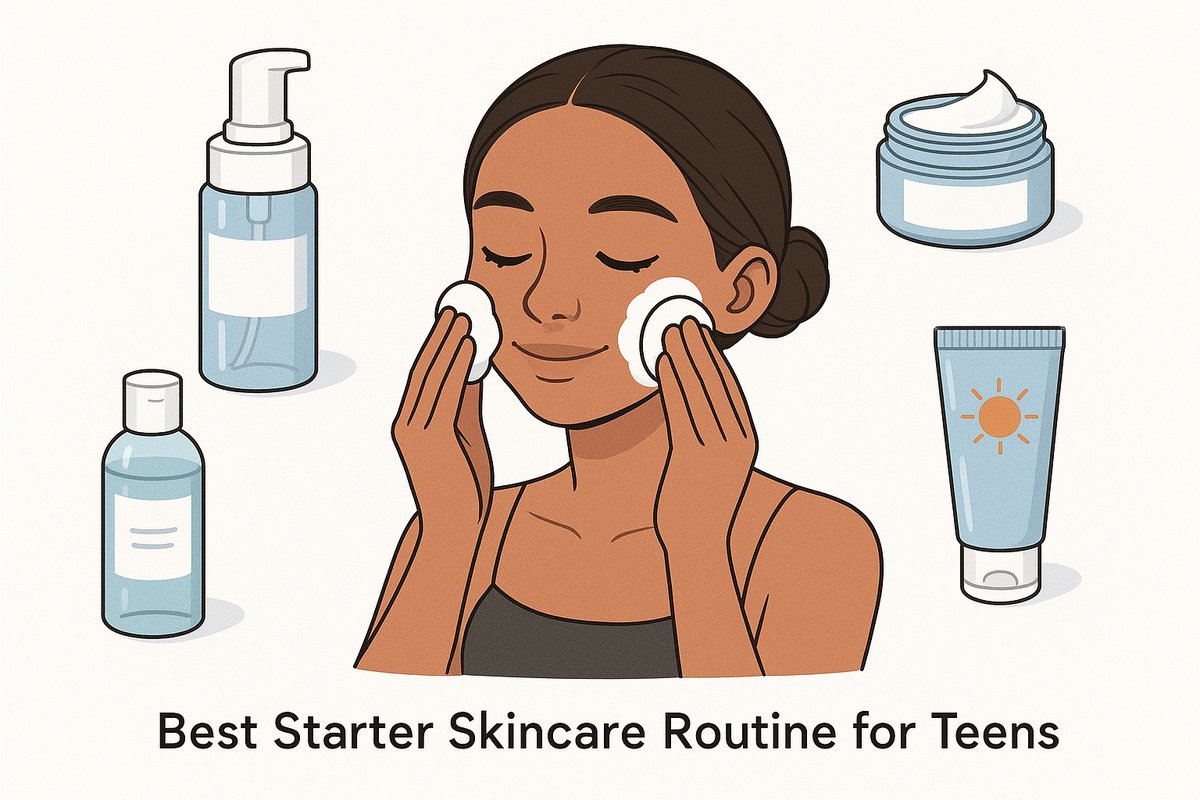
Teen skincare gets overcomplicated fast. Social media makes it sound like everyone needs toners, exfoliating pads, retinol, and five serums before they can even pass algebra. In reality, the best starter skincare routine for teens is usually much simpler: gentle cleanser, moisturizer, and sunscreen. If acne is a real issue, add one treatment product. That is enough for most teenagers.
Teen skin has unique characteristics — higher sebum production (androgen-driven), active acne formation, and high cellular turnover — that determine the ideal beginner routine. The evidence-based starter routine for teens is simple: gentle cleanser twice daily, non-comedogenic moisturizer, and SPF 30+ in the morning. For teen acne, benzoyl peroxide (2.5-5%) is the most effective OTC option. Harsh over-cleansing, excessive exfoliation, and layering too many actives are the most common mistakes that worsen teenage skin. Simplicity and consistency beat product diversity at this age.
- Adolescent skin produces more sebum than adult skin due to androgen surge during puberty — using heavy, occlusive moisturizers or skipping moisturizer altogether both worsen skin quality; a lightweight, oil-free moisturizer is appropriate even for oily teen skin.
- SPF 30+ daily in the morning is the most important skincare step for long-term skin health — photoaging begins accumulating in the teens and is largely irreversible; establishing the SPF habit early is the single highest-leverage intervention.
- Benzoyl peroxide (2.5-5%) is more effective and less resistance-promoting than topical antibiotics for teen acne; salicylic acid (2%) is appropriate for comedonal (blackhead/whitehead) acne and oil control; they can be alternated AM/PM.
- Prescription options (tretinoin 0.025-0.05%, adapalene 0.1%) are appropriate for moderate acne in teens and are dramatically more effective than OTC products — a dermatologist visit for persistent acne is time and cost-effective.
- The worst skincare mistakes for teens: popping pimples (drives bacteria deeper, creates hyperpigmentation and scarring), over-washing (barrier disruption increases acne), and skipping moisturizer on oily skin (compensatory sebum production increases).
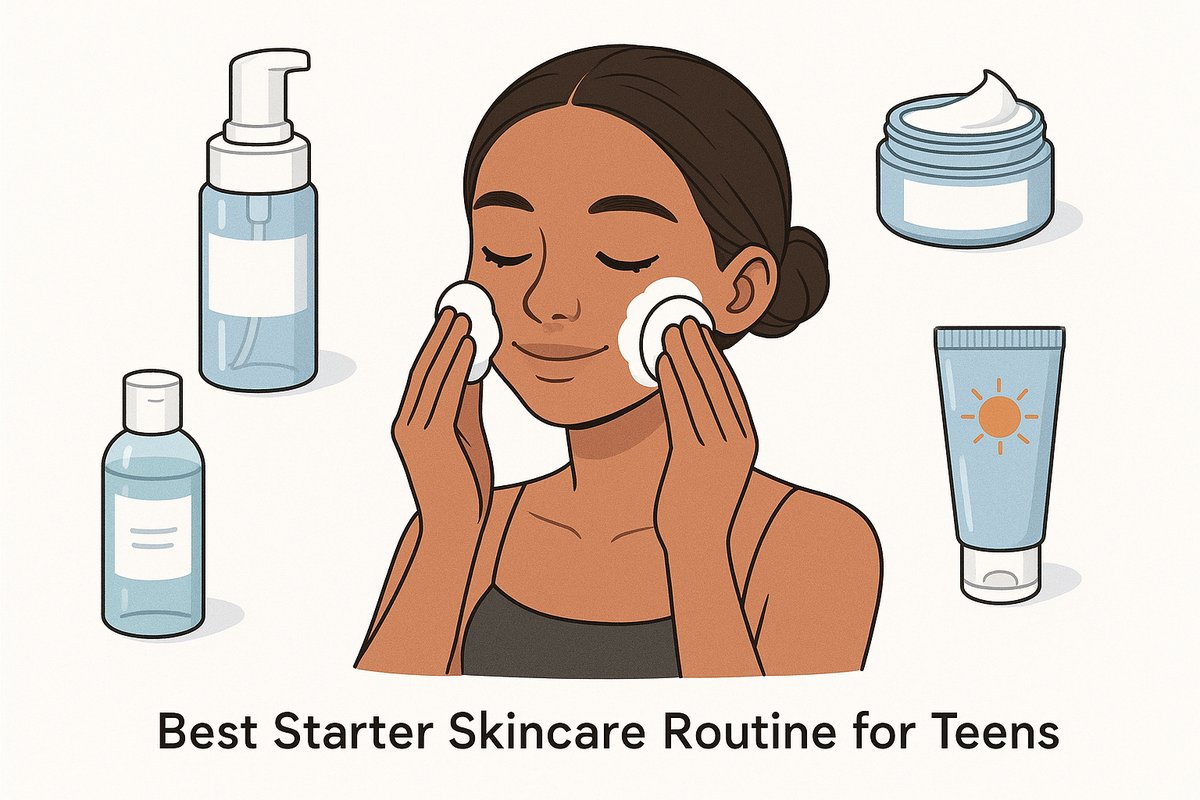
The Best Starter Skincare Routine for Teens
Morning
- gentle cleanser
- lightweight moisturizer
- broad-spectrum SPF 30+ sunscreen
Night
- gentle cleanser
- moisturizer
- acne treatment if needed
That is the entire starter routine. If acne is not a concern, the treatment step may not be necessary.
`r`n`r`n
Why Teens Should Start With the Basics
Simpler routines are easier to follow
Three products you actually use beat seven that sit on the counter.
`r`n`r`n
Teen skin is often easy to irritate
Many teens already deal with oiliness, sports sweat, acne, or over-washing. Adding scrubs, acids, and anti-aging actives all at once often makes skin worse, not better.
`r`n`r`n
The barrier matters
Acne treatments can dry the skin out. Research on moisturizers used with acne therapy shows that barrier-supportive products can improve tolerability and help people stay consistent.
`r`n`r`n
Step 1: Use a Gentle Cleanser
A good cleanser should remove sweat, oil, and sunscreen without stripping the face.
`r`n`r`n
What to look for
- gentle and non-stripping
- fragrance-free if possible
- appropriate for daily use
- no gritty scrub texture
If your face feels tight or squeaky after washing, the cleanser is probably too harsh.
`r`n`r`n
Step 2: Use a Moisturizer Even if Skin Is Oily
This is where a lot of teens get bad advice. Oily skin still needs hydration. In acne care, moisturizers can reduce irritation and make treatment easier to tolerate. A 2024 randomized controlled trial found that a ceramide- and niacinamide-containing moisturizer improved tolerability when used with topical acne therapy. Earlier studies found similar benefits with noncomedogenic moisturizers used alongside adapalene.
`r`n`r`n
Good moisturizer features for teens
- noncomedogenic
- lightweight lotion or gel-cream texture
- fragrance-free
- ingredients like glycerin, ceramides, or niacinamide
The right moisturizer should feel comfortable, not greasy.
`r`n`r`n
Step 3: Wear Sunscreen Every Morning
If a teen uses acne treatment, sunscreen becomes even more important. But sunscreen matters even without treatment because UV exposure adds up over time. In a randomized trial, participants assigned to daily sunscreen use showed slower skin aging than those using it only when they felt like it.
`r`n`r`n
Best sunscreen features for teens
- broad-spectrum
- SPF 30 or higher
- lightweight texture
- noncomedogenic or acne-friendly label
The best sunscreen is the one you will actually wear every day.
`r`n`r`n
When Teens Should Add an Acne Treatment
Not every teenager needs an active treatment. But if blackheads, whiteheads, or inflamed pimples are showing up regularly, one targeted product can help.
`r`n`r`n
Benzoyl peroxide
Useful for inflamed acne and commonly used as a starter treatment.
`r`n`r`n
Adapalene 0.1%
This is the retinoid that makes the most sense for many teens with acne. The 2024 AAD guidelines strongly recommend topical retinoids for acne, and adapalene has good evidence for comedonal acne and maintenance use.
`r`n`r`n
One important rule
Do not start multiple new actives at the same time. If you add adapalene, do not also add exfoliating acids and a scrub.
`r`n`r`n
A Sample Beginner Routine for Acne-Prone Teens
Morning
- Gentle cleanser
- Lightweight moisturizer
- Broad-spectrum SPF 30+
Night
- Gentle cleanser
- Adapalene 0.1% two to three nights per week to start
- Moisturizer
If adapalene feels drying, use moisturizer before and after it.
`r`n`r`n
Common Teen Skincare Mistakes
Over-cleansing
Washing several times a day usually makes skin angrier, not cleaner.
`r`n`r`n
Copying influencer routines
Teen skin usually does not need a luxury anti-aging stack.
`r`n`r`n
Skipping sunscreen because it feels greasy
That is usually a product-selection problem, not a reason to skip SPF.
`r`n`r`n
Final Take
The best starter skincare routine for teens is simple: cleanser, moisturizer, sunscreen, and one treatment only if needed. That is enough for most teens to protect their skin, manage early breakouts, and avoid a lot of self-inflicted irritation.
Boring skincare wins more often than trendy skincare.
`r`n`r`n
FAQ
What is the best skincare routine for a teenager?
For most teens, it is a gentle cleanser, moisturizer, and daily sunscreen. If acne is present, add one treatment like benzoyl peroxide or adapalene.
`r`n`r`n
Do teens need serum products?
Usually no. Most teens can do well without serums, especially at the start.
`r`n`r`n
Should teens use retinol?
Not usually for anti-aging. If acne is the issue, adapalene is the retinoid with the clearest role for teens.
`r`n`r`n
How many skincare products should a teen use?
Usually three basics, plus one treatment if needed.
`r`n`r`n
References
- Reynolds RV, et al. Guidelines of care for the management of acne vulgaris. J Am Acad Dermatol. 2024.
- Hughes MCB, et al. Sunscreen and prevention of skin aging: a randomized trial. Ann Intern Med. 2013.
- Tempark T, et al. Ceramides and niacinamide-containing moisturizer vs hydrophilic cream in acne vulgaris. J Cosmet Dermatol. 2024.
- Reviews on teen skincare routines: gentle cleansers, moisturizers, and sunscreen. PubMed search.
- Reviews on adapalene gel as a retinoid maintenance treatment for teen acne. PubMed search.
Related Reading
- Best Teen Skincare Routines and Products in 2026
- Best Acne Spot Care for Teens
- Bakuchiol for Acne-Prone Skin
- Do Teenagers Really Need Retinol?
- Best Supplements for Acne in 2026
Sources
- The Role of Ceramides in Skin Barrier Function (2024)
- Healthy Skin Barrier From Cradle to Grave: Review and Consensus (2023)
- Ceramide-Containing Adjunctive Skin Care for Barrier Restoration During Acne Treatment (2023)
- Ceramides for Skin Dryness and Barrier Disruption: 28-Day Trial (2019)
- Safety of Skin Care Products During Pregnancy (2011)