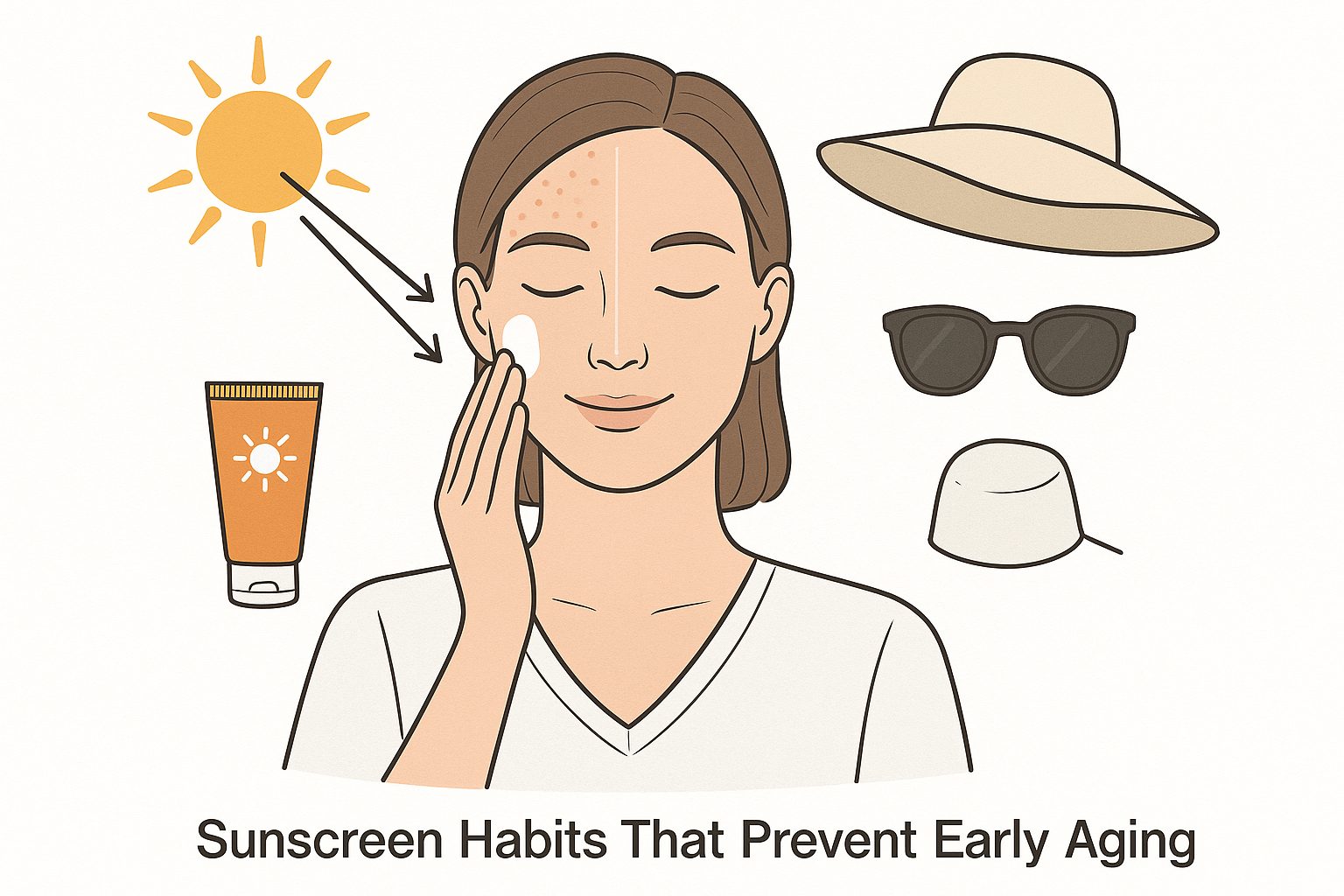
Sunscreen Habits That Prevent Early Aging
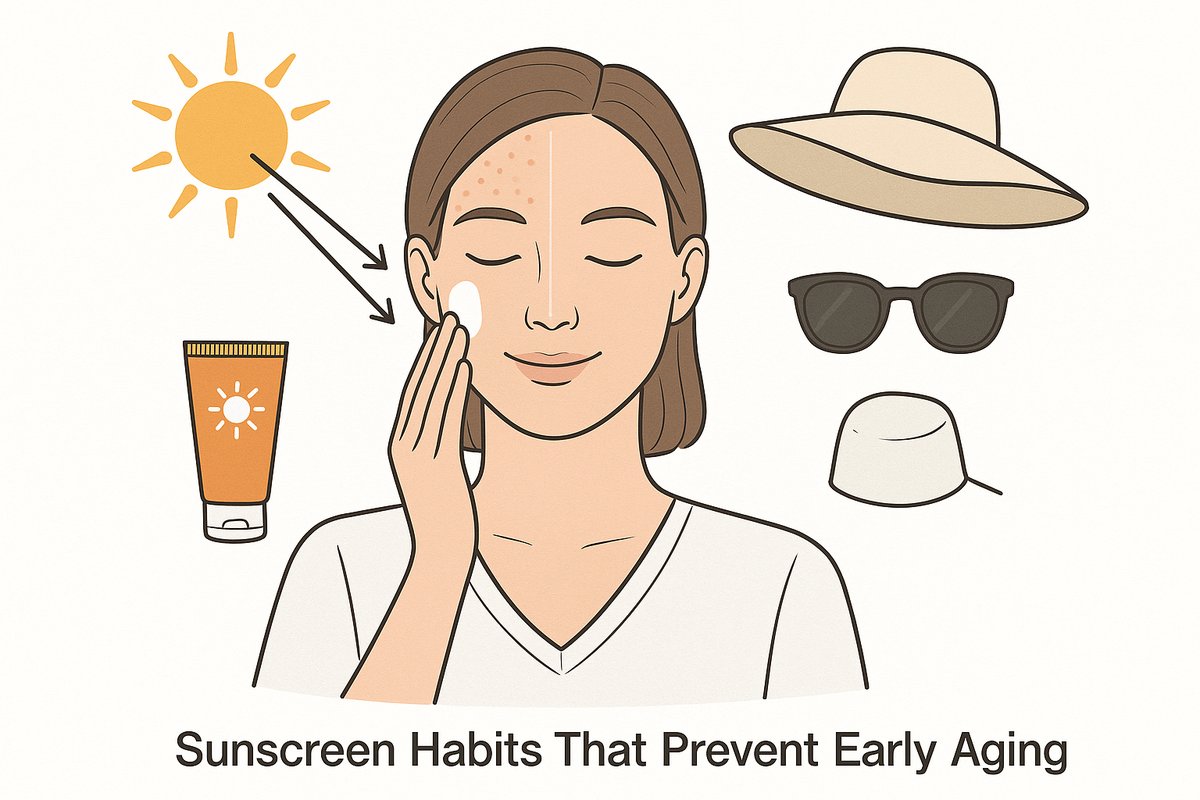
Daily SPF use is the single most evidence-supported intervention for preventing photoaging — UV radiation (particularly UVA, which penetrates deep into the dermis year-round regardless of cloud cover) accounts for approximately 80–90% of visible skin aging. The key habits: apply SPF 30+ broad-spectrum every morning as the last skincare step (before makeup); reapply every 2 hours of direct sun exposure; use a sufficient quantity (approximately 1/4 teaspoon for face and neck). The type of sunscreen matters less than consistent daily use — chemical or mineral, both work when applied correctly. Regular SPF use starting in young adulthood produces compounding prevention benefits that no corrective treatment can replicate.
- UVA penetrates cloud cover and glass windows and accounts for the majority of photoaging (collagen degradation via MMP activation, DNA strand breaks, melanin irregularities) — cloudy days and indoor environments with windows are not SPF-free days; daily year-round application is the standard.
- The SPF number measures UVB (sunburn) protection only — ‘broad-spectrum’ labeling (FDA-required for products making anti-aging claims) indicates UVA protection; look for SPF 30+ broad-spectrum or PA+++ rating for meaningful UVA coverage.
- Quantity is the most-underperformed aspect of sunscreen application: most people apply 25–50% of the tested quantity (2 mg/cm²) — at half the tested amount, SPF 50 effectively becomes SPF ~7; using a generous application (or layering two applications of a lighter formula) achieves closer to labeled protection.
- Vitamin C serum applied before SPF creates a synergistic antioxidant effect: L-ascorbic acid at 10–15% in an acidic base (pH 2.5–3.5) quenches UV-generated reactive oxygen species that escape SPF protection, particularly relevant for near-infrared and visible light that sunscreen doesn’t filter.
- Outdoor reapplication every 2 hours is not optional: sunscreen photodegrades — avobenzone in particular breaks down under UV exposure, losing UVA protection within 90 minutes of sun exposure; physical sunscreens (zinc oxide, titanium dioxide) are more photostable and lose efficacy more slowly but still require reapplication.
If you want sunscreen habits that prevent early aging, the biggest win is not finding a magical formula. It is using sunscreen consistently, correctly, and often enough that the habit becomes automatic.
Photoaging is driven largely by ultraviolet exposure, especially UVA, which contributes to wrinkles, dyspigmentation, and loss of elasticity over time. Sunscreen helps, but only if people use it like protection instead of an occasional accessory.
The Most Important Habit: Wear Sunscreen Every Day
Daily use beats “only when I remember” by a mile. In a randomized trial published in Annals of Internal Medicine, participants assigned to regular daily sunscreen use showed significantly less skin aging than those told to use sunscreen at their own discretion.
That is the headline most people need: sunscreen prevents visible aging best when it is routine, not situational.
Why daily use matters
Incidental exposure adds up. Walking to class, driving, sitting near windows, lunch breaks, sports, and errands all contribute over years. No single day looks dramatic, but the cumulative effect does.
Choose Broad-Spectrum SPF 30 or Higher
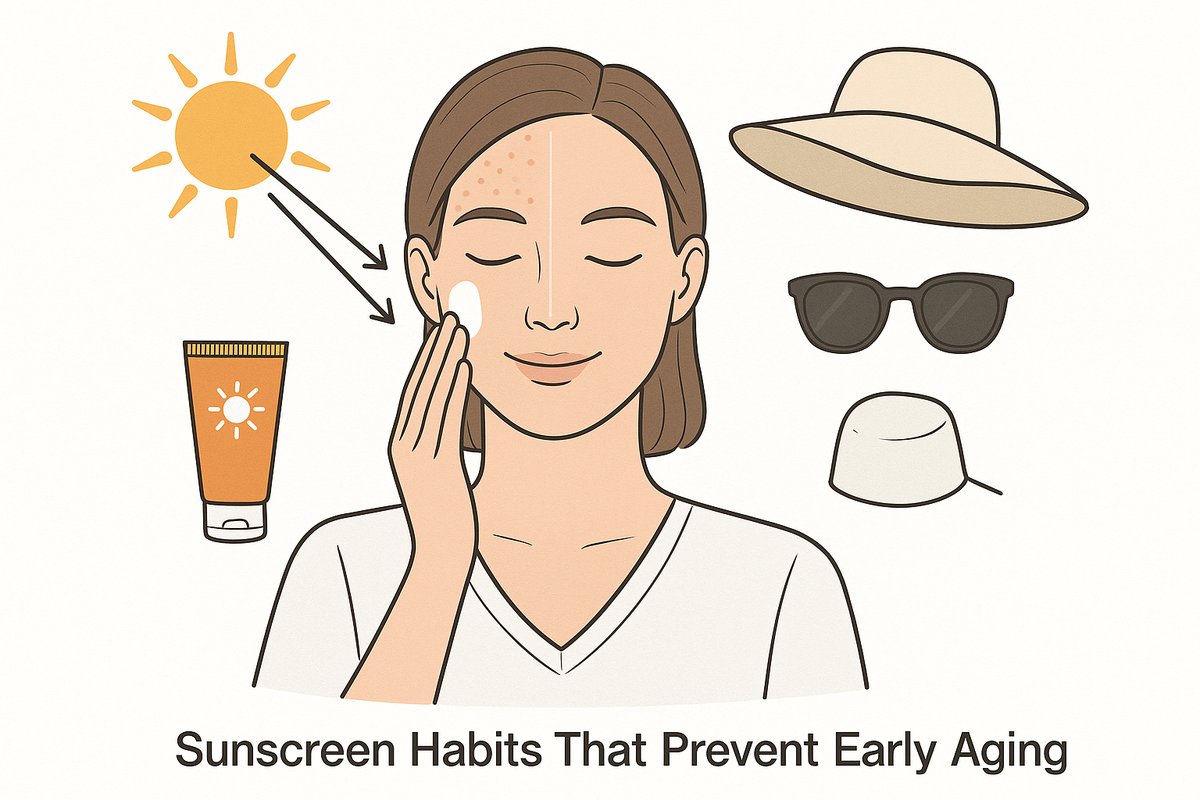
Not all sunscreen labels mean the same thing.
What broad-spectrum means
Broad-spectrum sunscreen protects against both UVB and UVA exposure. UVB is more associated with burning, while UVA is a major contributor to photoaging and pigmentation issues.
Why SPF 30 is the baseline
Dermatologists generally recommend SPF 30 or higher for daily wear because it offers a practical balance of protection and usability. Higher SPF is fine, but only if you apply enough of it.
Use Enough Sunscreen
This is where good intentions fail.
The under-application problem
People often apply far less than the amount used in sunscreen testing, which means real-world protection ends up lower than the number on the bottle.
Easy rule of thumb
- face and neck: about two finger lengths for many fluid formulas
- body: roughly one ounce for full-body coverage
No rule is perfect because formulas vary, but a tiny dab is almost always too little.
Reapply When It Actually Matters
One morning application is not magic armor for the next 12 hours.
Reapply when:
- you are outdoors for extended periods
- you sweat a lot
- you swim
- you towel off
- you are spending hours in bright daylight
For short indoor days, one well-applied morning layer may be practical. For beach days, sports, long walks, and driving trips, reapplication matters much more.
Cover the Spots People Forget
Early aging does not only show up in the middle of the face.
Commonly missed areas
- ears
- neck
- chest
- hairline
- tops of hands
Hands and neck often age early because people protect the face and forget everything else.
Match the Formula to Your Real Life
The best sunscreen habit is built around a product you do not hate.
For oily or acne-prone skin
Look for lightweight gels, fluids, or noncomedogenic lotions.
For dry skin
Creamier formulas may feel better and reduce the temptation to skip SPF.
For sports or sweating
Choose a water-resistant formula and actually reapply it.
If your sunscreen pills, stings, or feels unbearable, you probably need a different formula, not less sunscreen.
Pair Sunscreen With Other Smart Sun Habits
Sunscreen works best as part of a broader photoprotection strategy.
Helpful add-ons
- hats
- sunglasses
- shade when possible
- avoiding deliberate tanning
Reviews of sunscreen and photoaging consistently show that broader UV protection matters. Habits that reduce cumulative exposure make sunscreen work better.
Common Mistakes That Undercut Anti-Aging Results
Only wearing it on sunny days
UVA exposure still happens on cloudy days.
Using too little
A great formula does not help if you barely apply any.
Skipping reapplication outdoors
Morning-only sunscreen is not enough for long outdoor exposure.
Thinking makeup SPF replaces sunscreen
It usually does not, because most people do not apply enough makeup to reach the labeled SPF.
Final Take
The sunscreen habits that prevent early aging are not glamorous, but they work: daily broad-spectrum SPF 30+, enough product, smart reapplication, and consistency over years.
That does more for long-term skin quality than most expensive “anti-aging” products people buy instead of fixing their SPF habit.
FAQ
Does sunscreen really prevent early aging?
Yes. A randomized trial found that daily sunscreen use slowed skin aging compared with discretionary use.
What type of sunscreen is best for preventing wrinkles?
A broad-spectrum sunscreen with SPF 30 or higher is the best baseline because UVA protection matters for photoaging.
Do I need to reapply sunscreen if I work indoors?
Usually not every two hours on a normal indoor day, but reapplication matters if you are outside for long periods, sweating, or near strong daylight exposure.
Is sunscreen enough to prevent photoaging?
It is the foundation, but hats, shade, and avoiding tanning help reduce cumulative UV exposure too.
References
- Hughes MCB, Williams GM, Baker P, Green AC. Sunscreen and prevention of skin aging: a randomized trial. Ann Intern Med. 2013;158(11):781-
- doi:
- Matta MK, Zusterzeel R, Pilli NR, et al. Effect of sunscreen application under maximal use conditions on plasma concentration of sunscreen active ingredients: a randomized clinical trial. JAMA. 2019;321(21):2082-
- doi:
- Wang SQ, Balagula Y, Osterwalder U. Photoprotection: a review of the current and future technologies. Dermatol Ther. 2010;23(1):31-
- doi:
- Kohli I, Nicholson CL, Williams JD, et al. Sunscreens and photoaging: a review of current literature. Am J Clin Dermatol. 2021;22(6):819-
- doi:
Related Articles
- Longevity Skincare Routine for Women Over 40
- Best Ceramide Creams for Barrier Repair
- Minimalist Skincare Routine Under 5 Products
- Growth Factor Serums Explained Simply
- Do Teenagers Really Need Retinol?