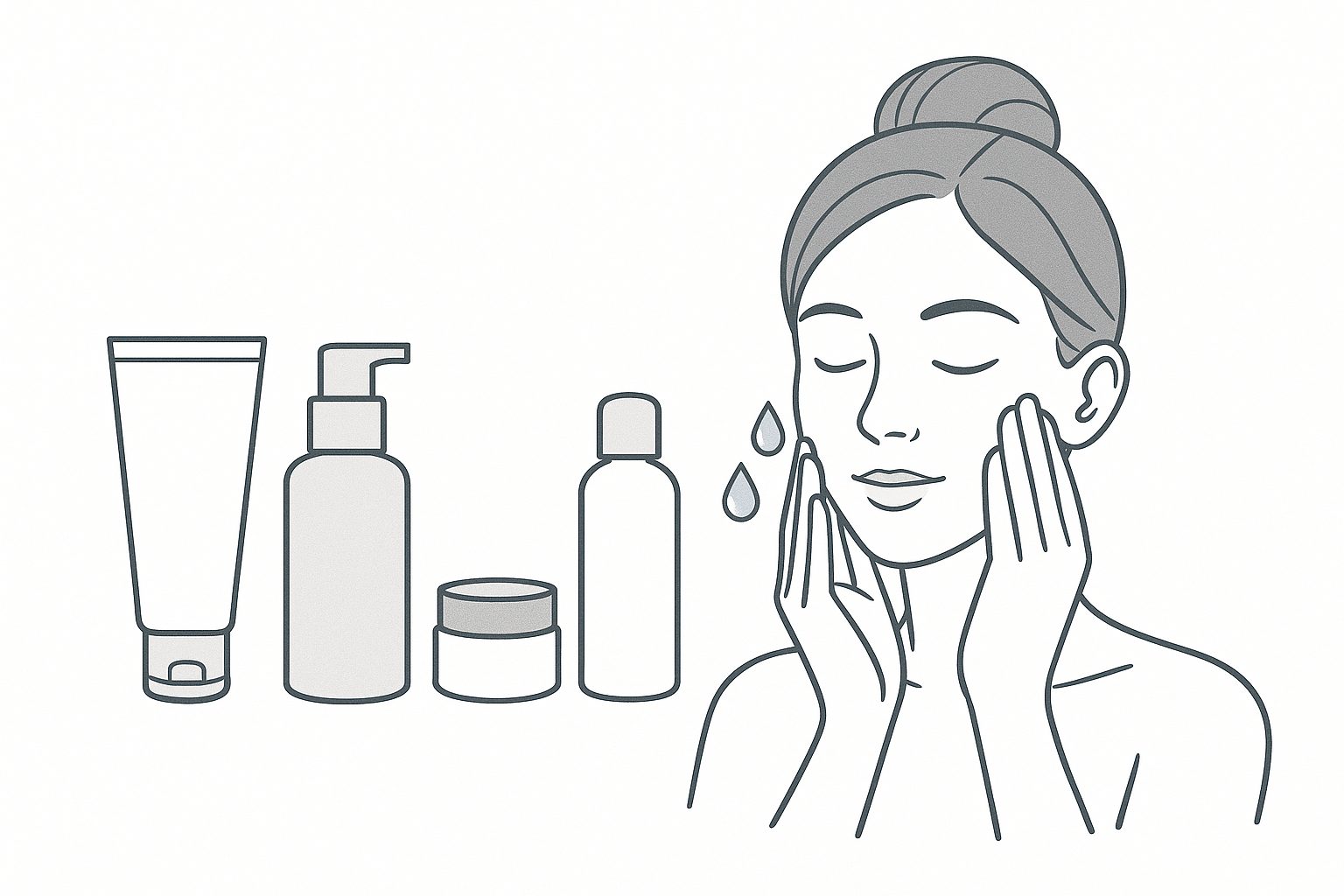
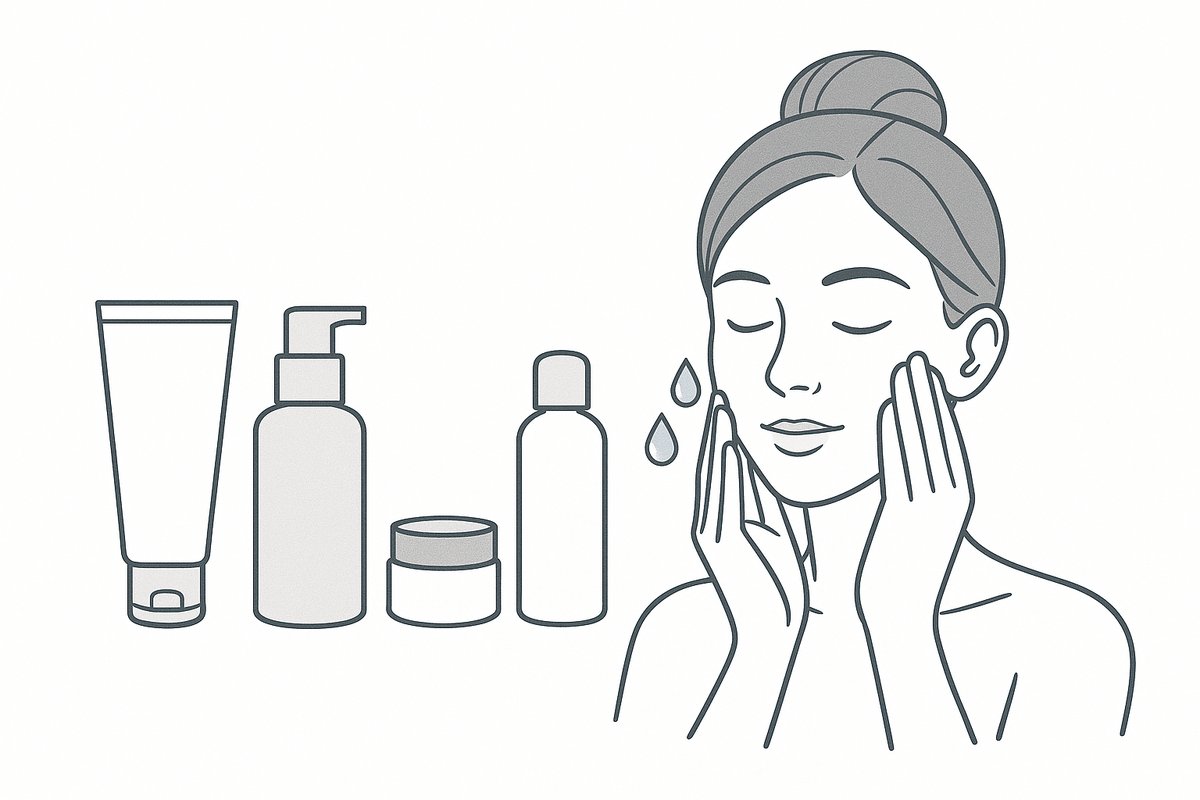
A minimalist skincare routine under 5 products works because the marginal benefit of additional products decreases rapidly after core functions are covered: cleansing (barrier preservation), moisturizing (barrier support), and SPF (UV protection) address the majority of skin aging and barrier concerns. A maximally effective 3-product routine is: gentle cleanser → SPF 30+ moisturizer (morning) → targeted active serum or retinol (evening). A 5-product version adds: a vitamin C serum (AM antioxidant protection) and a niacinamide treatment (barrier + sebum regulation). Beyond 5 products, most additions provide diminishing marginal benefit and increase sensitization risk from ingredient interactions.
- Ingredient competition is real above certain product counts: layering multiple acids (glycolic, salicylic, lactic), vitamin C, retinol, and peptides in a single routine can cause pH conflicts (vitamin C (optimal pH 2.5–3.5) applied before niacinamide can convert niacinamide to niacin, causing flushing in theory); minimalist routines eliminate this risk by design.
- The 80/20 principle applies to skincare: SPF + cleanser + moisturizer addresses approximately 80% of the modifiable skin outcomes achievable with topical skincare; the additional 20% from actives (retinoids, vitamin C, AHA) requires more complexity, cost, and adherence.
- The highest-value single active to add to a minimal routine is tretinoin or adapalene (retinoid): multiple meta-analyses confirm topical retinoids have the strongest efficacy evidence of any cosmetic-accessible active for photoaging, fine lines, and acne — if only one ‘extra’ product is used, a retinoid is the evidence-based choice.
- Product stacking has cumulative irritation risk: each additional active increases the chance of sensitization reactions, contact dermatitis, and barrier disruption — particularly relevant for people with rosacea, eczema-prone skin, or reactive skin; fewer products means fewer opportunities for adverse interactions.
- Minimalism reduces cost and decision fatigue, improving compliance: a consistent 3-product routine used daily outperforms an optimized 10-product routine used inconsistently — adherence is the most important variable in any skincare regimen, and simplicity is a key driver of adherence.
A minimalist skincare routine under 5 products is not just a budget move. It is often the best move for skin that is confused, irritated, or overloaded with too many actives. If your routine feels like a chemistry lab, minimalism is probably the upgrade.
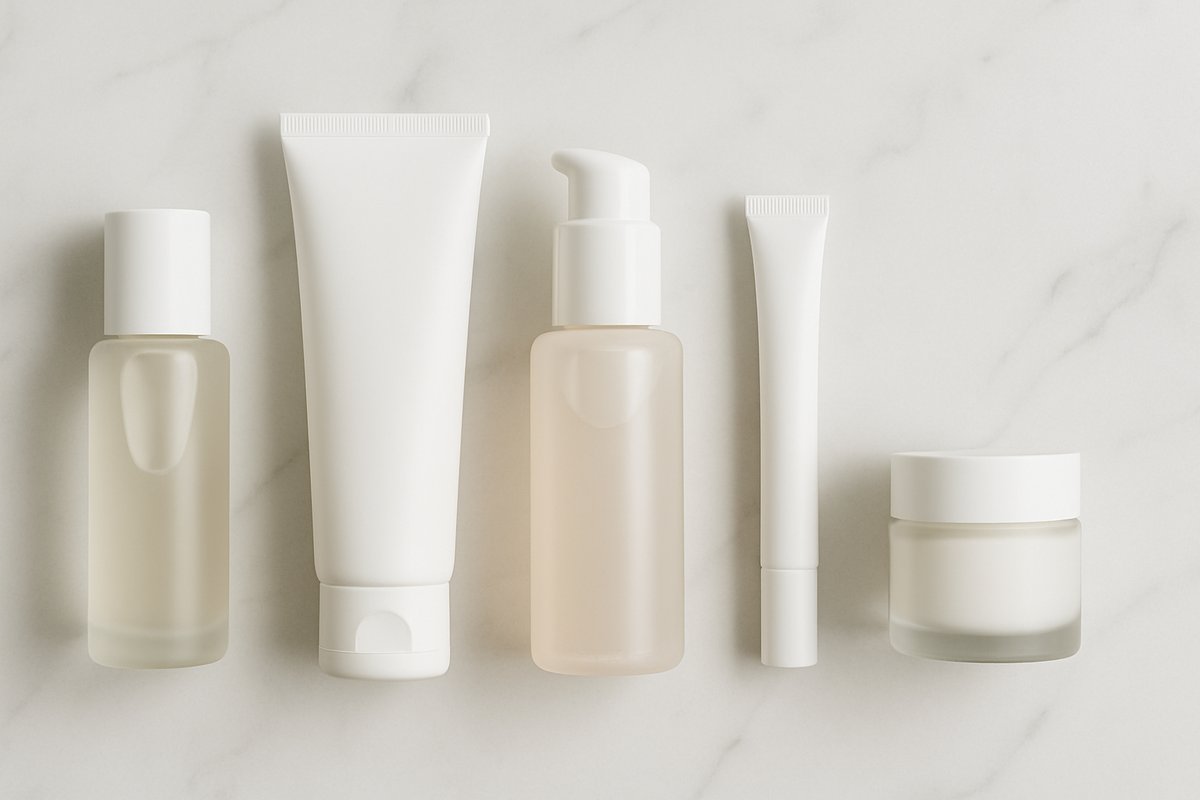
The basic idea is simple: keep the routine to three essentials, then add one optional treatment only if you actually have a skin concern to treat.
The Best Minimalist Skincare Routine Under 5 Products
Morning
1. Cleanser
2. Moisturizer
3. Sunscreen
Night
1. Cleanser
2. Moisturizer
3. Optional treatment if needed
That means many people can do well with just three total products, or four if acne treatment is included.
Why Minimalist Skincare Usually Works Better
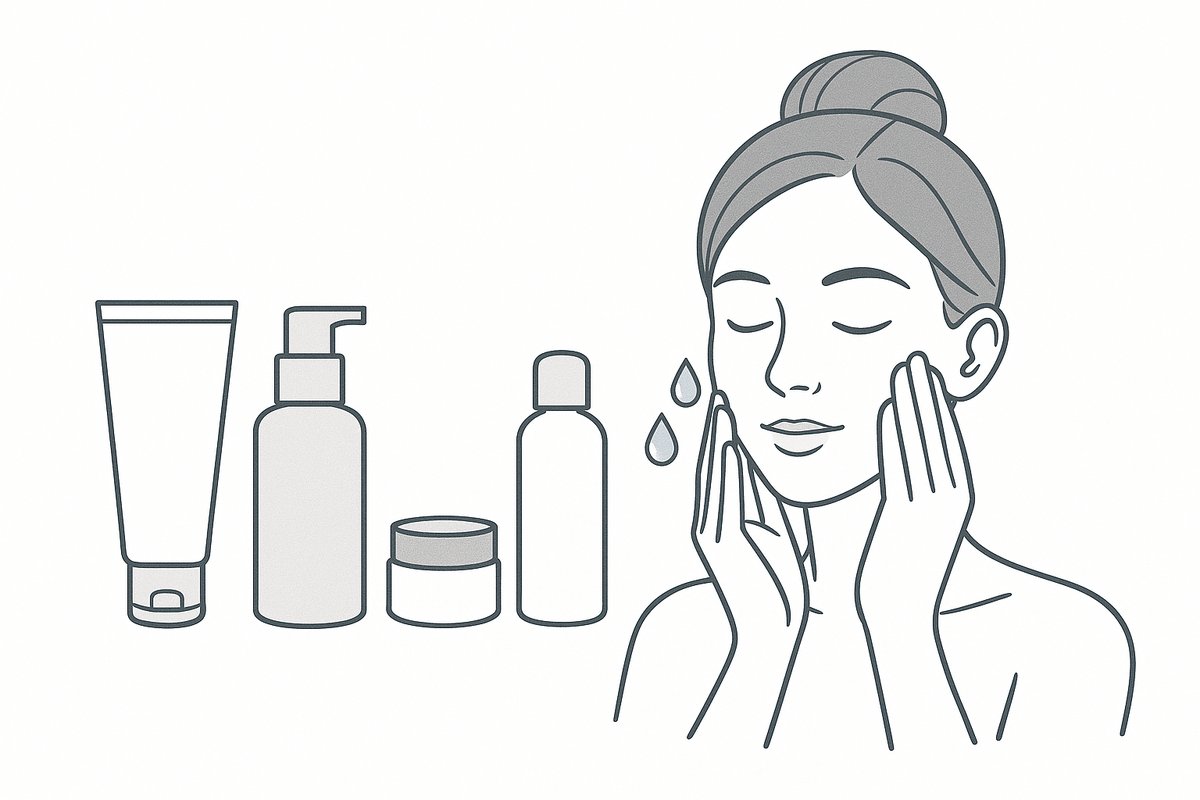
Fewer products means less irritation roulette
When you use too many actives at once, it becomes hard to tell what is helping and what is causing problems.
It improves consistency
A short routine is easier to repeat. Repetition beats complexity in skincare.
It lowers the odds of barrier damage
This matters especially if you are acne-prone. Studies show that moisturizers and ceramide-supportive skincare can improve tolerability when used with acne treatments. Fewer competing products usually means calmer skin.
Product 1: A Gentle Cleanser
A good cleanser should remove sweat, oil, and sunscreen without stripping the face.
What to look for
– gentle and non-stripping
– fragrance-free if possible
– suitable for daily use
What to avoid
– harsh scrubs
– strong “deep clean” formulas that leave skin tight
– unnecessary cleanser stacking
For many people, one good cleanser is enough.
Product 2: A Moisturizer That Fits Your Skin
Minimalist skincare still needs moisture. Skipping moisturizer does not make a routine more efficient. It often just makes treatment less tolerable.
Good moisturizer traits
– noncomedogenic
– simple formula
– texture matched to your skin type
– ingredients like glycerin or ceramides
If you are using acne treatment, moisturizer becomes even more important.
Product 3: A Daily Sunscreen
If you only keep one preventive skincare habit, make it sunscreen. A randomized trial showed that daily sunscreen use slowed visible skin aging compared with discretionary use.
Minimalist sunscreen rule
Pick one broad-spectrum SPF 30+ sunscreen you genuinely do not mind wearing. That matters more than owning several “best” options you never finish.
Product 4: Optional Treatment for a Real Problem
Minimalist does not mean anti-treatment. It means treatment should be intentional.
Best reason to add a fourth product
Acne.
The AAD acne guidelines strongly recommend topical retinoids and benzoyl peroxide for acne care. If you need one active, make it one with a real job.
Examples
– adapalene for comedonal acne
– benzoyl peroxide for inflamed acne
– azelaic acid if advised and well tolerated
Do not add a treatment just because a trend told you to “start early.”
What Most People Do Not Need
Toner
Usually optional.
Essence
Also optional.
Multiple serums
This is where simple routines get messy fast.
Daily exfoliation
Most people do not need it, and many barrier problems start here.
Minimalist Routine Examples
Oily or acne-prone skin
– gel cleanser
– lightweight gel-cream moisturizer
– fluid SPF 30+
– adapalene if needed
Dry or sensitive skin
– cream cleanser
– barrier-supportive moisturizer
– moisturizing SPF 30+
– no active at first unless clearly needed
Teen beginner routine
– gentle cleanser
– lightweight moisturizer
– sunscreen
– acne treatment only if breakouts are consistent
Final Verdict
The best minimalist skincare routine under 5 products is usually cleanser, moisturizer, sunscreen, and one treatment only if you have a real concern like acne. That is enough for many people to maintain skin barrier health, prevent a lot of self-inflicted irritation, and still address common skin issues.
Skincare gets better when every product has a reason to exist.
FAQ
Can a skincare routine really work with only 3 products?
Yes. Cleanser, moisturizer, and sunscreen are enough for many people, especially if skin is generally healthy.
What is the best 4-step minimalist skincare routine?
Cleanser, moisturizer, sunscreen, and one treatment product such as adapalene if acne is present.
Is minimalist skincare better for sensitive skin?
Often yes, because fewer variables usually mean lower irritation risk.
Do I need toner in a minimalist skincare routine?
Usually no. Toner is optional for most people.
References
- Reynolds RV, Yeung H, Cheng CE, et al. Guidelines of care for the management of acne vulgaris. J Am Acad Dermatol. 2024;90(5):
- doi:
- Hughes MCB, Williams GM, Baker P, Green AC. Sunscreen and prevention of skin aging: a randomized trial. Ann Intern Med. 2013;158(11):781-
- doi:
- Tempark T, et al. Efficacy of ceramides and niacinamide-containing moisturizer versus hydrophilic cream in combination with topical anti-acne treatment in mild to moderate acne vulgaris: A split face, double-blinded, randomized controlled trial. J Cosmet Dermatol. 2024;23(5):1758-
- doi:
- Draelos ZD, Baalbaki N, Colon G, et al. Ceramide-containing adjunctive skin care for skin barrier restoration during acne vulgaris treatment. J Drugs Dermatol. 2023;22(6):554-
- doi:
Related Articles
- Longevity Skincare Routine for Women Over 40
- Sunscreen Habits That Prevent Early Aging
- Best Ceramide Creams for Barrier Repair
- Do Teenagers Really Need Retinol?
- Best Acne-Safe Moisturizers for Gen Z