
Best Fungal Acne Safe Blush and Bronzer
The best fungal acne safe blush and bronzer products are usually lightweight powders or carefully chosen liquids with simple ingredient lists and a non-greasy finish. If you are prone to malassezia-related bumps, the safest choice is often a formula that adds color without adding richness.

Quick Answer
Fungal acne (Malassezia folliculitis) is caused by the Malassezia yeast that feeds primarily on fatty acids — meaning makeup products containing fermented ingredients, plant oils, and certain fatty acid esters can feed the yeast and worsen breakouts. For blush and bronzer, the key is avoiding formulas with comedogenic and Malassezia-feeding oils (coconut oil, olive oil, sunflower oil) and opting for powder or mineral formulas where the minimal ingredient list reduces the risk of problematic lipid sources. Powder blushes and mineral bronzers are inherently safer for fungal acne because their anhydrous (water-free) powder matrix typically avoids the oil-based emollients that feed Malassezia.
Key Takeaways

- Malassezia yeast feeds on fatty acids with chain lengths C11-C24 — this covers most plant oils and many synthetic esters used in cosmetics. Powder blushes and bronzers are inherently lower-risk because they lack the aqueous and emollient base required for these lipid components to sustain yeast growth.
- Check ingredient lists for specific problematic entries even in powder products: some pressed powder formulas include plant oil binders, fermented extracts (sake, rice ferment filtrate), and fatty acid esters. Products with pure mineral or synthetic pigment bases with talc, mica, or silica as primary ingredients are the safest for fungal acne.
- The Malassezia Safe Ingredients list (popularized by the f.c.t. subreddit community and now formally referenced by dermatologists) categorizes individual cosmetic ingredients as safe or problematic based on fatty acid carbon chain length and ester structure — this list is available online and useful for checking specific blush and bronzer formulas.
- Recommended safe blush options for fungal acne: Wet n Wild Color Icon Blush (mineral-based, clean ingredient list), e.l.f. Blush (simple ingredient base, minimal oil), NARS Orgasm Blush (powder base, Malassezia-safe formulation). Cream and liquid blushes require more careful ingredient checking.
- Bronzer for fungal acne requires extra attention because bronzer formulas often use higher concentrations of shimmer and binding agents that can include problematic oils. Mineral bronzers with mica-only shimmer and talc or silica base (Jane Iredale, Mineral Fusion) are the most consistently safe options.
Blush and bronzer seem harmless compared with foundation or primer, but they still sit on the skin for hours. Because many cheek products include oils, waxes, and creamy emollients, they can quietly become part of the problem in a fungal-acne-prone routine.
Why Cheek Products Matter for Fungal Acne
Cheeks, temples, and the outer face are common places for people to apply bronzer and blush generously. If your skin is reactive in those zones, the wrong texture can make bumps more noticeable.
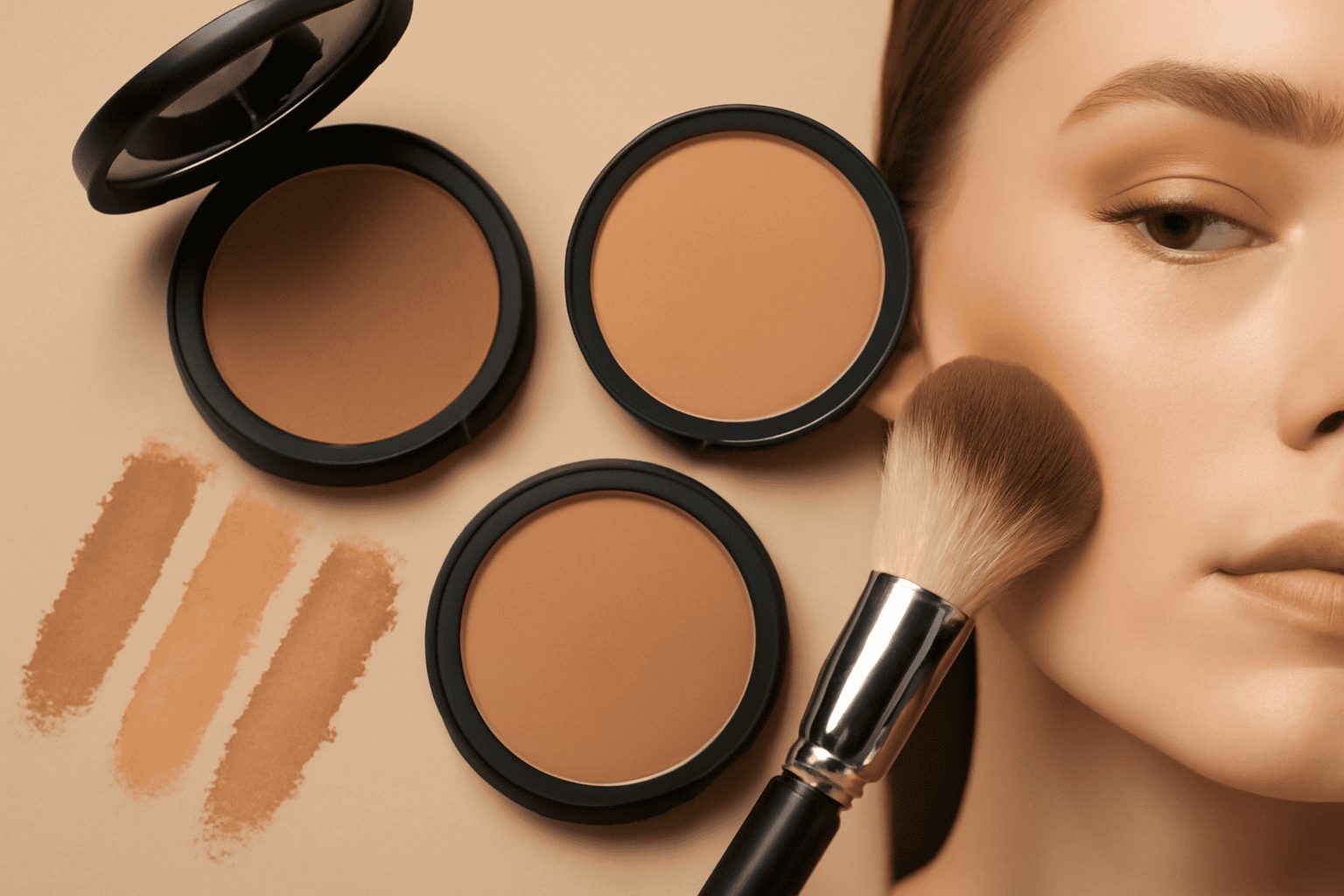
Cream products are not always the best match
Cream blush and cream bronzer can look gorgeous, but richer textures are often more likely to feel occlusive or contain ingredients fungal-acne-conscious shoppers try to avoid.
Best Types of Fungal Acne Safe Blush and Bronzer
Powder blush
Powder blush is usually the easiest and safest place to start. It offers control, sits lightly on the skin, and is simple to build.
Powder bronzer
A finely milled powder bronzer can warm up the face without creating the heavy feel that some cream bronzers leave behind.
Lightweight liquid cheek color
If you prefer a more skin-like finish, a thin liquid blush can work well when the formula is simple and non-greasy.
What to Look For
Non-greasy feel
The product should not stay tacky on the skin for hours.
Buildable pigment
Highly concentrated formulas can be harder to blend if your base makeup is already delicate.
Minimal fragrance
Fragrance is not needed in cheek makeup and may add irritation to already sensitive skin.
A finish that works with your base
Powder cheek products tend to pair well with soft-matte fungal-acne-safe foundation, while lightweight liquids can work over a natural finish base.
How to Apply Blush and Bronzer on Fungal Acne Prone Skin
Use fluffy brushes
A soft brush diffuses product without disturbing the foundation underneath.
Build slowly
Light layers help the finish look natural and reduce the risk of caking.
Avoid heavy stacking of cream over cream
If your primer, foundation, and concealer already have a creamy texture, adding rich cream blush and bronzer on top may be too much for your skin and for the makeup finish.
Place product strategically
Apply color where it flatters the face instead of sweeping it across every inch of the cheek. Less product often looks fresher.
Choosing Powder vs Liquid
Choose powder if:
- you are oily or combination
- cream products tend to break you out
- you want easier blending and touch-ups
Choose liquid if:
- your skin is drier
- you prefer a skin-like finish
- you found a formula with a simple ingredient list
Common Mistakes to Avoid
Prioritizing trendy cream formulas
Not every popular dewy cheek product is a good fit for reactive skin.
Forgetting to clean brushes
Cheek brushes collect oil, powder, and old product quickly.
Applying bronzer over active texture
Too much shimmer or pigment over bumps can make them stand out more.
FAQ: Best Fungal Acne Safe Blush and Bronzer
Is powder blush better for fungal acne?
For many people, yes. Powder blush tends to feel lighter and less occlusive than richer cream formulas.
Can bronzer trigger fungal acne?
It can if the formula is too rich or contains ingredients your skin does not tolerate well.
Are cream blushes bad for fungal acne?
Not always, but they deserve closer ingredient scrutiny because they are often made with oils and waxes.
What finish looks best on fungal acne prone skin?
A soft-matte or natural finish usually looks best because it does not exaggerate texture or greasiness.
Related Articles
- Best Fungal Acne Safe Primers for Smooth Long Wear Makeup
- Best Fungal Acne Safe Foundation Options for Clear Calm Skin
- Best Fungal Acne Safe Concealer for Spot Coverage Without Congestion
- Makeup Ingredients to Avoid With Fungal Acne
- Best Non-Comedogenic Acne-Safe Makeup in 2026