
—
Non-comedogenic makeup is formulated to avoid pore-blocking ingredients — but the designation is self-reported by manufacturers and not subject to FDA verification. The most reliable comedogenicity predictor is avoiding known high-comedogenicity ingredients: isopropyl myristate, isopropyl palmitate, coconut oil, cocoa butter, mineral oil in heavy concentrations, lanolin, and sodium lauryl sulfate. The best acne-safe makeup uses water-based or silicone-based formulations, niacinamide or salicylic acid as active additions, and zinc oxide (anti-inflammatory and non-comedogenic) as the SPF. Labels to trust: ‘oil-free,’ ‘non-comedogenic,’ ‘tested on acne-prone skin’ from dermatologist-developed brands.
- Non-comedogenic is a marketing term with no FDA-defined standard — brands determine it via in vitro testing, bunny ear assay, or internal protocols. Independent testing sometimes finds ‘non-comedogenic’ labeled products that clog pores in practice; ingredient screening remains the most reliable approach.
- The comedogenicity rating scale (0-5) was developed from rabbit ear follicle testing — while imperfect for human extrapolation, ingredients rating 3-5 (isopropyl myristate=5, cocoa butter=4, coconut oil=4, lanolin=4) consistently cause comedones across multiple testing methods.
- Silicone-based formulations (dimethicone, cyclopentasiloxane) are among the least comedogenic binders available — they create a breathable, non-pore-blocking matrix that is genuinely safe for acne-prone skin, despite the common misconception that ‘silicone = pore-clogging.’
- Niacinamide (5-10%) in foundations reduces sebum production, shrinks pore appearance, and has anti-inflammatory effects — making it an active addition that directly benefits acne-prone skin beyond just avoiding comedogenic ingredients.
- The highest-risk makeup categories for acne: heavy cream foundations, occlusive highlighters with lanolin or cocoa butter, and hair products (pomade acne — products dripping onto the forehead are a common acne trigger often overlooked in makeup audits).
If you have acne-prone skin, makeup can feel like a trap. You want coverage for redness, post-acne marks, and active breakouts, but you also do not want your makeup to create tomorrows breakout map.
Wearing makeup over active acne requires a careful product order and light touch. Our routine guide explains how to build a makeup routine around active acne without aggravating it.
Looking for spot coverage that stays acne-safe? Our picks for acne-safe concealers with non-comedogenic formulas that provide coverage without congestion are a good place to start.
That is why people search for non-comedogenic acne-safe makeup. The label is useful, but not perfect. It can help narrow the field, yet it should be paired with smart texture choices, ingredient awareness, and realistic expectations.
What non-comedogenic actually means
Non-comedogenic generally means a product is formulated to be less likely to clog pores. The American Academy of Dermatology commonly recommends oil-free and non-comedogenic skin care and makeup for acne-prone skin.
The important caveat: non-comedogenic is not a guarantee. Individual skin still varies, and the same formula that behaves beautifully on one person can break out another.
Think of the label as a filter, not a promise.
What acne-prone skin needs from makeup

The best acne-safe makeup should do four things:
– provide coverage without feeling heavy
– stay in place without constant layering
– work with acne treatments instead of stinging over them
– remove cleanly at night
A lot of acne-prone skin is also sensitive, dehydrated, or inflamed from actives like benzoyl peroxide, salicylic acid, or retinoids. That means the ideal formula is often lighter and gentler than the internets most full-glam recommendations.
Best makeup types for acne-prone skin
Foundation
For most breakout-prone skin, lightweight liquid foundation, skin tint, or mineral powder is easier to manage than thick cream formulas.
Good foundation traits
– non-comedogenic labeling
– oil-free or balanced formulas
– medium buildable coverage
– natural or soft-matte finish
– fragrance-free if you also get irritation
Very heavy full-coverage foundation can work for events, but daily wear often goes better with thinner layers and spot concealing.
Concealer
Concealer is where acne-prone routines often improve fast. Instead of masking the entire face, use an acne-safe concealer just where you need it.
Primer
Primer is optional. If your foundation wears well without it, skip it. If you need one, choose a lightweight smoothing or gripping primer labeled non-comedogenic.
Blush and bronzer
These matter more than people think because they are applied over the cheeks, where many adults break out. Powder formulas often work well, but cream formulas can also be excellent if they are light and non-comedogenic.
Product recommendations to consider
Rather than blindly chasing hype, shop by performance category.
Best categories to try
– Non-comedogenic liquid foundation for everyday redness and post-acne mark coverage
– Mineral powder foundation for oily or very breakout-prone skin
– Targeted spot concealer instead of heavy all-over coverage
– Lightweight primer only when needed for longevity
– Soft powder blush and bronzer if cream products tend to feel occlusive on you
Good formula priorities
– breathable texture
– no strong fragrance
– easy removability
– reasonable wear time without piling on powders
Ingredients and formula issues to watch
The modern acne conversation is better than the old all oils are evil nonsense, but certain textures still tend to be riskier for some users.
Use caution with
– very heavy occlusive textures you know break you out
– thick waxy cream products if your pores clog easily
– strongly fragranced formulas that irritate already inflamed skin
– too many layers of primer, foundation, concealer, and setting products
A 2025 review in JAAD Reviews noted that comedogenicity remains clinically messy and that labels alone are not enough. That is exactly right. Wear testing matters.
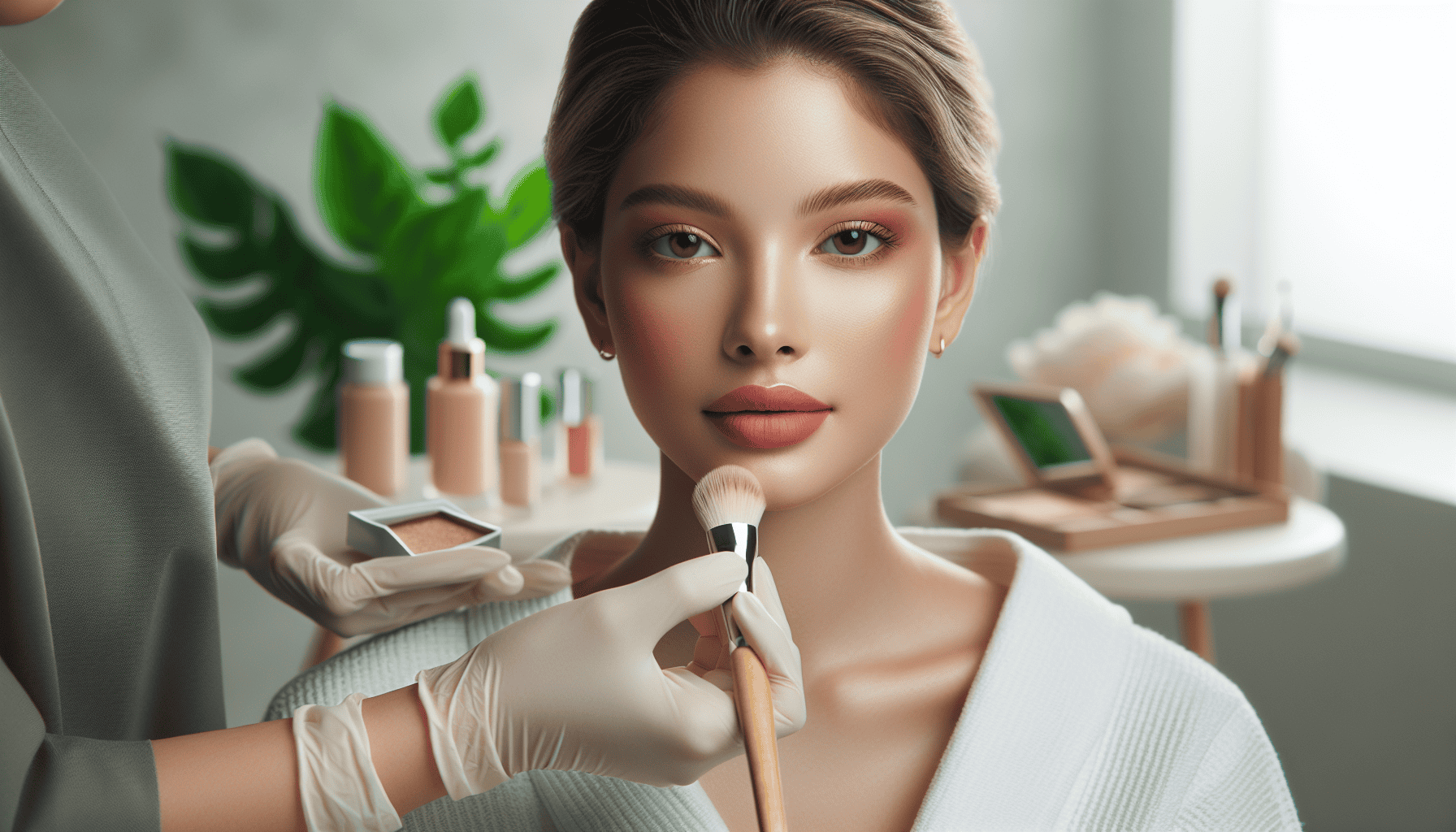
How to build an acne-safe makeup routine
Step 1: Prep the skin gently
Use a light moisturizer if your acne treatments leave you dry. Over-drying your skin can make makeup cling and patch up, which leads to adding more product than you need.
Step 2: Use thin layers
Apply a light base first. Then conceal only active lesions and dark marks. This gives a more natural finish and reduces pore-clogging buildup.
Step 3: Set only where necessary
Set the T-zone or active breakout areas if you need it, but avoid powdering your entire face into submission.
Step 4: Remove makeup fully
The AAD is clear that acne patients can wear makeup, but sleeping in it is still a terrible idea. Clean removal matters as much as formula choice.
Common mistakes acne-prone shoppers make
1. Using full coverage everywhere
Spot concealing usually looks better and feels lighter.
2. Buying glowy formulas that are too rich
Some dewy products are great. Others are basically pore anxiety in a bottle.
3. Ignoring irritation
Inflamed acne-prone skin often reacts to fragrance or harsh ingredients even when a product is technically non-comedogenic.
4. Keeping breakout-causing products too long
If a product predictably causes clogged pores, retire it. Do not keep trying to make it your personality.
FAQ
What is the best makeup for acne-prone skin?
Lightweight, non-comedogenic, oil-free or balanced formulas with buildable coverage usually work best. Many people do well with skin tints, liquid foundations, mineral powders, and spot concealers.
Does non-comedogenic makeup really help acne?
It can help reduce the risk of clogged pores, but it is not a guarantee. Your skin can still react to specific ingredients or textures.
Is powder or liquid foundation better for acne?
Either can work. Powder often suits oily skin well, while lightweight liquid formulas are usually better for dehydrated acne-prone skin.
Can I wear makeup over active acne?
Yes. The AAD says people with acne can wear makeup. Gentle prep, thin layers, and clean removal are the key.
What should I avoid if I have acne-prone skin?
Avoid products that consistently clog your pores, strongly irritate your skin, or require excessive layering to look good.
Sources for further reading
– American Academy of Dermatology: I have acne! Is it okay to wear makeup? https://www.aad.org/public/diseases/acne/causes/makeup
– American Academy of Dermatology: How to control oily skin https://www.aad.org/public/everyday-care/skin-care-basics/dry/oily-skin
– JAAD Reviews: Comedogenicity in cosmeceuticals: A review of clinical relevance, regulatory gaps, and future directions https://www.jaadreviews.org/article/S2950-1989(25)00088-1/fulltext
—
This article is for informational purposes only and is not medical advice. Persistent or scarring acne deserves a dermatologist, not just better concealer.
Related Articles
- Best Non-Toxic Makeup in 2026
- Best Fungal Acne Safe Primers
- Best Supplements for Acne in 2026
- Best Fragrance-Free Makeup for Sensitive Skin
- Rosacea-Friendly Makeup: Best Products and Tips
Sources
- Reviews on comedogenicity testing of cosmetic ingredients. PubMed search.
- Studies on acne cosmetica and comedogenic makeup ingredients. PubMed search.
- Trials on non-comedogenic cosmetics for acne-prone skin. PubMed search.
- Reviews on mineral makeup (zinc oxide, titanium dioxide) and acne outcomes. PubMed search.
- Reviews on salicylic acid and niacinamide in acne-targeting cosmetic formulations. PubMed search.

Leave a Reply