
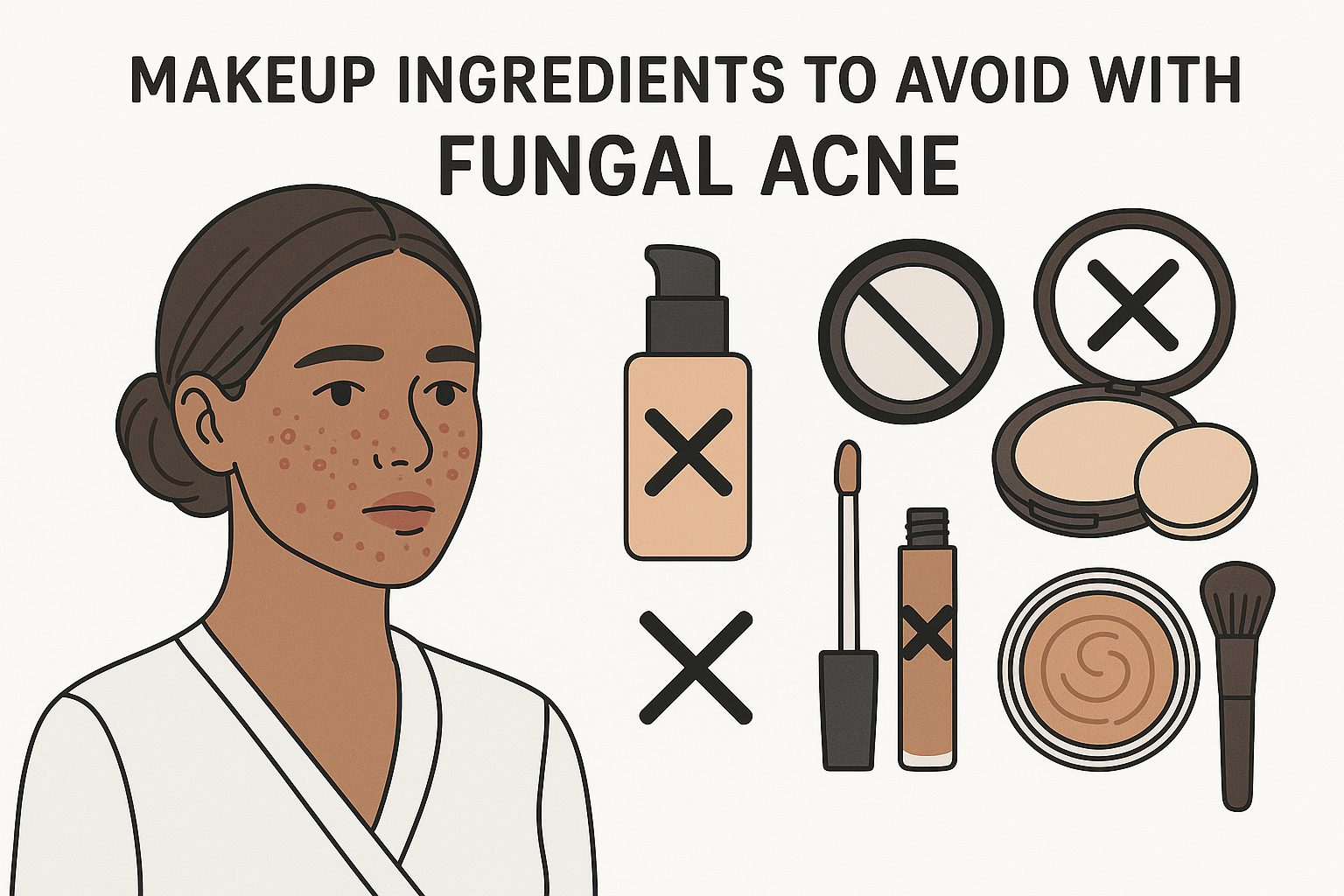
Makeup Ingredients to Avoid With Fungal Acne
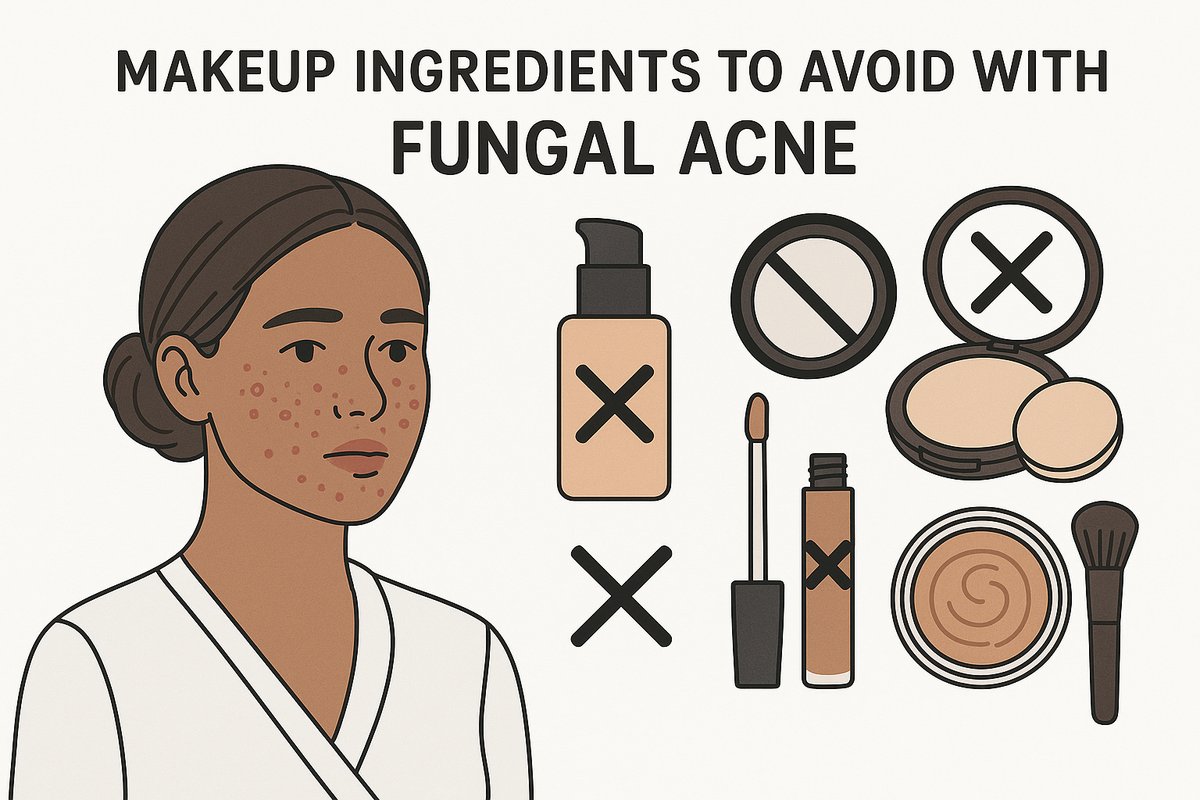
If you are researching makeup ingredients to avoid with fungal acne, the quick answer is to be extra cautious with esters, polysorbates, certain fatty acids, and richer lipid-heavy ingredients that may aggravate malassezia-prone skin. The safest approach is to evaluate each formula ingredient by ingredient rather than trusting product marketing.
Key Takeaways
- The core Malassezia feeding mechanism: Malassezia yeast lacks the ability to synthesize its own fatty acids and instead metabolizes fatty acids C11-C24 found in sebum, plant oils, and cosmetic emollients. Any makeup ingredient containing these fatty acids in free or esterified form risks feeding the yeast and worsening folliculitis.
- Priority ingredients to avoid in makeup for fungal acne: coconut oil, olive oil, sunflower oil, soybean oil, most plant-derived oils, isopropyl myristate, isopropyl palmitate, ethylhexyl palmitate, and most fatty acid esters — these appear frequently in foundations, primers, and concealers as emollients and skin-feel agents.
- Fermented ingredients are a category of concern: sake extracts, rice ferment filtrate, Galactomyces ferment filtrate, and similar fermented filtrates are popular K-beauty-derived ingredients that can introduce yeast metabolites and fatty acid byproducts that potentially feed Malassezia. The scientific evidence is partial, but the fungal acne community widely reports worsening with these ingredients.
- Safe ingredient categories for fungal acne makeup: silicones (dimethicone, cyclopentasiloxane), glycerin, hyaluronic acid, niacinamide, propanediol, aloe vera gel (carefully formulated), squalane (from sugar cane origin), and mineral pigments (iron oxides, zinc oxide, titanium dioxide, mica).
- Patch testing remains valuable even with Malassezia-safe products: individual reactions vary, and some people with fungal acne also have co-existing contact dermatitis or bacterial acne that may respond to different ingredient concerns. Apply a small test amount to the jaw/neck area for 48 hours before full face use.
For many people, fungal acne is frustrating because products labeled gentle, hydrating, or clean can still trigger tiny bumps, itchiness, and uneven texture. Makeup does not always cause the issue by itself, but it can absolutely make a flare harder to calm down.
Why Ingredient Awareness Matters
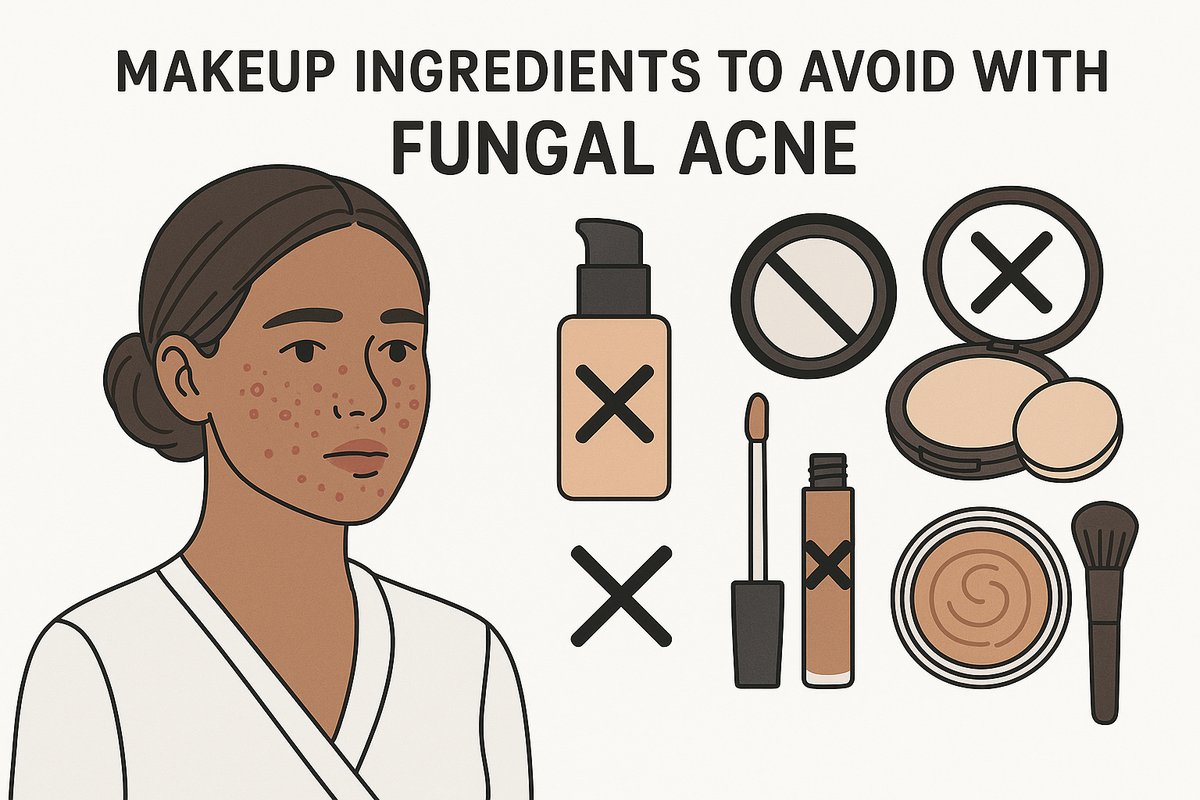
Fungal acne usually refers to malassezia folliculitis, a condition that can resemble acne but behaves differently. Because malassezia interacts differently with oils and certain emollients, ingredient selection matters more than it does in a standard acne routine.
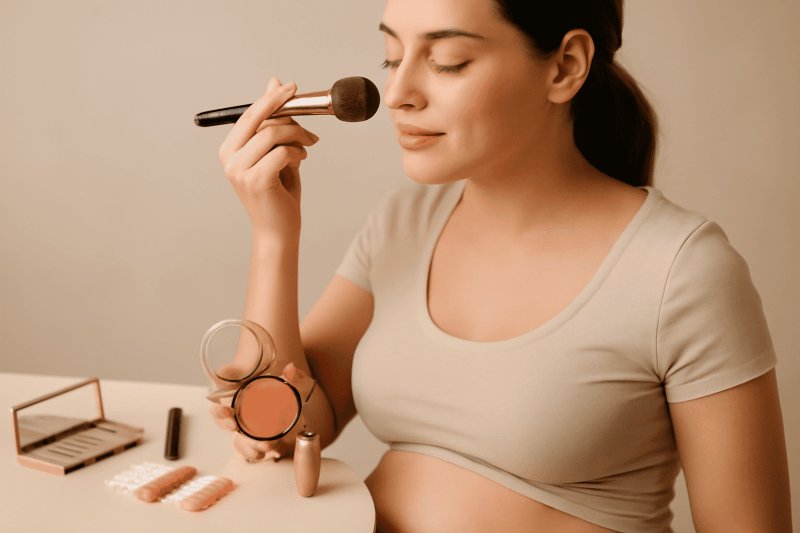
Makeup can stay on skin for hours
Unlike a cleanser that rinses off quickly, foundation, primer, concealer, and cream blush may sit on the face all day. That long wear time is one reason triggering formulas can become a problem.
Common Makeup Ingredients to Avoid With Fungal Acne
Esters
Esters appear in many complexion products because they improve texture and spreadability. They are common in primers, foundations, and concealers. People prone to fungal acne often try to minimize them because some can worsen flares.
Polysorbates
Polysorbates are used as emulsifiers and can appear in both skincare and makeup. They are another ingredient group many fungal-acne-conscious shoppers choose to avoid.
Certain fatty acids and lipid-rich ingredients
Not every oil or emollient causes problems for every person, but richer lipid-heavy formulas often create trouble for malassezia-prone skin. This is especially noticeable in cream products and dewy primers.
Fermented ingredients in reactive routines
Some fermented ingredients work fine for certain people, but others find they are not worth the risk during an active flare.
Heavy botanical oils in base makeup
Natural does not automatically mean safe. A foundation or primer loaded with plant oils may still be a poor match for fungal acne prone skin.
Product Categories That Deserve Extra Scrutiny
Primers
Primers are often full of slip agents, emollients, and skin-smoothing ingredients. Unfortunately, that silky feel can come with ingredients many fungal acne sufferers try to avoid.
Cream foundations and balms
These tend to be richer and more occlusive than lightweight liquids. They may look flattering at first but can feel heavy over time.
Liquid concealers
Some are simple and easy to tolerate. Others are surprisingly rich. Always check the label instead of assuming all liquid concealers are safe.
Cream blush and bronzer
These products are small in size but often packed with oils and waxes. If your cheeks or temples flare easily, they matter.
How to Read a Makeup Ingredient List More Effectively
Start with the first 10 to 15 ingredients
That section often tells you the most about the formula’s texture and performance. If the product looks rich on paper, it will usually feel rich on skin.
Compare similar products
When you find one foundation or concealer your skin tolerates, compare new options against it. Patterns become easier to spot that way.
Watch for reformulations
Brands change ingredients all the time. Re-check labels even if a product used to be safe.
What to Choose Instead
Lightweight, minimal formulas
Products with fewer unnecessary extras are often easier to tolerate.
Soft-matte or natural finishes
These formulas usually feel less greasy than very dewy products.
Targeted coverage instead of heavy layers
A thin layer of foundation plus spot concealer is often better than piling on multiple rich products.
Common Mistakes to Avoid
Trusting influencer claims without checking labels
A product may work for one person and still be a bad fit for your skin.
Focusing only on skincare
If your cleanser and moisturizer are safe but your foundation and primer are not, you may keep flaring without realizing why.
Changing everything at once
Test one new makeup product at a time so you can tell what is helping or hurting.
FAQ: Makeup Ingredients to Avoid With Fungal Acne
What ingredients commonly trigger fungal acne in makeup?
Many people prone to fungal acne are cautious with esters, polysorbates, certain fatty acids, and richer oil-heavy ingredients in base makeup.
Is oil-free makeup automatically fungal acne safe?
No. Oil-free products can still contain ingredients that may aggravate malassezia-prone skin.
Are cream makeup products bad for fungal acne?
Not always, but cream products are more likely to be rich and occlusive, so they deserve extra ingredient scrutiny.
How do I know if a makeup product is causing fungal acne?
Look for patterns such as itchy uniform bumps, worsening texture, or repeated flares after using the same product for several days.
Related Articles
- Fungal Acne-Safe Makeup Guide for 2026
- Best Non-Comedogenic Acne-Safe Makeup in 2026
- Makeup Ingredients Sensitive Skin Should Avoid and Why
- Best Makeup for Sensitive Skin: Products That Stay Calm
- Foundation for Reactive Skin That Does Not Sting
Sources
- Note: peer-reviewed support for this claim was not identified in available literature.
- Cleveland Clinic, Fungal Acne
- INCIDecoder, Polysorbate 20
- INCIDecoder, Isopropyl Myristate
- INCIDecoder, Lauric Acid
📚 Part of our Best Acne-Safe Makeup in 2026 hub. Explore all our acne-safe makeup guides.



Leave a Reply