
Best Makeup for Sensitive Skin: Gentle Routine
Shopping for makeup when you have sensitive skin is usually less fun than beauty marketing pretends. One wrong foundation can leave you red, itchy, tight, or broken out for days. The good news is that sensitive skin makeup does not have to be expensive or complicated. It just has to be selective.
The best makeup for sensitive skin is usually simple, fragrance-free, comfortable to wear, and easy to remove. More importantly, it respects the skin barrier instead of asking it to survive a ten-step product stack.
What sensitive skin actually needs from makeup
Sensitive skin is not one single diagnosis. It is a pattern of reactivity. Your skin may sting easily, flush with temperature changes, react to preservatives or fragrance, or become irritated when your barrier is weakened by exfoliants, acne treatments, or dry weather.
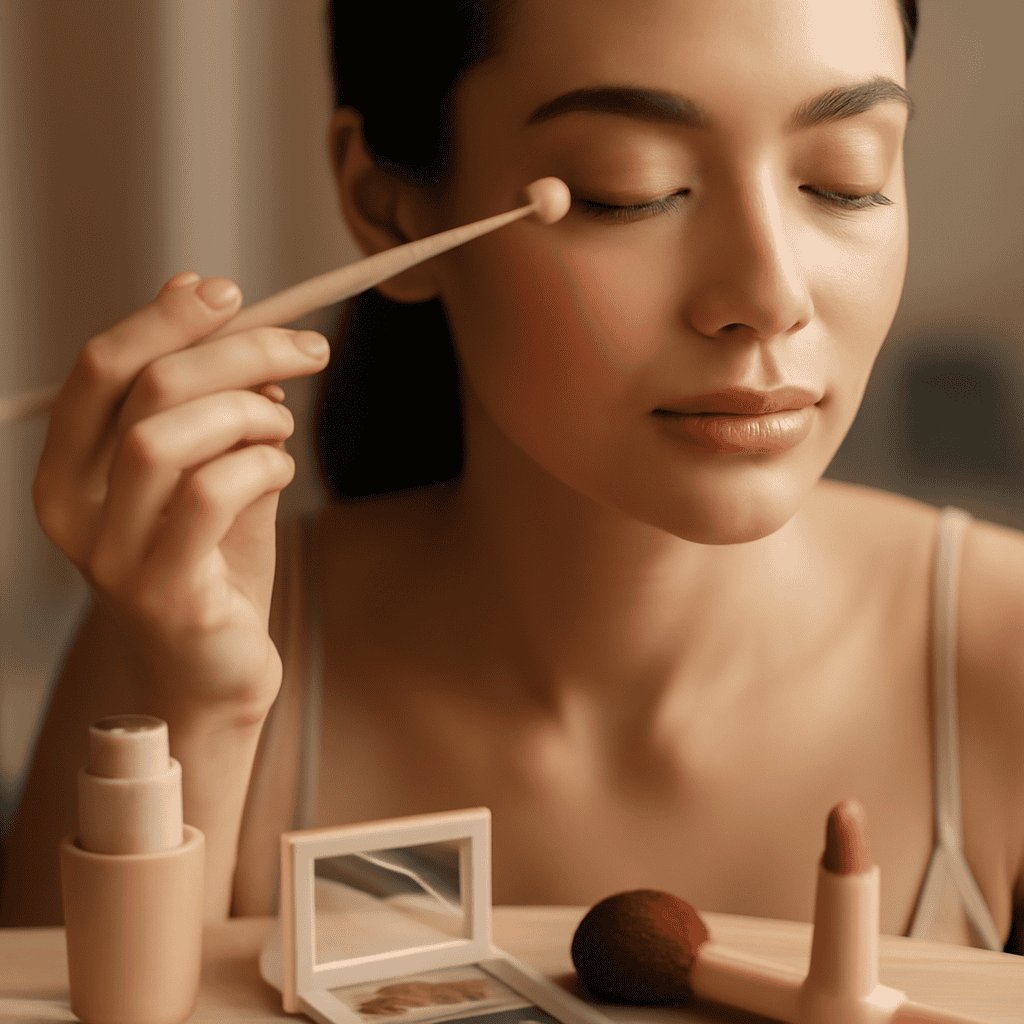
According to the American Academy of Dermatology, some ingredients can irritate sensitive skin more easily, and patch testing new products is a smart way to reduce bad reactions. In practice, that means your makeup should do three things well:
Before building a sensitive-skin routine, it helps to understand which ingredients are most likely to cause problems. Our ingredient guide covers a practical guide to makeup ingredients that commonly trigger sensitive skin reactions.
- avoid obvious triggers
- sit comfortably on compromised skin
- remove cleanly without aggressive rubbing
Best ingredients and formula traits for sensitive skin
You are usually better off with makeup that feels a little boring on paper. Trendy formulas packed with essential oils, acids, and strong sensorial ingredients often sound better than they wear.
What to look for
- fragrance-free labeling
- shorter ingredient lists when possible
- non-comedogenic claims if you also break out easily
- hydrating or skin-barrier-friendly textures
- mineral-based powder options for very reactive days
- dermatologist-tested claims as a useful bonus, not a guarantee
What to avoid or be cautious with
- fragrance and masking fragrance
- essential oils
- heavily denatured alcohol formulas that sting
- strong exfoliating acids in makeup hybrids
- aggressive glitter or shimmer on inflamed skin
- products that require hard scrubbing to remove
Not every sensitive person reacts to the same ingredient. That is why keeping a short product diary can be surprisingly useful.
Build a sensitive skin makeup routine in the right order
The mistake a lot of people make is trying to fix everything at once. Start with the products that touch the most skin and have the highest chance of causing irritation.
Step 1: Start with foundation or skin tint
Your base product covers the largest part of the face, so it has the biggest impact. For most sensitive skin types, the sweet spot is a fragrance-free liquid foundation, serum tint, or mineral powder that evens tone without feeling occlusive.
Good product types
- lightweight skin tints for dry or dehydrated skin
- mineral powder foundation for highly reactive skin
- medium-coverage liquid foundation for redness-prone complexions
Step 2: Choose a non-stinging primer only if you truly need one
A primer is not mandatory. If your skin reacts easily, skipping it is often smarter than adding another layer. If you do want one, go for a gentle hydrating or smoothing primer without fragrance.
Step 3: Add concealer strategically
Use concealer only where needed: around the nose, over discoloration, or under the eyes. Thick all-over concealer can feel suffocating and increases the odds of irritation.
Step 4: Use cream blush or a soft powder carefully
Sensitive skin often looks better with soft, sheer blush formulas.
Product recommendations by category
Best complexion picks for sensitive skin
- Fragrance-free skin tints for everyday wear
- Mineral powder foundations when your skin is inflamed or you want fewer ingredients
- Gentle concealers with medium coverage rather than ultra-full-coverage formulas
- Hydrating primers only if your base separates or clings
Best finish choices
- Natural or satin finishes are usually the safest bet
- Soft-matte can work for combo skin if the formula is not drying
- Overly dewy products may slide and require more touching-up
How to apply makeup without triggering your skin
Application technique matters.
Do this instead of fighting your face
- moisturize first and let it settle
- apply thin layers instead of one thick coat
- use clean brushes or a freshly washed sponge
- press product in rather than aggressively dragging it
- stop if a product stings on contact
A stinging or burning sensation is not your skin “adjusting” to makeup. That is your cue to remove it.
How to remove makeup when you have sensitive skin
A perfect gentle makeup routine can still fail if removal is harsh.
Safer removal habits
- use a gentle remover or cleanser that does not sting
- avoid rough washcloth friction
- hold remover over the eye area before wiping
- follow with a bland moisturizer if your barrier feels tight
If your face is red every night after removing makeup, the remover may be just as much of a problem as the makeup itself.
Common mistakes sensitive skin shoppers make
- Trusting “clean beauty” labels too much
Natural extracts and essential oils are not automatically gentle. For sensitive skin, simple often wins.
- Trying too many new products at once
When three products trigger redness, you learn nothing.
- Confusing irritation with allergy
Irritation can happen quickly and feel like burning or stinging. Allergy can show up later and may need dermatologist-guided patch testing to identify.
- Over-prepping the skin
Strong exfoliation, retinoids, and acids can make even good makeup feel awful. Sometimes the real fix is barrier repair, not a new foundation.
FAQ
What kind of makeup is best for sensitive skin?
Fragrance-free, simple, comfortable formulas with fewer known irritants are usually best. Many people do well with mineral powders, gentle skin tints, and lightweight concealers.
Is mineral makeup better for sensitive skin?
Often yes, especially when the formula has fewer ingredients and no fragrance. But not every mineral product is automatically irritation-free.
Why does foundation sting on my sensitive skin?
Common reasons include fragrance, alcohol, actives, a damaged skin barrier, or over-exfoliation before application.
Should sensitive skin use primer?
Only if it noticeably improves wear. If your routine is already stable without primer, skipping it may reduce irritation risk.
How do I test makeup for sensitive skin safely?
Patch test first, introduce one new product at a time, and wear it for a short day before trusting it for all-day use.
Sources for further reading
- American Academy of Dermatology: How to test skin care products — https://www.aad.org/public/everyday-care/skin-care-secrets/prevent-skin-problems/test-skin-care-products
- American Academy of Dermatology: Patch testing can find what’s causing your rash — https://www.aad.org/public/diseases/eczema/types/contact-dermatitis/patch-testing-rash
- PMC: Contact Dermatitis, Patch Testing, and Allergen Avoidance — https://pmc.ncbi.nlm.nih.gov/articles/PMC6170075/
Key Takeaways
- Fragrance-free, simple, comfortable formulas with fewer known irritants are usually best.
- Often yes, especially when the formula has fewer ingredients and no fragrance.
- Common reasons include fragrance, alcohol, actives, a damaged skin barrier, or over-exfoliation before application.
- Only if it noticeably improves wear.
- Patch test first, introduce one new product at a time, and wear it for a short day before trusting it for all-day use.
This article is for informational purposes only and is not medical advice. If you have persistent burning, swelling, or recurring rashes, see a board-certified dermatologist.
Hypoallergenic Full-Coverage Concealer
Dermatologist-tested, fragrance-free concealer for rosacea-prone and reactive skin.
- Fragrance-free, paraben-free
- Ophthalmologist tested for eye area
- Creamy texture, no cracking or settling
This is an editorial recommendation, not a sponsored placement.
Related Articles
- Best Makeup for Sensitive Skin Products That Keep Things Calm
- Best Clean Makeup for Sensitive Skin
- Best Starter Skincare Routine for Teens: The Simple Routine That Actually Works
- Centella Asiatica for Redness and Sensitive Skin: What Actually Works
Sources
- Pharmacological Effects of Centella asiatica on Skin Diseases: Evidence and Possible Mechanisms. Evidence-based complementary and alternative medicine : eCAM. 2021. PMID: 34845411.
- Bioactivity and physicochemical characterization of Centella asiatica and Marigold extract serums: Antioxidant, anti-inflammatory, anti-tyrosinase and skin barrier function insights. International journal of cosmetic science. 2025. PMID: 40637214.
- The Skin Barrier and Moisturization: Function, Disruption, and Mechanisms of Repair. Skin pharmacology and physiology. 2023. PMID: 37717558.
- The skin’s barrier. Giornale italiano di dermatologia e venereologia : organo ufficiale, Societa italiana di dermatologia e sifilografia. 2009. PMID: 19907407.
- Centella Asiatica Safety in Cosmetics (2023)