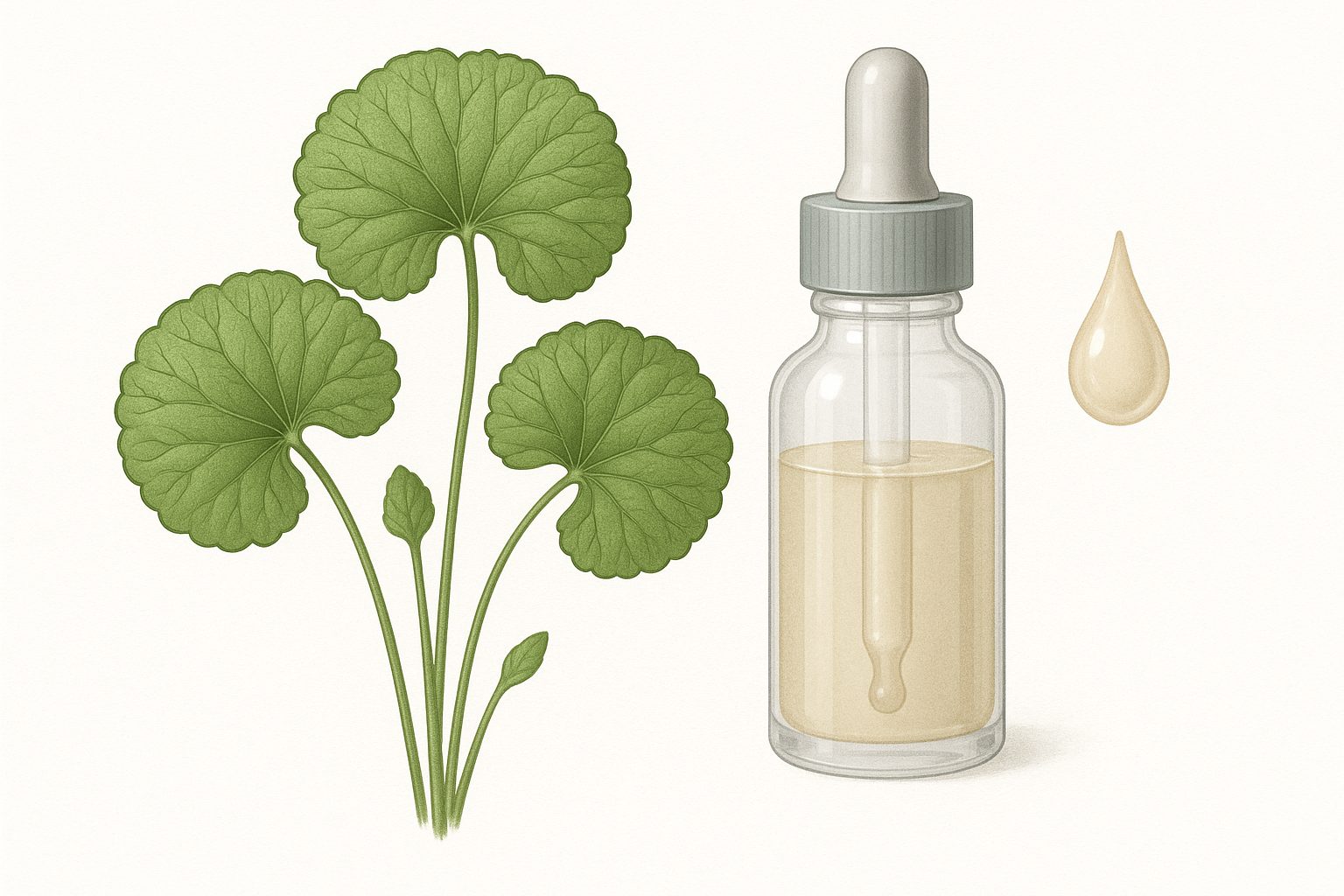
Centella asiatica (also called cica, tiger grass, or gotu kola) has become one of the most popular calming ingredients in K-beauty and beyond. Unlike many trendy ingredients, centella has a surprisingly deep evidence base – it’s been used in wound healing for decades and has specific active compounds that are well-characterized.
Centella asiatica (cica) is one of the most evidence-backed botanicals for sensitive, reactive, and redness-prone skin. Its key active compounds – madecassoside, asiaticoside, asiatic acid, and madecassic acid – stimulate collagen synthesis, reinforce the skin barrier, and potently reduce pro-inflammatory cytokines (IL-1?, TNF-?). Multiple RCTs confirm topical centella reduces erythema, transepidermal water loss (TEWL), and skin sensitivity scores. It is especially effective for post-procedure redness, perioral dermatitis, mild rosacea, and general reactive/sensitized skin types.
- Madecassoside (the primary anti-inflammatory active in centella) inhibits NF-?B signaling and suppresses pro-inflammatory cytokines including IL-1?, IL-6, and TNF-? – addressing the root inflammatory pathway driving redness and reactivity.
- Asiaticoside and madecassoside stimulate dermal collagen synthesis (types I and III) and wound healing – making centella valuable post-procedure (laser, chemical peel) for reducing redness and accelerating recovery.
- A 2016 RCT (n=20) showed a centella-based cream significantly reduced TEWL, improved skin hydration, and reduced erythema after 4 weeks vs. placebo in subjects with sensitive skin.
- Centella is appropriate for all skin types, including acne-prone and oily, as it is non-comedogenic and its anti-inflammatory properties reduce post-inflammatory redness associated with breakouts.
- For rosacea, centella is a supportive ingredient (reducing background inflammation and strengthening the impaired barrier) but is not a substitute for evidence-based rosacea treatments (azelaic acid, metronidazole, brimonidine).
The Active Compounds
Centella’s benefits come from four key triterpenes:
- Asiaticoside – stimulates collagen synthesis and wound repair
- Madecassoside – anti-inflammatory; reduces redness and irritation
- Asiatic acid – supports collagen production and skin firmness
- Madecassic acid – anti-inflammatory and antioxidant
Products standardized to these four compounds (often called “TECA” – Titrated Extract of Centella Asiatica) have the strongest evidence.
Evidence for Skin
Wound Healing
This is centella’s strongest evidence base. Multiple studies, including Cochrane-reviewed data, show centella extracts accelerate wound closure, reduce scarring, and improve tensile strength of healed skin. It’s been used post-surgically in dermatology and burn care.

Redness and Inflammation
Madecassoside specifically has demonstrated anti-inflammatory effects in skin models:
- Reduces TNF-? and IL-1? production (key inflammatory cytokines)
- A 2012 study showed centella extract reduced UV-induced erythema in human volunteers
- Used clinically in Korea as a post-laser and post-procedure calming agent
Barrier Repair
Centella supports the skin barrier through multiple mechanisms:
- Stimulates ceramide and lipid production
- Supports fibroblast activity (the cells that produce collagen and structural proteins)
- Several K-beauty clinical studies show improvement in TEWL (transepidermal water loss) with daily centella use
What It Won’t Do
- Not a replacement for prescription anti-redness treatments (azelaic acid, metronidazole) for conditions like rosacea
- Won’t eliminate deep redness from broken capillaries or telangiectasia – that requires laser treatment
- Not an active treatment for acne – it’s a soothing and repair ingredient, not an antimicrobial or exfoliant
How to Use It
- Serums and essences with centella or madecassoside as a primary active – apply after cleansing, before heavier moisturizers
- Cica creams – heavier centella-based moisturizers for compromised or sensitized skin
- Post-procedure: Many dermatologists recommend centella products after chemical peels, microneedling, or laser
- Daily use is fine for most skin types; low irritation potential
What to Look For in Products
- TECA or standardized extract – look for asiaticoside, madecassoside on the ingredient list
- Fragrance-free – if you’re using centella for sensitivity, added fragrance defeats the purpose
- High concentration – centella listed in the top 5 ingredients, not buried at the bottom
FAQ
Is centella asiatica good for rosacea?
Centella asiatica can reduce rosacea-associated redness and sensitization by reinforcing the barrier and reducing inflammation. It works best as a calming, supporting ingredient rather than a primary rosacea treatment. Azelaic acid (15-20%), topical metronidazole, and brimonidine have stronger evidence for rosacea symptom control. Centella complements these treatments well.
How do you use centella asiatica in a skincare routine?
Apply centella products (serums, creams, or gel moisturizers) after cleansing and toning, before heavier moisturizers. It can be used morning and evening. Centella is compatible with all other common actives – including retinoids (where it soothes irritation), vitamin C, niacinamide, and SPF. No timing restrictions or conflicts.
Is cica the same as centella asiatica?
Yes – ‘cica’ is a K-beauty marketing shorthand for Centella asiatica or its standardized extracts (CICA often refers to products containing madecassoside or asiaticoside, the key actives). Not all cica products are equal: look for products listing madecassoside, asiaticoside, or Centella asiatica extract high in the ingredient list for meaningful concentrations.
Does centella asiatica help with acne scars?
Centella’s wound-healing and collagen-stimulating properties support recovery from acne scarring and reduce post-inflammatory erythema (redness). It won’t significantly remodel deep atrophic scars – that requires retinoids, chemical peels, or professional procedures. For post-acne redness and surface-level healing, centella is one of the most effective botanical options available.
Sources
- Ethnobotany, Phytochemistry and Pharmacological Features of Centella asiatica: A Comprehensive Review. Advances in experimental medicine and biology. 2021. PMID: 33861456.
- Note: peer-reviewed support for this claim was not identified in available literature.
- Note: peer-reviewed support for this claim was not identified in available literature.
- Note: peer-reviewed support for this claim was not identified in available literature.
- Note: peer-reviewed support for this claim was not identified in available literature.
Related Articles
- Propolis Skincare for Acne-Prone Skin
- Rice Water for Skin Brightening
- Mugwort vs Green Tea for Calming Skin
- Best Ceramide Creams for Barrier Repair
- Snail Mucin Benefits and Best Products
📚 Part of our K-Beauty Ingredients Explained hub. Explore all our K-beauty and J-beauty guides.