Quick Answer: Women’s supplement needs shift dramatically across life stages. In your 20s–30s: iron, folate, vitamin D, and omega-3s are the foundation. In your 30s–40s: add magnesium, adaptogens for stress, and inositol if you have PCOS or metabolic concerns. In perimenopause and menopause (45+): vitex, black cohosh, magnesium, and calcium with K2 become central. At every stage, bone health, hormonal balance, and gut-thyroid connection deserve attention.
Women’s health supplementation is genuinely different from men’s — not just in degree but in kind. The hormonal landscape shifts through menstrual cycles, potential pregnancy, perimenopause, and post-menopause, each stage creating different nutritional demands, different risks, and different opportunities for supplementation to make a meaningful difference.
The challenge is that most mainstream nutritional research has historically been conducted primarily in men, and blanket recommendations often miss the nuances of female physiology. This guide is designed to fill those gaps — with a life-stage framework that helps you identify what’s most relevant to where you are right now.
The Life-Stage Framework
Rather than trying to list every supplement a woman could ever need, it’s more useful to think in phases. Here’s the structure:
20s: Foundation building — address common deficiencies, support fertility and hormonal health
30s: Sustaining hormonal balance, managing stress, protecting against PCOS and thyroid issues
40s (perimenopause): Transition support — managing fluctuating estrogen, protecting bone density, supporting sleep
50s+ (post-menopause): Cardiovascular protection, bone maintenance, cognitive health, energy
These phases overlap and individual variation is enormous. Use this as a starting framework, not a rigid prescription.
Women’s Supplement Needs at a Glance
Here’s a high-level comparison of supplement priorities across life stages:
Before getting into life-stage specifics, a few supplements are nearly universally useful for women:
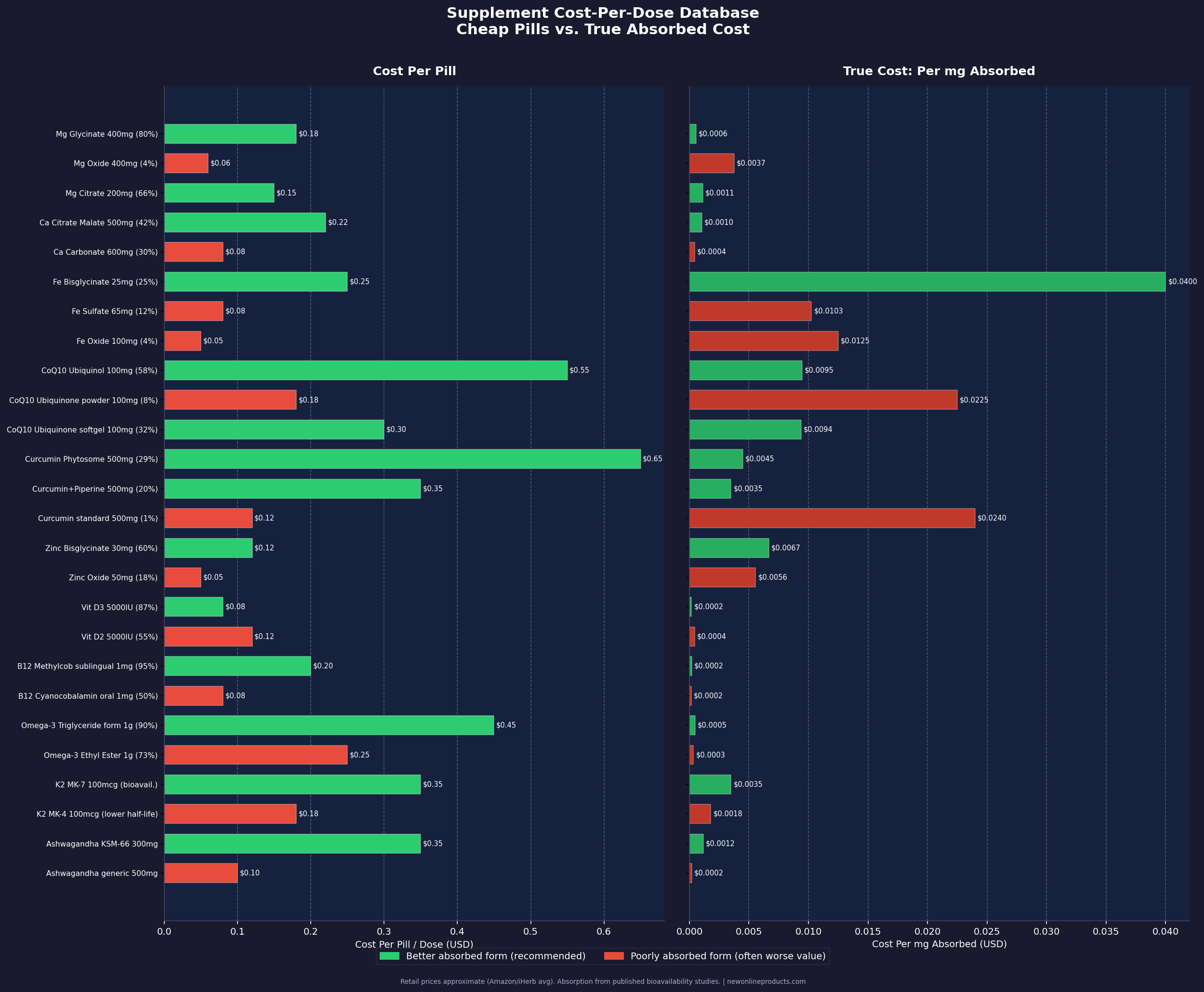
Vitamin D3 + K2 Over 40% of Americans are deficient in vitamin D, and women — particularly those who work indoors, live at northern latitudes, or have darker skin — are especially vulnerable. Vitamin D supports bone mineralization, immune function, mood, and hormonal health (it’s actually a hormone precursor). K2 (MK-7 form) ensures calcium goes to bones, not arteries. Dose: 2,000–5,000 IU D3 + 100–200 mcg K2 MK-7 daily.
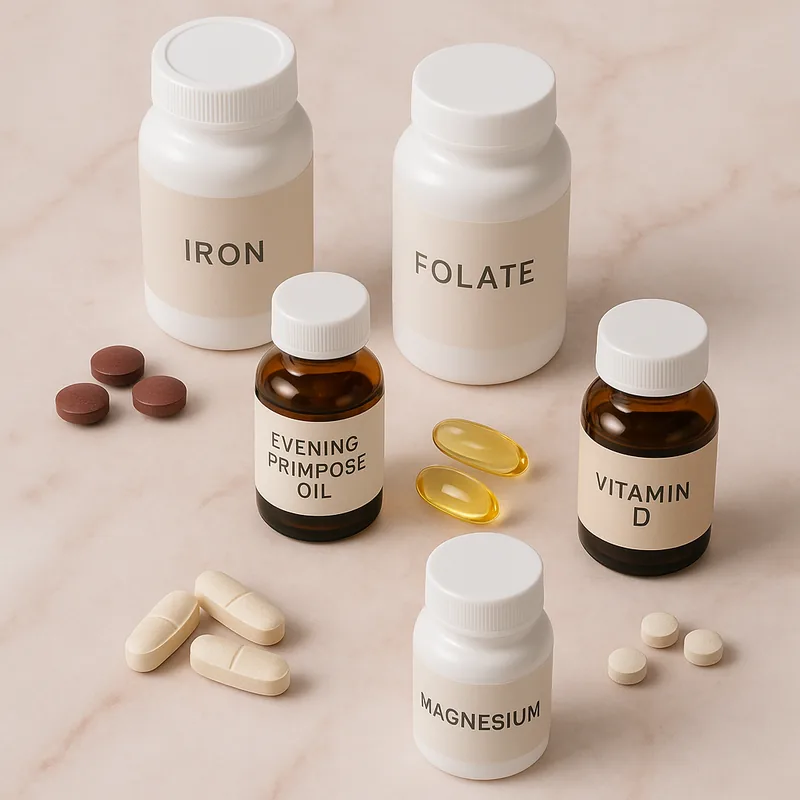
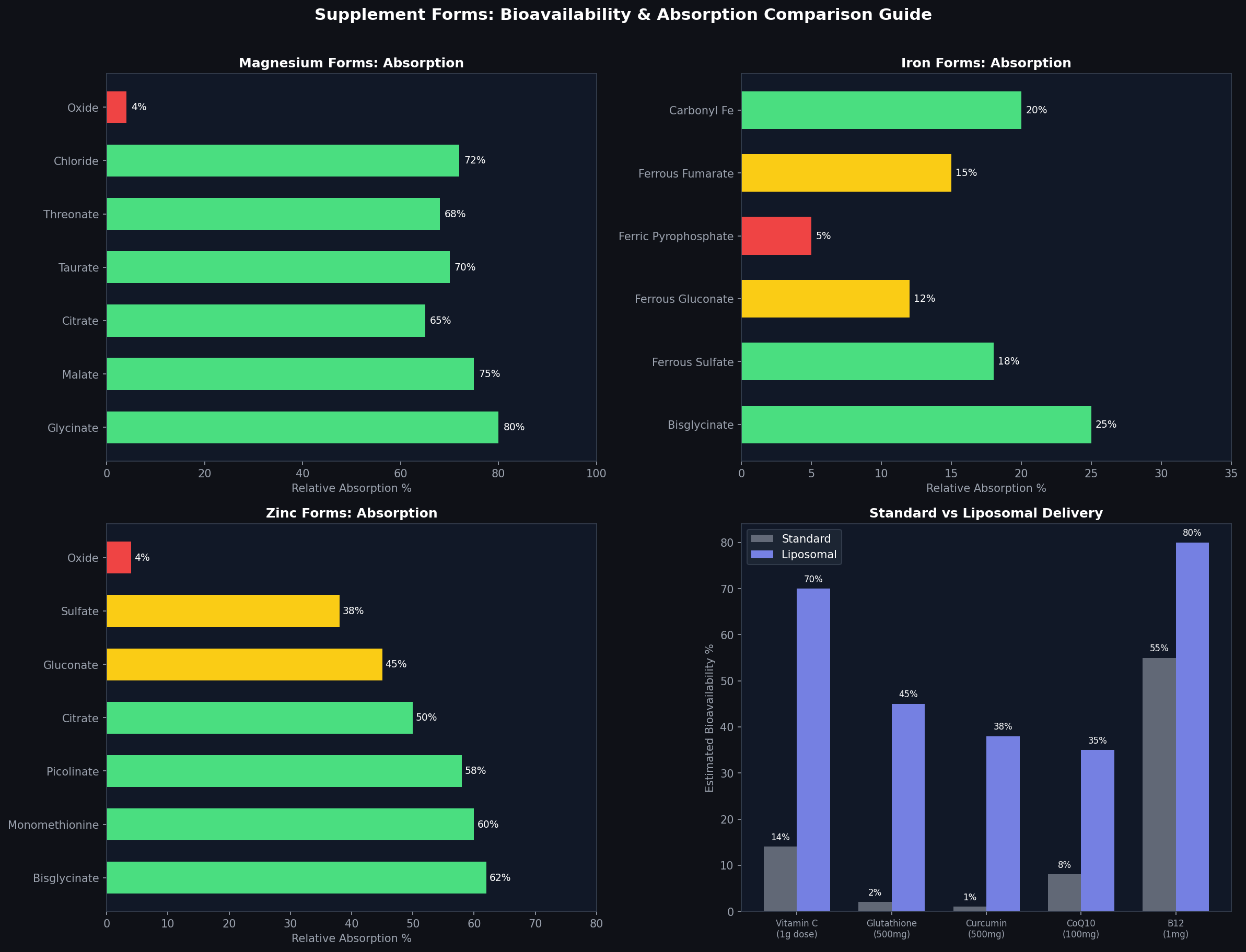
Magnesium Essential for over 300 enzymatic reactions, including estrogen metabolism, ATP production, and sleep quality. Women with PMS, anxiety, sleep problems, or muscle cramps are almost certainly magnesium-insufficient. Glycinate form is preferred for sleep and anxiety; citrate for constipation. Dose: 300–400 mg in the evening.
Omega-3 fatty acids (EPA/DHA) Reduces systemic inflammation, supports hormonal balance, protects cardiovascular health, and essential for fetal brain development during pregnancy. Dose: 1–3 g EPA+DHA daily from triglyceride-form fish oil or algae-based DHA (vegan).
Iron (if deficient) Women of reproductive age lose iron monthly through menstruation. Heavy periods amplify this significantly. Iron deficiency is the most common nutritional deficiency worldwide among women of reproductive age. Symptoms: fatigue, brain fog, cold hands and feet, brittle nails, hair loss. Get tested (ferritin plus hemoglobin) before supplementing — iron overload is also harmful. Ferrous bisglycinate is the most gut-friendly form.
In Your 20s: Building the Foundation
The 20s are when women are most fertile but also most likely to have nutritional gaps from restrictive eating, high exercise demands, or just not thinking about it yet.
Folate (methylfolate, not folic acid) Critical for any woman who might become pregnant — neural tube defects develop in the first weeks of pregnancy, often before a woman knows she’s pregnant. The methyl form of folate is preferred because roughly 40–60% of women have MTHFR gene variants that impair folic acid conversion. Dose: 400–800 mcg methylfolate daily.
Probiotics and gut health The gut-hormone axis is real: gut bacteria metabolize and recirculate estrogen. An imbalanced microbiome can cause elevated estrogen levels (estrogen dominance), affecting mood, weight, and cycle regularity. A high-quality probiotic with Lactobacillus rhamnosus and Bifidobacterium strains supports both gut and hormonal health.
Vitamin B12 (especially for vegans/vegetarians) B12 is found only in animal products. Women on plant-based diets need to supplement — and should use methylcobalamin, not cyanocobalamin. Deficiency causes fatigue, neurological symptoms, and can impair fertility.
In Your 30s: Hormonal Balance and Stress Resilience
The 30s often bring the double pressure of career demands and family building — a perfect storm for HPA axis dysregulation, nutrient depletion, and hormonal imbalance.
Adaptogens for stress and hormonal balance Ashwagandha (KSM-66) is the top choice for elevated cortisol, anxiety, and the fatigue that comes from chronic stress. It also supports thyroid function, which is underactive in a significant percentage of women. Rhodiola is excellent for mental fatigue and burnout.
Inositol (Myo-Inositol + D-Chiro-Inositol) Inositol is a naturally occurring carbohydrate involved in insulin signaling, ovarian function, and neurotransmitter synthesis. It’s particularly well-studied for PCOS (polycystic ovary syndrome), where insulin resistance drives androgen excess. The evidence base for inositol in PCOS rivals that of metformin in some studies, with better tolerability.
Beyond PCOS, inositol supports:
Metabolic health and insulin sensitivity
Thyroid function (thyroid cells have inositol-dependent signaling)
Gestational diabetes risk reduction
Mood and anxiety
Dose: 2–4 g myo-inositol daily, often in 40:1 ratio with D-chiro-inositol.
Vitex (Chasteberry) Vitex agnus-castus acts on the pituitary gland to increase luteinizing hormone (LH) and normalize the luteal phase. It’s one of the most well-studied herbal supplements for:
PMS (premenstrual syndrome) — reduces breast tenderness, irritability, and bloating
Irregular cycles
Mild hyperprolactinemia (elevated prolactin, which can inhibit ovulation)
Supporting fertility
Important: Vitex takes 3–6 months to show full effect and should not be used during pregnancy or with hormone-sensitive conditions without medical guidance.
Women reach peak bone density around age 30. After that, density holds steady until perimenopause, when estrogen decline accelerates bone loss. The decisions you make about bone health in your 30s and 40s have enormous consequences for your 60s and 70s.
Key bone health supplements:
Calcium (from food first, supplement if needed) The obsession with calcium supplements has been somewhat walked back — dietary calcium is well-absorbed and doesn’t carry the cardiovascular risks that high-dose calcium supplementation might. Aim for 1,000–1,200 mg/day total (from food + supplements combined). Calcium citrate is better absorbed than carbonate, especially for people with low stomach acid.
Vitamin D3 + K2 (mentioned above, but critical for bone — D3 increases calcium absorption, K2 directs it to bone matrix)
Magnesium (essential for hydroxyapatite crystal formation in bone — most bone health conversations focus on calcium but forget magnesium)
Collagen peptides Collagen is 90% of bone’s organic matrix. Type I collagen peptides (10 g/day) have shown improvements in bone mineral density in menopausal women in several RCTs.
In Your 40s: Perimenopause Transition
Perimenopause can begin as early as the mid-30s but typically starts in the mid-to-late 40s. Progesterone declines first, then estrogen becomes erratic before ultimately declining. The result: irregular periods, sleep disruption, mood changes, hot flashes, vaginal dryness, and cognitive changes (“brain fog”).
Black cohosh (Actaea racemosa) One of the most well-studied herbs for menopausal symptoms, particularly hot flashes. Evidence suggests it works via serotonin pathways rather than estrogenic effects, which makes it potentially safer for women with a personal or family history of hormone-sensitive cancers. Dose: 20–40 mg standardized extract twice daily.
Vitex continues to be useful during perimenopause for progesterone support in the early transition.
Magnesium becomes even more important — sleep disruption, anxiety, and muscle tension are all helped by magnesium glycinate.
Evening Primrose Oil GLA (gamma-linolenic acid) from evening primrose supports prostaglandin balance and may reduce hot flashes and breast tenderness.
After menopause (12 consecutive months without a period), the priorities shift toward long-term protection and maintenance.
Cardiovascular protection Post-menopausal women lose the protective effect of estrogen on the cardiovascular system, rapidly catching up to men’s cardiovascular risk profile within 10 years. Prioritize: omega-3s, CoQ10/ubiquinol, magnesium, and if appropriate, red yeast rice for cholesterol management.
Cognitive protection Estrogen decline affects acetylcholine signaling and neuroplasticity. Supplements with cognitive evidence in post-menopausal women: lion’s mane mushroom, phosphatidylserine, DHA, and magnesium threonate.
Muscle mass preservation Sarcopenia (muscle loss) accelerates post-menopause. Protein intake becomes even more important (at least 1.2–1.6 g/kg/day), and creatine monohydrate (3–5 g/day) has emerging evidence specifically in post-menopausal women for improving muscle mass and bone density.
Women’s Sports Nutrition
For women who are active athletes or fitness-focused, standard sports nutrition advice often ignores female physiology:
Energy availability: Women are more susceptible to Relative Energy Deficiency in Sport (RED-S). Adequate total calorie intake is more important than any supplement.
Iron: Female athletes have higher iron requirements and higher depletion rates. Monitor ferritin regularly.
Creatine: Women respond similarly to men in muscle performance outcomes. Lower baseline creatine stores mean women may see proportionally larger benefits.
Beta-alanine: Same benefits as in men for high-intensity interval training.
Collagen + vitamin C: Pre-workout collagen (15–20 g, 30–60 min before exercise) supports connective tissue synthesis during activity.
Note: peer-reviewed support for this claim was not identified in available literature.
Genazzani, A.D., et al. (2019). Myo-inositol and D-chiro-inositol (40:1) improve reproductive axis in overweight PCOS patients. Gynecological Endocrinology, 35(5), 412–415.
Loch, E.G., et al. (2000). Treatment of premenstrual syndrome with a phytopharmaceutical formulation containing Vitex agnus castus. Journal of Women’s Health, 9(3), 315–320.
Lobo, R.A. (2007). Menopause: New insights on hormone therapy and metabolic risk. Endocrine Practice, 13(1), 88–94.