Best Collagen Supplements Ranked by Type, Source, and Evidence
Quick Answer: For skin elasticity and wrinkle reduction, hydrolyzed Type I collagen peptides at 2.5–10g/day (marine or bovine) have the strongest clinical evidence, with measurable results at 8 weeks. For joint cartilage, undenatured Type II collagen (UC-II, 40mg/day) outperforms standard collagen peptides and even outperformed glucosamine plus chondroitin in head-to-head trials. Powder beats capsules for any application requiring meaningful daily doses. The best collagen supplement is the one matched to your specific goal.
Collagen is the most abundant structural protein in the human body — roughly 30% of total protein content — forming the scaffolding of skin, cartilage, bone, tendons, ligaments, and the gut lining. After your mid-twenties, natural collagen production declines at approximately 1–1.5% per year. By the time most people begin thinking about supplementation, the effects are already measurable: reduced skin elasticity, joint stiffness during exercise, slower recovery from connective tissue injuries.
The collagen supplement market has responded to this demand with remarkable growth and, unfortunately, remarkable confusion. There are at least 28 types of collagen in the human body, multiple animal sources with different biochemical profiles, and a critical distinction between hydrolyzed collagen peptides and undenatured collagen that is routinely glossed over in marketing. Products optimized for skin elasticity are built on completely different mechanisms than products targeting joint cartilage — and conflating them leads to poor outcomes and wasted money. This guide cuts through the noise with a source-by-source, type-by-type breakdown grounded in clinical evidence.
The Three Collagen Types That Drive Supplementation Decisions
Type I Collagen — Skin, Tendons, and Structural Integrity
Type I is the dominant collagen in skin, tendons, ligaments, and bone. It comprises roughly 90% of the body’s total collagen and is the primary biochemical target for skin aging, hair and nail support, and body composition applications. Both marine collagen (from fish skin and scales) and bovine collagen (from cattle hides) are predominantly Type I.
The clinical evidence for Type I hydrolyzed collagen peptides in skin applications is the strongest in the entire supplement category. A landmark 2014 randomized, double-blind, placebo-controlled trial by Proksch et al., published in Skin Pharmacology and Physiology, found that women aged 35–55 who supplemented with 2.5–5g of bioactive collagen peptides (Verisol) daily for eight weeks showed statistically significant improvements in skin elasticity, with a 7% average improvement in the higher-dose group and effects persisting for four weeks after supplementation ended. A companion study by the same research group demonstrated significant reduction in eye wrinkle volume at the same dose and duration. These aren’t marginal results — they’re among the cleaner effect sizes in the supplement literature.
The mechanism behind these results is more sophisticated than simply “providing building blocks.” Research has clarified that specific collagen-derived dipeptides — particularly Pro-Hyp (proline-hydroxyproline) and Hyp-Gly — are absorbed intact from the gut and circulate systemically, where they act as signaling molecules that stimulate fibroblast activity and upregulate the body’s own collagen synthesis. You’re not patching your skin directly; you’re telling your skin cells to do more of what they naturally do.
Type II Collagen — Joint Cartilage and the UC-II Mechanism
Type II collagen is the primary structural protein in articular cartilage — the flexible tissue cushioning your joints. And here is where the most important distinction in collagen supplementation becomes critical: for joint cartilage applications, the most effective form of Type II collagen is not hydrolyzed. It’s undenatured.
Undenatured Type II collagen retains its native three-dimensional triple-helix structure. When consumed in this intact form, it interacts with immune cells in the gut-associated lymphoid tissue (GALT), specifically Peyer’s patches in the small intestine. This interaction triggers an oral tolerance response — essentially teaching the immune system to stop attacking joint cartilage as foreign material, which is a key driver of the inflammation and degeneration underlying osteoarthritis.
The leading commercial form, UC-II (Undenatured Type II Collagen, sourced from chicken sternum cartilage and patented by Lonza), has a clinical track record that is genuinely impressive. A 2009 randomized, double-blind, placebo-controlled study by Crowley et al. in the International Journal of Medical Sciences found that 40mg/day UC-II produced significantly greater improvements in joint pain, stiffness, and physical function in knee osteoarthritis patients compared to a combination of 1,500mg glucosamine plus 1,200mg chondroitin. Forty milligrams beat 2,700 milligrams of the established standard-of-care supplement combination. This result has been replicated in subsequent trials in both osteoarthritis patients and healthy active adults.
The practical implication: taking a hydrolyzed collagen peptide product — even a high-quality Type II hydrolysate — does not replicate UC-II’s mechanism. The oral tolerance pathway requires the intact structural configuration. For joint cartilage support, UC-II at 40mg is the evidence-based choice, and it belongs in a capsule, not a powder dissolved in hot liquid.
Type III Collagen — Vascular and Youthful Skin Support
Type III collagen is found in skin, blood vessel walls, and hollow internal organs, and is often co-located with Type I in connective tissues. It is more abundant in fetal and young skin, contributing to its characteristic pliability and softness, and the Type I to Type III ratio shifts with age. Most bovine collagen supplements naturally contain a blend of Type I and Type III from cattle hide, which is part of why bovine collagen is positioned as a comprehensive skin and body composition supplement. Dedicated high-Type III products are less common in the market; most offerings include it as part of a Type I/III combination rather than as a standalone.
Marine Collagen vs. Bovine Collagen vs. Chicken Collagen
The source of your collagen determines which types are present, influences peptide molecular size and absorption characteristics, and matters for dietary preferences and allergen considerations.
Marine Collagen
Marine collagen is derived primarily from the skin, scales, and bones of fish — most commonly tilapia, cod, pollock, or snapper. It is almost exclusively Type I, making it a highly targeted option for skin elasticity, hair, and nail applications. Marine collagen peptides tend to be smaller in molecular weight than bovine collagen peptides, typically in the 1–5 kDa range versus the 5–15 kDa range common in bovine products. Smaller molecular size theoretically facilitates faster intestinal absorption, and some research supports this distinction.
A 2021 systematic review by Barati et al. published in Nutrients compared marine and bovine collagen supplementation outcomes and found that both produced statistically significant improvements in skin hydration and elasticity markers across clinical trials, with marine collagen demonstrating a modest potential advantage in some absorption measures. The clinical outcomes between well-hydrolyzed marine and bovine products were broadly comparable — the difference is most relevant when you specifically want the smallest-peptide, fastest-absorbing Type I product, or when dietary requirements exclude beef.
Marine collagen is the appropriate choice for pescatarians, for individuals with beef or mammalian meat allergies, and for consumers following halal or kosher dietary frameworks (when the product is appropriately certified). Heavy metal screening is particularly important for marine collagen; high-quality products should provide third-party test results confirming that fish-sourced material meets safety thresholds for mercury, lead, and cadmium.
Bovine Collagen
Bovine collagen is sourced from cattle hides, bones, and cartilage — most commonly from grass-fed or pasture-raised cattle in premium products. The primary advantage over marine is the natural Type I and Type III combination, which makes bovine the most versatile general-purpose collagen for skin, body composition, and connective tissue applications. It is the dominant source in the hydrolyzed collagen peptide market; the category-defining powders (Vital Proteins, Great Lakes, Designs for Health, Garden of Life) are primarily bovine.
Bovine collagen has a robust clinical evidence base and an amino acid profile rich in glycine, proline, and hydroxyproline — the specific residues that make collagen structurally distinct from other proteins and that are thought to drive the signaling effects of absorbed peptides. The main practical limitations are unsuitability for vegetarians and those with mammalian meat allergies, and the need to verify sourcing transparency (grass-fed and pasture-raised claims vary in meaning by region and certification body).
Chicken Collagen
Chicken sternum cartilage is the primary source of Type II collagen supplements, including the UC-II patented extract. It is the right source for joint cartilage applications in undenatured form. Hydrolyzed chicken collagen products exist in the market but occupy a small niche; for most Type I/III applications, marine or bovine products have equivalent or stronger evidence and broader availability.
Hydrolyzed Peptides vs. Undenatured Collagen: The Most Important Distinction in the Category
This distinction is critical and consistently underexplained in product marketing.
Hydrolyzed collagen peptides are produced by breaking intact collagen down through enzymatic hydrolysis — using food-grade proteases to cleave the triple helix into short-chain peptides of specific molecular weights, typically 2,000–5,000 Daltons. This processing dramatically improves digestibility (intact collagen is a large, tightly wound molecule that resists gastric breakdown) and is what generates the bioactive Pro-Hyp and Hyp-Gly dipeptides discussed earlier. Enzymatic hydrolysis is preferred over acid hydrolysis because it preserves specific peptide sequences rather than randomly fragmenting the protein chain.
Undenatured (native) collagen is collagen that has not been structurally processed — it retains its native triple-helix configuration. This structural integrity is precisely what enables UC-II’s oral tolerance mechanism. Exposing the immune system to intact Type II collagen in the gut-associated lymphoid tissue triggers a regulatory immune response that reduces the inflammatory attack on cartilage. The mechanism is immune modulation, not amino acid supplementation.
The practical takeaway is that these two categories work through fundamentally different pathways and are not interchangeable for joint applications. Taking a hydrolyzed Type II collagen product will deliver relevant amino acids to support general connective tissue repair but will not replicate UC-II’s cartilage-specific oral tolerance mechanism. If joint cartilage is your primary goal, you need UC-II (or a product with equivalent undenatured Type II collagen from a verified source). If skin, hair, body composition, or general connective tissue recovery is your goal, hydrolyzed peptides are the right format. Using hydrolyzed collagen for joints isn’t harmful — it just misses the most effective intervention.
Collagen Powder vs. Capsules: A Dose-First Decision
The format question resolves quickly when you look at the doses used in clinical trials.
For hydrolyzed collagen peptides, the evidence-based daily dose ranges from 2.5g (for targeted skin biomarker improvements) to 10–15g (for joint and musculoskeletal applications). Capsules typically contain 500mg to 1,000mg of collagen per serving. Reaching even the low end of therapeutic range (2.5g) requires five 500mg capsules. Reaching 10g requires ten to twenty capsules per day — impractical, expensive, and almost certainly more than anyone will sustain.
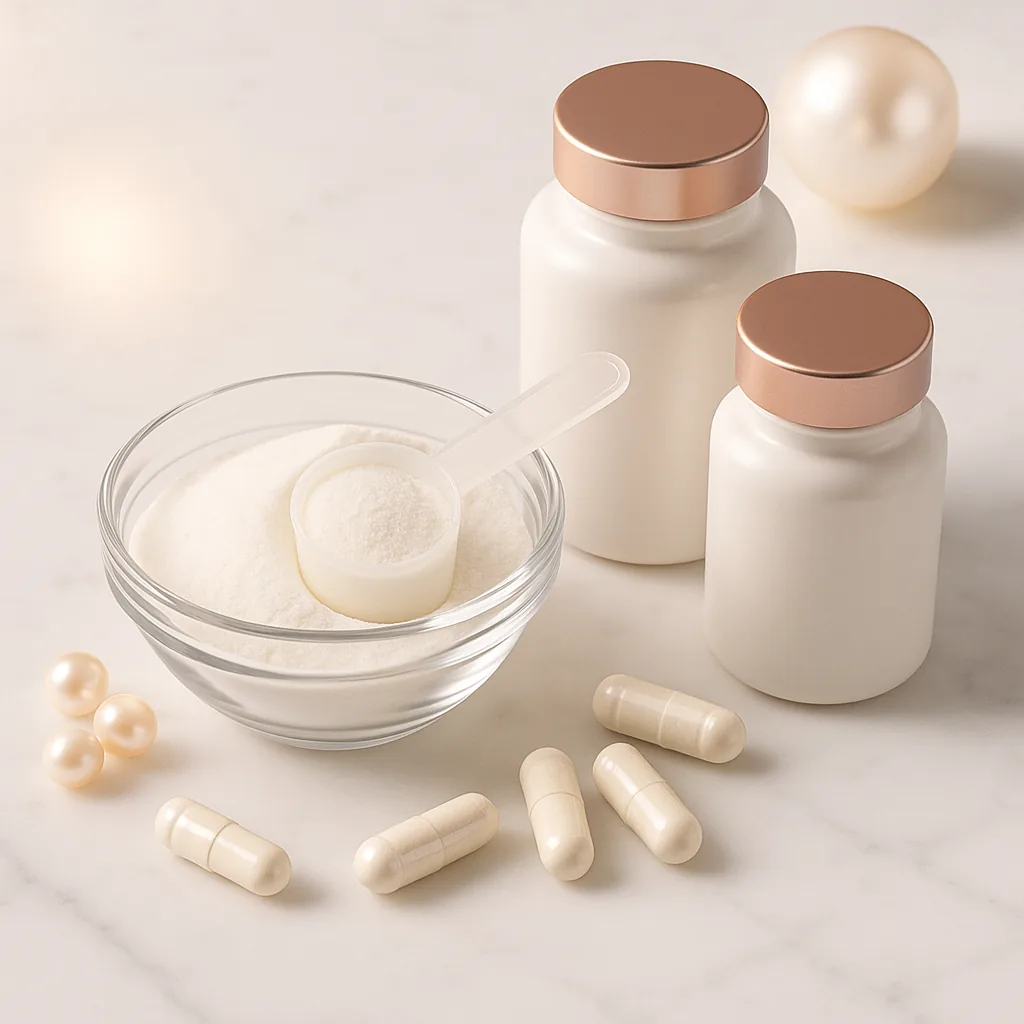
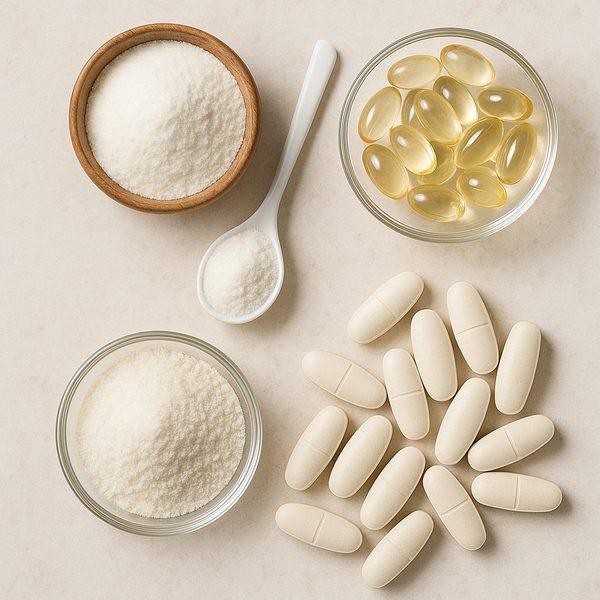
Powder wins decisively for any Type I/III hydrolyzed collagen application. A single 10–15g scoop of a quality collagen powder reaches the clinical dose in one step, dissolves readily in hot or cold liquids, is nearly flavorless in better products, and costs substantially less per gram of active collagen than equivalent capsule dosing. For anyone supplementing collagen for skin, hair, body composition, or broad connective tissue support, there’s no reasonable argument for capsules over powder on a cost-per-dose basis.
Capsules earn their place in two specific situations: UC-II (where the effective dose is just 40mg and maintaining the intact protein structure through heat and acidic preparation steps is important) and combination supplements pairing collagen with micro-nutrient cofactors at precise doses. For everything else, powder.
What the Evidence Actually Shows: Outcome by Application
Skin Elasticity, Hydration, and Wrinkle Reduction
This is the most robust evidence domain in collagen supplementation. A 2019 systematic review by Bolke et al. in Nutrients examined 11 randomized controlled trials of oral collagen supplementation and found consistent, statistically significant improvements in skin hydration, elasticity, and roughness across studies. The review confirmed that benefits appeared across multiple collagen peptide products, not just specific branded extracts. Effective doses ranged from 2.5–10g/day, with most studies running 8–24 weeks. Important note: most individual trials used branded peptide products (Verisol, Peptan) at specific molecular weights; results from generic or unspecified collagen powder may differ.
Joint Pain and Osteoarthritis
For osteoarthritis and joint pain, the UC-II evidence is the standout. Beyond the Crowley 2009 study, a 2016 multicenter investigation published in the Journal of Agricultural and Food Chemistry confirmed UC-II’s efficacy in reducing articular joint pain with improved tolerability compared to conventional approaches. Hydrolyzed collagen also demonstrates modest joint benefit via a different pathway: a landmark 2008 study by Clark et al. in Current Medical Research and Opinion found significant reductions in joint pain during activity in collegiate athletes who supplemented with 10g/day collagen hydrolysate for 24 weeks. The two approaches can complement each other.
Hair Growth and Nail Integrity
A 2017 randomized, double-blind, placebo-controlled study by Hexsel et al. in the Journal of Cosmetic Dermatology found that bioactive collagen peptides (2.5g/day) significantly increased nail growth rate and reduced brittleness over 24 weeks. For hair, the evidence base is growing but smaller — several trials show improved hair thickness and reduced breakage, with the mechanism likely involving improved dermal matrix support around follicles rather than direct keratin production. These applications benefit from the same hydrolyzed Type I/III peptide products used for skin.
Gut Barrier and Digestive Health
The gut health rationale for collagen is mechanistically plausible. Collagen is a structural component of the intestinal epithelium; glycine (the dominant amino acid in collagen at roughly 33% of total amino acid content) has well-documented anti-inflammatory properties; and preclinical research supports a role for collagen peptides in modulating tight junction proteins that maintain gut barrier integrity. However, well-powered human RCTs for gut applications are limited as of this writing. The evidence is largely mechanistic and observational. Including collagen in a gut health protocol is reasonable; counting it as a primary intervention requires more human trial data than currently exists.
Muscle Mass and Athletic Recovery
At higher doses (15–25g/day), collagen hydrolysate in combination with resistance training has been studied for its effects on lean body mass in older adults and in women. A 2015 study by Zdzieblik et al. in the British Journal of Nutrition found that sarcopenic men who supplemented with 15g/day collagen peptides during a resistance training program gained significantly more lean mass than the training-only placebo group. The amino acid profile of collagen (rich in glycine and proline but low in leucine and branched-chain amino acids) makes it an incomplete muscle protein by conventional sports nutrition standards — but its connective tissue-specific effects appear to complement rather than substitute for leucine-rich whey or casein for muscle building.
Quality Markers: What to Look for Before You Buy
Molecular Weight Specification
For hydrolyzed collagen peptides, the average molecular weight of the peptide chains is a meaningful quality indicator. Look for products specifying molecular weight in the 2,000–5,000 Dalton range. High molecular weight fragments (>10,000 Da) are less efficiently absorbed intact; very low molecular weight single amino acids lose the bioactive dipeptide sequences. Brands that specify molecular weight are demonstrating quality commitment and process control.
Hydrolysis Method
Enzymatic hydrolysis is the preferred manufacturing method. It uses food-grade protease enzymes to cleave the collagen chain at predictable sites, generating the bioactive peptide sequences that drive the clinical effects. Acid hydrolysis is less specific, generating more random fragmentation. Most premium brands specify enzymatic hydrolysis; if a product doesn’t mention the method, it’s worth asking or researching.
Sourcing and Transparency
For bovine collagen, grass-fed and pasture-raised sourcing indicates both animal welfare standards and typically a cleaner fatty acid co-profile. For marine collagen, wild-caught from cold-water fish is preferable to farmed sources, and third-party heavy metal testing results should be available. Regardless of source, look for products that specify the animal part used (hide, skin, scales, cartilage, bone) — this tells you which collagen types are present and helps you assess whether you’re getting what the label claims.
Vitamin C Cofactor Inclusion
Vitamin C (ascorbate) is an essential cofactor for two hydroxylase enzymes — prolyl hydroxylase and lysyl hydroxylase — that are required for the post-translational modification of collagen precursors. Without adequate Vitamin C, newly synthesized collagen chains cannot be properly hydroxylated, cross-linked, or stabilized into functional triple-helix structures. Scurvy (severe Vitamin C deficiency) is, at its core, a collagen synthesis failure. Some collagen supplements include Vitamin C as a cofactor; others don’t. If yours doesn’t, ensure you’re sourcing adequate Vitamin C through diet or a separate supplement — particularly relevant if you’re taking collagen for wound healing, post-exercise recovery, or connective tissue repair.
Best Collagen Supplement by Goal: Summary Comparison
Goal
Best Collagen Type
Best Source
Recommended Form
Evidence-Based Daily Dose
Evidence Strength
Skin elasticity and wrinkles
Type I
Marine or bovine
Hydrolyzed peptide powder
2.5–10g
Strong — multiple RCTs
Joint cartilage (osteoarthritis)
Type II (UC-II)
Chicken sternum
Undenatured capsule
40mg
Strong — multiple RCTs
Hair growth and nail integrity
Type I/III
Marine or bovine
Hydrolyzed peptide powder
2.5–5g
Moderate — several trials
Gut barrier integrity
Type I/III
Bovine
Hydrolyzed peptide powder
10–20g
Preliminary — mechanistic
Lean mass and muscle recovery
Type I/III
Bovine
Hydrolyzed peptide powder
15–25g + resistance training
Moderate — limited RCTs
Bone density support
Type I
Bovine
Hydrolyzed peptide powder
5–15g
Emerging evidence
Joint pain in active adults
Type I/II blend
Bovine + chicken
Hydrolyzed powder + UC-II cap
10g peptides + 40mg UC-II
Moderate–Strong
Frequently Asked Questions
What is the best time of day to take collagen?
Timing matters less than daily consistency, but some evidence favors peri-exercise timing for connective tissue-specific applications. A 2017 study by Shaw et al. in the American Journal of Clinical Nutrition found that 15g of vitamin C-enriched gelatin taken 1 hour before exercise doubled collagen synthesis markers compared to placebo, suggesting improved uptake by recently worked connective tissue. For skin and hair applications, any consistent time of day is appropriate — what matters is that you take it every day.
Can you get enough collagen from food alone?
Bone broth, skin-on poultry, oxtail, pig’s feet, and slow-cooked cuts from ligament-rich areas contain collagen precursors, but concentrations are substantially lower than supplement forms and the specific bioactive peptide sequences (Pro-Hyp) that drive signaling effects are not reliably present in predictable amounts. Food-sourced collagen precursors contribute to your overall amino acid pool but don’t replicate the consistent, measured dose of hydrolyzed peptides used in clinical trials.
Is marine collagen better than bovine collagen for skin?
For skin applications specifically, marine collagen has a modest potential advantage in absorption rate due to its smaller average peptide size, and contains exclusively Type I collagen — the most skin-relevant type. Bovine collagen’s Type I/III combination is a reasonable choice for general skin and connective tissue support. Both have comparable clinical evidence for skin outcomes in well-hydrolyzed forms; choose marine for the purest Type I focus, and bovine for breadth of application or where dietary preferences don’t restrict it.
How long does it take for collagen to work?
Skin elasticity studies consistently show measurable improvements at 8 weeks, with continued gains through 12–24 weeks. Joint pain studies (UC-II) typically reach statistical significance at 90 days. Hair and nail changes require 3–6 months, reflecting the growth cycle timelines of those tissues. Evaluating collagen supplementation before 8 weeks of consistent daily use is premature — the biology doesn’t work on a faster timeline.
Are vegan collagen supplements effective?
There are no plant-based collagen molecules. “Vegan collagen” products are either collagen-boosting precursor supplements (providing Vitamin C, silica, zinc, and specific amino acids that support the body’s own synthesis) or recombinant collagen produced via yeast or bacterial fermentation systems. Neither category has the same clinical evidence base as hydrolyzed animal collagen peptides. Precursor supplements are mechanistically reasonable and worth trying for those avoiding animal products, but expectations should be calibrated to the lower evidence level.
Can I take collagen with other supplements?
Yes, and some combinations are synergistic. Vitamin C is the most important cofactor to pair with collagen. Hyaluronic acid complements collagen for skin hydration (different mechanism — hyaluronic acid retains water in the dermal matrix). Silica supports collagen cross-linking. There are no established problematic interactions between collagen and common supplements, though anyone on anticoagulants should discuss supplementation with their prescriber, as some collagen products (particularly those from joint or cartilage tissue) may contain cofactors with mild blood-thinning properties.
Does cooking destroy collagen peptides?
Hydrolyzed collagen peptides are heat-stable and can be added to hot beverages, soups, baked goods, and smoothies without meaningful degradation of the bioactive peptides. This is one of the practical advantages of the powder format — it integrates easily into existing dietary habits. UC-II (undenatured Type II collagen) should not be heated, as the native structural configuration enabling the oral tolerance mechanism can be disrupted by sustained high temperatures; keep it in capsule form.
Key Takeaways
Collagen type determines application: Type I/III hydrolyzed peptides for skin, hair, nails, and body composition; Type II (UC-II, undenatured) for joint cartilage.
Hydrolyzed peptides and undenatured collagen work through entirely different mechanisms — they are not interchangeable for joint applications.
UC-II at 40mg/day outperformed glucosamine (1,500mg) plus chondroitin (1,200mg) in head-to-head randomized trials — a remarkable efficacy-per-dose ratio.
Marine collagen offers the purest Type I focus with potentially faster absorption; bovine provides Type I/III versatility with a strong overall evidence base.
Powder is far more practical than capsules for the 2.5–15g/day doses required for most applications. Use capsules for UC-II and micro-dosed cofactor combinations.
Vitamin C is a required cofactor for collagen synthesis — always ensure adequate intake alongside supplementation.
Minimum 8 weeks of daily supplementation before evaluating results — the biology does not produce faster timelines.
Quality markers to prioritize: molecular weight specification (2,000–5,000 Da), enzymatic hydrolysis, sourcing transparency, and third-party testing for heavy metals (especially marine).
For more on collagen’s mechanisms and full evidence review, see our complete collagen supplement guide and the practical breakdown of collagen powder formats and mixing tips. For skin-specific recommendations grounded in cosmetic dermatology research, visit our best collagen for skin guide. Women navigating hormonal changes, where estrogen decline accelerates collagen degradation, will find relevant context in our women’s health supplements guide.
Sources
Proksch, E., Segger, D., Degwert, J., Schunck, M., Zague, V., & Oesser, S. (2014). Oral supplementation of specific collagen peptides has beneficial effects on human skin physiology: A double-blind, placebo-controlled study. Skin Pharmacology and Physiology, 27(1), 47–55.
Proksch, E., Schunck, M., Zague, V., Segger, D., Degwert, J., & Oesser, S. (2014). Oral intake of specific bioactive collagen peptides reduces skin wrinkles and increases dermal matrix synthesis. Skin Pharmacology and Physiology, 27(3), 113–119.
Crowley, D. C., Lau, F. C., Sharma, P., Evans, M., Guthrie, N., Bagchi, M., & Bagchi, D. (2009). Safety and efficacy of undenatured type II collagen in the treatment of osteoarthritis of the knee: A clinical trial. International Journal of Medical Sciences, 6(6), 312–321.
Clark, K. L., Sebastianelli, W., Flechsenhar, K. R., Aukermann, D. F., Meza, F., Millard, R. L., & Albert, A. (2008). 24-week study on the use of collagen hydrolysate as a dietary supplement in athletes with activity-related joint pain. Current Medical Research and Opinion, 24(5), 1485–1496.
Bolke, L., Schlippe, G., Gerß, J., & Voss, W. (2019). A collagen supplement improves skin hydration, elasticity, roughness, and density: Results of a randomized, placebo-controlled, blind study. Nutrients, 11(10), 2494.
Barati, M., Jabbari, M., Navekar, R., Farahmand, F., Zeinalian, R., & Salehi-Sahlabadi, A. (2021). Collagen supplementation for skin health: A mechanistic systematic review. Journal of Cosmetic Dermatology, 20(8), 2357–2371.
Shaw, G., Lee-Barthel, A., Ross, M. L., Wang, B., & Baar, K. (2017). Vitamin C–enriched gelatin supplementation before intermittent activity augments collagen synthesis. American Journal of Clinical Nutrition, 105(1), 136–143.
Hexsel, D., Zague, V., Schunck, M., Siega, C., Camozzato, F. O., & Oesser, S. (2017). Oral supplementation with specific bioactive collagen peptides improves nail growth and reduces symptoms of brittle nails. Journal of Cosmetic Dermatology, 16(4), 520–526.
Zdzieblik, D., Oesser, S., Baumstark, M. W., Gollhofer, A., & König, D. (2015). Collagen peptide supplementation in combination with resistance training improves body composition and increases muscle strength in elderly sarcopenic men. British Journal of Nutrition, 114(8), 1237–1245.
Related Articles
Collagen Supplements: Complete Guide to Types, Benefits, and Dosage
Best Collagen Powder: Ranked by Source, Purity, and Value



Leave a Reply