Vaginal Probiotics: Best Strains, Evidence, and How to Choose
Quick Answer: Vaginal probiotics — primarily Lactobacillus strains taken orally or applied vaginally — may help restore and maintain the healthy vaginal microbiome that protects against bacterial vaginosis, yeast infections, and UTIs. The strains with the strongest clinical evidence are L. rhamnosus GR-1, L. reuteri RC-14, and L. crispatus, which work by producing lactic acid and hydrogen peroxide to maintain an acidic, pathogen-resistant vaginal environment.
The vaginal microbiome is one of the most clinically consequential microbial communities in the human body, yet it gets a fraction of the research attention that the gut microbiome does. That gap is closing fast, and what researchers have found is remarkable: a relatively simple microbial community — ideally dominated by just a handful of Lactobacillus species — stands between women and an array of infections, discomforts, and reproductive health complications.
If you’ve dealt with recurrent bacterial vaginosis (BV), recurring yeast infections, or UTIs that seem to come back despite treatment, you may have heard that probiotics can help. The question isn’t whether probiotics can support vaginal health — the evidence increasingly says they can — but which probiotics, in what form, at what dose, and with what realistic expectations. This guide answers all of those questions.
Understanding the Vaginal Microbiome
To understand why vaginal probiotics work, you first need to understand what a healthy vaginal microbiome actually looks like — and why it matters so much.
In a landmark 2011 study, Ravel et al. analyzed vaginal microbiome communities from 396 women and identified five dominant “community state types” (CSTs). Four of the five were each dominated by a single Lactobacillus species: L. crispatus, L. iners, L. gasseri, or L. jensenii. The fifth — CST IV — was characterized by a diverse mix of anaerobic organisms with low Lactobacillus representation, and it was this fifth type that correlated with higher BV rates, elevated pH, and worse reproductive outcomes.
This research solidified what clinicians had suspected for decades: Lactobacillus dominance in the vagina isn’t just normal — it’s protective. Here’s how it works:
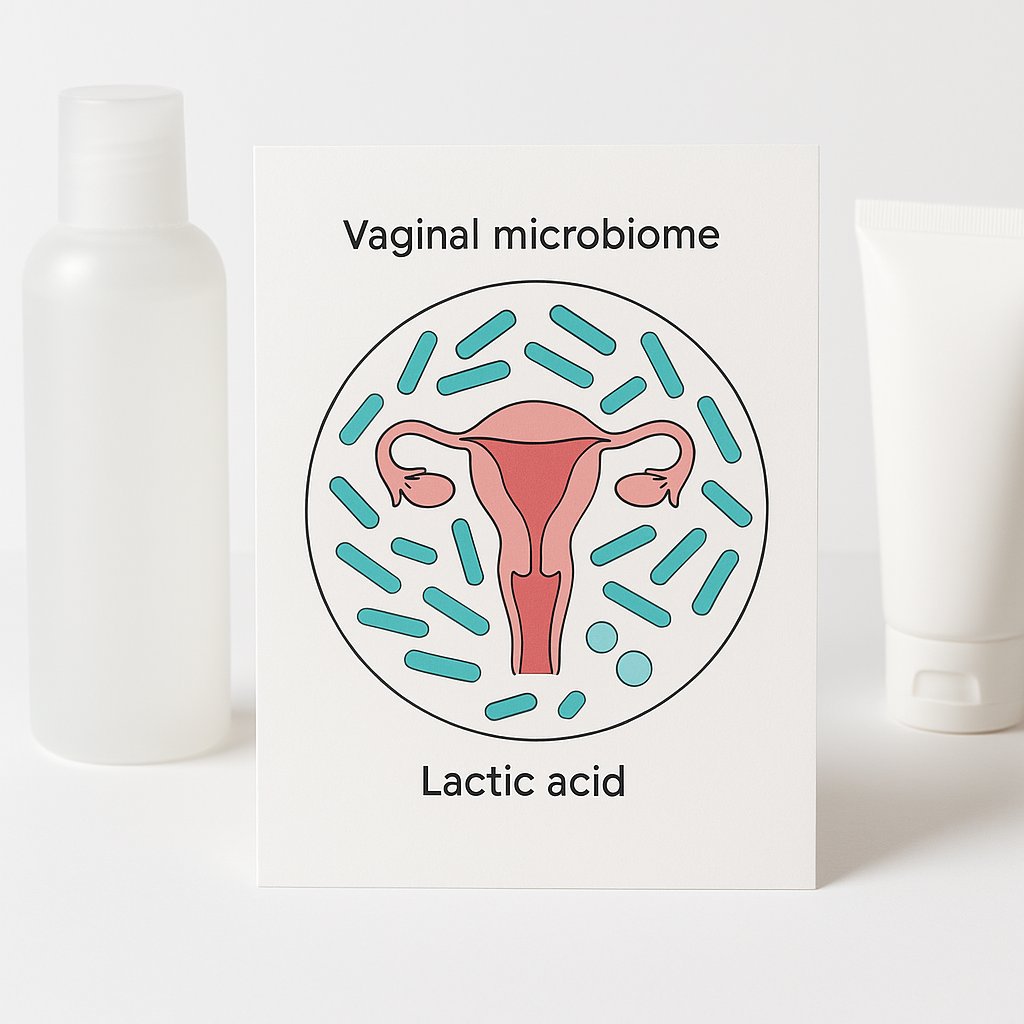
Lactic acid production:Lactobacillus bacteria metabolize glycogen (stored in vaginal epithelial cells) and produce lactic acid, maintaining vaginal pH between 3.5 and 4.5. This acidic environment is inhospitable to most pathogens, including Gardnerella vaginalis (the primary BV-associated organism) and Candida species.
Hydrogen peroxide production: Many Lactobacillus strains, particularly L. crispatus, produce hydrogen peroxide (H₂O₂), which has direct antimicrobial effects against BV-associated bacteria and sexually transmitted pathogens.
Bacteriocin production: Vaginal Lactobacilli secrete bacteriocins — small proteins that inhibit competing organisms — creating an additional layer of chemical protection.
Competitive exclusion: By occupying adhesion sites on the vaginal epithelium, Lactobacilli physically prevent pathogens from establishing colonization.
When this system breaks down — through antibiotics, hormonal changes, sexual activity, douching, or stress — the result can be BV, yeast overgrowth, or increased vulnerability to UTIs and STIs.
What Disrupts the Vaginal Microbiome
Understanding the disruptors helps explain both why vaginal infections are so common and when probiotic support is most valuable.
Antibiotics are perhaps the most dramatic disruptor. While treating a bacterial infection, antibiotics simultaneously reduce Lactobacillus populations in the vagina, creating a window of vulnerability. This is why many women experience yeast infections after antibiotic courses — Candida, normally kept in check by competitive bacteria, takes advantage of the ecological opportunity.
Hormonal fluctuations profoundly affect vaginal flora. Estrogen stimulates glycogen deposition in vaginal epithelial cells, which in turn feeds Lactobacillus bacteria. As estrogen falls before menstruation, after pregnancy, and particularly at menopause, Lactobacillus populations can decline — explaining why many women experience recurrent vaginal infections at predictable points in their hormonal cycle. For menopausal women, this connection becomes especially important; see our Menopause Supplements Guide for a broader look at hormonal transition support.
Sexual activity can alter vaginal pH (semen has a pH of 7.1–8.0, significantly more alkaline than healthy vaginal pH) and introduce new microorganisms. While normal vaginal pH typically recovers within hours, recurrent disruption can reduce Lactobacillus resilience over time.
Douching and certain hygiene products are among the most avoidable disruptors. Despite marketing to the contrary, the vagina is self-cleaning. Douching removes protective bacteria, disrupts pH, and is associated with significantly higher BV rates in epidemiological research.
Psychological stress has a real but underappreciated effect on vaginal flora through cortisol-mediated immune changes, which research by Verstraelen et al. in Microbiome (2014) linked to reduced Lactobacillus dominance during periods of high stress.
The Strains with Clinical Evidence
Not all probiotics have vaginal health evidence, and within those that do, specific strain identities (not just species names) determine efficacy. The following are the most evidence-supported strains for vaginal microbiome health.
Lactobacillus rhamnosus GR-1 and Lactobacillus reuteri RC-14
This combination has the largest body of clinical evidence for vaginal microbiome restoration. These strains were originally isolated from the vaginal and urinary tracts of healthy women, suggesting they’re naturally adapted to vaginal colonization. Critically, both survive gut transit when taken orally and have been shown to migrate to the vaginal area following oral supplementation — a finding initially surprising to researchers but now well-documented.
A foundational 2003 study by Reid et al. in FEMS Immunology & Medical Microbiology found that oral supplementation with GR-1 and RC-14 for 28 days significantly increased normal vaginal lactobacilli and reduced potentially pathogenic organisms in women with abnormal flora.
A 2006 double-blind RCT by Anukam et al. in Microbes and Infection evaluated these strains in women being treated for BV with metronidazole. The probiotic group showed significantly better vaginal microbiome restoration and lower BV recurrence at follow-up compared to antibiotic treatment alone. A 2009 extension of this work in Canadian Journal of Microbiology confirmed a roughly 50% reduction in BV recurrence in women who continued probiotic supplementation after antibiotic treatment.
Lactobacillus crispatus
Among all vaginal Lactobacillus species, L. crispatus produces the highest concentrations of D-lactic acid and H₂O₂ and is most consistently associated with the lowest rates of vaginal infections, STIs, and preterm birth. A 2011 study by Fredricks et al. in Journal of Infectious Diseases confirmed that L. crispatus dominance was associated with the lowest risk of BV, while dominance by L. iners (another common vaginal species) was associated with higher transition rates to BV-associated flora.
A 2020 intravaginal L. crispatus product (LACTIN-V) was evaluated in a Phase 2b RCT by Cohen et al. published in New England Journal of Medicine, showing a significant reduction in BV recurrence compared to placebo when used after antibiotic treatment. While this was an intravaginal product, it demonstrated the clinical potential of this species for vaginal microbiome restoration.
Oral supplementation products containing L. crispatus are now emerging in the market, driven by this research interest.
Lactobacillus acidophilus
One of the most common probiotic species and widely present in women’s probiotic formulas, L. acidophilus has a weaker vaginal health evidence base than GR-1/RC-14 or crispatus but contributes general lactic acid production and is well-tolerated. A 1992 RCT by Hilton et al. in Annals of Internal Medicine — one of the earliest controlled trials of this type — found that women who consumed L. acidophilus-rich yogurt daily had significantly fewer vulvovaginal candidiasis episodes (3x reduction) compared to periods without yogurt consumption.
Lactobacillus gasseri
L. gasseri is one of the four species that can dominate healthy vaginal communities and is increasingly appearing in dedicated vaginal probiotic formulas. Limited but emerging evidence suggests it may support vaginal pH maintenance and inhibit Gardnerella vaginalis growth, with in vitro evidence reviewed by Rönnqvist et al. in Infectious Diseases in Obstetrics and Gynecology (2006).
Oral vs. Vaginal Delivery: Which Route Works?
One of the most practical questions about vaginal probiotics is whether you need to apply them directly or whether oral supplementation works. The answer, perhaps surprisingly, is that oral supplementation is effective — though the mechanisms are somewhat indirect.
The oral route: Probiotic bacteria taken orally survive stomach acid (better in capsule form), travel through the small intestine, and are excreted. From the perianal area, vagina-adapted strains like GR-1 and RC-14 can migrate to the periurethral area and into the vagina. This “ascending colonization” pathway was documented by Reid et al. and has been replicated in multiple studies. For most women, oral supplementation is the more practical approach and sufficient for preventive and maintenance use.
The vaginal route: Intravaginal probiotics (suppositories, gels, or capsules placed vaginally) deliver organisms directly to the vaginal epithelium. This results in faster colonization and may be more effective for active infections or severe dysbiosis. Products like LACTIN-V (intravaginal L. crispatus biotherapy) are being evaluated in clinical trials for BV treatment.
The verdict: For prevention and maintenance, oral supplementation with vagina-tropic strains (GR-1/RC-14) is a well-evidenced approach. For recurrent BV or post-antibiotic restoration, some women benefit from a combination: oral supplementation daily plus a vaginal probiotic suppository used for 1–2 weeks after the disruption event.
Probiotics for BV: What the Evidence Actually Shows
Bacterial vaginosis affects an estimated 29% of women aged 14–49 in the United States, making it the most common vaginal condition in reproductive-age women. Despite its prevalence, BV recurrence after antibiotic treatment is dismayingly common — approximately 50–70% of women experience recurrence within 12 months of treatment.
This high recurrence rate is what makes the probiotic evidence particularly exciting. A 2014 systematic review by Senok et al. in Cochrane Database of Systematic Reviews concluded that while evidence was promising for Lactobacillus probiotics reducing BV recurrence, larger trials were needed. Since then, several well-designed trials have emerged:
A 2019 RCT by Eriksson et al. in EClinicalMedicine found that women with BV who received a 12-week course of oral Lactobacillus rhamnosus GR-1 and L. reuteri RC-14 had significantly better vaginal flora normalization rates compared to placebo.
Current clinical consensus suggests probiotics are best used adjunctively — meaning alongside, not instead of, antibiotic BV treatment — and that consistent long-term use may meaningfully reduce recurrence rates.
Probiotics for Yeast Infections
Vulvovaginal candidiasis (VVC) — yeast infections — affects approximately 75% of women at some point in their lives, and 5–8% experience recurrent infections (four or more per year). The relationship between Lactobacillus dominance and Candida suppression is biologically clear: Lactobacilli produce lactic acid that inhibits Candida growth and compete for adhesion sites on the vaginal epithelium.
A 2012 systematic review by Xie et al. in International Journal of Gynecology and Obstetrics found that probiotic supplementation reduced the rate of vulvovaginal candidiasis in women who used antibiotics, which is one of the most common yeast infection triggers.
For women dealing with recurrent yeast infections, the evidence suggests:
Oral probiotics with GR-1/RC-14 or L. acidophilus may reduce recurrence, particularly when started during or after antibiotic use.
Dietary interventions (reducing sugar, addressing any underlying metabolic issues) often need to accompany probiotic use for lasting results.
Active infections should still be treated with standard antifungal therapy — probiotics are preventive and adjunctive, not primary treatment.
Vaginal Probiotics and pH
Vaginal pH is perhaps the most objective, measurable indicator of vaginal microbiome health. The normal range is 3.5–4.5; above 4.5 is associated with BV; below 3.5 can sometimes indicate other issues. Probiotic supplementation with appropriate strains has been shown to measurably shift vaginal pH in the protective direction.
A 2020 study by Vodstrcil et al. in PLOS ONE demonstrated that women with higher baseline vaginal Lactobacillus abundance had more consistently favorable pH, and that supplementation with Lactobacillus strains produced measurable pH improvements over 8–12 weeks.
For women who want to track their own progress, vaginal pH test strips are available over the counter and can provide a practical feedback mechanism for assessing probiotic effectiveness.
Dosing, Timing, and What to Look For
Dose: For oral vaginal probiotics, studies have typically used 1–5 billion CFU of GR-1 and RC-14 combined. This is often lower than general gut probiotic doses, which can seem counterintuitive — but these strains are highly targeted and the clinical evidence supports this dose range.
Timing: Daily dosing is standard in clinical trials. For best results, take probiotics consistently rather than intermittently. The vaginal microbiome takes 4–8 weeks to show measurable change with oral supplementation.
With or without food: Taking with food may improve survival through stomach acid. Some manufacturers recommend taking on an empty stomach — follow product-specific instructions when available.
Storage: Many vaginal probiotic formulas with GR-1/RC-14 are shelf-stable when properly lyophilized. Follow manufacturer storage guidance; refrigeration is still required for some formulas.
Label Checklist for Vaginal Probiotics
| What to Look For | Why It Matters | |—|—| | L. rhamnosus GR-1 + L. reuteri RC-14 by strain name | Clinical evidence is strain-specific | | CFU guaranteed at expiration | Viability when you actually use it matters | | Delayed-release or acid-resistant capsule | Protects organisms through stomach acid | | Third-party testing | Verifies actual CFU and strain identity | | No unnecessary fillers | Reduces risk of irritating ingredients | | Cranberry extract co-formulation | Optional; may enhance UTI prevention |
Vaginal probiotics are generally very well-tolerated. The organisms used are species that naturally inhabit the human body, and serious adverse events in clinical trials have been essentially nonexistent. Mild GI symptoms (gas, loose stool) are occasionally reported at the start of supplementation and typically resolve within the first week.
Immunocompromised individuals should exercise caution with any probiotic and consult a healthcare provider, as there are rare reports of bacteremia with probiotic organisms in severely immunosuppressed patients.
During pregnancy: Many women have safely used vaginal probiotics during pregnancy in clinical trials, but always consult your OB-GYN before starting any new supplement during pregnancy.
For active infections: Probiotics do not replace antibiotic or antifungal treatment for active BV or yeast infections. They are best used preventively and adjunctively — alongside treatment, and continued afterwards to reduce recurrence.
FAQ
Can I use vaginal probiotics while being treated for BV?
Yes — and research suggests you should. Taking oral GR-1/RC-14 probiotics during metronidazole BV treatment and continuing for 4–8 weeks afterwards may significantly reduce the chance of BV recurrence compared to antibiotics alone. Take the probiotic at a different time of day than your antibiotic.
Are vaginal probiotic suppositories better than oral capsules?
Not necessarily for prevention and maintenance. Oral supplementation with vagina-tropic strains like GR-1/RC-14 has strong clinical evidence. For post-antibiotic restoration or active dysbiosis, vaginal suppositories (when available) may work more quickly. For most women, oral supplementation is more practical and sufficient.
How long does it take for vaginal probiotics to work?
Measurable vaginal microbiome changes from oral supplementation typically require 4–8 weeks of consistent daily use. Subjective symptom improvement (reduced discharge, odor, or irritation) may occur sooner for some women.
Will eating yogurt help my vaginal microbiome?
Potentially, though the effect is modest compared to targeted probiotic supplementation. The 1992 Hilton study found that daily yogurt consumption reduced yeast infections significantly — but not all yogurts contain clinically relevant strains. Look for yogurts specifically mentioning live L. acidophilus or probiotic strains.
Can men benefit from vaginal probiotics? (What about sexual transmission of vaginal bacteria?)
Vaginal microbiome health is indeed influenced by sexual partners — BV is more common in women with male partners who carry BV-associated bacteria. Some researchers are studying whether probiotic supplementation in male partners might reduce BV recurrence rates in women, though this is early research territory.
I’ve had recurrent BV for years — will probiotics finally fix it?
Possibly help is the honest answer. For truly recurrent BV (4+ episodes per year), probiotics are unlikely to be a standalone solution. However, combined with antibiotic treatment, lifestyle factors (condom use, avoiding douching), and consistent long-term probiotic use, many women do see meaningfully reduced recurrence rates. This is an area worth discussing with a gynecologist who is familiar with the probiotic literature.
Key Takeaways
The healthy vaginal microbiome is Lactobacillus-dominant by design — this dominance creates the acidic, antimicrobial environment that prevents BV, yeast infections, and UTIs.
Lactobacillus rhamnosus GR-1 and L. reuteri RC-14 are the best clinically evidenced strains for vaginal health and can be taken orally.
Lactobacillus crispatus is the gold-standard vaginal species and is appearing in more products; intravaginal delivery has phase 2b RCT data.
Oral supplementation works through an ascending colonization pathway; intravaginal delivery is faster but less practical for daily use.
Probiotics are most effective for preventing BV and yeast recurrence and as adjuncts to antibiotic treatment — not as standalone treatments for active infections.
Disruption events (antibiotics, menopause, stress) are the key times to be most consistent with probiotic supplementation.
Look for strain-level identification, CFU at expiration, and delayed-release capsules when choosing a product.
Measurable changes in the vaginal microbiome take 4–8 weeks of consistent daily use.
Sources
Ravel, J., et al., “Vaginal microbiome of reproductive-age women,” PNAS, 2011.
Reid, G., et al., “Oral use of Lactobacillus rhamnosus GR-1 and L. reuteri RC-14 significantly alters vaginal flora,” FEMS Immunology & Medical Microbiology, 2003.
Anukam, K., et al., “Augmentation of antimicrobial metronidazole therapy of bacterial vaginosis with oral probiotic Lactobacillus rhamnosus GR-1 and Lactobacillus reuteri RC-14,” Microbes and Infection, 2006.
Fredricks, D.N., et al., “Molecular identification of bacteria associated with bacterial vaginosis,” New England Journal of Medicine, 2005.
Cohen, C.R., et al., “Randomized trial of LACTIN-V to prevent recurrence of bacterial vaginosis,” New England Journal of Medicine, 2020.
Hilton, E., et al., “Ingestion of yogurt containing Lactobacillus acidophilus as prophylaxis for candidal vaginitis,” Annals of Internal Medicine, 1992.
Xie, H.Y., et al., “Probiotics for vulvovaginal candidiasis in non-pregnant women,” International Journal of Gynecology and Obstetrics, 2012.
Eriksson, K., et al., “A randomized placebo-controlled trial of Lactobacillus rhamnosus GR-1 and L. reuteri RC-14 to prevent bacterial vaginosis,” EClinicalMedicine, 2019.
Verstraelen, H., et al., “Characterization by pyrosequencing of the vaginal microbiota in healthy non-pregnant women,” Microbiome, 2014.
Vodstrcil, L.A., et al., “The influence of sexual activity on the vaginal microbiota and Gardnerella vaginalis clade diversity,” PLOS ONE, 2020.
Rönnqvist, P.D.J., et al., “Lactobacilli in the female genital tract in relation to other genital microbes,” Infectious Diseases in Obstetrics and Gynecology, 2006.




Leave a Reply