
Sea Moss Benefits for Women: Thyroid, Fertility, Skin, and More
Quick Answer: Sea moss (primarily Chondrus crispus and Gracilaria species) contains iodine, iron, folate, zinc, and a broad spectrum of trace minerals that address several common nutritional gaps in women. It offers genuine support for thyroid function, menstrual health, skin hydration, and digestive health. The caveats: iodine content varies wildly between sources, and the wildest health claims (fertility miracle, cure-all) exceed what the evidence supports.
For women specifically, iodine is one of sea moss’s most significant attributes. The thyroid gland uses iodine to synthesize the hormones T3 (triiodothyronine) and T4 (thyroxine), which regulate metabolism, temperature, heart rate, menstrual cycle regularity, and much more. Iodine deficiency is one of the leading causes of hypothyroidism worldwide, and women are significantly more likely than men to develop thyroid disorders.
According to USDA data, sea moss can contain anywhere from 47 to 4,500 mcg of iodine per gram of dried seaweed — an enormous range that reflects variations in water temperature, salinity, and harvest location. The RDA for iodine is 150 mcg/day for adults, with an upper tolerable limit of 1,100 mcg/day. This means sea moss can easily deliver appropriate amounts, but also that consuming too much — especially of iodine-rich varieties — can actually suppress thyroid function rather than support it.
The paradoxical iodine effect: Both too little and too much iodine impair thyroid function. Excessive iodine intake can trigger autoimmune thyroid conditions in genetically susceptible individuals. For women who already have Hashimoto’s thyroiditis (autoimmune hypothyroidism), high-iodine sea moss could be problematic without medical supervision.
For women with no thyroid disorders, moderate consumption of sea moss provides iodine in a food-matrix form (alongside other minerals and compounds), which may be better tolerated than isolated iodine supplements.
Iron: Supporting Menstrual Health
Iron deficiency is the most common nutritional deficiency globally, and women are disproportionately affected due to monthly menstrual blood loss. Symptoms of iron deficiency — fatigue, cold hands and feet, hair loss, brain fog — are extremely common among premenopausal women and often go undiagnosed.
Sea moss contains non-heme iron (plant-source iron) at roughly 8–9 mg per 100g of dried seaweed. While non-heme iron is less bioavailable than heme iron from animal sources, sea moss’s iron content still represents a meaningful dietary contribution — particularly for vegetarians and vegans who may struggle to meet iron needs.
Combining sea moss with vitamin C-rich foods improves non-heme iron absorption significantly. The gel form blended into smoothies with citrus fruit or berries is a practical strategy for maximizing the iron you actually absorb.
Folate and Fertility
Sea moss contains folate (vitamin B9), the naturally occurring form of folic acid critical for DNA synthesis, cell division, and fetal neural tube development. Adequate folate is one of the most robustly evidence-backed nutrients for preventing neural tube defects during early pregnancy — making it a priority for women of childbearing age.
While sea moss isn’t the most concentrated folate source available (leafy greens still reign supreme), it contributes meaningfully to total folate intake in the context of a varied diet. Women trying to conceive often find that sea moss fits naturally into a nutrient-dense eating approach.
The zinc content of sea moss also merits mention here. Zinc is involved in ovarian function, progesterone production, and egg quality. Zinc deficiency has been associated with irregular menstrual cycles and reduced fertility in research including a 2018 review by Garner and Hyder in Reproductive Sciences. Sea moss provides a modest but relevant amount of zinc.
Collagen Production and Skin Hydration
Sea moss contains proline and glycine — two amino acids that serve as precursors for collagen synthesis. It also contains vitamin C (in smaller amounts), which is required for collagen production. The combination is relevant to skin health, joint integrity, and wound healing.
More uniquely, sea moss contains carrageenan, a polysaccharide that functions as a humectant — it attracts and holds water molecules. In its topical applications, carrageenan is used in skincare products for this property. When consumed as part of a gel, it may contribute to mucous membrane hydration systemically, though evidence for this internal mechanism is largely theoretical.
Some women report significant improvements in skin texture and hydration when consuming sea moss gel consistently, which aligns with the humectant properties of carrageenan and the collagen precursor content.
Digestive Health and the Gut Microbiome
Carrageenan in sea moss serves as a prebiotic fiber, meaning it feeds beneficial bacteria in the gut. A healthy gut microbiome influences everything from immune function to hormone balance — the latter being particularly relevant for women, since gut bacteria are involved in estrogen metabolism through a process called the “estrobolome.”
Research on carrageenan as a prebiotic is ongoing, with some promising in-vitro and animal studies showing selective fermentation by beneficial bacterial strains. However, there’s also a contested body of research on degraded carrageenan (not the same compound in food-grade sea moss) and intestinal inflammation. It’s worth noting that food-grade carrageenan in amounts consumed from sea moss is considered safe by regulatory bodies including the FDA and EFSA, and is quite different from the degraded form (poligeenan) studied in inflammation models.
Sea Moss Nutrient Women’s Health Benefit Evidence Level Iodine Thyroid hormone synthesis, metabolism Strong (foundational biology) Iron Menstrual blood replenishment, energy Moderate (non-heme iron is less bioavailable) Folate Neural tube development, fertility Strong for dietary folate generally Zinc Ovarian function, hormone balance Moderate Carrageenan Prebiotic fiber, gut health Early/emerging Collagen precursors Skin health, joint integrity Plausible Vitamin C Collagen synthesis support Strong (for C specifically, modest amounts in sea moss) How to Use Sea Moss
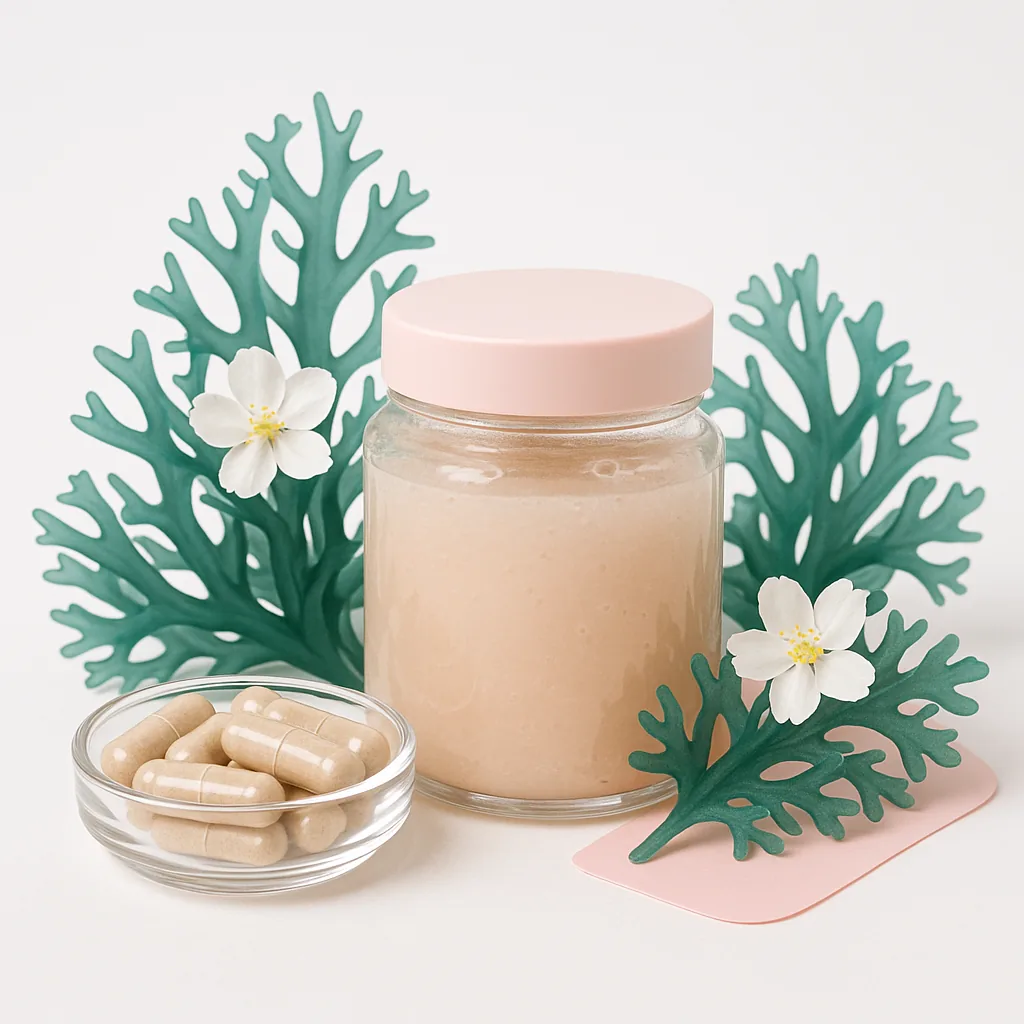
Making sea moss gel: Rinse dried sea moss thoroughly, soak in filtered water for 12–24 hours, blend with fresh water until smooth. Refrigerate and use within 2–3 weeks. Use 1–2 tablespoons daily in smoothies, soups, oatmeal, or sauces.
Capsules: More consistent for supplementation — look for products that state the species and list iodine content. Start with 500–1,000 mg/day and adjust based on response and iodine status.
Choosing quality sea moss: Wildcrafted Atlantic Irish moss (Chondrus crispus) from clean waters is the gold standard. Much of the sea moss sold online is pool-grown in artificial saltwater tanks, which has a significantly lower mineral content. Ask vendors about sourcing and look for lab-tested products with verified mineral content.
Cautions and Who Should Be Careful
- Thyroid disease: Anyone with hypothyroidism, hyperthyroidism, or Hashimoto’s should consult their physician before supplementing with sea moss — iodine status should be tested first.
- Pregnancy: While folate and iron are beneficial, iodine intake during pregnancy should be carefully managed. Sea moss can contribute to iodine overload if combined with prenatal vitamins and iodized salt.
- Medication interactions: Sea moss may affect thyroid medication absorption (levothyroxine). Separate by at least 4 hours and inform your prescribing physician.
- Blood thinners: The vitamin K content, while modest, is relevant for those on warfarin.
FAQ
How much sea moss should a woman take daily?
Most practitioners suggest 1–2 tablespoons of gel daily or 1,000–2,000 mg of capsules. Given the wide variation in iodine content, starting on the lower end and monitoring thyroid markers over time is prudent.
Can sea moss help with hormonal imbalances?
Sea moss isn’t a hormone itself, but its iodine, zinc, and selenium content can support thyroid and reproductive hormone function. For women with iodine-related hypothyroidism, optimizing iodine intake may improve cycles and energy. It’s not a treatment for PCOS or estrogen dominance, but it’s a supportive food.
Does sea moss help with weight loss?
Sea moss contains fucoxanthin, a carotenoid with some evidence for modest thermogenic effects in animal studies. Its fiber content (carrageenan) promotes satiety. These are real mechanisms, but the weight-loss claims made by influencers are often grossly exaggerated.
Is sea moss gel the same as Irish moss?
Yes — “Irish moss” usually refers to Chondrus crispus, the same plant called sea moss when used in Caribbean traditions. “Sea moss” as sold today is often the tropical Gracilaria species, which is different but closely related. True Irish moss (Chondrus crispus) from the North Atlantic is generally considered the more nutrient-dense option.
Can sea moss replace iron supplements for anemia?
Sea moss provides non-heme iron, which has lower bioavailability than heme iron or ferrous sulfate supplements. For diagnosed iron-deficiency anemia, medical-grade iron supplementation is more reliable. Sea moss can be a dietary complement, but isn’t a substitute for therapeutic iron in clinical deficiency.
Sources
- Potential clinical benefits of probiotics, prebiotics, synbiotics, and postbiotics for depression via the microbiota-gut-brain axis. World journal of psychiatry. 2025. PMID: 40495829.
- Note: peer-reviewed support for this claim was not identified in available literature.
- Garner, T.B., & Hyder, J.M. (2018). Role of zinc in female reproduction. Reproductive Sciences, 25(4), 659-673. DOI: 10.1177/1933719117745785.
- Bhattacharyya, S., Dudeja, P.K., & Tobacman, J.K. (2008). Carrageenan-induced NFkB activation depends on distinct pathways mediated by reactive oxygen species and Hsp27 or by Bcl10. Biochimica et Biophysica Acta, 1780(7-8), 973-982. PMC: PMC2574861.
Related Articles
Leave a Reply