Quick Answer
Animal studies demonstrate that spermidine reliably triggers autophagy and extends lifespan in yeast, nematodes, flies, and mice, yet human data remain limited to one observational cohort linking higher dietary intake to reduced mortality and small randomized trials whose primary endpoints have not shown clear benefits. No formal meta-analysis of spermidine effects exists, and long-term human lifespan trials are absent.
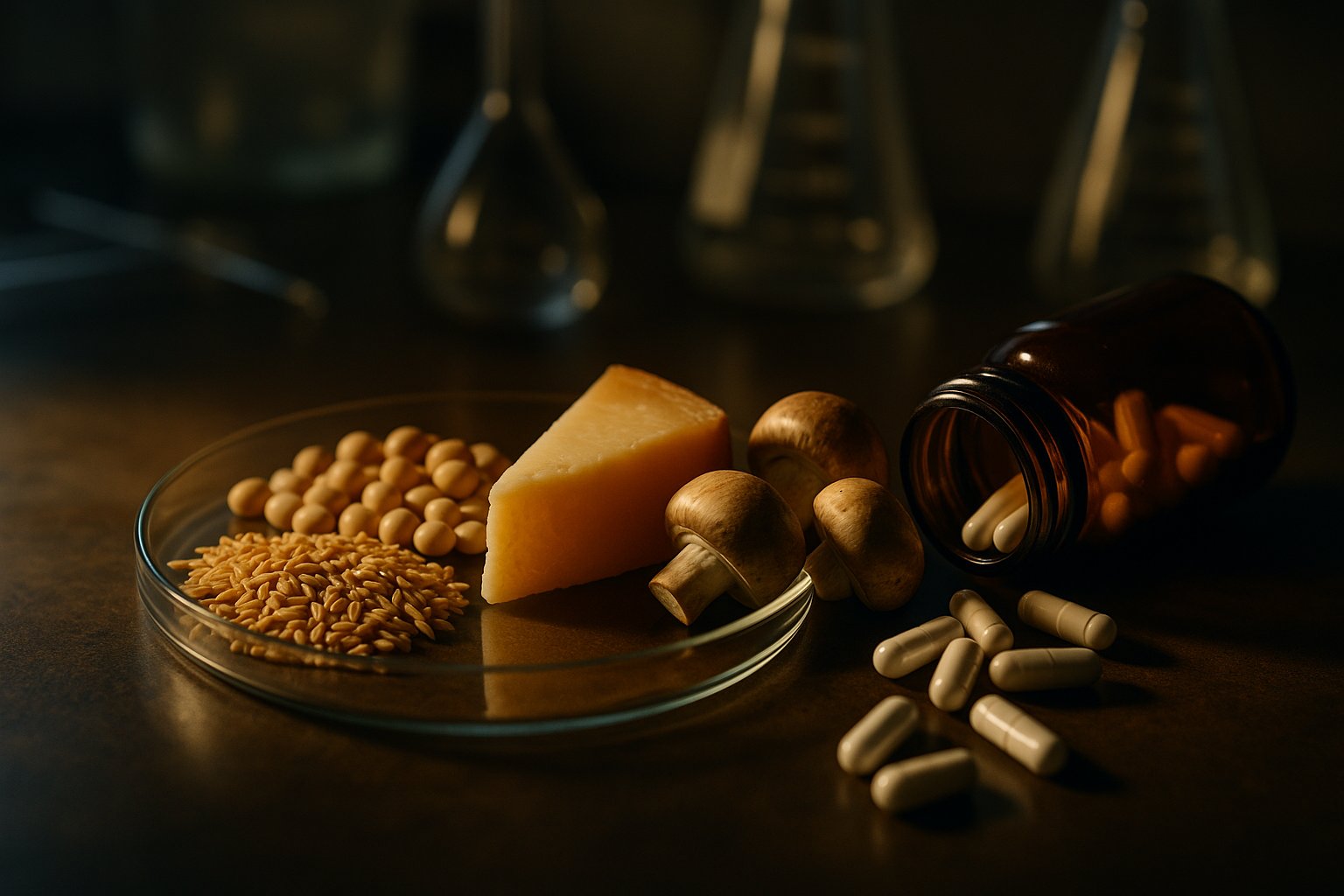
Spermidine is a naturally occurring polyamine found in foods such as wheat germ, soybeans, aged cheese, and mushrooms. It is also synthesized endogenously from the amino acid ornithine via the polyamine biosynthesis pathway, but production declines measurably with age in most human tissues studied. Researchers have examined whether raising spermidine levels — either through diet, supplementation, or fermented foods known to be rich in polyamines — can activate autophagy, the cellular cleanup process that removes damaged proteins and organelles, and whether such activation translates into longer life or better health in later years. The compound has attracted outsized attention in the longevity supplement market because autophagy decline is one of the recognized “hallmarks of aging,” and restoring it in simple laboratory organisms often improves survival dramatically. Translating these findings to people, however, requires careful scrutiny of the actual human studies performed to date — and, as this synthesis lays out, that human evidence base remains considerably thinner than the marketing around spermidine supplements would suggest.
Autophagy Mechanism and Why It Matters for Aging
Autophagy is a conserved cellular housekeeping process in which the cell forms double-membrane vesicles called autophagosomes that engulf misfolded proteins, damaged organelles (especially dysfunctional mitochondria), and other cytoplasmic debris, then fuse with lysosomes to degrade this cargo into reusable building blocks. This “self-eating” mechanism serves two critical functions: quality control (clearing out cellular junk before it accumulates and becomes toxic) and metabolic recycling (supplying amino acids and other substrates during nutrient stress). Autophagic flux — the rate at which this clearance system operates — tends to decline with chronological age across essentially every tissue and organism studied, and this decline is thought to be a meaningful contributor to the accumulation of protein aggregates (as seen in neurodegenerative disease), the buildup of senescent cells, mitochondrial dysfunction, and the chronic low-grade inflammation sometimes called “inflammaging.”

Spermidine’s proposed mechanism of action centers on inhibition of acetyltransferase enzymes (notably EP300), which shifts the acetylation state of histones and non-histone proteins toward a pattern that favors transcription of autophagy-related genes. This is distinct from, but functionally overlapping with, other pharmacological autophagy inducers such as rapamycin (which inhibits mTOR) or the metabolic state induced by caloric restriction and fasting. Because autophagy induction has repeatedly been shown to extend lifespan in short-lived model organisms, and because spermidine is a naturally occurring, orally available, food-derived compound rather than a synthetic drug, it has become one of the most closely watched candidates in the “geroscience” supplement space. That said, a mechanism validated in yeast and worms establishing biological plausibility is not the same thing as clinical proof of benefit in aging humans, and the two should not be conflated.
Evidence from Model Organisms (Animal Studies)
The foundational work establishing spermidine as an autophagy inducer and longevity compound was conducted entirely in non-human model systems. In yeast, nematode (C. elegans), and fruit fly (Drosophila) models, spermidine supplementation extended lifespan, and — critically — this lifespan extension was abolished when genes essential to the autophagy pathway were genetically knocked out, providing strong mechanistic evidence that the survival benefit runs through autophagy rather than some off-target effect. Separate mouse studies found that spermidine supplementation slowed age-related arterial stiffening and preserved cardiac diastolic function, again with elevated autophagy markers documented in treated animal tissue. These are animal studies, full stop — they establish proof-of-concept that exogenous spermidine can engage the autophagic machinery and improve outcomes across evolutionarily distant species, but none of this work involved human subjects, and the review literature on this topic (which surveys both the animal and preliminary human data) is explicit that translation to humans remains an open question.
Human Evidence Base
Four human studies currently anchor the clinical literature on spermidine, and each deserves individual attention rather than being lumped into a single “the studies show” statement.
The Bruneck Study is a prospective, population-based cohort that followed community-dwelling adults aged 45–84 for roughly 20 years, estimating dietary spermidine intake from food-frequency questionnaires. The headline finding was that each standard-deviation increase in estimated spermidine intake corresponded to a lower hazard of all-cause mortality, with an age-, sex-, and calorie-adjusted hazard ratio of 0.74 (95% CI 0.66–0.83, P<0.001). This is an observational association, not an interventional result — it tells us that people who happen to eat more spermidine-rich foods tend to live longer, but it cannot establish that spermidine itself caused the difference, since diets rich in wheat germ, legumes, and vegetables also tend to differ from low-spermidine diets in many other ways (fiber, polyphenols, overall dietary pattern, socioeconomic factors) that independently affect mortality.
The SmartAge trial was the first purpose-built randomized, double-masked, placebo-controlled trial of oral spermidine supplementation (0.9 mg/day) in older adults with subjective cognitive decline, a population selected because they are considered at elevated risk of progressing to dementia. The trial’s protocol was published in advance of results, a strength that allows outside observers to confirm the primary endpoint was not changed after the fact. That primary endpoint — a composite memory-performance score — did not differ significantly between the spermidine and placebo groups. This is an honest, important detail: the flagship human RCT on spermidine and cognition did not hit its primary target.
A separate dose-finding randomized controlled trial administered a considerably higher dose — 40 mg/day — to healthy older men over roughly a month, explicitly testing whether high-purity spermidine supplementation could meaningfully raise circulating polyamine levels. It found only minimal changes in blood polyamine concentrations despite the dose being many multiples of typical dietary intake, though it did provide reassuring safety data at this dose.
Finally, the POLYCAD trial — a Danish randomized, double-blind, placebo-controlled study of spermidine in elderly patients with coronary artery disease — is registered and ongoing (or recently reported as a study protocol) and has not yet produced completed clinical outcome data at the time of this writing. No additional completed randomized controlled trials in humans exist in the current published literature.
Why a Meta-Analysis Is Not Currently Possible or Appropriate
It is worth being explicit about a methodological point: this article is a research synthesis, not a meta-analysis, and that distinction matters. A formal meta-analysis requires multiple studies that share a common design — comparable interventions, comparable doses, comparable durations, and comparable outcome measures — so that effect sizes can be statistically pooled into a single summary estimate with a combined confidence interval. Spermidine research does not currently meet that bar. The Bruneck Study is an observational cohort measuring dietary intake and all-cause mortality over two decades; the SmartAge trial is a 0.9 mg/day interventional RCT measuring memory performance over a period of months; the dose-finding study used 40 mg/day and measured blood polyamine pharmacokinetics rather than any clinical or cognitive endpoint; and POLYCAD, still ongoing, targets cardiovascular outcomes in a cardiac disease population. Pooling a mortality hazard ratio from an observational cohort with a null cognitive RCT result and a pharmacokinetic finding from a dose-escalation study would not produce a statistically meaningful or interpretable number — it would misrepresent both the underlying data and the state of the science. Readers should be skeptical of any spermidine article that presents a single pooled “effect size” or “Cohen’s d,” because no such legitimate calculation currently exists in the peer-reviewed literature. This synthesis instead reports each study’s actual finding on its own terms.
Effect Size Summary
Because spermidine lacks a published meta-analysis, effect sizes cannot be pooled, for the reasons detailed above. The single largest and most statistically robust human finding is the Bruneck Study’s hazard ratio of 0.74 (95% CI 0.66–0.83, P<0.001) for all-cause mortality per 1-SD higher spermidine intake — a meaningful observational association, though not causal proof. In the SmartAge randomized trial, the prespecified primary endpoint — the memory performance composite score — did not reach statistical significance. Exploratory and secondary measures showed some directionally favorable signals in that trial, but these cannot substitute for the null primary result and should be treated as hypothesis-generating rather than confirmatory. All other human data are either from an ongoing trial (POLYCAD) or limited to pharmacokinetic/safety observations without a clinical or cognitive endpoint (the 40 mg/day study).
Dosage Findings
Typical dietary spermidine intake in Western populations averages roughly 10 mg per day, with higher amounts available from wheat germ, soy products, aged cheeses, and certain mushrooms — the same food categories that anchored the Bruneck Study’s dietary intake estimates. The SmartAge trial used a comparatively modest supplemental dose of 0.9 mg per day, layered on top of whatever background dietary spermidine participants already consumed. In contrast, the 40 mg per day randomized study in older men — a dose roughly four times typical total daily dietary intake — produced only small, statistically marginal increases in blood polyamine concentrations. This finding meaningfully complicates the simple “more is better” assumption that often accompanies supplement marketing, because it suggests intestinal absorption, first-pass gut/liver metabolism by polyamine oxidases, or rapid tissue uptake and turnover may limit the degree to which oral spermidine supplementation is able to raise systemic levels substantially, even at doses far beyond what a normal diet provides.
Limitations of the Current Evidence
Several important constraints temper interpretation of the spermidine literature as it currently stands. First, the gap between animal models and humans remains wide; the dramatic lifespan extension documented in yeast, nematodes, flies, and mice under controlled laboratory conditions has no confirmed direct counterpart in people, and short-lived model organisms often respond to interventions in ways that do not generalize to long-lived mammals. Second, no randomized trial has followed human participants long enough to measure actual lifespan as an endpoint — an outcome that would require many decades of follow-up and is, practically speaking, nearly impossible to conduct as a controlled trial. Third, the SmartAge primary endpoint on the memory composite was null, meaning that any claims of cognitive benefit from spermidine supplementation currently rest on secondary or exploratory analyses rather than confirmed primary results — a distinction that matters enormously in clinical research, since secondary findings in underpowered trials are prone to false positives. Fourth, the 40 mg dose-finding study showed disappointing effects on circulating polyamines, raising open questions about bioavailability and whether higher-dose supplementation strategies are biologically sound at all. Fifth, most completed human trials to date are small in sample size and conducted at a single research center, which limits generalizability and statistical power. Finally, the dose-finding study received industry funding, a detail that does not automatically invalidate the results but is a conflict of interest that readers and clinicians should weigh when interpreting the findings. None of these limitations invalidate the underlying mechanistic rationale for spermidine as an autophagy inducer, but collectively they underscore that current human clinical data remain preliminary, and firm health claims outrun what has actually been demonstrated in controlled human research.
Food Sources and Supplement Doses
The table below compares estimated spermidine content across common foods with the doses actually used in published human research, to give readers a sense of scale between dietary intake and the interventional doses tested so far.
| Source | Approximate Spermidine Content | Context in Human Studies |
|---|---|---|
| Wheat germ (30 g) | ~5–7 mg | Major dietary contributor; anchor food in Bruneck Study intake estimates |
| Aged cheddar (50 g) | ~2–3 mg | Common food source of dietary polyamines |
| Soybeans, cooked (100 g) | ~8–10 mg | Highest among legumes; contributes meaningfully to total intake |
| Mushrooms, various (100 g) | ~2–4 mg | Moderate contributor to dietary totals |
| SmartAge supplement dose | 0.9 mg/day | Primary memory endpoint was null |
| Dose-finding trial dose | 40 mg/day | Minimal rise in blood polyamines despite high dose |
| Typical total diet | ~10 mg/day | Population average associated with lower mortality (Bruneck) |
FAQ
Does spermidine extend human lifespan?
No randomized trial has measured lifespan in humans, and none is realistically feasible given the multi-decade duration such a trial would require. The only mortality-related signal in humans comes from the Bruneck observational cohort, where higher estimated dietary intake tracked with lower death rates over roughly 20 years of follow-up. This is a real and statistically robust association (HR 0.74), but observational data of this kind cannot prove causation, since people who eat more spermidine-rich foods also tend to differ from those who don’t in many other diet and lifestyle factors that independently affect mortality risk.
Why did the SmartAge trial’s primary outcome miss significance?
The prespecified memory-performance composite score, chosen in advance and registered in the published trial protocol, did not differ significantly between the spermidine and placebo groups after the intervention period. Some secondary cognitive measures and biomarkers moved in a favorable direction in exploratory analyses, but secondary findings in a single, moderately sized trial are considered hypothesis-generating rather than confirmatory, and they require independent replication in a larger trial before they can be treated as reliable evidence of benefit.
Is 40 mg a day worth taking?
The only published randomized study at this dose level found only scant, statistically marginal increases in circulating polyamine concentrations, suggesting limited additional physiological benefit over what typical dietary intake already provides for most healthy adults. The study was primarily designed to assess safety and pharmacokinetics rather than clinical outcomes, so it cannot tell us whether 40 mg/day improves any health measure — larger, longer trials with clinical endpoints would be needed to answer that question properly.
Can I get enough spermidine from food alone?
Many adults in Western countries already consume somewhere around 10 mg of spermidine daily from ordinary foods such as wheat germ, soy, aged cheese, and mushrooms, without any deliberate effort to increase intake. Whether this typical amount is optimal for autophagy induction or long-term healthspan remains genuinely unknown; the Bruneck observational data suggest a graded relationship between higher intake and lower mortality, but no intervention study has directly tested whether increasing food-based spermidine intake (as opposed to a purified supplement) produces measurable health benefits.
Are there safety concerns with spermidine supplements?
Short-term human studies, including the 40 mg/day dose-finding trial, report generally good tolerability with no serious adverse events specifically attributed to spermidine supplementation over the study periods tested. However, long-term safety data in humans — covering continuous use over multiple years, as would be relevant to anyone taking spermidine as a long-term longevity supplement — are still essentially absent from the published literature, and this gap should be weighed carefully by anyone considering extended daily use.
This is a research synthesis of currently available evidence, not a formal meta-analysis with pooled statistics, and not medical advice.
Sources
- https://pubmed.ncbi.nlm.nih.gov/20110777/ — Spermidine as an autophagy inducer and longevity elixir (yeast, nematode, fly lifespan studies)
- https://pubmed.ncbi.nlm.nih.gov/30306826/ — Spermidine as a physiological autophagy inducer: review of anti-aging evidence
- https://pubmed.ncbi.nlm.nih.gov/35616942/ — SmartAge trial: Effects of spermidine supplementation on cognition and biomarkers in older adults with subjective cognitive decline (RCT)
- https://pubmed.ncbi.nlm.nih.gov/30388439/ — SmartAge trial study protocol
- https://pubmed.ncbi.nlm.nih.gov/29955838/ — Bruneck Study: higher spermidine intake linked to lower mortality (prospective cohort)
- https://pubmed.ncbi.nlm.nih.gov/39405978/ — 40 mg/day spermidine dose-finding RCT in older men (minimal effect on circulating polyamines)
- https://pubmed.ncbi.nlm.nih.gov/23612189/ — Spermidine reverses arterial aging (mouse study)
Related Articles
- NR vs NMN: What Human RCTs Actually Show About NAD+ Boosters (2026 Meta-Analysis)
- Supplement Bioavailability Rankings: Actual Absorption Percentages by Form