Best Adaptogens for Sleep in 2026
Quick Answer: The best adaptogens for sleep are ashwagandha (KSM-66) for cortisol reduction, magnolia bark for anxiety-driven insomnia, reishi for deeper sleep phases, and L-theanine for fast-acting calm. Unlike sedative sleep aids, adaptogens address the stress that disrupts sleep rather than forcing unconsciousness.
If your main issue is sleep onset rather than staying asleep, our focused guide on the best adaptogens for falling asleep narrows the field to what actually helps you drift off.
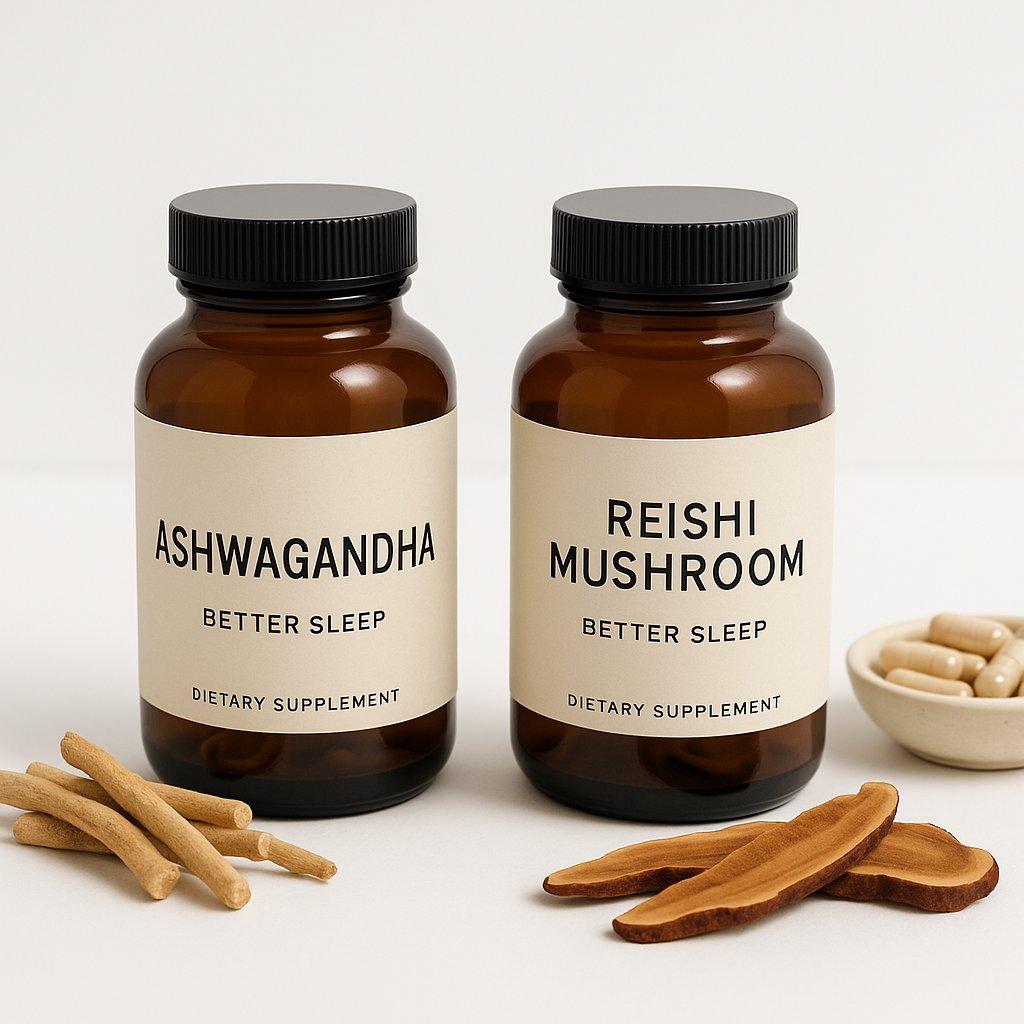
You don’t have a sleep problem. You have a stress problem that shows up at bedtime.
That’s the core insight behind using adaptogens for sleep — rather than sedating your brain into unconsciousness (looking at you, diphenhydramine), adaptogens lower the stress hormones that keep you wired at night. The result is sleep that’s genuinely restorative, not just unconsciousness.
Why Adaptogens Work Differently Than Sleep Aids
Traditional sleep supplements (melatonin, valerian, GABA) work by either sedating you or manipulating circadian signaling. Adaptogens take a different approach:
- Lower cortisol — The #1 sleep disruptor
- Modulate HPA axis — Normalize your stress response system
- Support GABA naturally — Without the tolerance buildup of GABAergic drugs
- Improve sleep architecture — More deep sleep and REM, not just total sleep time
This is why adaptogens often improve sleep quality even when total sleep time doesn’t change dramatically.
Best Adaptogens for Sleep
🏆 Best Overall: Ashwagandha (KSM-66)
The most clinically studied adaptogen for sleep. A 2019 RCT found KSM-66 ashwagandha improved sleep quality by 72% and reduced sleep onset latency significantly (Langade et al., Cureus, 2019). It works primarily by reducing cortisol (up to 30% reduction in chronically stressed adults).
- Dose: 300–600mg KSM-66 extract, 1 hour before bed
- Onset: Noticeable within 2 weeks, full effects at 6–8 weeks
Best for: Stress-driven insomnia, racing thoughts at bedtime
Top Pick: Nootropics Depot KSM-66 Ashwagandha
Best for Anxiety-Related Insomnia: Magnolia Bark (Honokiol)
Honokiol, the active compound in magnolia bark, is a potent GABA-A receptor modulator — similar mechanism to benzodiazepines but without addiction potential or cognitive impairment (Qu et al., British Journal of Pharmacology, 2012).
- Dose: 200–400mg magnolia bark extract (standardized to honokiol)
- Timing: 30–60 minutes before bed
Best for: People who lie awake with anxious thoughts
Top Pick: Nootropics Depot Magnolia Bark Extract
Best for Deep Sleep: Reishi Mushroom
Reishi (Ganoderma lucidum) doesn’t sedate — it modulates the immune-sleep connection. Triterpenes in reishi support TNF-alpha-mediated sleep promotion, potentially increasing deep sleep phases (Cui et al., Journal of Ethnopharmacology, 2012).
- Dose: 1000–1500mg dual-extract (hot water + alcohol extraction)
- Timing: Evening, with or without food
Best for: Those who sleep enough hours but wake unrefreshed
Top Pick: Real Mushrooms Reishi 415 Extract
Best Fast-Acting: L-Theanine
Not a traditional adaptogen, but L-theanine (from green tea) increases alpha brain waves — the relaxation state between waking and sleeping. Works within 30–40 minutes (Nobre et al., Nutritional Neuroscience, 2008).
- Dose: 200–400mg, 30 minutes before bed
- Stackability: Excellent — pairs with every adaptogen on this list
Best for: Immediate calming effect while building longer-term adaptogen benefits
Best for HPA Axis Reset: Phosphatidylserine
Phosphatidylserine (PS) directly blunts cortisol response to stress. Particularly effective for people whose cortisol peaks at night instead of morning (a common pattern in chronic stress and burnout) (Starks et al., JISSN, 2008).
- Dose: 100–200mg before bed
Best for: Night owls with reversed cortisol rhythms, high-stress professionals
The Ultimate Adaptogen Sleep Stack
1 hour before bed:
- Ashwagandha KSM-66 — 300mg
- Magnolia bark — 200mg
- L-theanine — 200mg
30 minutes before bed:
- Reishi extract — 1000mg
- Magnesium glycinate — 300mg (not an adaptogen, but synergistic)
This stack addresses cortisol, GABA, alpha waves, and deep sleep architecture through distinct, complementary mechanisms.
Adaptogens vs. Common Sleep Supplements
| Supplement | Mechanism | Tolerance Risk | Sleep Quality |
|---|---|---|---|
| Melatonin | Circadian signaling | Low (but dependency) | Onset only |
| Valerian | GABA modulation | Moderate | Moderate |
| Diphenhydramine | Histamine blockade | High | Poor (reduces REM) |
| Ashwagandha | Cortisol reduction | None | High |
| Magnolia bark | GABA-A modulation | Very low | High |
| Reishi | Immune-sleep axis | None | High (deep sleep) |
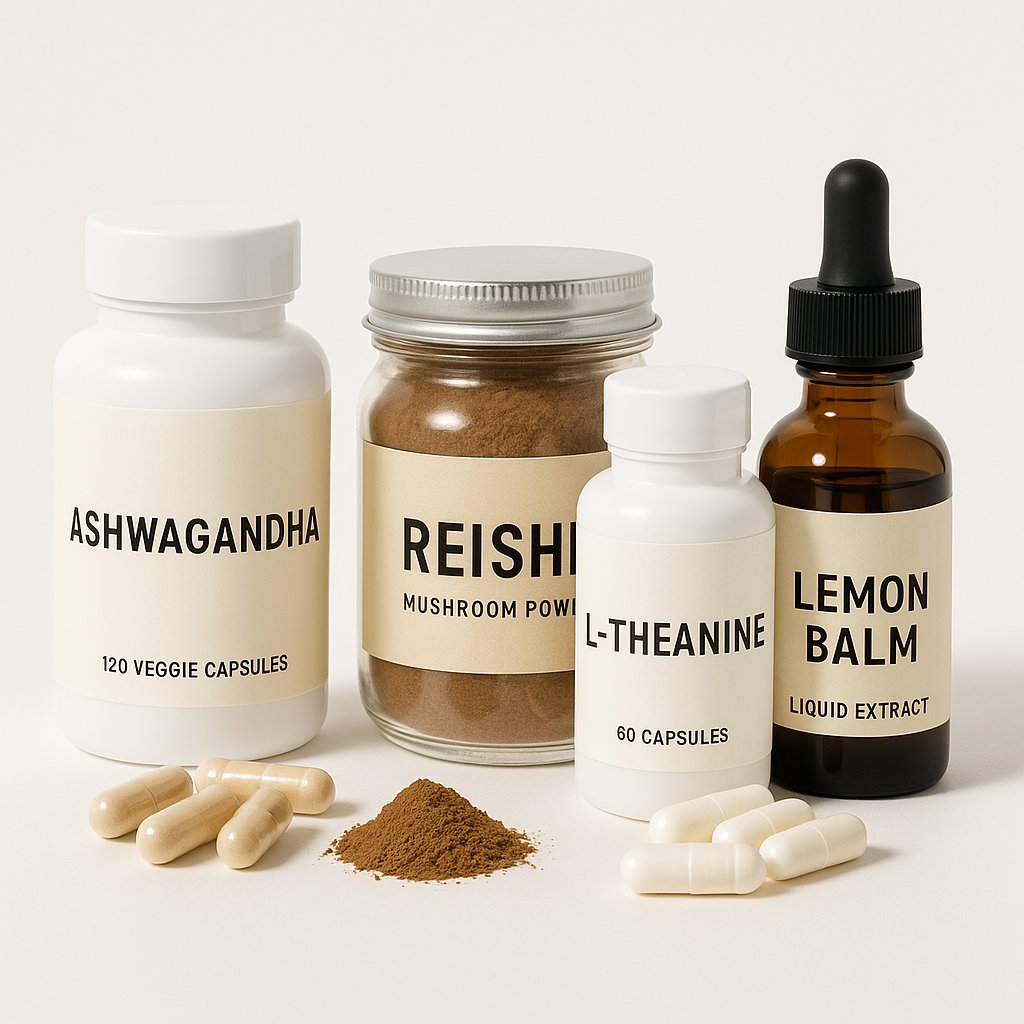
Who Benefits Most from Adaptogens for Sleep?
- High-stress professionals who can’t “turn off” at night
- People who wake at 2–4 AM (cortisol spike pattern)
- Those who’ve become dependent on melatonin or sleep aids
- Shift workers trying to normalize sleep patterns
- Anyone who sleeps enough hours but wakes tired
FAQ
Do adaptogens actually help you sleep?
Yes, particularly when poor sleep is driven by elevated stress hormones. Ashwagandha (KSM-66) improved sleep quality by 72% in a randomized controlled trial. Adaptogens work by addressing the root cause — stress — rather than sedating you into sleep.
Can I take adaptogens with melatonin?
Yes, they work through completely different mechanisms. However, many people find they can reduce or eliminate melatonin once adaptogens take full effect (typically 4–8 weeks). Consider using melatonin short-term while adaptogens build up.
How long do adaptogens take to improve sleep?
L-theanine works within 30–40 minutes. Magnolia bark within a few days. Ashwagandha and reishi typically require 2–6 weeks of consistent use for full sleep benefits. This is not a drawback — it means they’re addressing root causes rather than masking symptoms.
Are adaptogens safe to take every night?
Ashwagandha, reishi, and L-theanine have strong long-term safety profiles. Magnolia bark is well-tolerated but less studied for extended use. Cycling (8 weeks on, 1 week off) is a common precautionary approach for ashwagandha.
What’s the best adaptogen for someone who wakes up at 3 AM?
This pattern typically indicates a nocturnal cortisol spike. Phosphatidylserine (100–200mg) and ashwagandha (300mg) taken before bed specifically target cortisol. Magnolia bark adds GABA support to prevent the anxiety that often accompanies these awakenings.
Key Takeaways
- Ashwagandha KSM-66 is the most evidence-backed adaptogen for sleep, targeting cortisol — the primary stress-driven sleep disruptor.
- Magnolia bark targets GABA-A receptors for anxiety-related insomnia without addiction risk.
- Reishi mushroom supports deep-sleep architecture through immune-sleep signaling, not sedation.
- L-theanine provides fast-acting calm (30–40 min) and stacks well with all adaptogens on this list.
- Most adaptogens need 2–6 weeks of consistent use to reach full effect — they address root-cause stress, not symptoms.
Related Articles
- Best Apigenin Supplements for Sleep in 2026
- Best Supplements to Reduce Cortisol and Belly Fat in 2026
- Best Performance and Recovery Supplements in 2026
This article is for informational purposes only and does not constitute medical advice. Consult your healthcare provider before starting any new supplement regimen.
Sources
- Boyle NB, Lawton C, Dye L. The effects of magnesium supplementation on subjective anxiety and stress. Nutrients. 2017;9(5):429.
- Hidese S, Ogawa S, Ota M, et al. Effects of L-theanine administration on stress-related symptoms and cognitive functions. Nutrients. 2019;11(10):2362.
- Pratte MA, Nanavati KB, Young V, Morley CP. An alternative treatment for anxiety: a systematic review of human trial results reported for the Ayurvedic herb ashwagandha. J Altern Complement Med. 2014;20(12):901-908.
- Sarris J, Byrne GJ, Cribb L, et al. L-Theanine in the adjunctive treatment of generalized anxiety disorder. J Psychiatr Res. 2019;110:31-37.
- Chandrasekhar K, Kapoor J, Anishetty S. A prospective, randomized double-blind, placebo-controlled study of safety and efficacy of a high-concentration full-spectrum extract of ashwagandha root in reducing stress and anxiety in adults. Indian J Psychol Med. 2012;34(3):255-262.
📚 Part of our Best Supplements for Anxiety hub. Explore all our anxiety and calming supplement guides.