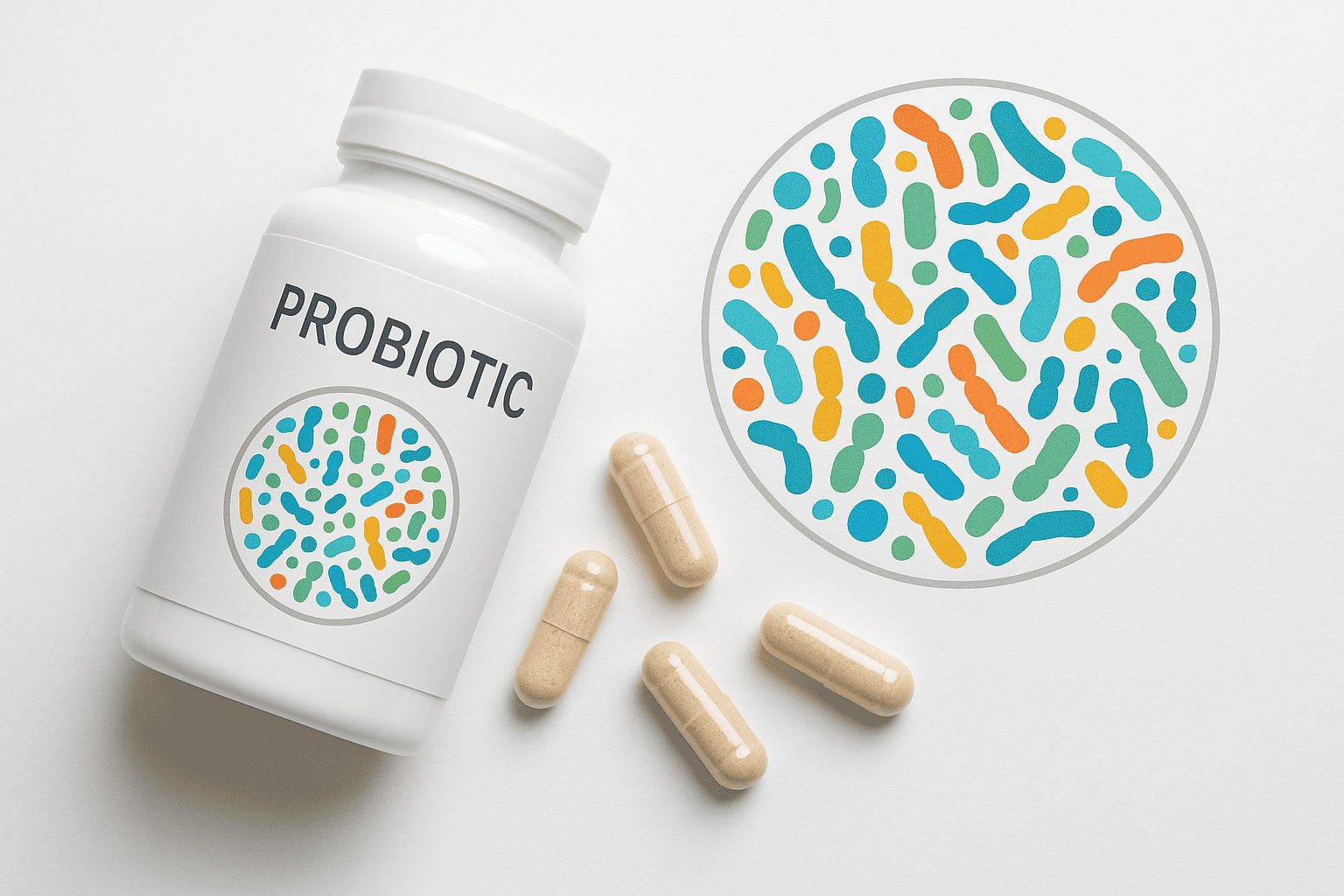
Quick Answer: Probiotics are not interchangeable — strain specificity matters enormously. Lactobacillus rhamnosus GG works for acute diarrhea. Bifidobacterium infantis 35624 targets IBS. Lactobacillus crispatus is the gold-standard for vaginal/UTI support. Choosing the right strain for your specific health goal is the difference between results and expensive placebo.
“Probiotic” on a label tells you almost nothing useful. It’s a category, not a specification — like saying “medication” when you mean ibuprofen. The identity that matters is the full strain designation: Genus, Species, and Strain number. Lactobacillus rhamnosus GG behaves differently from Lactobacillus rhamnosus ATCC 9595, even though they’re the same species.
This guide maps the evidence to specific health goals so you can choose probiotics by what you actually need — not by CFU count or marketing claims. Think of it as a selector hub: when the site already has a deeper article on a specific goal, this page points you there rather than trying to replace every spoke article.
How to Read Probiotic Labels
A proper probiotic identification has three parts:
Example: Lactobacillus rhamnosus GG
- Genus: Lactobacillus
- Species: rhamnosus
- Strain designation: GG (Gorbach-Goldin, the researchers who isolated it)
When a product lists only “Lactobacillus blend” or even “Lactobacillus acidophilus” without a strain number, you cannot determine whether it matches any evidence-based application.
CFU count is secondary to strain identity. 1 billion CFU of the right strain outperforms 50 billion CFU of an unvalidated mixture for most specific health goals.
Strains by Health Application
If you want the short version before diving into the sections, these are the clearest strain-to-goal matches on this page:
- IBS: Bifidobacterium infantis 35624 and Lactobacillus plantarum 299v
- Antibiotic recovery: Lactobacillus rhamnosus GG and Saccharomyces boulardii CNCM I-745
- Vaginal health and UTI support: Lactobacillus crispatus plus L. rhamnosus GR-1 + L. reuteri RC-14
- Oral health and bad breath: Streptococcus salivarius K12 and M18
- Mood and stress: Lactobacillus helveticus R0052 + Bifidobacterium longum R0175
- Immune support: Lactobacillus rhamnosus GG and Bifidobacterium animalis BB-12
- Cholesterol support: Lactobacillus reuteri NCIMB 30242
Best Probiotic Strains for IBS
IBS is a functional GI disorder that encompasses diarrhea-predominant (IBS-D), constipation-predominant (IBS-C), and mixed subtypes. Probiotic evidence in IBS is significant but strain-specific.
Best-evidenced strains:
Bifidobacterium infantis 35624 (Bifantis)
- Specifically developed for IBS; proprietary strain now available as Align
- Landmark double-blind RCT (Whorwell et al., 2006) — 6 billion CFU/day reduced bloating, abdominal pain, and bowel dysfunction scores vs. placebo
- Works across IBS subtypes; mechanisms include mucosal immune modulation and barrier enhancement
Lactobacillus plantarum 299v (LP299V)
- Multiple RCTs showing reduced pain and bloating in IBS-D
- Improves transit time and reduces bacterial gas production
- Available in multiple consumer products; Probi brand is the primary licensed source
VSL#3 (multi-strain formulation)
- Contains 8 strains including multiple Bifidobacterium and Lactobacillus species
- Strongest evidence in IBS-C and ulcerative colitis maintenance
- Prescription version available for UC (Visbiome)
Saccharomyces boulardii CNCM I-745
- Not a bacterium but a yeast probiotic
- Specifically effective for antibiotic-associated diarrhea and traveler’s diarrhea
- Available as Florastor
- Unaffected by antibiotics (being a yeast)
Best Probiotic Strains for Vaginal Health and UTI Support
The vaginal microbiome in healthy women is dominated by Lactobacillus species that maintain low pH (acidic) and produce hydrogen peroxide, inhibiting pathogens including bacterial vaginosis organisms and Candida.
Best-evidenced strains:
Lactobacillus crispatus (CTV-05, ATCC 33820)
- Considered the “gold standard” vaginal Lactobacillus
- Dominant species in women with lowest BV and UTI incidence
- Topical vaginal products with this strain show strongest colonization data
- LiveBiotherapeutic Products (LBPs) with L. crispatus are in clinical trials for BV and UTI prevention
Lactobacillus rhamnosus GR-1 + Lactobacillus reuteri RC-14 (combination)
- The most thoroughly tested oral probiotic combination for vaginal health
- Original human clinical research: Hallen et al. 1992, Reid et al. multiple trials
- Daily oral use results in vaginal colonization (bacteria migrate from rectum to vaginal mucosa)
- Shown to reduce BV recurrence, support vaginal pH, and decrease UTI incidence
- Available as RepHresh Pro-B, Jarrow Fem-Dophilus, Culturelle Women’s
Lactobacillus acidophilus NCFM + Lactobacillus rhamnosus HN001
- Multiple trials showing reduction in recurrent UTI frequency in women
If vaginal, urinary, or broader women’s-health support is your main shopping goal, go deeper with Best Probiotics for Women in 2026: Vaginal, Gut, and Urinary Support, which is built around that exact use case.
Best Probiotic Strains for Antibiotic Recovery
Best-evidenced strains:
Lactobacillus rhamnosus GG
- Highest quality evidence for AAD prevention in both adults and children
- Multiple Cochrane-reviewed RCTs confirm efficacy
- Should ideally start at or before antibiotic initiation; space 2+ hours from antibiotic dose
- Available as Culturelle
Saccharomyces boulardii CNCM I-745
- Strongest evidence for C. difficile-related diarrhea prevention
- Takes 2 capsules/day during and 2 weeks after antibiotics
- Being a yeast, is completely unaffected by antibacterial antibiotics
Best Probiotic Strains for Oral Health and Bad Breath
Oral-health probiotics are a separate niche from gut probiotics. The strains with the clearest use-case fit are Streptococcus salivarius K12 for bad breath, throat ecology, and recurrent tonsil issues, plus M18 for plaque and cavity support.
- K12 is the better-known strain for halitosis support and upper-oral/throat colonization.
- M18 has a more dental-focused profile, including plaque and enamel-support logic.
- Delivery format matters: oral probiotics usually work best as slowly dissolving lozenges, not standard swallowed capsules.
If oral health is the actual goal, read Best Oral Probiotics in 2026: K12, M18 Strains because the strain list, delivery format, and evidence base are different from general gut-focused probiotic shopping.
Best Probiotic Strains for Mood and Stress
The gut-brain axis is a real bidirectional communication network. Certain probiotics demonstrably affect neurotransmitter precursors, vagus nerve signaling, and inflammatory mediators that influence mental health.
Best-evidenced strains:
Lactobacillus helveticus R0052 + Bifidobacterium longum R0175
- This combination is the most evidence-backed for mood and anxiety reduction
- RCT by Messaoudi et al. (2011): reduced anxiety and depression scores, cortisol reduction
- Available as Jamieson Natural Sources Mood Probiotic
Lactobacillus rhamnosus JB-1
- Reduced anxiety-like behavior in animal models; modulates GABA receptor expression
- Human data is limited but promising
Bifidobacterium longum 1714
- Reduced perceived stress and improved memory in healthy volunteers (Allen et al., 2016)
Important caveat: Psychobiotic research is exciting but early. The effect sizes in human trials are typically modest. Probiotics are not a replacement for therapy, medication, or lifestyle interventions for mood disorders. But as adjuncts, these specific strains show meaningful signals.
Best Probiotic Strains for Immune Support and Respiratory Infections
Best-evidenced strains:
Lactobacillus rhamnosus GG
- Reduced duration and severity of respiratory tract infections in children in multiple RCTs
- May reduce frequency of ear infections in daycare children
Bifidobacterium animalis subsp. lactis BB-12
- Consistently shown to reduce incidence of URIs (upper respiratory infections) in adults
- Available in multiple products; Danone licensed this strain widely
Lactobacillus acidophilus NCFM
- Reduced cold duration and severity in a double-blind RCT in adults
Best Probiotic Strains for Cholesterol and Cardiovascular Support
Best-evidenced strains:
Lactobacillus plantarum CECT7527, CECT7528, and CECT7529
- The Cardioviva combination: 3 strains together showed 13% LDL reduction in a rigorous 12-week RCT (Jones et al., 2012)
- Available as Cardioviva capsules in Canada and some US markets
Lactobacillus reuteri NCIMB 30242
- Reduces total and LDL cholesterol via bile salt hydrolase activity
- Multiple RCTs by lactobacillus experts
- Available as Cardivida/BioGaia Cholesterol supplement

Best Probiotic Strains for Eczema and Atopic Conditions
Best-evidenced strains:
Lactobacillus rhamnosus HN001
- Prevention of eczema in high-risk infants when given to pregnant mothers and infants in early life
- A 6-year follow-up showed sustained benefit in the New Zealand RCT (Wickens et al., 2012)
Lactobacillus rhamnosus GG
- Some RCT evidence for reducing eczema severity when started in pregnancy
Best Probiotic Strains for Infant Health (Colic and Early Development)
Lactobacillus reuteri DSM 17938 (BioGaia)
- Strongest evidence for reducing colic crying time in breastfed infants
- Multiple meta-analyses confirm 50%+ reduction in crying duration vs. placebo
- Available as BioGaia Protectis infant drops
Multi-Strain vs Single-Strain Probiotics
The “more is better” instinct leads many to buy 10, 20, or even 40-strain probiotics. But for targeted health goals, this is often counterproductive:
When multi-strain makes sense:
- General gut resilience and diversity
- IBS (VSL#3 for constipation-predominant)
- When you have multiple goals simultaneously
When single/targeted-strain makes more sense:
- Specific conditions (vaginal health, AAD, colic)
- When you need to isolate whether a probiotic works
- Clinical applications like C. difficile prevention
The strain-matching approach is evidence-based and more cost-effective than megadose blends.
Practical Buying Guide
What to Look For
- Full strain designation (Genus + Species + strain ID)
- CFU count at end of shelf life (not manufacture date) — many contain 50%+ fewer live bacteria by expiration
- Third-party verification
- Appropriate storage (some strains require refrigeration; look for “refrigerate after opening” at minimum)
Red Flags
- “Proprietary blend” masking individual strain doses
- Species listed without strain designation (e.g., “Lactobacillus acidophilus” with no strain)
- Impossible CFU claims (100 billion+ CFU in a single room-temperature capsule)
- Products marketing generic “immune support” without strain specificity
Key Takeaways
- Strain identity matters more than CFU count — always look for full strain designation
- IBS: B. infantis 35624 (Align) and L. plantarum 299v have strongest evidence
- Vaginal/UTI: L. rhamnosus GR-1 + L. reuteri RC-14 combination is the most tested oral option
- AAD: L. rhamnosus GG and S. boulardii CNCM I-745 are well-established
- Mood/anxiety: L. helveticus R0052 + B. longum R0175 combination shows the best human data
- Cholesterol: L. reuteri NCIMB 30242 has solid RCT evidence
- Probiotics should complement — not replace — standard treatments for medical conditions
- The “more strains = better” assumption is wrong for most specific health goals
Frequently Asked Questions
How do I know which probiotic strain is right for me?
Match the strain to your primary health goal using evidence. If you have IBS symptoms, look for B. infantis 35624 or L. plantarum 299v. If you’re prone to BV or UTIs, seek L. rhamnosus GR-1 + L. reuteri RC-14. This guide provides the mapping.
Does the CFU count matter?
CFU matters less than strain identity. However, the dose should be within the range used in clinical trials — typically 1–50 billion CFU depending on strain and application. Ensure the CFU count is listed at end of shelf life.
Can I take multiple probiotic strains simultaneously?
Yes, though interactions between strains are poorly understood. A simpler approach is to use a targeted strain for your primary concern, and if needed, add other strains at different times of day.
Do probiotics need refrigeration?
Some do, some don’t. Strains like L. rhamnosus GG are more shelf-stable; others require refrigeration. Check the product label. Higher temperatures and moisture degrade viability faster.
How long do I need to take probiotics?
For specific conditions like AAD prevention, 2 weeks during and after antibiotics is typical. For IBS management or vaginal health, ongoing use (weeks to months) is generally needed. Benefits often persist while taking and fade when stopped.
What is the best probiotic for beginners?
If you are new to probiotics and do not have a specific health condition driving the choice, Lactobacillus rhamnosus GG (available as Culturelle) is the most broadly studied strain with a solid safety record in adults and children. It is widely available, shelf-stable, and has clinical backing for both gut resilience and immune support. If you have a specific goal—IBS, vaginal health, mood support—use the strain-to-goal matching in this guide rather than defaulting to a high-CFU generalist blend.
Is it safe to take probiotics every day long-term?
For most healthy adults, daily probiotic use appears safe over extended periods. The well-studied strains like L. rhamnosus GG and B. animalis BB-12 have long safety records in general populations. The important exceptions are people who are immunocompromised, critically ill, or have central venous catheters—in those cases, even beneficial bacteria can pose infection risk and a clinician should be involved. For everyone else, consistent daily use at evidence-matched doses is generally considered low-risk, with the caveat that benefits in healthy people are more modest than in those with a specific condition the probiotic targets.
Why do probiotics cause bloating, and how do you fix it?
Bloating when starting probiotics is common and usually temporary. It typically happens because the introduced bacteria interact with existing gut flora and fermentable substrates, producing gas in the process. Most people find it settles within one to two weeks as the gut adjusts. To minimize it: start with a lower dose than the full recommended amount, take the probiotic with food rather than on an empty stomach, and avoid pairing a new probiotic with a sudden large increase in fiber. If bloating persists beyond two to three weeks or is severe, try a different strain—some formulations are better tolerated than others for individual gut profiles.
Can you take probiotics with magnesium or berberine?
Usually yes, probiotics can be taken with magnesium or berberine, but timing and tolerance matter more than the idea of a direct conflict. Magnesium is generally neutral from a probiotic-strain perspective, while berberine has antimicrobial effects that may make some people prefer separating it from probiotics by a few hours if their stomach is sensitive. If magnesium is the bigger question, see Best Magnesium Supplements in 2026; if you are specifically weighing berberine, see Berberine Benefits in 2026.
Are probiotic gummies as good as capsules?
Sometimes, but capsules usually give you better strain labeling, more reliable dose stability, and fewer filler ingredients like added sugar. Gummies can still be a reasonable choice for consistency if you dislike pills, but the better product is the one that lists the exact strain and delivers an evidence-matched dose through shelf life.
Sources
- National Institutes of Health Office of Dietary Supplements. Probiotics fact sheet.
- Reviews on strain-specific probiotic effects. PubMed search.
- Reviews on Lactobacillus rhamnosus GG. PubMed search.
- Clinical trials on Bifidobacterium longum strains. PubMed search.
- Reviews on Saccharomyces boulardii. PubMed search.
Related Articles
- Best Oral Probiotics in 2026
- Best Probiotic Strains for Constipation
- Prebiotics vs Probiotics
- Gut Supplement Stack for Beginners
- Best Probiotics for Women in 2026
📚 Part of our Best Probiotics in 2026 hub. Explore all our probiotic and gut health guides.