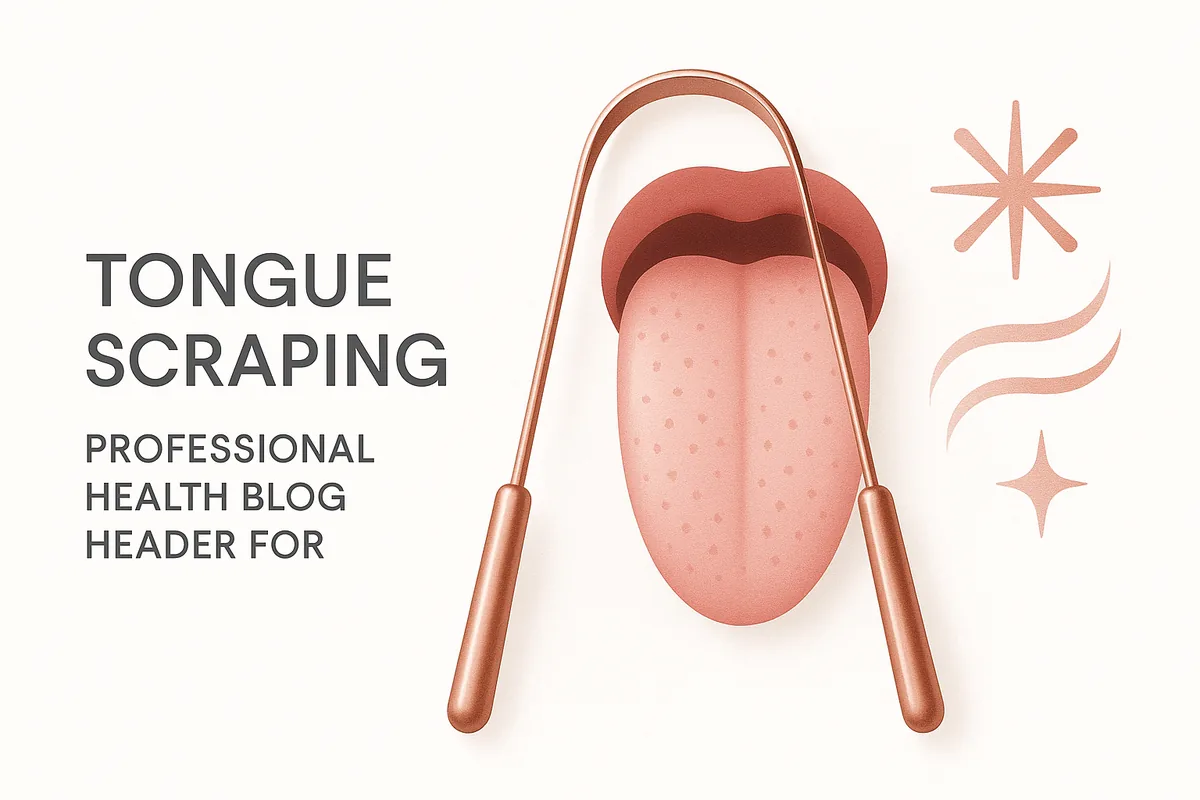
Tongue Scraping: Halitosis Evidence & Best Tools
- The tongue coating on the back of the tongue is one of the main sources of intra-oral halitosis.
- Trials summarized in a Cochrane review found tongue scrapers reduce volatile sulfur compounds better than brushing the tongue with a toothbrush.
- The best tongue scraper is the one you will use consistently, but stainless steel is usually the most durable and easiest to clean.
- Tongue scraping helps bad breath caused by biofilm, but it will not solve halitosis from gum disease, dry mouth, reflux, or tonsil stones.
- Gentle once-daily scraping is usually enough. More force does not equal better results.
Quick Answer: Tongue scraping works. It is one of the simplest evidence-based ways to reduce bad breath because it removes the tongue coating that produces volatile sulfur compounds, although it works best as part of a full oral-hygiene routine rather than a stand-alone fix.
Most people blame bad breath on the teeth, but the back of the tongue is often the main problem. That rough surface traps bacteria, food debris, dead cells, and proteins, which then break down into the sulfur compounds that create the classic “morning breath” and persistent halitosis smell.
That is why tongue scraping has survived every wellness trend cycle: it is not mystical, it is mechanical. You are removing biofilm from one of the most odor-prone surfaces in the mouth. If you are also comparing rinses, see this mouthwash guide for what can help after brushing and scraping.
Why the tongue matters so much in halitosis
A review in Journal of Breath Research describes tongue coating as the main cause of intra-oral halitosis, with volatile sulfur compounds as the principal odor-producing chemicals. In practical terms, that means a clean-looking smile can still come with bad breath if the tongue surface is heavily coated.
Periodontal disease can also contribute to mouth odor, but tongue coating is the easiest daily target because you can physically remove a lot of it in a few seconds.
What the evidence says about tongue scraping
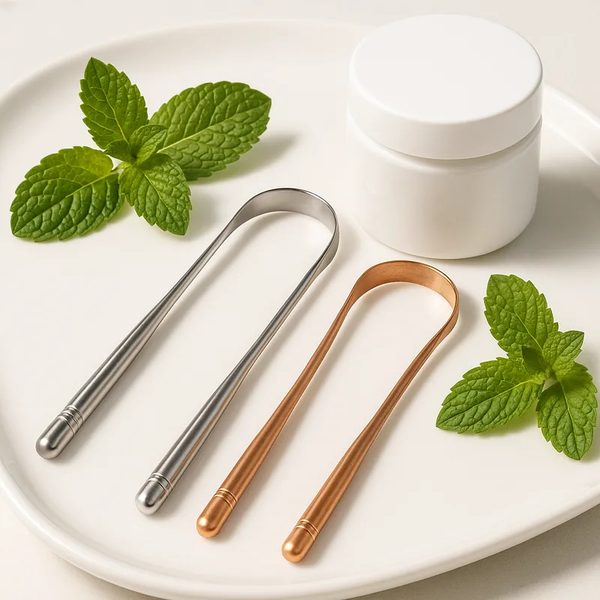
The best short summary comes from the Cochrane review: tongue scrapers and tongue cleaners showed a statistically significant advantage over toothbrushes for reducing volatile sulfur compounds in adults with halitosis. The difference was not magic, but it was meaningful enough to matter in real life.
That lines up with the biology. The scraper covers more surface area, bends to the shape of the tongue, and lifts debris off the papillae better than toothbrush bristles. If your goal is odor reduction, a purpose-built scraper makes more sense than using whatever brush happens to be near the sink.
Best tongue scraper tools: what to buy
| Type | Best for | Pros | Cons |
|---|---|---|---|
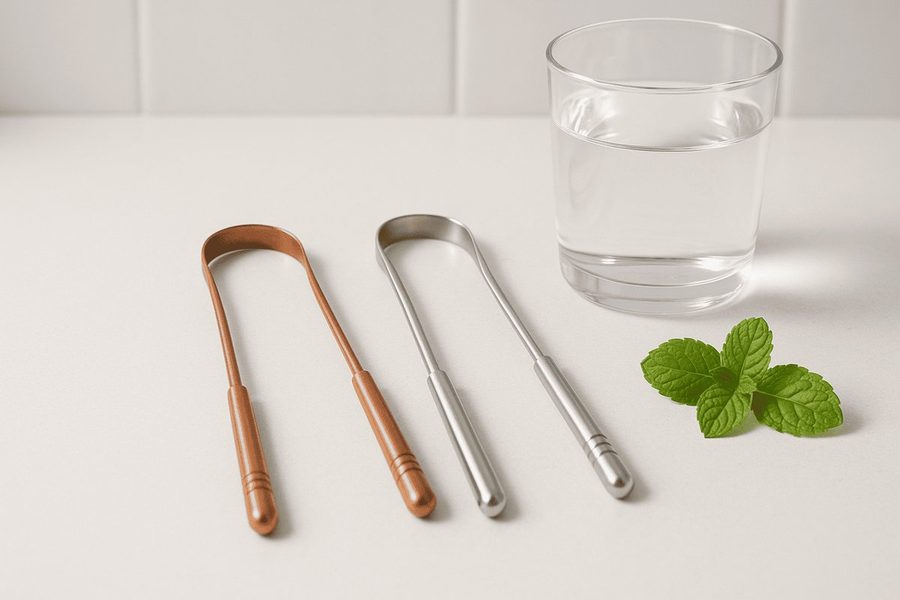
| Stainless steel | Most people | Durable, easy to sanitize, gentle with good technique | Costs a bit more up front |
| Copper | People who like traditional metal scrapers | Flexible and effective | Needs more maintenance to keep clean and dry |
| Plastic | Travel or trying the habit cheaply | Inexpensive and easy to find | Less durable and easier to replace often |
The “best” material is mostly about durability and comfort. There is no strong clinical reason to think a copper scraper dramatically outperforms stainless steel for breath. Technique and consistency matter more.
How to tongue scrape correctly
1. Start at the back, but not so far that you gag badly
Place the scraper on the back third of the tongue as far as you can tolerate comfortably.
2. Pull forward with light pressure
You are lifting coating off the surface, not shaving the tongue. One gentle pass is better than one aggressive pass.
3. Rinse the scraper between passes
Most people do 2 to 5 passes. Stop once the heavy coating is mostly gone.
4. Finish with brushing, flossing, and hydration
Tongue scraping works best when it is part of a complete routine. Dry mouth, gum bleeding, and trapped food between teeth can still keep breath bad even if your tongue is clean.
People who also struggle with buildup, plaque, or “natural” remedies should keep the limits straight. Oil pulling has much weaker and more mixed evidence than physically removing tongue coating, and it is not a replacement for brushing or flossing.
When tongue scraping will not fix bad breath
If scraping helps only a little or the smell comes back quickly, the issue may be something else:
- gum disease or untreated cavities
- dry mouth from mouth breathing, medications, or dehydration
- tonsil stones
- sinus drainage
- reflux or other gastrointestinal causes
That is also why mouth freshness is bigger than one habit. If you are chewing sugarless gum for saliva support, that can complement scraping by reducing dry-mouth conditions that let odor linger.
FAQ
Does tongue scraping really help bad breath?
Yes. It helps because it removes the tongue coating that produces a large share of bad-breath sulfur compounds. It is not the only cause of halitosis, but it is one of the easiest to improve.
How often should you scrape your tongue?
Once daily is enough for most people. Some people prefer morning and evening, but scraping harder or more often does not automatically produce better breath.
Is a copper tongue scraper better than stainless steel?
Not clearly. Copper and stainless steel can both work well. Stainless steel is usually the simpler, lower-maintenance choice for most people.
Can tongue scraping damage the tongue?
It can if you use excessive pressure. Gentle scraping should not damage taste buds or the tongue surface, but aggressive scraping can irritate tissue and make the habit unpleasant.
Sources
- Reviews on tongue scraping and halitosis. PubMed search.
- Reviews on oral hygiene and tongue cleaning. PubMed search.
- Systematic reviews on halitosis treatment. PubMed search.
- American Dental Association. Tongue scrapers guidance.
- Reviews on the oral microbiome and tongue. PubMed search.
Related Articles
- Best At-Home Teeth Whitening in 2026
- Best Oral Probiotics in 2026
- Probiotic Strain Guide
- Best Probiotic Strains for Constipation
- Prebiotics vs Probiotics
📚 Part of our Best At-Home Teeth Whitening hub. Explore all our oral health guides.