
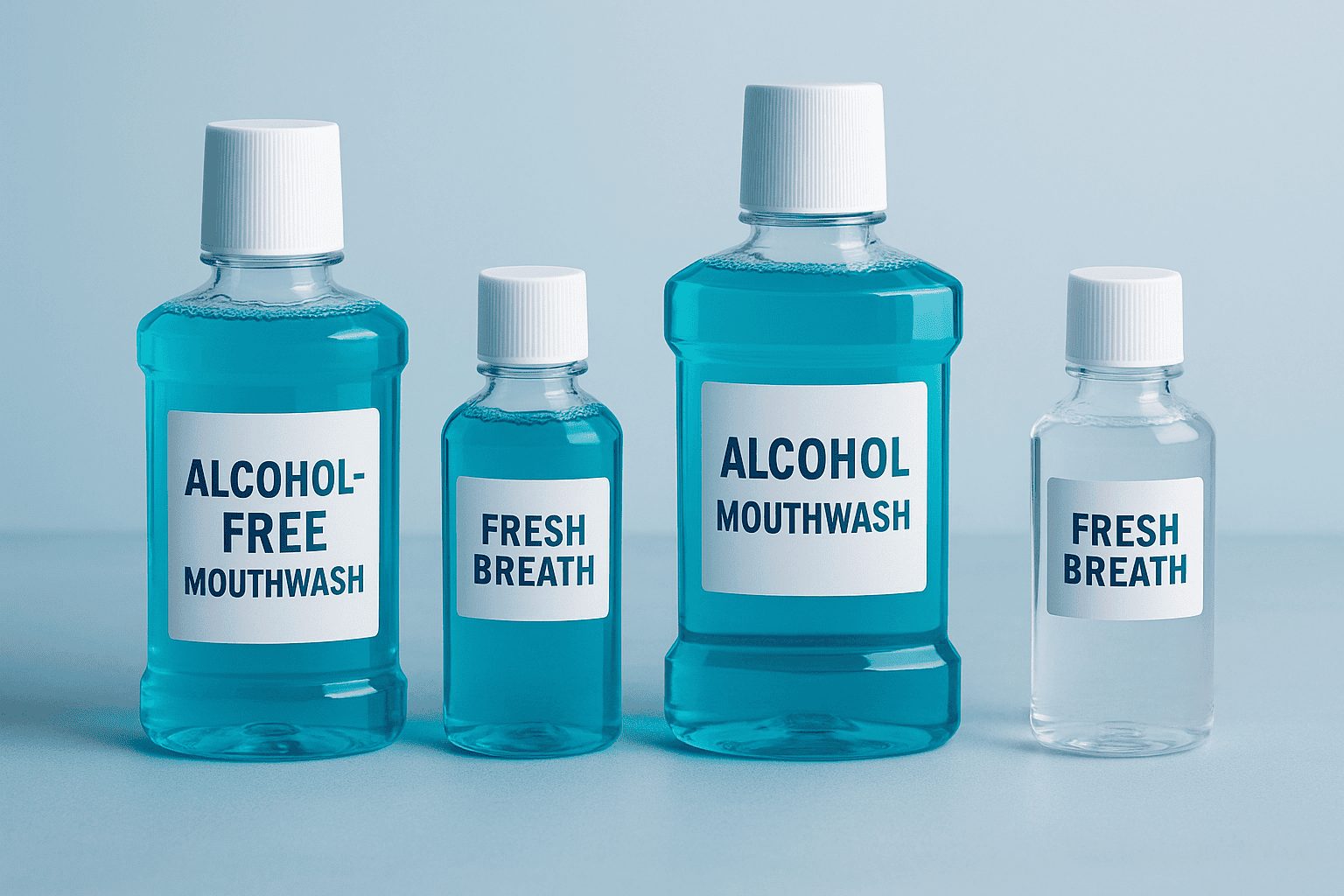
- For most people, mouthwash is an adjunct, not a substitute for brushing, flossing, and dental care.
- Alcohol-free antimicrobial rinses are usually the best default for daily use when the goal is fresher breath plus plaque or gingivitis support.
- Chlorhexidine is effective, but it is usually best reserved for short-term, dentist-directed use because staining and taste changes are common.
- Fluoride rinses make the most sense for people with higher cavity risk, orthodontic appliances, or enamel concerns.
- The best mouthwash depends on the goal: bad breath, gum inflammation, cavity prevention, or dry-mouth comfort are not the same problem.
Quick Answer: The best mouthwash for daily use is usually an alcohol-free rinse matched to your goal: CPC or essential-oil rinses for plaque and breath support, fluoride rinses for cavity risk, and chlorhexidine only when a dentist specifically wants short-term antibacterial control. Mouthwash can help, but it does not replace brushing and flossing.
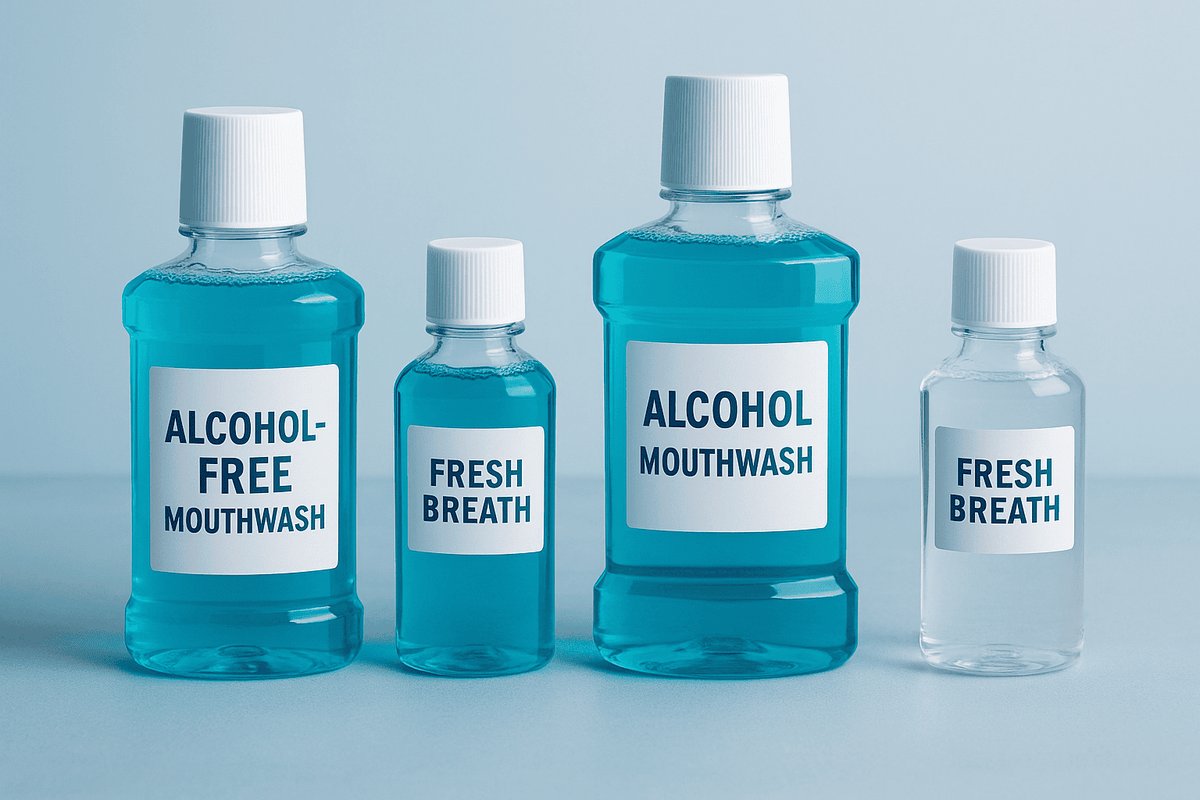
Mouthwash gets marketed as if one bottle should do everything: freshen breath, kill every germ, prevent cavities, heal gums, and somehow make your mouth feel “clinical.” Real life is not that neat. The best mouthwash depends on what problem you are actually trying to solve.
If you only remember one thing from this guide, make it this: daily mouthwash should be boringly appropriate. You usually want something effective enough to help, gentle enough to keep using, and specific enough to match your actual problem. If your breath issue starts on the tongue, a tongue scraper may matter as much as the rinse you choose.
If you are really asking, “What is the best mouthwash for bad breath, dry mouth, gum health, or whitening maintenance?” the answer changes with the goal. That is why the comparison below is organized around the problem you are trying to solve rather than around the loudest bottle on the shelf.
What mouthwash can and cannot do
The American Dental Association notes that therapeutic mouthrinses with ingredients such as cetylpyridinium chloride, chlorhexidine, and essential oils can help reduce plaque and gingivitis when combined with brushing and flossing. That phrase matters: when combined with. Mouthwash does not remove sticky plaque from between teeth, and it does not fix a poor brushing routine.
Cosmetic rinses mainly mask odor. Therapeutic rinses try to change the oral environment. Both can make your mouth feel cleaner, but only the second category is doing meaningful work beyond flavor.
Best mouthwash by goal: bad breath, gum health, dry mouth, cavities, and whitening maintenance
| Your goal | Best fit | Why it helps | Main caution |
|---|---|---|---|
| Bad breath | CPC or essential-oil rinse, plus tongue cleaning | Helps reduce odor-causing bacteria rather than only masking smell | If tongue coating is the real issue, rinse alone is rarely enough |
| Gum health and mild gingivitis support | CPC or essential-oil rinse for daily use; chlorhexidine only short term if advised | Can lower bacterial load and support plaque control alongside brushing and flossing | Chlorhexidine works, but staining and taste changes make it a poor casual default |
| Dry mouth or sensitivity | Alcohol-free gentle rinse | Less likely to sting, dry, or irritate already sensitive tissues | May feel less intense even when it is the smarter long-term choice |
| Cavity prevention | Fluoride rinse | Supports enamel and caries prevention | Not mainly a breath product |
| Whitening maintenance | Gentle alcohol-free rinse used around peroxide whitening | Keeps the routine tolerable without adding as much irritation | Mouthwash does not bleach teeth the way peroxide does |
CPC for everyday use
Cetylpyridinium chloride, usually shortened to CPC, is a reasonable daily-use antimicrobial ingredient for many people. A recent systematic review comparing CPC and chlorhexidine found that chlorhexidine had a small plaque-control edge in non-brushing situations, but in ordinary brushing situations there was no significant difference between them for plaque and gingivitis prevention.
That is a useful real-world finding. Most people are brushing. So if you want an antimicrobial rinse that fits normal life, CPC often gives you enough benefit with fewer reasons to reserve it like a prescription-style tool.
Chlorhexidine for short-term, dentist-directed situations
Chlorhexidine is the heavy hitter. It is often used after dental procedures or during periods of significant gum inflammation because it is reliably antimicrobial. It is not, however, the best default for casual daily use. The ADA notes staining of teeth, dentures, and tongue, plus altered taste, as known issues. The recent review comparing CPC with chlorhexidine also found chlorhexidine tends to stain more.
So yes, chlorhexidine works. But it works in the same way a very strong medication works: useful in the right setting, annoying enough that you do not treat it as lifestyle mouthwash.
Fluoride rinses for cavity-prone mouths
Fluoride rinse makes the most sense when the main problem is not odor or gum swelling but cavity risk. That includes people with frequent decay, dry mouth, orthodontic appliances, or enamel that seems to get demineralized easily. Cochrane evidence supports fluoride mouthrinses for caries prevention, especially in younger populations and higher-risk settings.
If your enamel is the issue, a fluoride rinse is usually more rational than chasing harsher whitening or antiseptic products. It pairs well with habits that support saliva and remineralization, including sugarless gum.
Alcohol-Free vs. Alcohol-Based Mouthwash: Which Is Better for Daily Use?
Many people assume the burn means the rinse is working. Usually it just means the formula is harsh. Alcohol-based products can feel powerful, but that same intensity can be unpleasant for people with dry mouth, mouth ulcers, irritated gums, or whitening sensitivity.
Alcohol-free formulas are usually the better daily choice unless you have a very specific reason otherwise. They are easier to keep using consistently, and consistency matters more than drama.

How to choose the best mouthwash for your situation
For bad breath
Choose a therapeutic rinse, but also check the cause. Mouthwash helps more when paired with tongue scraping, hydration, and plaque control. If you are hoping mouthwash will rescue a coated tongue or gum disease by itself, it will disappoint you.
For gum health
If your gums bleed easily or feel inflamed, think in terms of plaque control, not just mint strength. CPC and essential-oil rinses make more sense as daily adjuncts, while chlorhexidine is better treated as a short-term tool for dentist-directed situations rather than a forever rinse.
For dry mouth
Choose an alcohol-free rinse that feels gentle enough to use consistently. People with dry mouth often do worse with high-burn formulas, and if decay risk is part of the picture, pairing a gentle rinse with fluoride support is usually smarter than chasing the strongest antiseptic feel.
For sensitive teeth
If your teeth are already reactive to temperature or feel tender after whitening, treat your mouthwash choice the same way you would treat everything else in your routine: prioritize gentle. Alcohol-free rinses are the natural default. A fluoride rinse may also help if the sensitivity ties to enamel thinning. Avoid anything with strong menthol or astringent actives until sensitivity settles.
For whitening maintenance
Choose a gentle alcohol-free rinse, especially if you are using peroxide strips or trays. Harsh rinses can make an already sensitive mouth feel worse after at-home whitening.
For “natural” oral care
Be careful. Natural sounding does not equal more effective. If you are tempted to replace evidence-backed rinses with oil pulling, understand that the evidence for oil pulling is far weaker and more limited.
FAQ
Is chlorhexidine the best mouthwash?
No, not for most people. Chlorhexidine is very effective, but it is usually best for short-term or dentist-directed use because staining and taste changes are common.
Is alcohol-free mouthwash better?
For daily use, often yes. Alcohol-free rinses are generally easier on dry, sensitive, or irritated mouths and are usually the better default for long-term use.
What mouthwash is best for cavities?
A fluoride rinse is the better choice when cavity prevention is the main goal. It supports enamel and makes more sense than choosing a breath-focused rinse if decay risk is the real issue.
Can mouthwash replace brushing and flossing?
No. Mouthwash is an adjunct. It can lower bacterial load or deliver fluoride, but it does not physically remove plaque the way brushing and flossing do.
Should you use mouthwash before or after brushing?
The ADA generally suggests using mouthwash after brushing and flossing so you are not rinsing away fluoride that just coated your teeth—especially if you use a fluoride toothpaste. That said, some people prefer to rinse before brushing to loosen debris, and for purely breath-focused rinses the timing matters less. If your mouthwash contains fluoride, using it at a separate time from brushing (such as after lunch) may give your enamel an extra fluoride exposure rather than duplicating what your toothpaste already does.
How long should you swish mouthwash?
Most therapeutic mouthwashes recommend 30 to 60 seconds of active swishing—enough time for the active ingredient to contact the gum tissue and tooth surfaces without requiring an uncomfortable extended effort. Chlorhexidine rinses often specify 30 seconds. Longer is not meaningfully better for most products, and some people swish so briefly that the rinse barely reaches the back of the mouth where bacteria accumulate. Set a timer the first few times until 30 to 60 seconds feels natural.
Can mouthwash help with bleeding gums?
Mouthwash can support gum health as part of a broader routine, but it is not the root fix for consistently bleeding gums. Bleeding typically signals plaque-related inflammation, and the most effective interventions are better brushing technique, flossing, and professional cleaning—not adding a rinse on top of inadequate mechanical care. That said, a CPC or essential-oil antimicrobial rinse used alongside proper brushing and flossing can reduce the bacterial load that drives gingivitis. If gums bleed regularly despite good hygiene, see a dentist rather than relying on mouthwash alone.
Sources
- Reviews on chlorhexidine mouthwash. PubMed search.
- Reviews on CPC mouthwash. PubMed search.
- American Dental Association. Mouthrinse guidance.
- Reviews on fluoride mouthwash and caries prevention. PubMed search.
- Reviews on alcohol-free mouthwash. PubMed search.
Related Articles
- Oil Pulling: Does It Work?
- Tongue Scraping: Halitosis Evidence & Best Tools
- Best At-Home Teeth Whitening in 2026
- Best Oral Probiotics in 2026
- Probiotic Strain Guide
📚 Part of our Best At-Home Teeth Whitening hub. Explore all our oral health guides.




Leave a Reply