Best At-Home Teeth Whitening in 2026: What Works
- At-home whitening works best when it uses peroxide, usually hydrogen peroxide or carbamide peroxide.
- Strips and custom trays can change the internal color of teeth, while whitening toothpastes mostly remove surface stains.
- Charcoal toothpaste and peroxide-free “natural whitening” products have weak evidence and can add unnecessary abrasion.
- Tooth sensitivity is the most common side effect, but it is usually temporary and often improves with shorter wear times or lower-strength products.
- Crowns, veneers, and fillings do not bleach, so uneven color is a common reason to get professional advice before whitening.
Quick Answer: The best at-home teeth whitening options are peroxide-based strips and custom trays. They are the methods with the strongest evidence for actually lightening teeth, while whitening toothpaste mainly helps with surface stains and charcoal products do much less than the marketing suggests.

If you want a realistic answer instead of whitening hype, here it is: at-home whitening can work very well, but only when the product is doing real bleaching instead of just polishing the surface. That is why peroxide strips and tray systems consistently outperform trendier options like charcoal toothpaste, “detox” powders, or blue-light gadgets that do not deliver enough bleaching chemistry on their own.
The goal is not just a brighter smile for a week. The goal is getting a noticeable improvement without wrecking your teeth with overuse, setting yourself up for sensitivity, or wasting money on products that mostly clean stains. If bad breath is part of the problem too, pair whitening with a good tongue scraping routine rather than assuming whiter teeth will make your mouth feel cleaner.
How at-home whitening actually works
True bleaching works by letting peroxide move through enamel and break down stain molecules inside the tooth. According to the American Dental Association, the most common bleaching ingredients are hydrogen peroxide and carbamide peroxide. That matters because intrinsic color change is very different from simply scrubbing coffee or tea off the surface.
Peroxide strips and trays are the evidence-based options
Strips are convenient, predictable, and usually the best starting point for most people. They place peroxide against the front surface of the teeth for a set amount of time each day, which makes them useful for mild to moderate yellowing.
Custom trays are the more flexible option. A tray holds bleaching gel against more of the tooth surface and can be easier to fine-tune for wear time and strength. A systematic review and meta-analysis found tray-delivered carbamide peroxide products performed at least as well as, and in some analyses slightly better than, tray hydrogen peroxide for at-home bleaching.
Whitening toothpaste is mostly a maintenance tool
Whitening toothpastes can help remove extrinsic stains from coffee, tea, red wine, or smoking. What they usually cannot do well is change the underlying shade of the tooth. That is why many people think a toothpaste “is not working” when the real issue is that they are asking a polishing product to do a bleaching job.
Used correctly, whitening toothpaste can still be helpful after a peroxide cycle. It is just better understood as maintenance, not the main event.
What works best: quick comparison
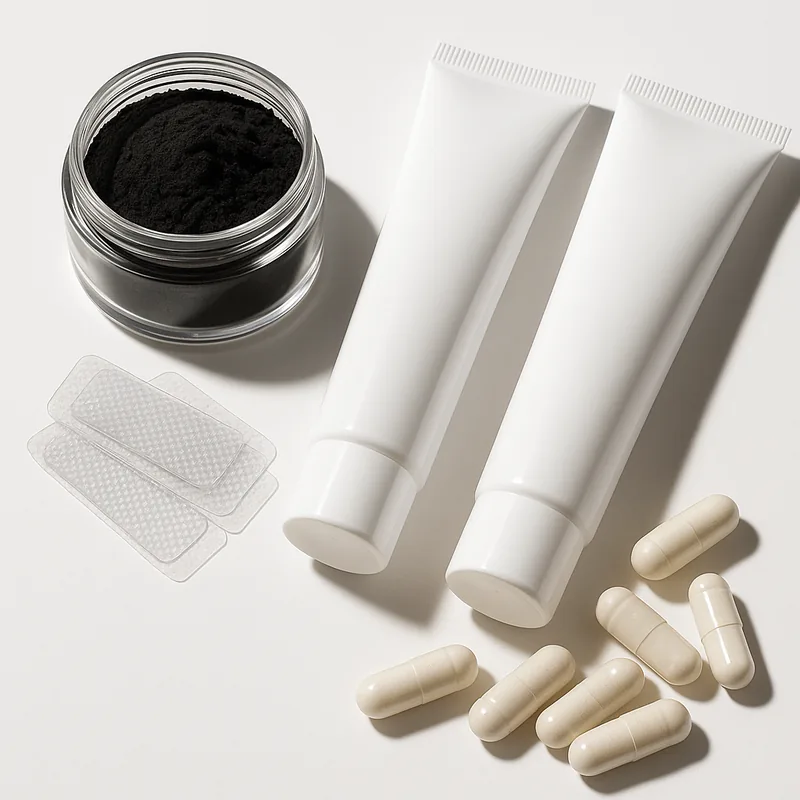
| Method | Best use | What it can do | Main downside |
|---|---|---|---|
| Peroxide strips | Most people whitening at home | Noticeable bleaching with simple daily use | Temporary sensitivity or gum irritation |
| Custom trays | More customized whitening | Strong coverage and adjustable wear time | More effort and easier to overdo |
| Whitening toothpaste | Surface stain control | Removes superficial discoloration | Limited real bleaching |
| Charcoal toothpaste | Mostly marketing appeal | Little to no meaningful whitening advantage | Can increase surface roughness and abrasion |
| Peroxide-free “natural” kits | People avoiding peroxide | Weak evidence for real whitening | Often disappointing results |
Why charcoal toothpaste is a myth for real whitening
Charcoal products became popular because they look like they should pull stains out of teeth. The evidence is a lot less exciting. A 2020 systematic review on natural, peroxide-free bleaching agents concluded that the current literature does not support these agents as reliable dental bleaching tools. An in vitro study in Clinical Oral Investigations also found charcoal whitening toothpastes did not deliver clinically acceptable whitening performance and often increased enamel surface roughness.
In plain English: charcoal may make you feel like you are doing something aggressive and effective, but that is not the same thing as actually bleaching teeth. If you are also experimenting with trends like oil pulling, keep expectations grounded. Neither charcoal nor oil pulling is a substitute for peroxide if your goal is visible whitening.
How to choose the best at-home whitening method for your goal
If you want the best balance of results and convenience
Choose peroxide strips. They are easy to use, widely available, and strong enough for most common staining patterns.
If you have more stubborn staining
Choose a tray-based system, ideally after a dentist confirms you do not have cavities, leaking restorations, or exposed root surfaces that would make whitening miserable.
If you already whitened and just want to hold the result
Use a whitening toothpaste, watch staining drinks, and consider habits that reduce surface exposure to acids and pigments. Even something simple like sugarless gum after meals can help by increasing saliva flow instead of letting acids and pigments sit on teeth.
How to manage whitening sensitivity
Sensitivity is the most common reason people quit too early. The American Dental Association notes that peroxide systems can cause transient tooth sensitivity and gum irritation. Usually that means you should adjust the protocol, not panic.
- Shorten wear time instead of stacking more applications.
- Use the product every other day if your teeth are reactive.
- Avoid whitening immediately after very acidic food or aggressive brushing.
- Do not keep “touching up” because you are chasing an unnaturally white shade.
If you already have a dry or irritated mouth, using the right mouthwash matters more than people think. Alcohol-heavy rinses can make an irritated mouth feel worse right when you are trying to tolerate peroxide.
When not to whiten at home
At-home whitening is a poor fit if you have untreated cavities, cracked teeth, gum recession, severe sensitivity, or a smile with multiple visible crowns and fillings. Restorations do not bleach with natural teeth, so uneven color can become more obvious after treatment.
Dark gray, brown, or banded discoloration can also be harder to improve with OTC options alone. In those cases, a dentist can tell you whether bleaching, bonding, or another cosmetic approach makes more sense.
FAQ
Do whitening strips really work?
Yes. Peroxide whitening strips work because they deliver a real bleaching agent to the tooth surface for repeated contact over time. They are one of the most practical evidence-backed options for at-home whitening.
Is charcoal toothpaste safe for whitening?
Not as a primary whitening strategy. Charcoal products have weak evidence for real bleaching and may add surface roughness or abrasion without producing the kind of shade change most people want.
How long do at-home whitening results last?
Results can last months, but they fade faster if you smoke or drink a lot of coffee, tea, or red wine. Maintenance habits and occasional touch-ups matter more than buying the most aggressive product once.
Will whitening work on crowns, veneers, or fillings?
No. Whitening changes natural tooth structure, not dental restorations. If you have visible restorations in your smile line, talk to a dentist before whitening so you do not create obvious color mismatch.
Sources
- Reviews on at-home teeth whitening products. PubMed search.
- Reviews on hydrogen peroxide teeth whitening safety. PubMed search.
- American Dental Association. Teeth whitening guidance.
- Reviews on carbamide peroxide teeth whitening. PubMed search.
- Reviews on LED teeth whitening efficacy. PubMed search.