
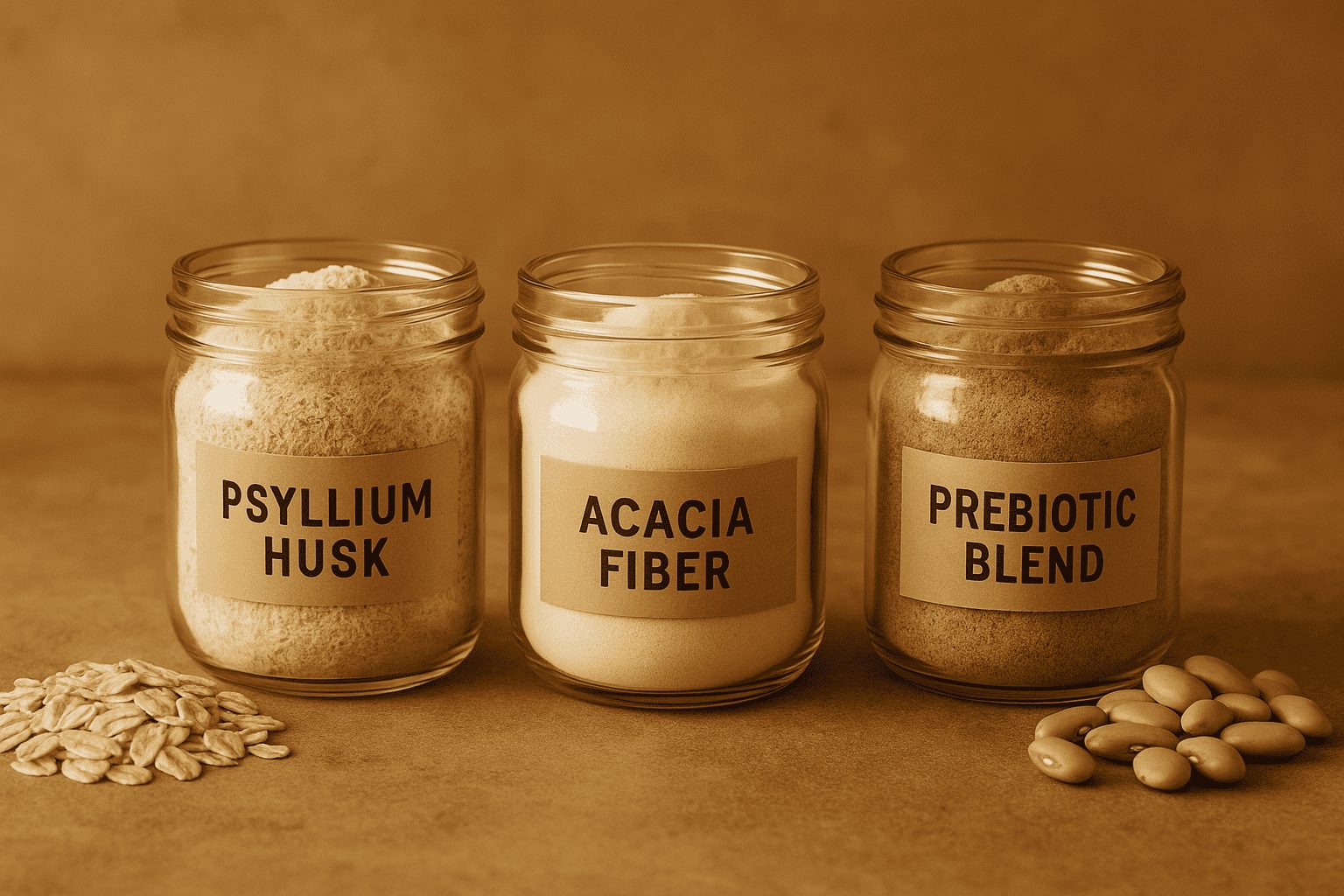
Best Fiber Supplements: Psyllium, Acacia, More
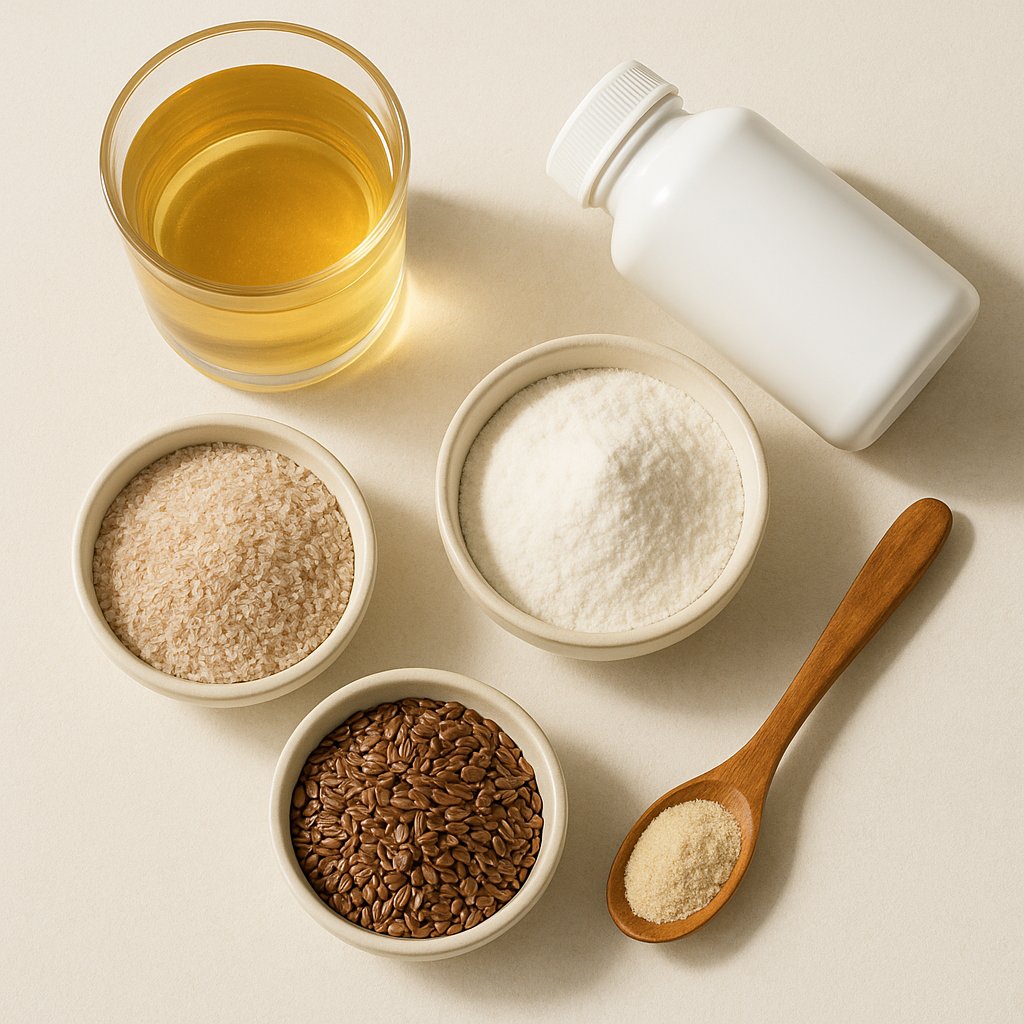
Quick Answer: Psyllium husk is the most evidence-backed fiber supplement for cholesterol reduction, blood sugar control, and regularity. For gut microbiome and prebiotic support, choose acacia fiber, inulin, or FOS. Always increase water intake when adding fiber supplements.
Many prebiotic fibers double as digestive support. For a focused look at FOS, GOS, and resistant starch options, see our roundup of the best prebiotic supplements in 2026.
Most people don’t get enough fiber. The average American consumes 10-15 grams per day, well below the recommended 25-38 grams. But fiber deficiency isn’t just a constipation issue — insufficient fiber is linked to dysbiosis (an imbalanced gut microbiome), impaired blood sugar regulation, elevated LDL cholesterol, increased colorectal cancer risk, and compromised gut barrier integrity.
Fiber supplements can meaningfully bridge the gap, but not all fibers work the same way or for the same purposes. This guide covers the major fiber supplement types, their specific benefits, and how to choose the right one for your goals.
Types of Dietary Fiber: The Framework
Understanding fiber classification helps you match supplements to goals:
Soluble fiber: Dissolves in water to form a gel. Slows digestion, lowers LDL cholesterol (by binding bile acids), moderates blood sugar spikes, and feeds beneficial gut bacteria. Examples: psyllium, inulin, FOS, guar gum, pectin, beta-glucan.
Insoluble fiber: Doesn’t dissolve. Adds bulk to stool, speeds transit time, and reduces constipation. Examples: wheat bran, cellulose, most vegetable fibers.
Prebiotic fiber: A subset of soluble fiber that specifically feeds beneficial gut bacteria (primarily Bifidobacterium and Lactobacillus). Examples: inulin, FOS (fructooligosaccharides), GOS (galactooligosaccharides), pectin, resistant starch.
Viscous fiber: Forms a thick gel in the gut, most relevant for cholesterol and blood sugar benefits. Psyllium and beta-glucan (oats) are the most viscous common fibers.
Most whole foods contain both soluble and insoluble fiber. Supplements tend to be more concentrated in one type.
Psyllium Husk
Psyllium (Plantago ovata seed husk) is the best-studied fiber supplement and the most versatile. It’s both soluble (and highly viscous) and partially fermentable.
Key benefits backed by strong evidence:
Cholesterol reduction: Psyllium is FDA-approved as a cholesterol-lowering food ingredient. Meta-analyses show consistent reductions of 5-10% in LDL cholesterol with 10-15g/day. The mechanism is viscous gel binding bile acids in the gut, forcing the liver to convert more cholesterol into new bile acids (reducing serum LDL).
Blood sugar management: The viscous gel slows glucose absorption and blunts post-meal blood sugar spikes. Several trials show meaningful reductions in HbA1c in type 2 diabetics with 10-15g/day. Psyllium is often recommended as an adjunct to dietary management.
Constipation relief: Very well-established. The gel softens stool and increases bulk. Works for both constipation and diarrhea (it normalizes transit time bidirectionally).
IBS: The NICE guidelines (UK) specifically recommend psyllium (ispaghula husk) for IBS symptoms. Multiple RCTs support its use for IBS with constipation predominance and mixed-type IBS.
Gut microbiome: Psyllium is partially fermentable — it feeds some beneficial bacteria, though less than dedicated prebiotic fibers.
Practical notes:
- Take with 8+ oz water; inadequate fluid can worsen constipation or cause choking risk
- Start low (5g/day) and increase gradually to minimize gas and bloating
- Typical therapeutic dose: 10-15g/day in 2-3 divided doses
- Available as powder (Metamucil-style) or capsules; powder generally better for cholesterol effects due to higher dose convenience
- Psyllium can reduce absorption of medications (lithium, carbamazepine, certain diabetes drugs) — take 2 hours apart from medications
Psyllium Husk vs. Psyllium Seed
Psyllium husk is the outer coating of the seed — more concentrated in fiber than the whole seed powder. Most quality supplements use husk. “Psyllium husk powder” is finely ground husk; “psyllium husk capsules” contain the husk directly.
Acacia Fiber (Acacia Senegal Gum)
Acacia fiber is derived from the gum of Acacia senegal trees. It’s a highly fermentable prebiotic fiber that’s particularly gentle on the digestive system.
Key properties:
- Very well-tolerated even at higher doses (less gas and bloating than many other prebiotic fibers)
- Potent prebiotic effect: significantly increases Bifidobacterium and Lactobacillus
- Supports gut barrier integrity (through SCFA production, particularly butyrate)
- Mild effect on stool consistency
What the evidence shows:
- A 2012 trial in Nutrition Journal showed acacia fiber at 10g/day significantly increased beneficial bacteria populations while reducing pathogenic bacteria
- Studies show it’s well-tolerated in IBS patients (unlike some other prebiotics)
- Some evidence for blood sugar benefits through prebiotic modulation of gut bacteria involved in glucose metabolism
Best for: Microbiome support, IBS (especially where gas from other fibers is a problem), general gut health.
FOS (Fructooligosaccharides) and Inulin
Inulin and FOS are closely related prebiotic fibers found naturally in chicory root, garlic, onion, leeks, asparagus, and bananas. Most inulin supplements are extracted from chicory root.
Differences:
- Inulin: Long-chain; fermented more slowly throughout the colon; less gas production per gram
- FOS: Short-chain; fermented rapidly in the proximal colon; higher gas production per gram
Key benefits:
- Very potent prebiotic effects (among the most studied for Bifidobacterium growth)
- Support SCFA production (especially butyrate — critical for colonocyte health)
- Some evidence for calcium absorption enhancement
- Modest blood sugar benefits
Practical issues: FOS and inulin cause more gas and bloating than psyllium or acacia, especially at doses above 5-8g/day. Starting low (2-3g/day) and increasing slowly is essential.
Best for: Deliberate microbiome enrichment, constipation (via fermentation and osmotic effects), combined with probiotic supplementation.
Resistant Starch
Resistant starch (RS) is starch that resists digestion in the small intestine and reaches the colon largely intact, where it’s fermented by bacteria.
Types:
- RS1: Physically protected starch (whole grains, seeds)
- RS2: Raw starch granules (raw potatoes, green bananas)
- RS3: Retrograded starch (cooked and cooled pasta/rice/potatoes)
- RS4: Chemically modified starch (some commercial fiber supplements)
Key benefits:
- Among the best-documented prebiotic fibers for butyrate production
- Strong evidence for blood sugar modulation (second meal effect — RS at breakfast improves post-lunch blood sugar)
- Emerging evidence for gut barrier support
- Good tolerability relative to FOS
Best form for supplementation: Hi-Maize resistant starch (RS2) from high-amylose corn, or Bob’s Red Mill unmodified potato starch (RS2). Green banana flour is another whole-food source.
Dose: Start with 5-10g/day and increase to 15-30g/day for therapeutic effect. Mix into cool or room-temperature foods (cooking destroys RS2).
Beta-Glucan
Beta-glucan fiber (not to be confused with mushroom beta-glucans) is the soluble fiber in oats and barley.
Key benefits:
- Strong evidence for LDL cholesterol reduction (FDA-approved health claim, like psyllium)
- Blood sugar modulation
- Modest immune effects (via gut immune stimulation)
Best used: From oat bran (3-10g beta-glucan/day) or barley. Available as concentrated supplement (oat beta-glucan powder).
Other Notable Fibers
Guar Gum (Partially Hydrolyzed, PHGG): Highly viscous at full molecular weight (used as food thickener), but partially hydrolyzed forms (PHGG) have excellent tolerability. Well-studied for IBS with good evidence. Gentle and effective.
Pectin: Found in apple and citrus peels. Highly fermentable, good prebiotic, some evidence for cholesterol reduction. Available as supplement but less commonly used.
Glucomannan (Konjac Fiber): Highly viscous soluble fiber. Strong evidence for weight management (satiety), blood sugar, and cholesterol. Takes up lots of water — must be taken with plenty of liquid. Used in low-carb products as a gelling agent.
Practical Fiber Supplementation Guide
For cholesterol reduction: Psyllium (10-15g/day) or oat beta-glucan (3-6g/day)
For blood sugar management: Psyllium, glucomannan, or resistant starch
For constipation: Psyllium first-line; acacia or PHGG for sensitive digestive systems
For microbiome optimization: Acacia, inulin/FOS, resistant starch, or a combination “prebiotic blend”
For IBS: Psyllium (strong evidence), PHGG (good evidence), acacia (well-tolerated)
General wellness/gut health: A combination approach — psyllium base with prebiotic fiber (inulin or resistant starch) covers both motility and microbiome benefits
Frequently Asked Questions
Can I just eat more fiber-rich foods instead of supplementing?
Yes — and ideally this is the goal. Whole food fibers come with vitamins, minerals, and phytonutrients. However, for therapeutic goals (cholesterol reduction, blood sugar management) you often need 10-15g/day of specific fiber types that are hard to achieve from food alone without significant dietary changes. Supplements fill the gap efficiently.
Why does fiber cause gas?
Fermentable fibers (especially FOS, inulin) are fermented by gut bacteria, producing hydrogen, methane, and CO2. This is actually a sign of healthy fermentation, but can be uncomfortable. As your microbiome adapts to increased fiber, gas typically decreases over 2-4 weeks. Starting low and increasing slowly is the key strategy.
Is more fiber always better?
Not necessarily. Very high fiber intake (>60-70g/day) can bind minerals like iron, zinc, and calcium. People with certain digestive conditions (Crohn’s, severe IBS, after bowel surgery) may need to limit insoluble fiber. For most healthy adults, 25-38g/day from combined food and supplement sources is the target.
What’s the best fiber supplement for weight loss?
Glucomannan has the strongest evidence for weight management (it’s bulky, slows gastric emptying, and promotes satiety). Psyllium and resistant starch also contribute via blood sugar stabilization and satiety effects. No fiber supplement causes significant weight loss in isolation — it supports a calorie-controlled diet.
Do fiber supplements affect medication absorption?
Yes. Psyllium, glucomannan, and others can reduce absorption of thyroid medications, statins, blood thinners, and others. Always take medications 1-2 hours before or after fiber supplements.
Should I take fiber in the morning or evening?
For blood sugar and cholesterol effects, taking fiber with or before meals (especially breakfast) has more evidence. For constipation, evening is often recommended (allows overnight transit). For general health, twice-daily dosing split between meals is practical.
Key Takeaways
- Psyllium husk has the strongest clinical evidence for LDL reduction and blood sugar management – FDA permits a cholesterol health claim at 7+ g/day.
- Soluble fibers (psyllium, acacia, inulin) form gels that slow digestion, blunt glucose spikes, and feed gut bacteria; insoluble fibers add bulk and speed transit.
- Prebiotic fibers (inulin, FOS, acacia) selectively feed Bifidobacterium and Lactobacillus – key for microbiome diversity.
- Always increase fiber gradually (start with half the serving) and drink at least 8 oz water per serving to prevent gas, bloating, and impaction.
- Most adults need 25-38 g/day total fiber; supplements bridge gaps but should not replace whole food fiber sources.
Conclusion
Fiber supplementation is one of the most evidence-backed, inexpensive, and safe interventions in nutrition. Psyllium leads the evidence base for cholesterol and blood sugar; acacia and FOS/inulin lead for microbiome support; resistant starch is compelling for butyrate production and metabolic effects.
Most people benefit from combining fiber types rather than relying on one. A daily psyllium husk base (for soluble viscous fiber) plus a prebiotic component (acacia, inulin, or resistant starch) covers both GI motility and microbiome bases — while ideally also increasing whole-food fiber from vegetables, legumes, and whole grains.
Sources
- Systematic reviews on fiber supplementation. PubMed search.
- Reviews on psyllium husk health benefits. PubMed search.
- Reviews on acacia fiber as a prebiotic. PubMed search.
- NIH ODS. Dietary supplement fact sheets.
- Reviews on fiber supplements and gut health. PubMed search.
Related Articles
- Best Fiber Supplements in 2026
- Best Prebiotic Supplements in 2026
- Prebiotics vs Probiotics
- Gut Supplement Stack for Beginners
- Supplement Stacking Guide



Leave a Reply