
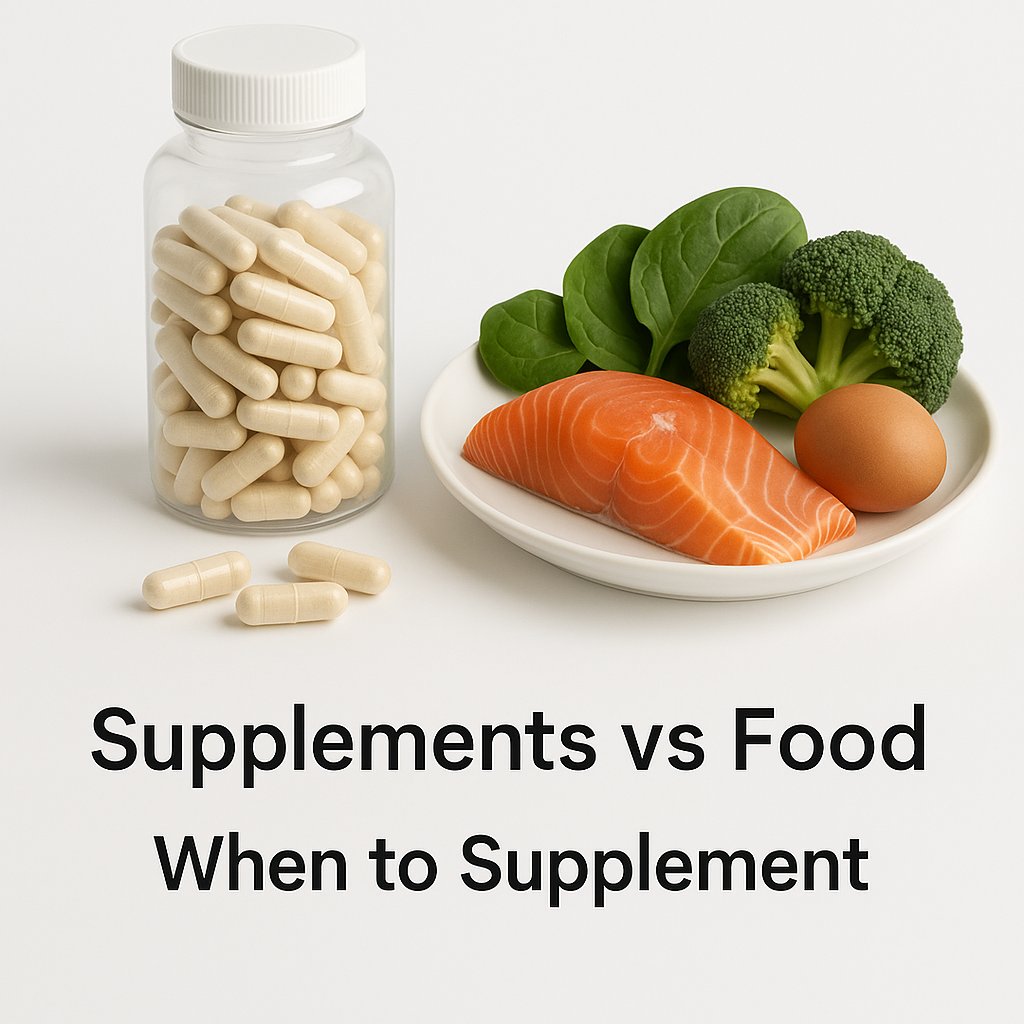
Supplements vs Food: When to Supplement
Quick Answer: Food provides supplements in a synergistic matrix that’s hard to replicate in capsule form. But supplementing makes clear sense when: you have a documented deficiency, your diet structurally excludes certain nutrients, you have absorption issues, or you need therapeutic doses that food can’t practically deliver. The food-first default is right — but it’s not always sufficient.
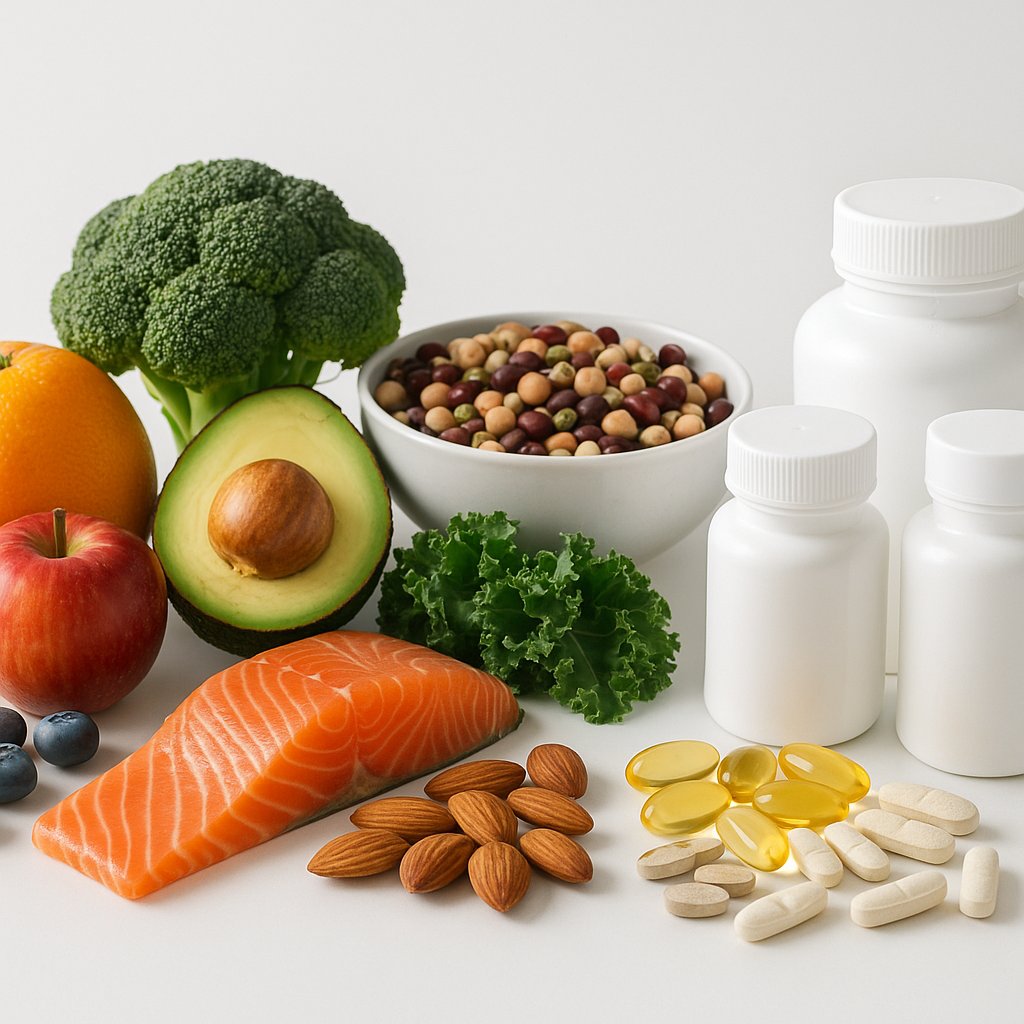
The supplement industry wants you to believe you need supplements to thrive. The food-as-medicine crowd wants you to believe supplements are unnecessary shortcuts. The honest answer is: both positions are sometimes right and sometimes wrong, depending on the specific nutrient, your diet, your physiology, and your goals.
This guide provides a rational framework for deciding when supplements add genuine value versus when real food is sufficient — or superior.
Why Food Generally Wins
The food matrix: Nutrients in whole foods come packaged with cofactors, fiber, phytonutrients, and synergistic compounds that influence absorption and bioactivity. An orange provides vitamin C plus flavonoids (bioflavonoids like hesperidin) that enhance vitamin C’s antioxidant activity, plus fiber that affects glucose metabolism, plus potassium. A vitamin C capsule provides just ascorbic acid.
Bioavailability in context: Many nutrients from food are absorbed differently — often better — than from supplements:
- Lycopene from cooked tomatoes is more bioavailable than from supplements
- Lutein from egg yolks is better absorbed than from spinach (due to fat cofactor)
- Heme iron (from meat) absorbs at 15-35%, regardless of dietary factors; non-heme iron from supplements requires vitamin C and careful timing
- Many phytonutrients in food interact with other food components in ways not replicated by isolates
What whole food provides that supplements don’t:
- Thousands of uncharacterized phytonutrients we haven’t isolated yet
- Fiber (which affects gut microbiome, blood sugar, cholesterol — not in most supplements)
- Water and volume (affect satiety, GI transit)
- Synergistic nutrient relationships in their natural context
When Supplements Make Undeniable Sense
Documented Deficiency
The clearest case: your blood test shows you’re deficient in vitamin D, iron, B12, zinc, or another measurable nutrient. Food-based correction works in principle, but often isn’t fast enough or practical enough to achieve therapeutic levels:
- Ferritin at 12 ng/mL: difficult to correct through diet alone in a reasonable timeframe
- Vitamin D at 12 ng/mL: would require daily sunshine and/or enormous amounts of fortified foods
- B12 deficiency in vegans: essentially requires supplementation since B12 is barely present in plants
Structural Dietary Exclusions
When your diet systematically excludes entire nutrient categories:
Strict vegans/vegetarians:
- Vitamin B12: No reliable plant sources of bioavailable B12; supplement is necessary
- Vitamin D3: Plant sources provide D2 (less effective); supplement with D3 (now available from lichen for vegans)
- Long-chain omega-3s (EPA/DHA): ALA from flaxseed converts poorly to EPA/DHA; algae-derived EPA/DHA supplements fill this gap
- Zinc and iron: Plant forms are less bioavailable; careful diet or supplementation needed
Dairy-free:
- Calcium: Hard to meet requirements without dairy without careful diet planning
- Iodine: Major source eliminated
Gluten-free (strict):
- May miss B-vitamin fortified grains; B-complex supplementation can bridge the gap
Malabsorption Conditions
IBD, celiac, post-bariatric surgery, and other malabsorption conditions reduce absorption efficiency for multiple nutrients — often requiring therapeutic doses well above what diet can provide:
- Post-Roux-en-Y gastric bypass: requires lifelong iron, B12, calcium, vitamin D, and sometimes zinc supplementation at therapeutic doses
- Crohn’s disease: folate, B12, zinc, iron, vitamin D deficiencies are extremely common
Life Stages with Dramatically Increased Requirements
Pregnancy:
- Folic acid/methylfolate: 600 mcg DFE/day — difficult to reliably achieve without supplementation, especially given the 70-80% cooking-related degradation of food folate
- Iron: 27 mg/day — often impossible without supplementation in women who were already borderline
- Iodine: Increased needs, many prenatal vitamins insufficient
Infancy (exclusively breastfed):
- Vitamin D: Breast milk is low in vitamin D; the AAP recommends 400 IU/day supplementation for all breastfed infants
Post-60:
- B12: Absorption declines due to reduced stomach acid; supplement more effective than food
- Vitamin D: Skin synthesis declines substantially; 1,000-2,000 IU/day is often warranted regardless of diet
Therapeutic Doses Not Achievable From Food
Sometimes the evidence-based dose for a specific goal simply can’t be reached through diet:
- Omega-3 for triglycerides: 4g EPA+DHA/day (pharmaceutical dose, Vascepa) — you’d need to eat 4-5 fatty fish meals per day
- Vitamin D for deficiency correction: 3,000-5,000 IU/day — impossible from food (salmon has ~500 IU per serving)
- Magnesium for sleep: 400 mg magnesium glycinate — vegetables provide magnesium but at lower concentrations requiring unrealistic volumes
- SAM-e for depression: No food source provides meaningful amounts
- Creatine: 5g/day for cognitive/athletic benefits — would require eating ~1 kg of raw meat
Specific Clinical Applications Beyond General Nutrition
Some supplement uses are frankly pharmacological — using natural compounds therapeutically at doses food can’t deliver:
- Berberine for blood sugar: No food source provides therapeutic doses
- Nattokinase for cardiovascular support: Natto food source has variable content
- High-dose vitamin C for specific conditions: Food sources insufficient
When Food Is Clearly Preferable
General antioxidant protection: Research consistently shows antioxidant supplements (vitamin E, beta-carotene, vitamin C in healthy populations) have failed to replicate the benefits of antioxidant-rich diets. The polyphenol synergy from colorful vegetables and fruits outperforms isolated antioxidant supplements.
Nattokinase is a clear example of when supplementation outperforms food sources — natto contains variable enzyme levels that make precise dosing impractical. For the full cardiovascular evidence and dosing data, see our guide on nattokinase as a supplement studied for cardiovascular support, in cases where food sources can’t deliver therapeutic doses.
Fiber: While fiber supplements work for specific purposes (see Best Fiber Supplements in 2026), whole food fiber is dramatically superior for microbiome diversity, colonocyte health, and overall gut function. Eating a variety of plant foods provides dozens of fiber types; a supplement provides one or two.
Protein: Whole food protein sources provide complete amino acid profiles in their natural matrix, often with superior satiety, micronutrients, and in the case of animal proteins, heme iron, zinc, B12, etc. Protein supplements are useful for convenience or volume needs, not because they’re better than food protein.
Most vitamins and minerals in people with good diets: If you eat diverse, minimally processed foods regularly — vegetables, fruits, legumes, whole grains, quality proteins — most micronutrient needs are met. Supplementing on top of an excellent diet adds marginal or no benefit for most individual nutrients.
The Synergy Principle: Why You Can’t Just Supplement Your Way to Health
Large scale trials of individual nutrients — vitamin E, beta-carotene, vitamin C, vitamin A — have largely failed to reproduce the associations seen in observational diet studies. The most likely explanation: the benefits come from the whole-food matrix, not isolated compounds.
Example: Beta-carotene and lung cancer. Observational studies showed people who ate more beta-carotene (from vegetables) had lower lung cancer rates. The supplement trials (CARET, ATBC) found beta-carotene supplements actually increased lung cancer risk in smokers. The food-based benefit came from the full vegetable matrix; the isolated supplement extracted a harmful component from its beneficial context.
This doesn’t mean all isolated supplements are harmful — it means that whole food effects don’t automatically translate to isolated supplement effects.
A Decision Framework
Start with food:
- Eat a diverse diet with abundant vegetables, fruits, quality protein, and healthy fats
- Identify structural gaps (vegan, dairy-free, etc.) and fill them with targeted supplements
Layer in supplementation when:
- Documented deficiency (test before supplementing where possible)
- Structural dietary exclusion makes deficiency likely
- Life stage increases requirements above what diet realistically provides
- A specific therapeutic goal requires doses not achievable from food
- Absorption issues impair utilization of dietary sources
Be skeptical of:
- Supplements claiming to replicate the benefits of a food that has been studied as a whole (e.g., “pomegranate extract” vs. eating pomegranate)
- Long lists of botanical extracts at sub-therapeutic doses that can’t replicate the benefits seen in dietary patterns
- Supplementing nutrients not shown to be beneficial when added to already-adequate intake
Key Takeaways
- Food-first is the right default because of the matrix effect, synergistic nutrients, and the failure of isolated antioxidant trials to replicate diet-based benefits
- Supplementing clearly makes sense for documented deficiencies, structural dietary exclusions (vegan/vegetarian), malabsorption conditions, pregnancy, and therapeutic dosing that diet can’t provide
- B12 for vegans, vitamin D for most people, iron for deficient women, and folate in pregnancy are the clearest supplement-appropriate cases
- Fiber, antioxidants, and general micronutrient coverage are best achieved through dietary diversity rather than supplements
- The goal of supplementation should be to fill specific, identifiable gaps — not to replace the quality of a real food diet
Frequently Asked Questions
Should I get blood tests before starting supplements?
For nutrients where deficiency is common and easily tested (vitamin D, B12, iron/ferritin, zinc), testing before supplementing is strongly recommended. It prevents unnecessary supplementation (and possible excess) and documents whether your supplement is working. For nutrients like magnesium (difficult to test accurately with serum levels), empirical supplementation is often practical.
Can you take too many supplements and harm yourself?
Yes. Fat-soluble vitamins (A, D, E, K) accumulate and can be toxic at high doses. Iron supplementation in those without deficiency causes oxidative stress. Selenium toxicity (selenosis) occurs at chronic doses above 400 mcg/day. Vitamin B6 at doses above 100 mg/day long-term can cause peripheral neuropathy. Always match supplementation to need.
Are organic food supplements better?
For botanical supplements (herbal products), organic certification reduces pesticide exposure, which matters since many botanicals are bioaccumulators. For standard vitamin/mineral supplements synthesized in labs, “organic” is less relevant (the minerals aren’t from organic sources in any meaningful sense). For food-based supplements (spirulina, chlorella, mushroom extracts), organic matters more.
Sources
- National Institutes of Health Office of Dietary Supplements. Multivitamin/mineral supplements fact sheet.
- Reviews on dietary supplements vs whole food sources. PubMed search.
- Reviews on nutrient bioavailability from food vs supplements. PubMed search.
- Reviews on micronutrient deficiency and supplementation. PubMed search.
- Systematic reviews on multivitamin efficacy. PubMed search.



Leave a Reply